“The motorbikes formed a wall...” - Rival claims Tadej Pogacar was suddenly ‘pulled along’ at 15kph faster during Roubaix chase
CyclingWednesday, 15 April 2026 at 19:30
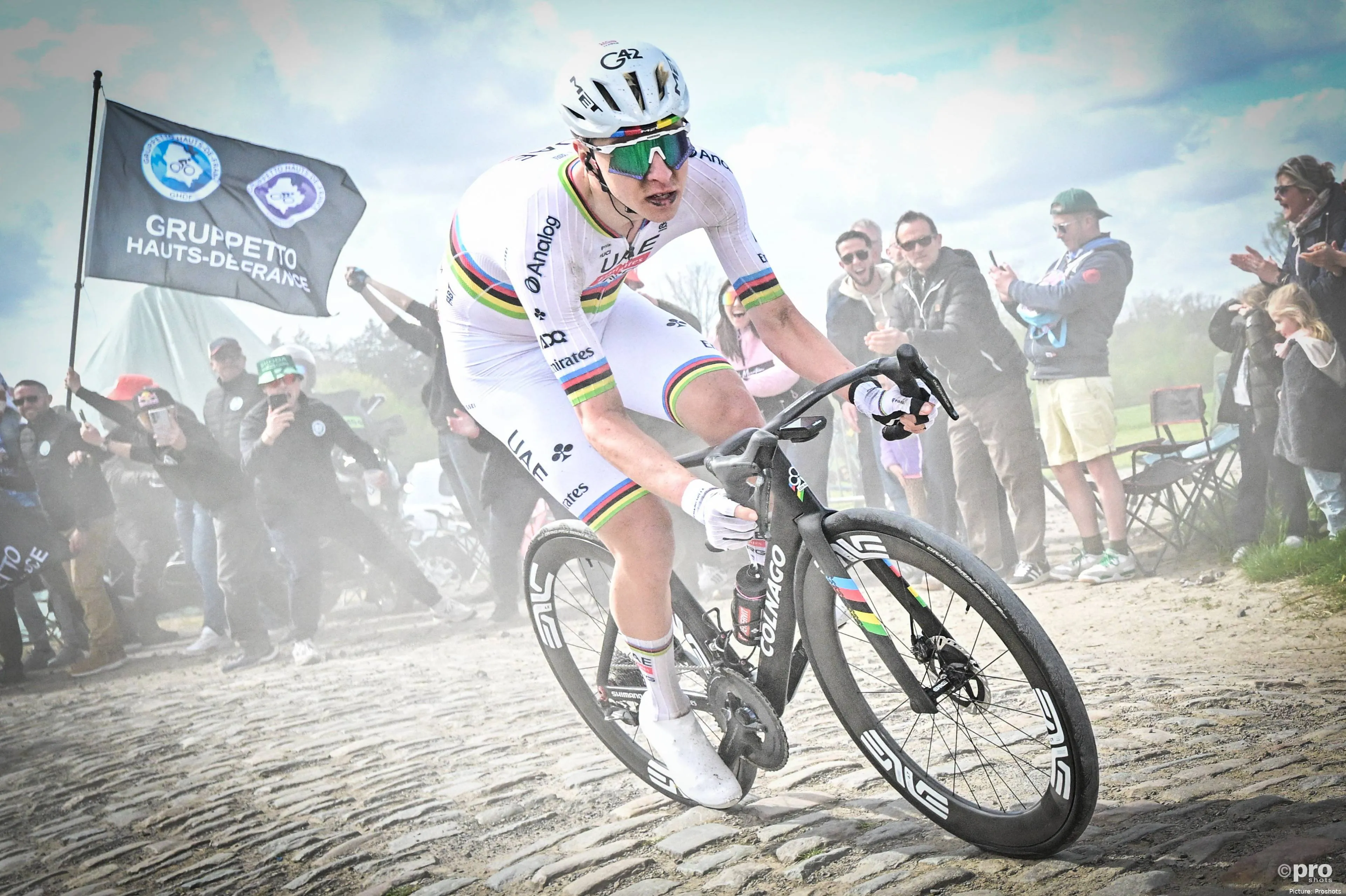
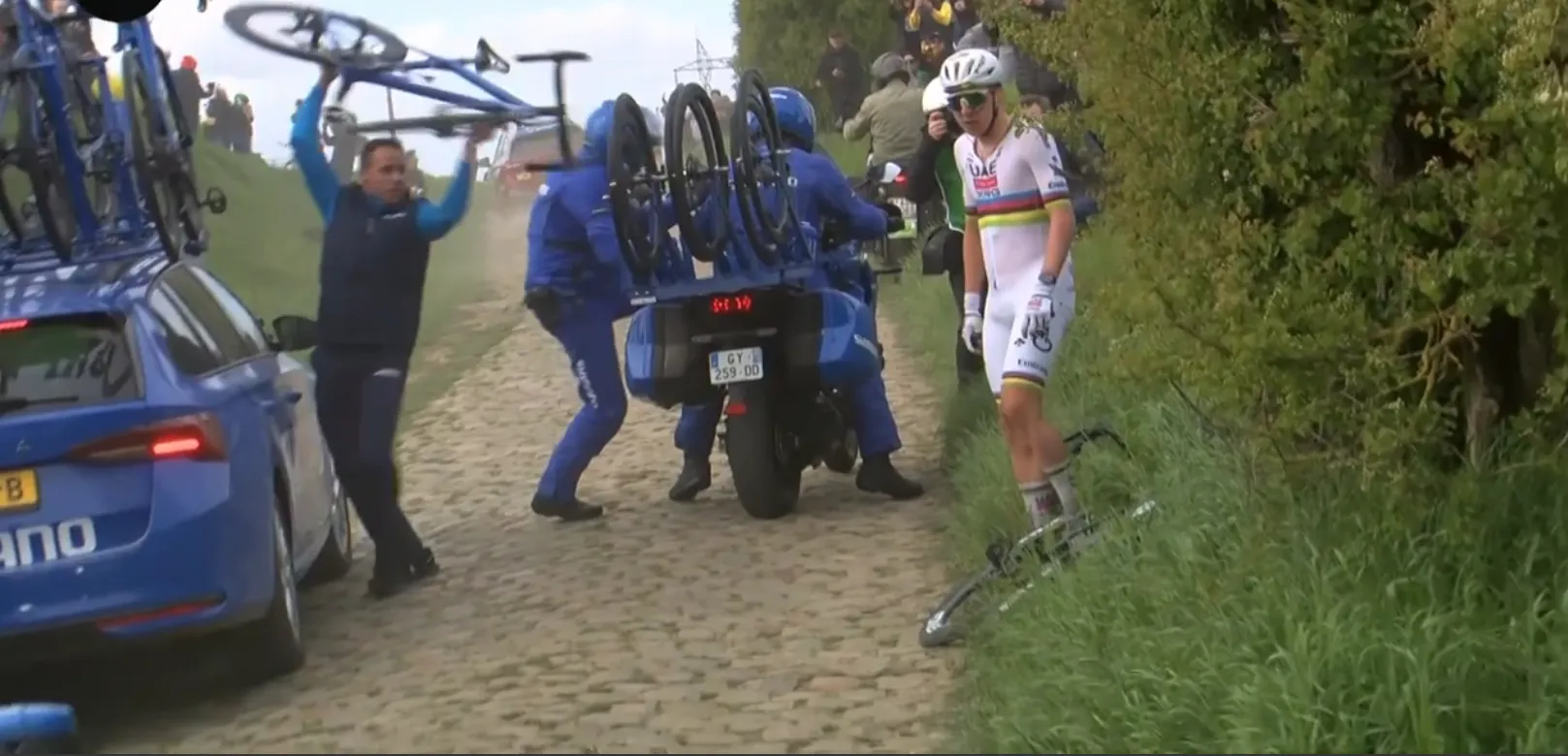
Tadej Pogacar’s ride at Paris-Roubaix 2026 has been framed as one of the defining performances of the race. A puncture at the worst possible moment, a frantic chase, and a return to the front before finishing second behind Wout van Aert. From the outside, it looked like a display of pure strength. Inside the peloton, the picture was more complicated.
“We suddenly started riding 15kph faster”
Oliver Naesen was not riding at the front when Pogacar punctured. Instead, he was caught in the chasing group, close enough to see exactly how the comeback developed. Speaking on the HLN Wielerpodcast, he explained: “I saw Pogacar’s setback and comeback from very close.”
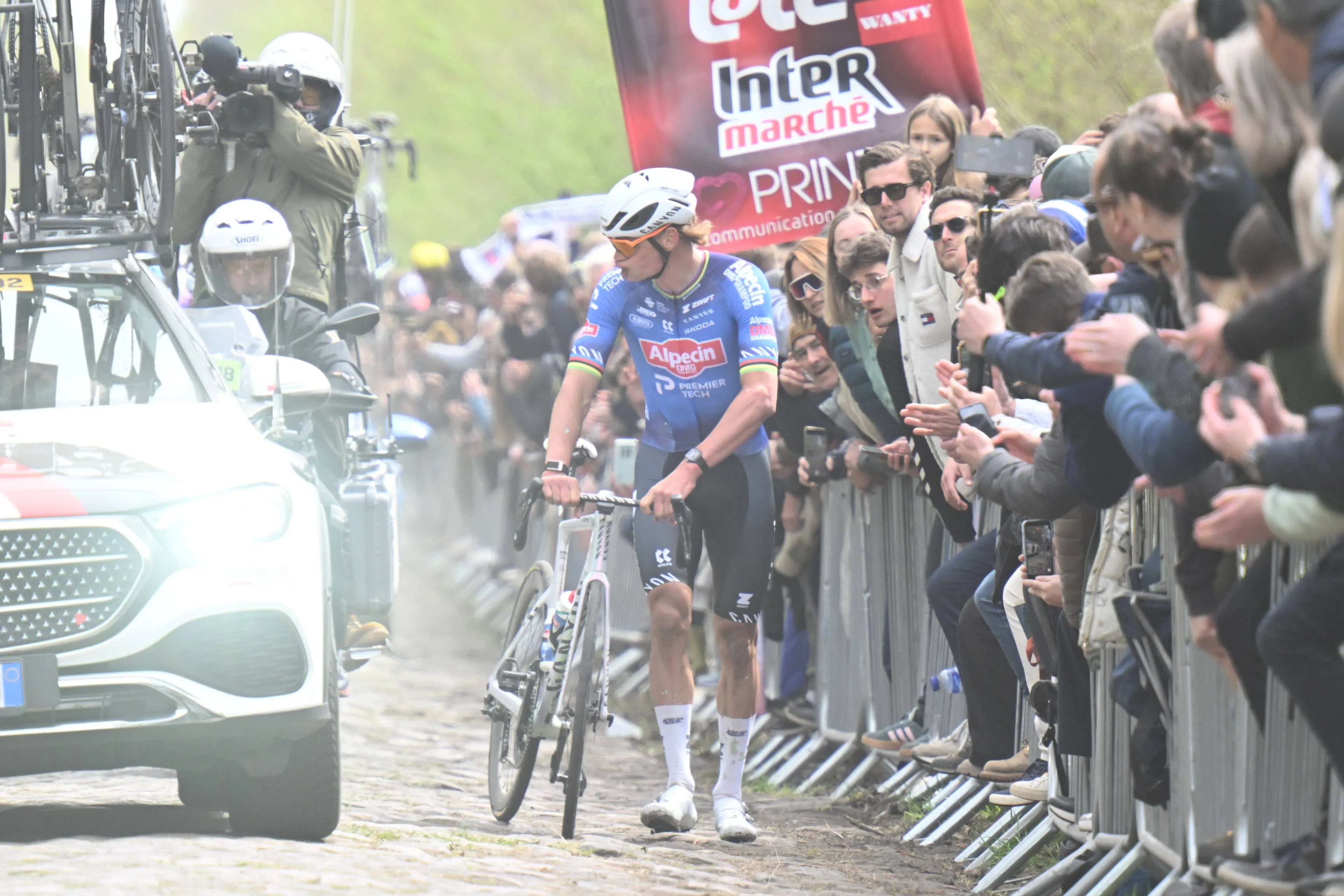
What stood out was not just the effort, but the sudden shift in speed. “The motorbikes formed a wall for our group. We suddenly started riding 15 kilometres per hour faster, together with Pogacar and his team-mates.”
Naesen does not deny the strength required to finish the job. “After that, Pogi closed the gap himself,” he says, but the conditions of the chase, in his view, were far from neutral. “It was incredible how they pulled us along with the motorbikes.”
Read also
A race that wasn’t working behind
That moment came in a part of the race where cooperation had already broken down. Naesen found himself in a second peloton alongside Yves Lampaert, in a group that was struggling to organise any meaningful chase. “He was nervous about the cooperation, because there wasn’t really any,” Naesen said.
With the race fragmenting and gaps opening, the arrival of Pogacar from behind was always going to change the dynamic. Naesen, however, felt that change was predictable. “I said: ‘Lampi, Eurosport, France 2… they’ll bring us back in a minute.’ And that’s exactly what happened.”
More than just Pogacar
Naesen’s perspective is shaped by the fact he was present for multiple key moments in the race. “I experienced Wout’s puncture, I saw Pogacar’s bad luck and comeback up close, and I was there again after Arenberg following Mathieu’s delay,” he said, referencing the misfortune that also hit Mathieu van der Poel.
That wider context matters. Paris-Roubaix is built on chaos, where bad luck is part of the equation for everyone. But Naesen’s argument is that what followed Pogacar’s puncture went beyond that usual unpredictability.
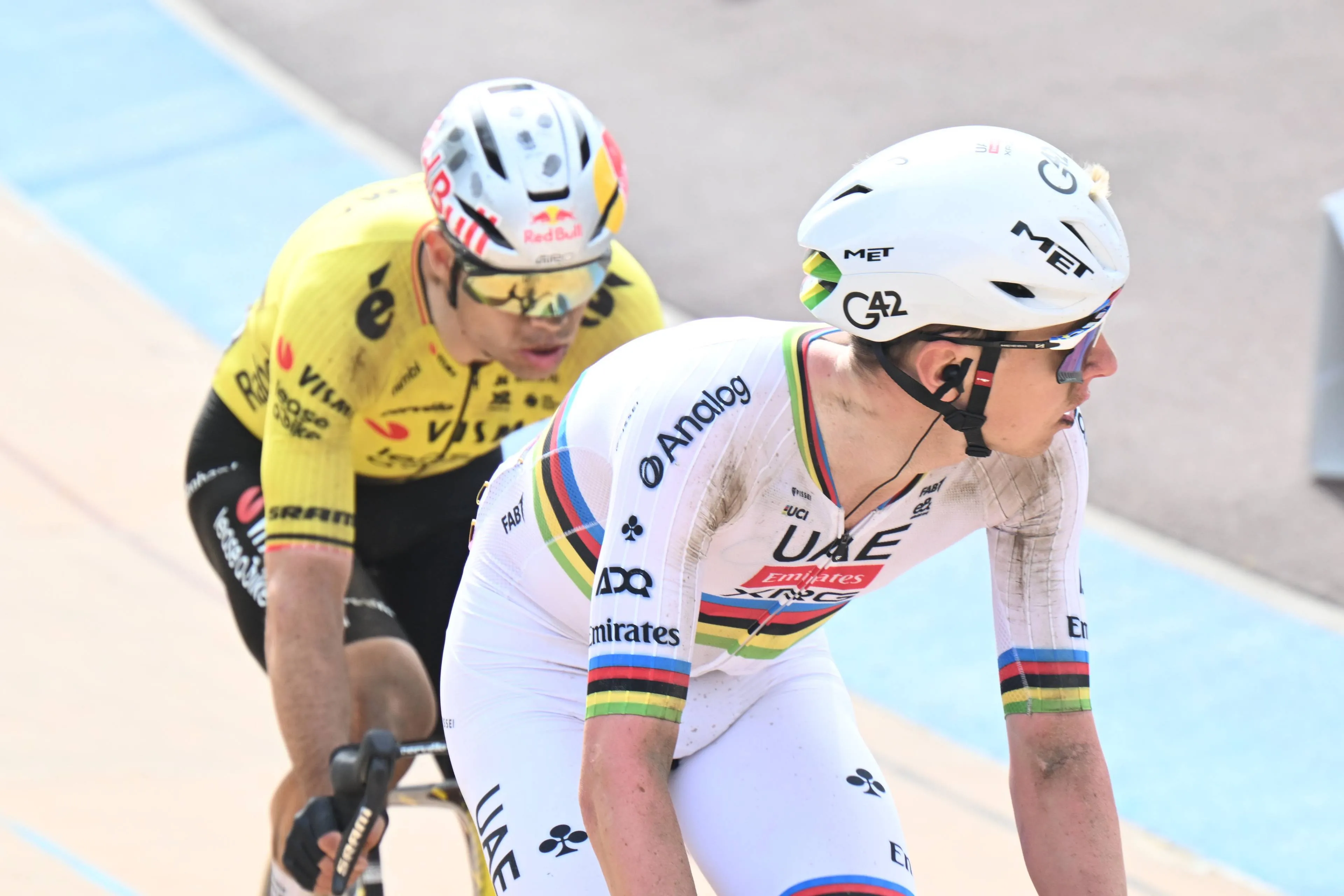
“That’s often race manipulation”
The role of race vehicles has long been debated within the sport, but Naesen’s comments push that discussion into sharper territory. “That’s often the case,” he said when asked whether such situations amount to race manipulation.
For him, the issue is not isolated to Roubaix. “If you look at the Poggio, when Pogacar and the others arrive with five or six seconds at the bottom… I think back to that image where ten motorbikes were riding twenty metres in front of him. That makes the difference between winning and losing.”
It is a view that reframes not just one moment, but a pattern.

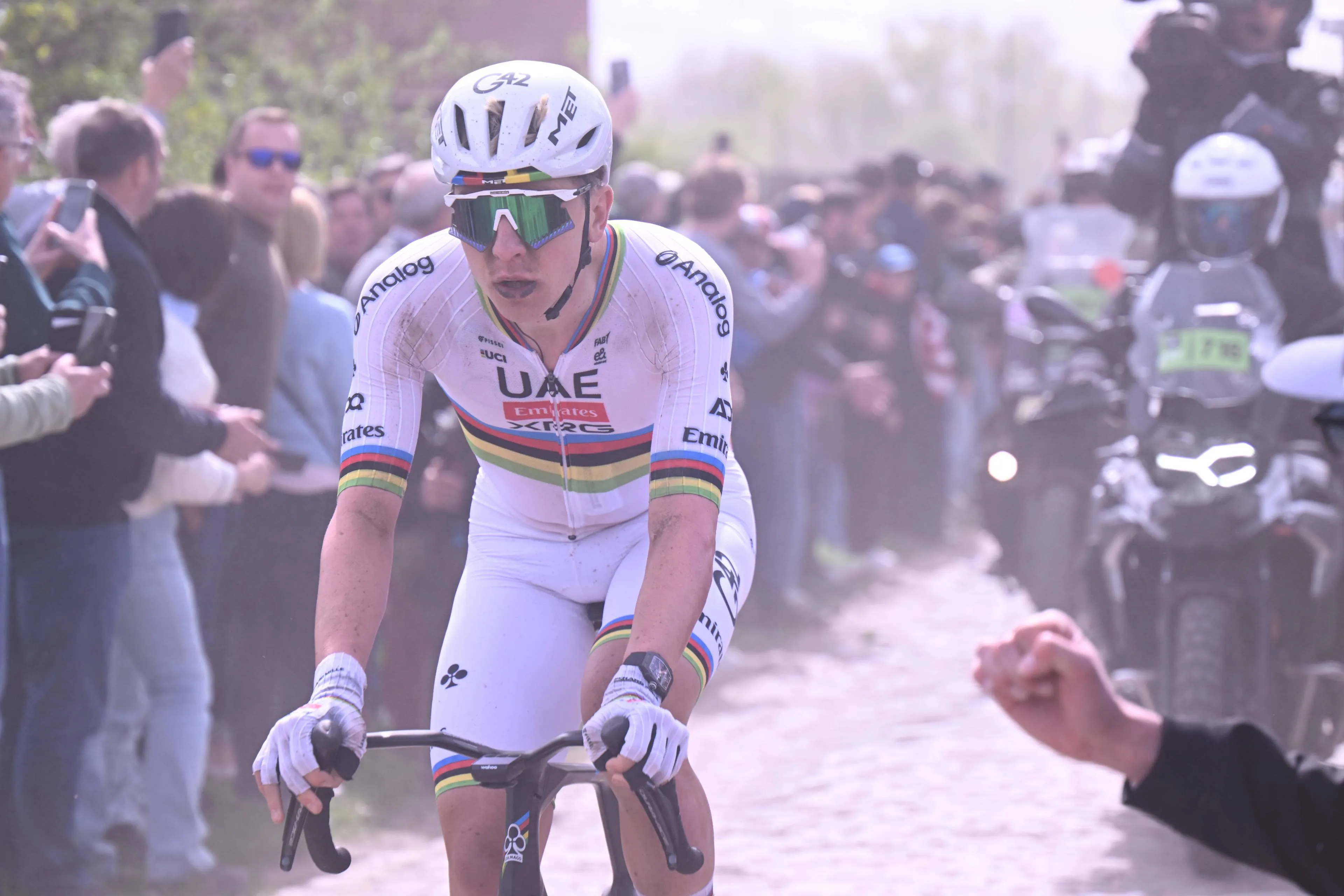
Tadej Pogacar at the 2026 Paris-Roubaix
A performance and a question
None of this erases what Pogacar did. To recover from a puncture, navigate the chaos of bike changes and still fight for victory requires a level that very few riders can reach. Naesen himself acknowledged that effort in what he saw up close. But his account introduces a second layer to the story, one that sits alongside the performance rather than replacing it.
In a race decided by margins, the question is not just how Pogacar got back. It is how much the race itself helped him get there. And in Paris-Roubaix, that line is rarely as clear as it looks from the outside.
claps 1visitors 1
Just in
Popular news
Latest comments
- I'm assuming he means the head tube angle was slacker than he's used to. but in that case a wheel barrow should have handled better on the cobbles than his colanago did lol. he was slipping all over the place, almost ran into wout a few times. what a sore loser he and his team are.whkman15-04-2026
- seriously, his team car blocked the back 1/2 of the peloton for over a minute according to some of the riders.whkman15-04-2026
- I think Pogačar can definitely break the record of 19 monuments, and probably before he's 30. But he's got 4 Giri, 1 Tour and 1 Vuelta to match Merckx there. He can probably do the latter two this year. If I were Pogačar, I would win the 2026 Tour and Vuelta, then do the same for the 2027 Giro and Vuelta. After that, no more Tours and just the Giro-Vuelta double every year thereafter. Should he win every grand tour he tries like that, he can be the outright record holder for all three Grand Tours by 2031 (when he'll be 32/33). I don't expect him to win them all, and doing that program every year is very strenous, but I think it is possible for him to achieve that before he retires (assuming he retires at 36)
 Rafionain-Glas15-04-2026
 - It’s an emergency, it’s optional AND, it’s the same for EVERYONE, zero point in mention in it.Mistermaumau15-04-2026
- Yes, always surprised on the roads when getting overtaken that the turbulence and pull at a distance is so much more noticeable than from a car.Mistermaumau15-04-2026
- Extremely one-dimensional attitude, start an oil company maybe.Mistermaumau15-04-2026
- 7 years into their pro careers, Merckx and Pogačar are tied with 10 monuments, 2 world championships, and 5 grand tours. In years 8 to 10, Merckx won 5 more Monuments and 6 more grand tours. In year 8, Pogačar could well end up with 4 monuments, a world championship, and another grand tour. How he does these next 3 years will allow for a better numerical comparison with Merckx, in other words. But we still have to wait for his full career to unfold before we make a true comparison.RidesHills15-04-2026
- For all the top riders, managing their athletic time is an essential part of their training. There have been plenty of articles written about Pogačar's time off the bike, same with van der Poel. Vingegaard focuses on his family time so much that he gets critique like you just gave Evenepoel. The reality is that bodies need rest, they need time to recover, and there's nothing wrong with an athlete being honest about it.RidesHills15-04-2026
- "Aleksandr Vlasov leads the challenge for Red Bull - BORA - hansgrohe, supported by rising talents Giulio Pellizzari and Lorenzo Finn, forming one of the most intriguing combinations of experience and youth in the race." Ahahahahahahahahaha GC results in the past year for Giulio Pellizzari: Tirreno-Adriatico: 3 Volta a Valenciana: 3 Vuelta a España: 6 Vuelta a Burgos: 4 Giro d'italia: 6 Now for Aleksandr Vlasov: Paris-Nice: 15 Vuelta a Andalucia: 7 Volta a Valenciana: 7 Tour de France: 27 Tour de Suisse: 21 Tour de Romandie: 24Rafionain-Glas15-04-2026
- It is really crazy how much the motorbikes help. Between favourites it's usually not too bad, but the other riders are worst affected. It may have been possible for the chasers to catch Pogačar and van Aert without the motorbikes, but due to the presence of van der Poel they got their share too.Rafionain-Glas15-04-2026
Loading
2 Comments