“The decisive GC rider... Jonas Vingegaard in the pink jersey” - Jens Voigt predicts exactly where Team Visma | Lease a Bike can win the 2026 Giro d’Italia
Cycling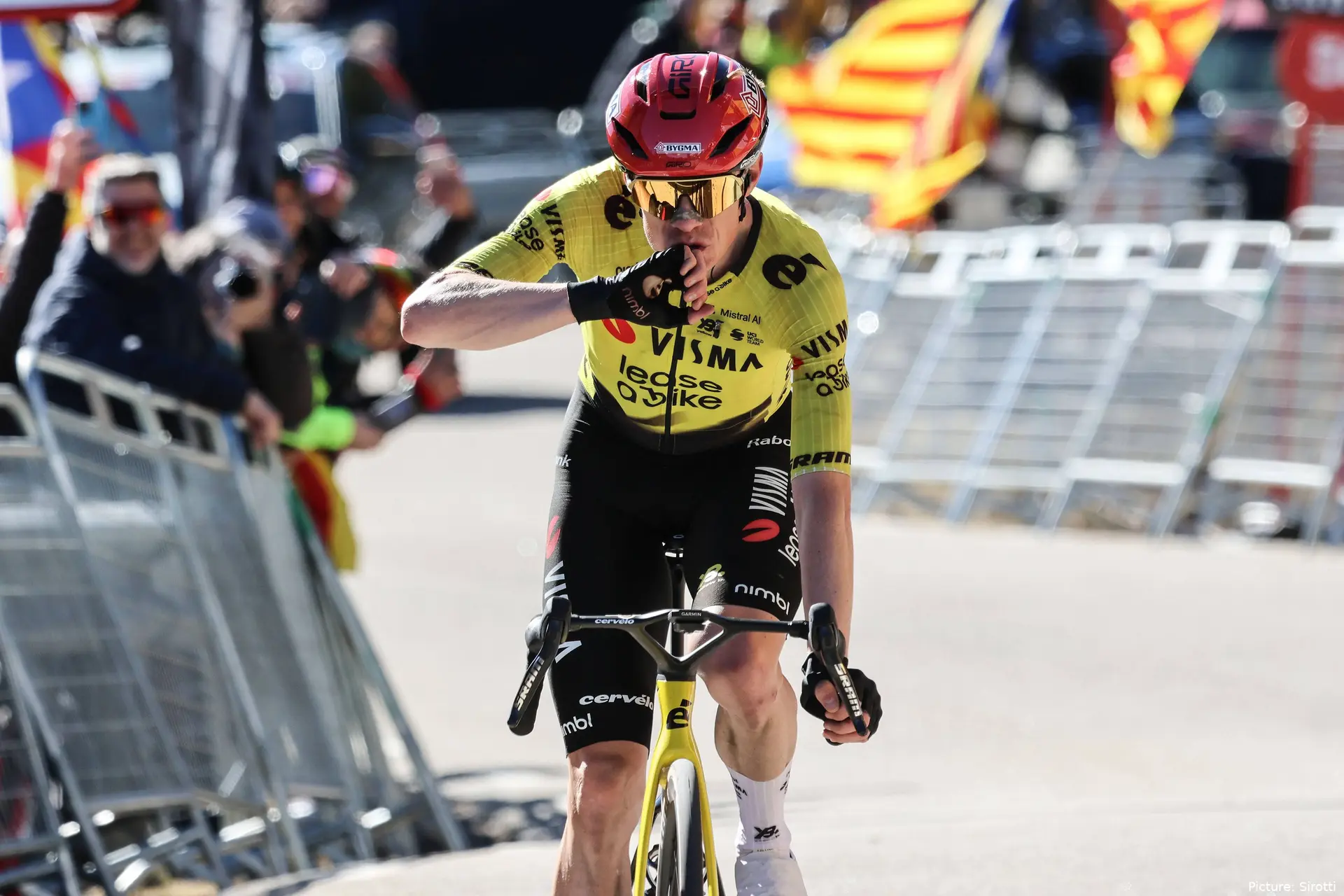
Jonas Vingegaard may not even have pinned on a race number yet at the 2026 Giro d’Italia, but former Grand Tour rider and TNT Sports analyst Jens Voigt already believes he can identify the moment the race could swing decisively in Team Visma | Lease a Bike’s favour.
“The race contains a tactical hinge - the first major mountain test, Stage 7 finishing on Blockhaus - where a rider of Vingegaard’s calibre can ‘put a stamp’ on the race, take the maglia rosa, and then rely on a team prepared to protect him,” Voigt explained in analysis for TNT Sports.
That assessment lands in the context of a Giro that has steadily tilted towards Vingegaard before the race has even started.
Joao Almeida, initially viewed as one of the Dane’s biggest challengers, has already withdrawn through illness. Mikel Landa was ruled out following his crash at Itzulia Basque Country, while former Giro winner Richard Carapaz also confirmed his absence after a delayed recovery from surgery. Against that backdrop, Voigt sees Visma arriving in Italy with both the strongest rider and the clearest tactical structure.
“Jonas only”
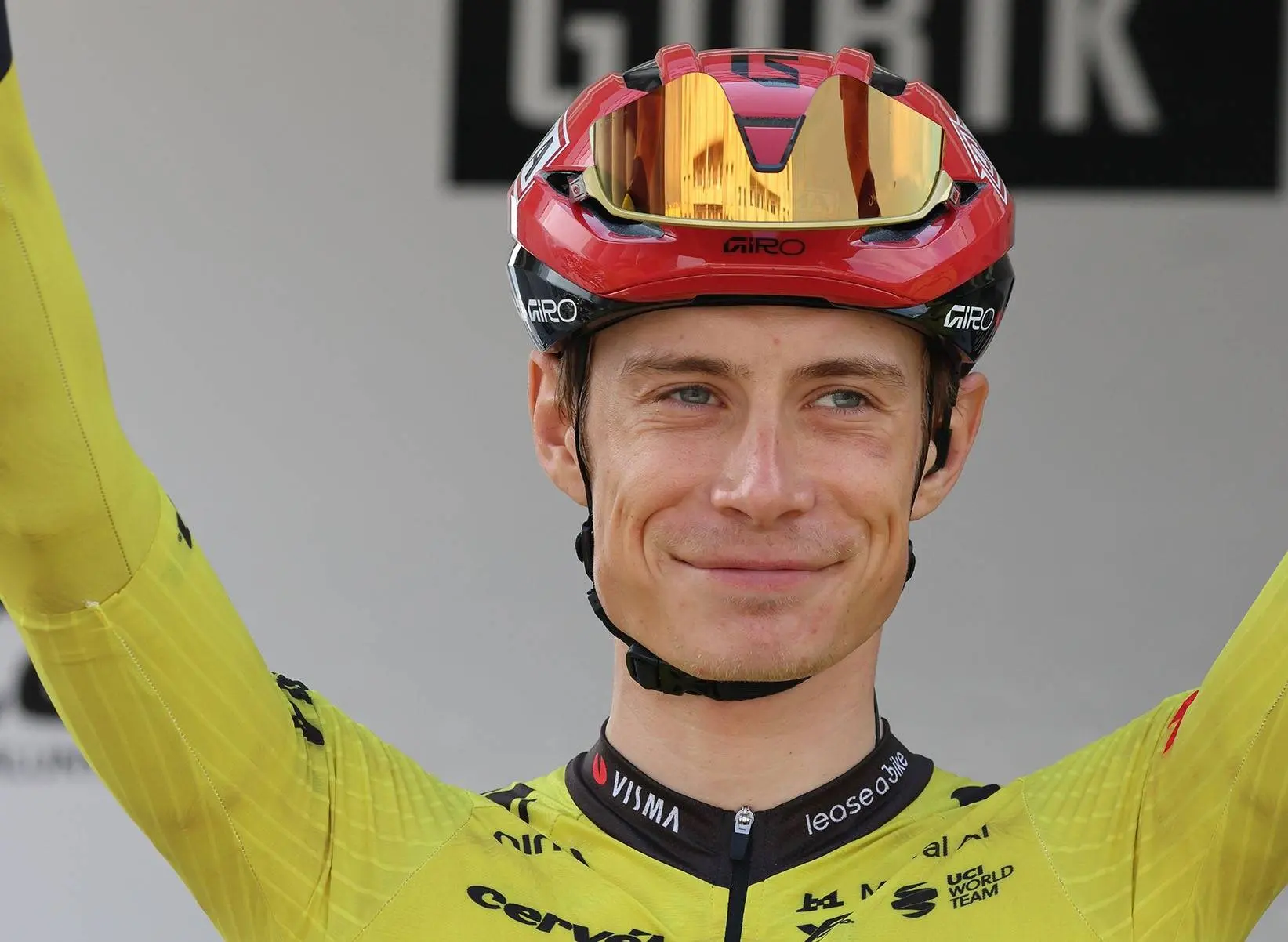
Voigt pointed directly towards Visma’s team selection as the biggest reason Vingegaard starts the race as overwhelming favourite. “They have a well-balanced, GC-focused squad whose single priority is Jonas Vingegaard in the maglia rosa,” he said. “Their selection is a classic sign of a team built to control a three-week race.”
That lineup includes experienced Grand Tour support riders such as Sepp Kuss and Wilco Kelderman, alongside the engine of Victor Campenaerts and emerging Italian talent Davide Piganzoli.
For Voigt, the absence of a protected sprinter tells the story. “They have effectively omitted a protected sprinter and chosen riders to protect and pace the leader in the mountains,” he explained. “Domestiques who can stay with a GC leader deep into climbs, set tempo, and control breakaways are the practical basis for race control.”
The German also highlighted the internal clarity within the team as a major advantage heading into three weeks of racing. “The internal clarity - everyone receiving the same directive that this Giro is ‘Jonas only’ - is exactly what allows a team to execute a consistent plan and defend a jersey once obtained.”
Why Blockhaus matters
The Blockhaus summit finish on stage 7 has already emerged as one of the defining talking points of the 2026 route. Coming after the opening stages in Bulgaria and the first week in Italy, it represents the Giro’s first true high mountain test and the first major opportunity for the general classification contenders to create serious time gaps.
That aligns closely with what Vingegaard himself recently said in conversation with La Gazzetta dello Sport, where he identified Blockhaus alongside Corno alle Scale and the major Dolomite stages as key moments in the race. “In certain occasions, there can be very big time gaps,” Vingegaard warned.
The Dane also described this year’s Giro as “more unpredictable” than the Tour de France or Vuelta a Espana, adding that “the surprises, more than elsewhere, can be anywhere.”
Yet despite those warnings, the wider mood around the race continues to move in one direction.
“The decisive GC rider”
Voigt did not entirely dismiss the possibility of chaos, crashes or tactical surprises disrupting the race, but his overall verdict on Vingegaard’s position was emphatic.
“If he starts and rides through to Rome without a major incident, I expect him to be the decisive general classification rider,” he said. “There are always caveats - crashes, illness, tactical surprises - but barring a major incident, I expect Vingegaard to take time on the big climbs and defend it to the finish.”
It is the latest sign of how dramatically the Giro landscape has changed in recent weeks. What initially looked like a deep and dangerous Maglia Rosa battle has gradually become centred around one rider, one team and one question: can anybody stop Team Visma | Lease a Bike from taking control once the race reaches the mountains?

Kieran WoodDeputy Editor-in-Chief
Kieran Wood is a sports journalist based in Wales and has been active in journalism since 2022. He regularly contributes to DartsNews.com and CyclingUpToDate.com, where he covers professional cycling and darts. In cycling, his work includes liveblogs from major races, including the Tour de France, the Giro d’Italia, and La Vuelta a España, alongside race reports and analysis. He has also conducted interviews with professional riders.
His reporting spans the full racing calendar, from one-day classics to stage races, with a focus on accurate, real-time coverage and clear contextual analysis. For statistics, results, and historical context, he regularly uses resources such as ProCyclingStats. To support reporting on rider activity and training context where relevant, he also references Strava.
In his work, Kieran places strong emphasis on careful sourcing, editorial accuracy, and updating articles as new, verified information becomes available.
claps 2visitors 2
Just in
Popular news
Latest comments
- in football also, The Special one is like a dictator controlling the egos of Ibra and other top footballers. Also Alex Ferguson was very abusive sometimes violent too but all of it gets swept under the rug due to the accomplishments. Even today i would say that verbal abuse and screaming still remains the best tool of most managers to motivate their players next to benching and fear of trade.abstractengineer17-10-2026
- At least all that doping talk will end when (if) Seixas becomes world #1vappaxbipmv17-10-2026
- He is only 24, i think his team is to be blamed in part for the mismanagement due to their reliance on him for points. But ultimately i dont think they had options either. What is needs is a good rest , consultation with doctors about his issues (mental or physical) if any and then fresh start, slow but steady. He should be back at the top, maybe a limited racing calendar will also helpabstractengineer17-10-2026
- i think its the worst for the winners with "win at all costs" mentalityabstractengineer17-10-2026
- You @frieder3, as an american, should also be ashamed of your president. If you're not, there's something wrong with you.PogiSloFans17-10-2026
- A simple solution would be de cluttering the media circus that follows race get rid of photographers on bikes or only allow at certain places. All drivers or riders to be certified. It is not rocket science. You cannot reduce speed of peleton so ensure the bubble they ride in is safepaultryan200217-10-2026
- I don’t know about some of these reports, is it shocking that management says do it our way? we are the managers, not you? I understand some teams might have a more collaborative approach. but this is within their rights as management.mij17-10-2026
- Remco had a great year, no question. He is clearly one of the top 30 riders in history already, & top 5 in time trial. My only criticism is he should have raced/won the Belgian & Euro TT championships--?why give them away.Xrider5117-10-2026
- no matter what anyone says, I’d take his palmares right now and be happy if I never got any more. rainbows, golds, GTs, monuments, one days, one weeks.mij17-10-2026
- There's no evidence anyone on UAE is doping. Period!Xrider5117-10-2026
Loading
Write a comment