Tour de France Femmes 2026 stage 9 preview, profiles, favourites and predictions - 8 seconds separate Vollering and Niewiadoma, who takes the yellow jersey?
Cycling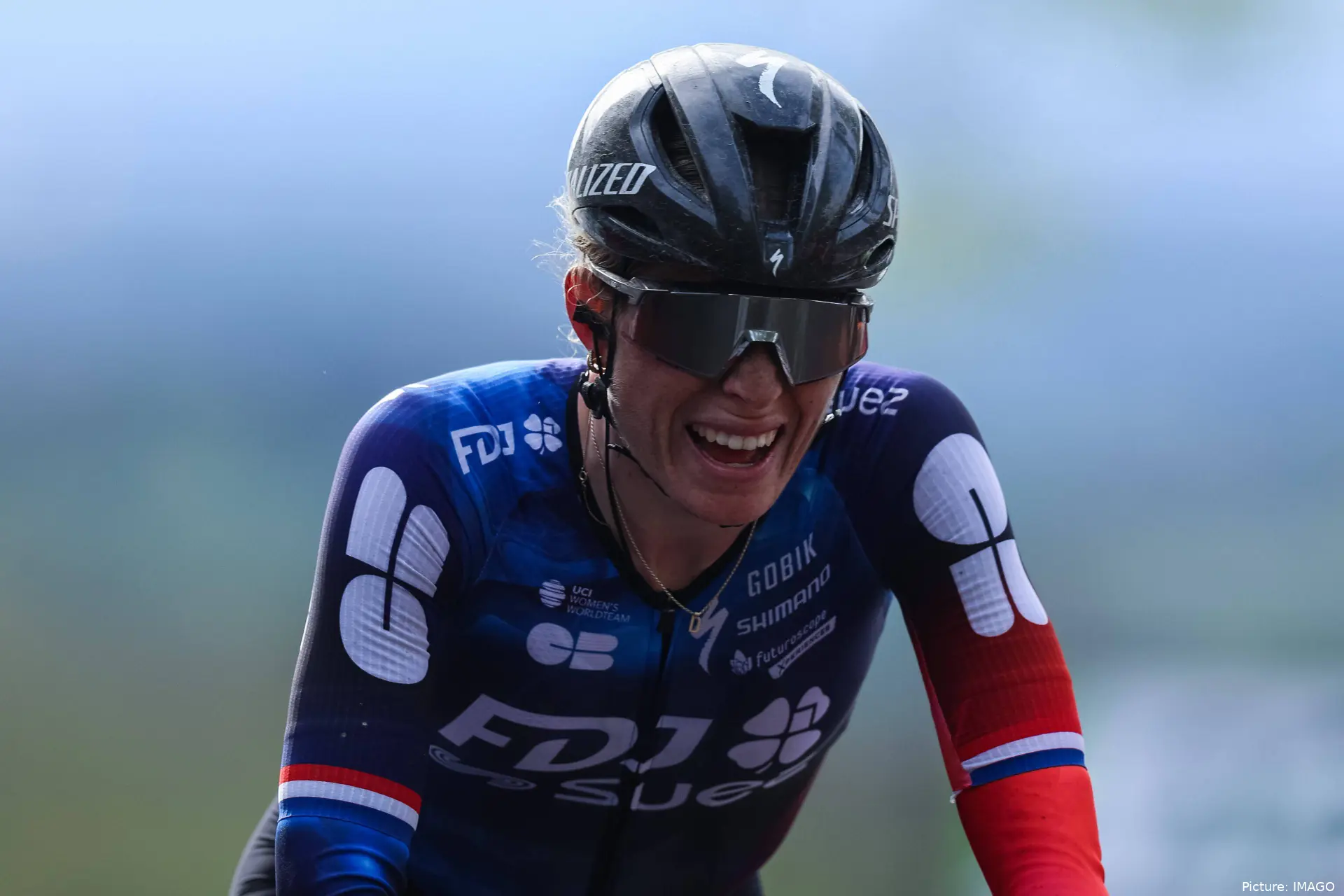
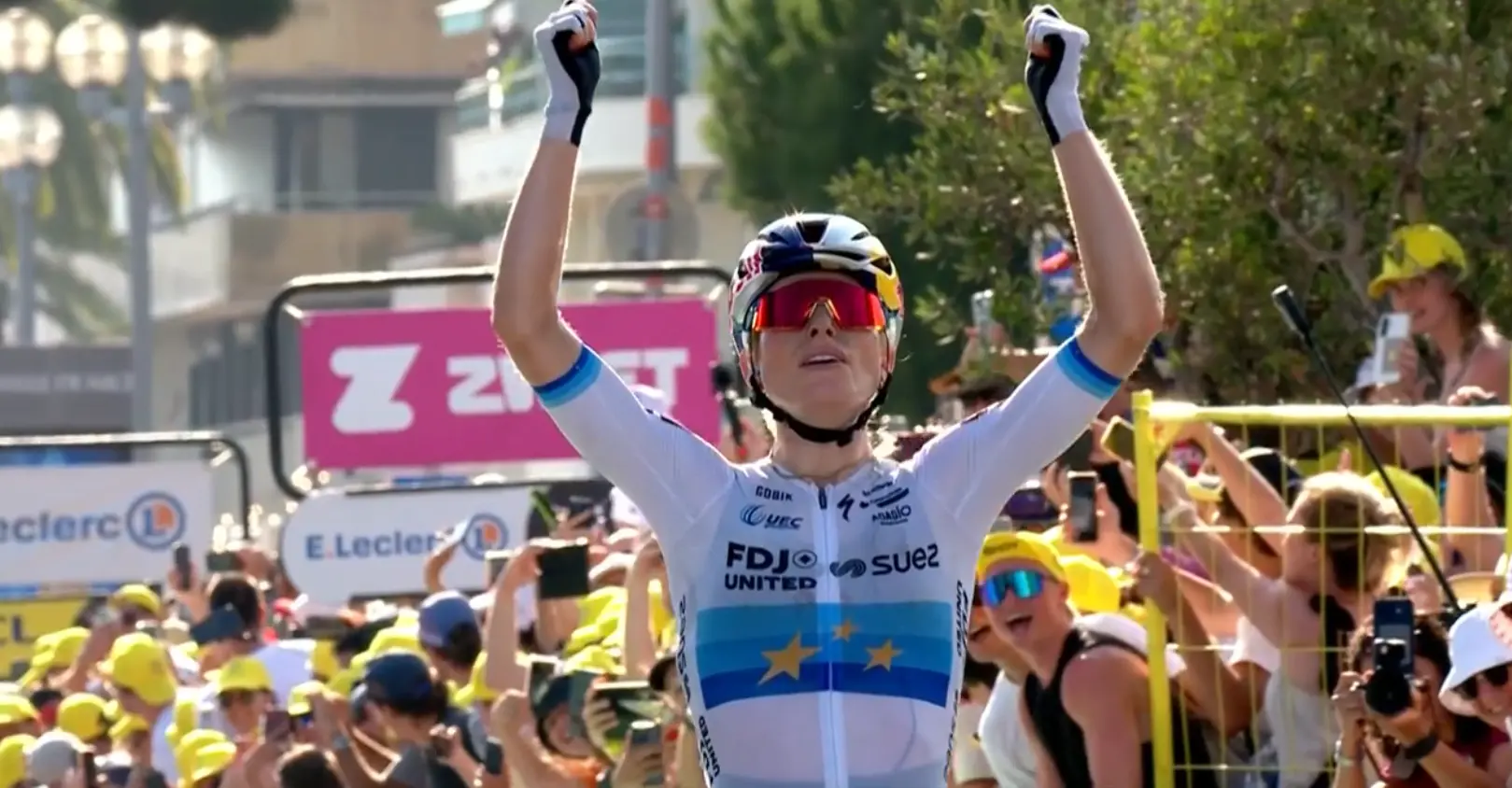
The route of the 2026 Tour de France Femmes has been announced this morning in Paris, and it features a very difficult route that differs quite a lot from this year's. Taking place from Saturday, 1 August to Sunday, 9 August 2026, the time trials are back at this year's edition, and we will have a mythical first-time summit finish at Mont Ventoux, with a finale in Nice where we will have another GC showdown. We take a look at its stages and profiles.
The equivalent of the men's Tour de France, the Tour de France Femmes was finally brought to life in 2022 after many years of discussion. Whilst the race does not have the same duration, it provides the women's peloton with nine days of hard racing, a lot of exposure, and an event that has quickly become one of - if not the - most important in the women's side of the sport, whilst rivaling many of the men's biggest races.
The race was first won by Annemiek van Vleuten, and the following year, in 2023, her compatriot Demi Vollering became the maillot jaune. The Dutch rider was second over the past two seasons, losing it to Katarzyna Niewiadoma in a dramatic finale that came down to a fight for seconds on the Alpe d'Huez in 2024; whilst in 2025 it was Pauline Ferrand-Prévot who took France's first win at the Tour with a set of dominant performances in the mountain stages.
Read also

Schedule Tour de France Femmes 2026
| Stage | Date | Start | Finish | Distance | Type |
| 1 | August 1 | Lausanne | Lausanne | 137.4 km | Flat |
| 2 | August 2 | Aigle | Geneva | 148.6 km | Flat |
| 3 | August 3 | Geneva | Poligny | 157.3 km | Hilly |
| 4 | August 4 | Gevrey-Chambertin | Dijon | 20.7 km | Individual Time Trial |
| 5 | August 5 | Mâcon | Belleville-en-Beaujolais | 139.8 km | Hilly |
| 6 | August 6 | Montbrison | Tournon-sur-Rhône | 152.9 km | Hilly |
| 7 | August 7 | La Voulte-sur-Rhône | Mont Ventoux | 144.2 km | Mountainous |
| 8 | August 8 | Sisteron | Nice | 175.1 km | Flat |
| 9 | August 9 | Nice | Nice | 98.9 km | Mountainous |
Preview stage 9 Tour de France Femmes 2026
An incredibly exciting race, packed with thrill from start to finish. Demi Vollering took the race lead today on the explosive terrain where she had the upper hand on Katarzyna Niewiadoma. She is finally in the yellow jersey, on the day that it matters. The gap is only of 8 seconds, which provides no assurances. However FDJ does have a superior team and can afford to send women into the breakaway to both try and shut down bonifications, and to have satelite riders who may help Vollering in the finale.
The job is hard for Canyon, but they do have Antonia Niedermaier to launch Niewiadoma onto a big attack. The Top5 riders will focus on that final climb, but outside of them, UAE and Lidl-Trek for example have every reason to try and attack the brutal day from early on and try to make the difference before that final climb to Éze.
It is a day for the GC women, the climbers. But the final ascent is far from the finish and it could become quite tactical as Vollering only needs to focus on Niewiadoma. Elisa Longo Borghini and Marlen Reusser may be allowed to go up the road in the finale, as can others in the mix.
And if it comes down to a reduced but not exclusive group we might see a Kim Le Court or Noemi Rüegg take a victory in a reduced sprint. Even Lotte Kopecky, whose form has been on the rise, is a card - whilst she is also for a breakaway.
Prediction Tour de France Femmes 2026 stage 9:
*** Demi Vollering, Elisa Longo Borghini
** Katarzyna Niewiadoma, Kim Le Court
* Marlen Reusser, Antonia Niedermaier, Paula Blasi, Dominika Wlodarczyk, Cédrine Kerbaol, Noemi Rüegg, Lotte Kopecky
Pick: Elisa Longo Borghini
How: Solo win with attack on the final descent or flat.
Profile stage 9: Nice - Nice

Nice - Nice, 99 kilometers
The final stage of the race starts and ends in Nice and features a very simplistic profile: A four-lap circuit including a climb and a descent back to the finish.
The circuit is 23.5 kilometers long, and the climbing begins right from the first kilometers. The riders will ascend it through its traditional side, which is 7.8 kilometers long at 5.9%. The ascent is rather inconsistent and provides opportunities to attack from early on.
The descent is fast and somewhat technical. The climbs will end with 92, 66, 40, and 15.5 kilometers to go.
Previous previews
Preview overall classification Tour de France Femmes 2026
The nine-day race begins in Lausanne, and the fight for the yellow jersey will be thrilling. All of the biggest GC specialists in the women's peloton will be present at the race that is often termed the highlight of the season. At the helm of the favourites' standings perhaps is defending champion Pauline Ferrand-Prévot, who will look to bring the victory to France once again; and Giro Donne winner Demi Vollering, who will once again look to win the race after two consecutive second places.
La Vuelta winner Paula Blasi is also present, teaming up with Elisa Longo Borghini to fight for the overall win and try to take on the experienced winners of the Tour. Marlen Reusser, Anna van der Breggen and Katarzyna Niewiadoma are all experienced contenders and are very strong podium candidates, whilst carrying the possibility of winning the race as well.
Prediction Tour de France Femmes 2026 overall classification
*** Demi Vollering, Pauline Ferrand-Prévot
** Marlen Reusser, Elisa Longo Borghini, Paula Blasi, Anna van der Breggen
* Niamh Fisher-Black, Katarzyna Niewiadoma, Feme de Vries, Dominika Wlodarczyk, Antonia Niedermaier, Kim Le Court, Lotte Kopecky
Pick: Pauline Ferrand-Prévot
Preview stage 1 Tour de France Femmes 2026
The opening stage of the race sees the riders finish in Lausanne in what is a small ascent to the line. SD Worx would, at their prime, have Lotte Kopecky as the main favourite, but her current form raises questions, whilst the climb may be too hard for Lorena Wiebes. The likes of Kim Le Court, Marianne Vos, World Champion Magdeleine Vallières and Puck Pieterse are amongst the puncheurs who may be perfectly suited to this finale, but all have to be at the top of their game to be able to win it.
Simultaneously, the GC women will look to avoid splits, or ambitiously fight for the stage win as well as taking bonus seconds to get ahead of their rivals. Demi Vollering might be the most explosive out of them, but Ferrand-Prévot, Reusser, Longo Borghini and Niewiadoma will be amongst those who should have a strong finale.
Prediction Tour de France Femmes 2026 stage 1:
*** Puck Pieterse, Demi Vollering
** Kim Le Court, Franziska Koch, Lorena Wiebes, Marianne Vos
* Pauline Ferrand-Prévot, Katarzyna Niewiadoma, Magdeleine Vallières, Marlen Reusser, Lotte Kopecky, Elisa Longo Borghini, Paula Blasi
Pick: Puck Pieterse
Profile stage 1: Lausanne - Lausanne

Lausanne - Lausanne, 138.1 kilometers
The race begins in Switzerland with a 138-kilometer-long stage starting and finishing in Lausanne. There will be no gift to the sprinters; the first stage right away should see the climbers and overall classifications come to the front on the race's first hilltop finish.
Some classics specialists may survive and be within a shot of the first yellow jersey on a day that is hilly from start to finish, but mainly features a 2.6-kilometer-long final ascent.
It won't be overly difficult, but the approach towards it should be quite fast, and the gradients do go above the average quite a bit. 4.6% is still enough to do some damage, and it will be a thrilling finale to kick off the action.
Preview stage 2 Tour de France Femmes 2026
The stage features some climbing. It's not fully flat, but it's unlikely that there will be a major push to try and prevent it, or that one would be successful. SD Worx have Anna van der Breggen but her opening stage didn't look overly good and the team should fully focus on Wiebes and her goals.
With Lotte Kopecky losing time on GC as well it is Wiebes who carries responsibility in the team and also has a stage that is hers to win. Her form is tremendous as seen today and in a pure sprint there really isn't much to argue - she only needs to be in position.
Charlotte Kool and Elisa Balsamo, her traditional rivals, should continue being the most dangerous women but I argue Zoe Bäckstedt could also spring a surprise and even challenge Wiebes in the right conditions.
Prediction Tour de France Femmes 2026 stage 2:
*** Lorena Wiebes
** Charlotte Kool, Elisa Balsamo
* Zoe Bäckstedt, Chiara Consonni, Shari Bossuyt, Amalie Dideriksen, Lily Williams, Marianne Vos
Pick: Lorena Wiebes
How: Regular bunch sprint.
Profile stage 2: Aigle - Genève

Aigle - Genève, 147.9 kilometers
The second day of racing is also the second day of the race fully within Swiss territory. A tricky day, one that begins in Aigle, where the UCI headquarters are based.
The riders will find a combination of climbs early on where a strong breakaway might go up the road, and then a hilly profile throughout the Swiss back country.
There are five categorized ascents on what is a difficult day to control, as in Genève, a bunch sprint is expected, but the pace has to be managed carefully throughout the many climbs - including those that are not categorized as well.
It is terrain for the classics specialists. The final 37 kilometers are either flat or slightly downhill and allow for some control before the finish.
Preview stage 3 Tour de France Femmes 2026
The breakaway does stand chances to win the stage, but it is not clear who could do it. Being a strong climber is required to make it to the front group in the first place, but the finale is rather flat and doesn't feature many chances to make a difference. Hence it's a matter of playing your cards and then seeking out the win through opportunity or a good sprint at the end of the stage.
I point out a few dangerous names in Riejanne Markus who was very close to the win today and Lucinda Brand of Lidl-Trek; Olympic Champion Kristen Faulkner and World Champion Madeleine Vallières. There has to be a certain dynamic with the time losses so far but at the same time being quality riders.
But a sprint can happen and decide the stage. Today, SD Worx had a hard time controlling the finale, and they wouldn't bring back Markus without the late leadouts' acceleration. This means they may not succeed tomorrow, in what is a notably harder stage.
Nevertheless Lorena Wiebes is without a doubt the fastest in the field and a rider that will survive the climbs. If it comes down to a sprint, there's little doubt of the outcome. The likes of Marianne Vos, Elisa Balsamo, Zoe Bäckstedt and Charlotte Kool can hope for a lucky strike and win a sprint without the best Wiebes.
Prediction Tour de France Femmes 2026 stage 3:
*** Lorena Wiebes
** Elisa Balsamo, Marianne Vos
* Charlotte Kool, Shari Bossuyt, Zoe Bäckstedt, Letizia Paternoster, Magdeleine Vallieres, Kristen Faulkner, Riejanne Markus, Lucinda Brand
Pick: Lorena Wiebes
How: Statistically speaking, Wiebes winning a sprint is still the most likely scenario.
Profile stage 3: Genève - Poligny

Genève - Poligny, 156.9 kilometers
The third day of racing is another one that is hard to control and designed to be rather chaotic. The riders start off in Genève and leave Switzerland right in the opening kilometers of the stage.
As they enter France, they also begin climbing. The Col de la Caucille is 11.6 kilometers long at 6.3%, and it is quickly followed by another third-category climb.
The tough ascents combined with the plateau and downhill sections mean that this is terrain where it is very hard to put on an organized chase. The riders don't have a truly flat section throughout the stage where the dust can settle and have no more obstacles ahead, far from the finish.
The final categorized climb comes with 24 kilometers to go and also features bonus seconds, meaning the race can implode. After a descent, the final 13 kilometers are flat and should lead towards a sprint in Poligny.
Preview stage 4 Tour de France Femmes 2026
A difficult time trial to gauge, as the riders don't have a set power to follow throughout a certain period of time, but instead a key climb halfway through the course and then a descent where there will be sections without pedaling, and others that can be taken easier.
Hence, tactics do matter in this time trial, and we might see surprises. Nevertheless, we should see the GC women take to the front the most and the fight for the overall classification really is the main story of the day.
Sigrid Haugset goes into the time trial with 2 minutes of lead over her rivals, perhaps enough to keep the yellow jersey over it, she is a quality rider.
Behind, Marlen Reusser is the main favourite to take the stage win. Yellow seems hard for the world champion, however taking the initiative ahead of the mountain stages certainly sems to be possible for the Swiss riders. Zoe Bäckstedt is, in my opinion, the only rider who might be able to rival her on the flat roads, but the climbing aspect makes it hard for anyone to come close. Anna van der Breggen on paper also has good time trialing power.
Demi Vollering and Pauline Ferrand-Prévot, the top two last year, will be the two riders under the closest attention. The Dutchwoman looked stronger today, and against the clock on mostly fast terrain, the defending champion has her work cut out for.
Prediction Tour de France Femmes 2026 stage 4:
*** Marlen Reusser
** Anna van der Breggen, Demi Vollering
* Zoe Bäckstedt, Pauline Ferrand-Prévot, Noëmi Ruegg, Elisa Longo Borghini, Katarzyna Niewiadoma
Pick: Marlen Reusser
Profile stage 4 (ITT): Gevrey-Chambertin - Dijon

Gevrey-Chambertin - Dijon, 21 kilometers
Like the men's Tour de France, the organizers of the Tour de France Femmes have organized a hilly time trial. 21 kilometers in length, it will take place from Gevrey-Chambertin to Dijon.
Halfway through, there is a climb to be tackled, 2 kilometers in length and with a 6.7% average gradient. Whilst many of the specialists coincide with the GC contenders, the heavyweight specialists might lose time in this part of the route.
The riders will spend a few kilometers descending, a fast and straight-line descent, not a technical one. At the end, this is a day when meaningful differences can be created.
Preview stage 5 Tour de France Femmes 2026
We've got an incredibly interesting stage on our hands. If it was the final day of the race, with this profile, I would expect nothing less than the GC race fully breaking up in the first kilometers of the stage. At this point in time, perhaps not yet, but we've got interesting dynamics at play.
First of all the yellow jersey fight. There is a tough climb towards the end, so the climbers can afford to wait. One could argue it's not a brutal day and we may not see big attacks, but I see reasons for the opposite to be the case. Marlen Reusser is now in the race lead and in second place is Demi Vollering. Vollering is a more explosive rider and if she can win time on Reusser she may jump into the yellow jersey; whilst once again if she is able to drop a fragile Pauline Ferrand-Prévot she may be able to extend her gap even further ahead of the high mountains.
Vollering has every reason to attack this stage and may even find allies in Kim Le Court and Puck Pieterse who are not necessarily top climbers and are more interested in the stage - a perfect alliance could even be formed with Le Court as it was teased on stage 3.
Aside from Le Court and Pieterse, Noemi Rüegg is also in the same situation where she wants the stage and not necessarily attack the race, but can be an ally to others amongst the big battle. Reusser will want to maintain yellow, Ferrand-Prévot to not lose more time - although if she has the legs, attacking is mandatory...
UAE have Elisa Longo Borghini and Paula Blasi in-game and it will be interesting to see where the two will sit on what might be a key day for the overall classification. Many others sit high on GC and will hope for a good day.
But the stage's difficult start may make a chase then unviable in the peloton and benefit those who attack and risk early; and at this point in the race 34 riders are still within 5 minutes of the yellow jerseym, meaning we might still see some riders take big risks and potentially moving up the overall classification quite a lot.
Prediction Tour de France Femmes 2026 stage 5:
*** Demi Vollering, Kim Le Court
** Puck Pieterse, Elisa Longo Borghini, Noemi Rüegg
* Marlen Reusser, Cédrine Kerbaol, Marianne Vos, Pauline Ferrand-Prévot, Katarzyna Niewiadoma, Paula Blasi, Anna van der Breggen
Pick: Kim Le Court
How: Small group sprint win.
Profile stage 5: Mâcon - Belleville-en-Beaujolais

Mâcon - Belleville-en-Beaujolais, 140.3 kilometers
140 kilometers from the fifth stage of the Tour de France Femmes, a proper day of racing for the classics specialists, where the overall classification riders will have to be at their best not to lose time - or even win some.
From Macôn to Belleville-en-Beaujolais, there are 2900 meters of climbing, and they come right from the gun. There are no fewer than eight categorized ascents during this day on the Massif Central, a region known for its tricky roads and chaotic racing.
The riders have some longer efforts and also a few short and very explosive climbs. A breakaway can succeed, and a GC raid can happen on a day like this.
The final two climbs of the day end with 30 and 10.5 kilometers to go, respectively, one being 3.7 kilometers at 5.8% and the second being 2.9 kilometers long at 7.9%. The latter can be quite important and see the victory contenders go on the attack.
Preview stage 6 Tour de France Femmes 2026
A day that is near impossible to control. Yes, there are riders who could win from a small group sprint such as Marianne Vos or Kim Le Court, but it's impossible for two teams to commit to an organized chase and pull it off at the end of such a day. Only if GC riders are out front will there be GC teams also chasing and a small peloton sprint could happen.
But this is a hard scenario. The GC could implode again and we could see attempts to raid the race once again, with the immense amount of riders close to each other on the classification. Demi Vollering may test Marlen Reusser once again, as she does need to take the yellow jersey at some point in the race and requires the climbs to make the difference.
Opportunist attacks can happen at any point, specially for the teams with depth - of which there are plenty. It can become quite interesting. But a breakaway win is ultimately the most likely on terrain where it is hard to pull off a chase, and with the gaps that have already opened in the race thus far - although understand who will be in front is a hard task.
Prediction Tour de France Femmes 2026 stage 6:
*** Noemi Rüegg, Puck Pieterse
** Demi Vollering, Kim Le Court, Évita Muzic
* Célia Gery, Marlen Reusser, Katarzyna Niewiadoma, Elisa Longo Borghini, Magdeleine Vallières, Maeva Squiban, Riejanne Markus
Pick: Évita Muzic
How: Breakaway win
Profile stage 6: Montbrison - Tournon-sur-Rhône

Montbrison - Tournon-sur-Rhône, 153.6 kilometers
The sixth day of racing is also quite tricky, without it being clear if it's a day that can end in a reduced bunch sprint, breakaway scenario, or even an all-out GC fight. The start takes place in Montbrison, and the riders don't take long to arrive on explosive roads.
There are six categorized ascents this time around, once again moving from short and explosive ones to longer efforts. Notably, the Col de Lalouvesc is 8.6 kilometers long at 4.9%, and may see attacks as it finishes with 48 kilometers to go and sees a long and steep descent afterwards.
We might see action then on the Côte de Boucleu-le-Roi, which is 3.9 kilometers long at 5.6%. This climb ends with a mere 16 kilometers to go, and with 9 kilometers, there is a small uphill ramp with a bonus sprint included.
In between are descents, and the riders will go all the way down to Tournon-sur-Rhône to finish the stage.
Preview stage 7 Tour de France Femmes 2026
An effort of well beyond an hour and gradients that make tactics meaningless. It's the queen stage of the Tour de France Femmes and perhaps the most difficult finish in the race's history. You can't deny the difficulty of Mont Ventoux, and how much it can change the race.
The climb is 21 kilometers long at 8% and the first 15 average almost 10%, a lot of it without any major corners or switchbacks. It is simply a climb that begins, is brutal from the start, and the riders are stuck in figurative hell as they go up the mountain. By the time they enter the exposed sections the gaps will have already been created, before the gradients ramp up again in the final kilometers.
Demi Vollering is perhaps the main favourite to win the stage but the truth is there is a lot of balance. In such gradients, Marlen Reusser may struggle, but the Swiss rider is great at measuring her efforts. Her and Isabella Holmgren are in danger though due to the steepness of the climb, that favours pure climbers.
I wouldn't put Katarzyna Niewiadoma as one, but her form is stupendous and there is nothing that can be said against the 2024 winner thus far. Pure climbers such as Antonia Niedermaier and Niamh Fisher-Black could really benefit from such a day, or even win.
The latter and Pauline Ferrand-Prévot are expected to jump into the Top10 because the differences will be huge. The Frenchwoman hasn't had the legs of last year, but a stage win is not impossible, as she does have form and the effort will suit her very well.
Furthermore the UAE trio will do their own race but carry a lot of expectations as Elisa Longo Borghini, Dominika Wlodarczyk and Paula Blasi sit in 4th, 6th and 10th in the overall classification.
Prediction Tour de France Femmes 2026 stage 7:
*** Demi Vollering
** Marlen Reusser, Katarzyna Niewiadoma, Pauline Ferrand-Prévot
* Elisa Longo Borghini, Paula Blasi, Dominika Wlodarczyk, Antonia Niedermaier, Isabella Holmgren, Niamh Fisher-Black,
Pick: Demi Vollering
How: Solo win
Profile stage 7: La Voulte-sur-Rhône - Mont Ventoux

La Voulte-sur-Rhône - Mont Ventoux, 147 kilometers
The queen stage of the race, and the only true high mountain day of the Tour - but what a beauty it promises to be. On paper, an 'unipuerto' day; however, the Mont Ventoux truly overshadows all other smaller ascents on the day.
The peloton starts off from La Voulte-sur-Rhône and moves towards the Géant de Provence over a 147-kilometer stage. On the day are three categorized climbs, but all will be a warm-up for the final one.
The climb, tackled for the first time in this race, is around 21 kilometers long at 8%. Its toughest sections are its first two-thirds, often reaching into the 10% for many kilometers.
As the riders reach the most exposed section of the climb, the gradients lower and the wind becomes a big factor - depending on where it's facing - but the final kilometers once again steepen and make way for big differences to be created.
Preview stage 8 Tour de France Femmes 2026
A stage that should be rather calm until the riders reach Nice. And then all hell might break lose. Those final 10 kilometers will be fast and furious, with a small ascent first and foremost where the GC riders will take to the front, and then a short but incredibly steep ramp.
The GC has changed fully over this Friday, with a new yellow jersey but the same rider in pursuit. Stage 9 is quite hard, but there is nothing that assures Demi Vollering that she will win the overall classification. With an incredibly steep ramp present, where positioning may matter just as much as the legs, we may see the GC women rule over another stage. I predict attacks and Niewiadoma might even do the same if she is the stronger one.
Marlen Reusser shouldn't have the legs to attack such an explosive section but might be very dangerous if there is a group heading towards the finish - with a late attack. But this terrain is equally just as good for the puncheurs.
Take a Kim Le Court, she is a potential winner in any scenario. Puck Pieterse and Noemi Rüegg might prioritize the stage win whilst the likes of Elisa Longo Borghini, Paula Blasi and Cédrine Kerbaol might succeed with a late attack.
And amongst all of these riders there is Lorena Wiebes. Of course we must count Marianne Vos and Lotte Kopecky, but Wiebes is the one many will be looking at. She is not going to be the strongest climber, but on such efforts she can defend herself quite well. If the race comes back in those final kilometers she may still succeed in that scenario.
Prediction Tour de France Femmes 2026 stage 8:
*** Kim Le Court, Demi Vollering
** Puck Pieterse, Katarzyna Niewiadoma, Lorena Wiebes
* Marlen Reusser, Elisa Longo Borghini, Cédrine Kerbaol, Paula Blasi, Marianne Vos, Lotte Kopecky, Noemi Rüegg, Riejanne Markus
Pick: Kim Le Court
How: Small group sprint.
Profile stage 8: Sisteron - Nice

Sisteron - Nice, 171.8 kilometers
Stage 8 starts off in Sisteron and is the longest day of the race, one that once again is unclear on who will be the main favourites. The riders will go up and down quite a lot throughout most of the 171-kilometer stage, but very gradually.
As the riders approach Nice, most of the peloton should be relatively fresh, but they face an explosive finale.
The Côte de la Gineste is 2.5 kilometers long at 4.2% and summits with only 7.5 kilometers to go. But right after comes a 13% ramp that extends for 450 meters of duration. This ends with only 6 kilometers, however, and after a short descent, the riders are already on the Promenade des Anglais and will reach the finish quite quickly.
List of winners Tour de France Femmes
| Year | Winner | 2nd | 3rd |
| 2025 | FERRAND-PRÉVOT Pauline | VOLLERING Demi | NIEWIADOMA Kasia |
| 2024 | NIEWIADOMA Kasia | VOLLERING Demi | ROOIJAKKERS Pauliena |
| 2023 | VOLLERING Demi | KOPECKY Lotte | NIEWIADOMA Kasia |
| 2022 | VAN VLEUTEN Annemiek | VOLLERING Demi | NIEWIADOMA Kasia |

Rúben SilvaEditor-in-Chief
A founding contributor to CyclingUpToDate since its launch in January 2022, Ruben Silva has played a central role in shaping the site’s editorial direction and long-term growth. Before joining the project, he built his experience through independent blogging at Echelons Hub and by producing race previews for Ciclismo Internacional, developing a strong analytical voice rooted in daily engagement with professional cycling.
Beyond editorial work, he has been closely involved in the expansion and coordination of CyclingUpToDate’s wider network, helping establish and support sister platforms across multiple languages. This includes ongoing collaboration with CiclismoAlDia (Spanish), CiclismoAtual (Portuguese), WielrennenUpToDate (Dutch), and RadsportAktuell (German), contributing to a shared editorial vision and consistent international coverage.
He also helps oversee editorial governance across the network, setting standards for accuracy and consistency and coordinating updates or corrections when needed.
Originally from the Porto metropolitan area in Portugal, he holds a bachelor’s degree in Geography. His path into cycling journalism was shaped not through formal media training, but through independent reporting, community engagement, and sustained on-the-ground involvement in the sport.
Over the course of his career, he has conducted approximately 100 interviews across road cycling and cyclocross, ranging from one-to-one conversations and online formats to press conferences and on-site pre- and post-race coverage. His interviews include leading riders, team managers, and prominent figures within cycling media: Tadej Pogacar, Jonas Vingegaard, Mathieu van der Poel, Primoz Roglic, Wout van Aert, Joao Almeida and Tom Pidcock; managers like Patrick Lefevere and Joxean Matxin; and YouTube personality Bryan Kennedy (BKXC)...
Within 18 months of launch, he helped grow CyclingUpToDate’s English-language platform into one of the most-read cycling news websites, built entirely from the ground up. As both a professional journalist and lifelong cycling enthusiast, his focus remains on delivering accurate, timely, and well-contextualized coverage.
claps 4visitors 4
Just in

Popular news


Latest comments
- He didn't even try to sprint all outvappaxbipmv18-10-2026
- Campenaerts looked like a rolling pumpkin with that all orange leaders skinsuit !frieders318-10-2026
- He can take his dumb a$$ politics somehwere else !frieders318-10-2026
- good to have her back. fingers crossed she‘ll be able to stay!Ketterechts17-10-2026
- A tenner and he wins the Tour next year, too 😂anonymouscyclist17-10-2026
- the answer is either stick to classics or GTs but not bothabstractengineer17-10-2026
- the exodus already stared with Ciccone. Already they were struggling with two sprinters, now there are three. Also Ganna will demand leadership. Gall is the most proven GC, Ayuso has the most potential. GC leadership for everybody will be impossible. Literally a UAE style mess without pogi.abstractengineer17-10-2026
- I raced as an amateur for 12 years, including six years on my country’s national road cycling team. I secured two national titles and competed in three World Championships plus more than 15 international stage races. At 23, we travelled to Italy for a training camp—or so I assumed. On a rest day, we watched a presentation about adopting a more “professional” training approach. It was crystal clear what “professional” meant. That moment first exposed me to this dilemma. After returning from Italy, I left cycling—at least at the competitive level I had known. Over the following two years, the whole team was caught doping. I hold that everyone is innocent until proven guilty. In my view, current stakeholders operate on a different scale, and the sums involved are vast. I am unsure whether any doping would ever be revealed. I try to stay positive and enjoy the show. My 2c.
 vannpelt17-10-2026
 - Fiver he wins 🤣
 leedorney17-10-2026
 - “…measures to reduce speeds.” Might as well shorten the race course to just 50km as well? ASO generates at minimum €300m a year and 30- 40% profit. Maybe stop being greedy and spend more of the profit to protect the riders instead.b3tlla17-10-2026
Loading
1 Comments