Tour de France safety chief calls for lower speeds after rider protests: “These bikes are behaving more like motorcycles”
Cycling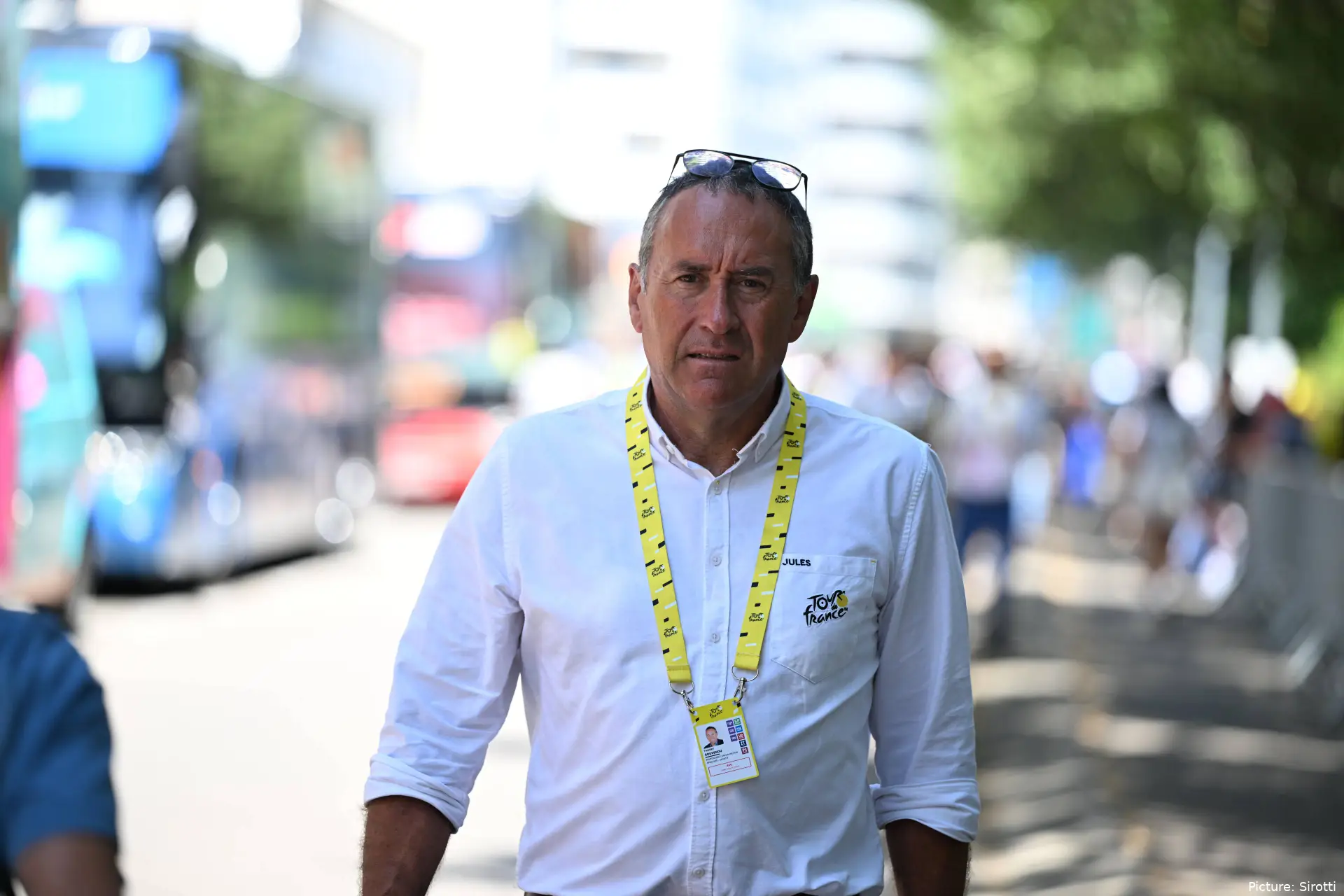
Tour de France safety chief Thierry Gouvenou has called for measures to reduce racing speeds following the rider protests at Il Lombardia and Paris-Tours, arguing that the increasing pace of the peloton is making courses harder to secure.
“We, the organisers, are also calling for measures to reduce speeds,” Gouvenou told road.cc. “I signed on to be the safety manager for a bicycle race, but I don’t want to end up being the safety manager for a motorcycle race. Right now, on the descents, these bikes are behaving more like motorcycles than bicycles.”
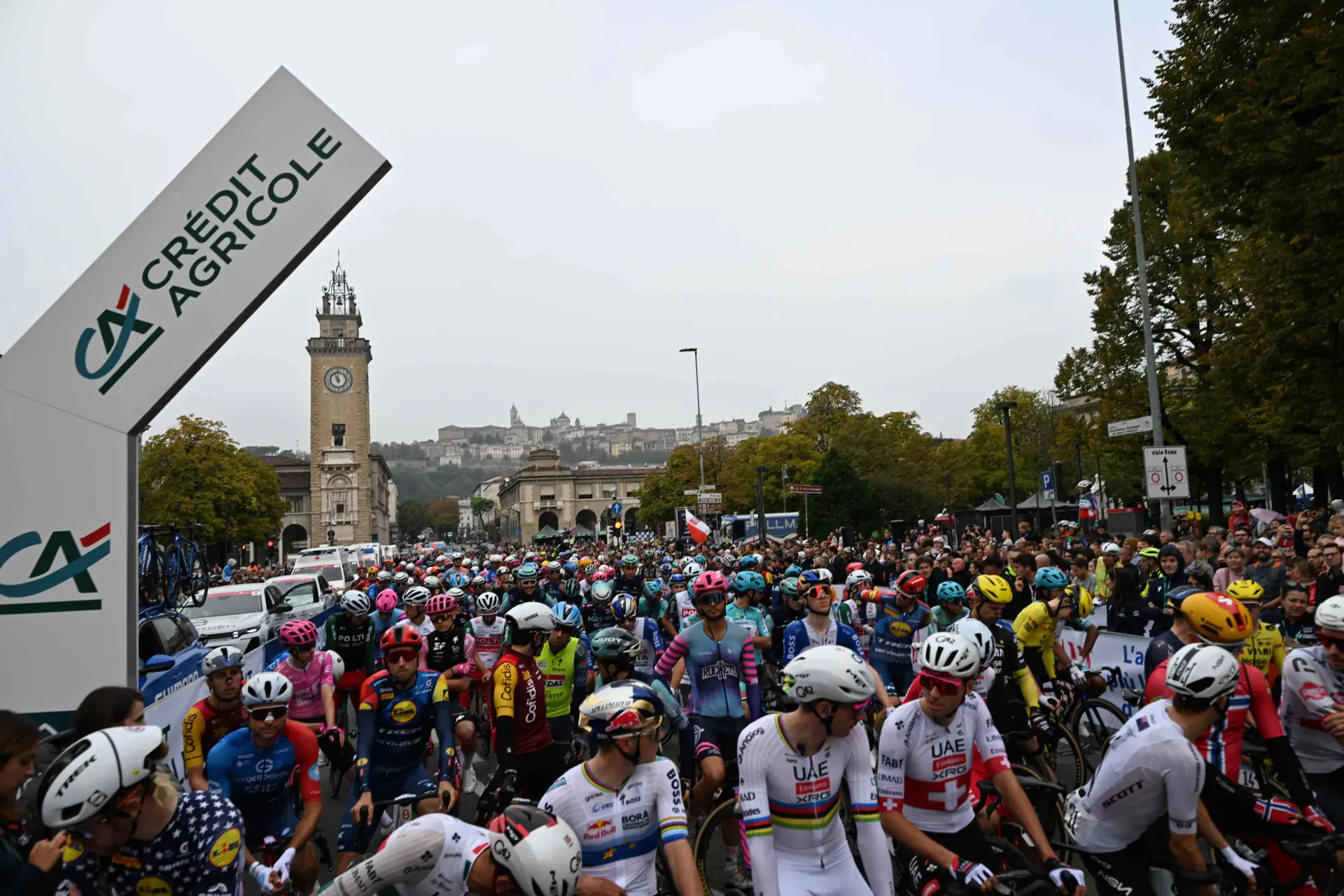
The Tour’s course designer, who oversees safety at other ASO races and sits on the SafeR Commission, was speaking after riders delayed the start of Il Lombardia by around five minutes on 10 October.
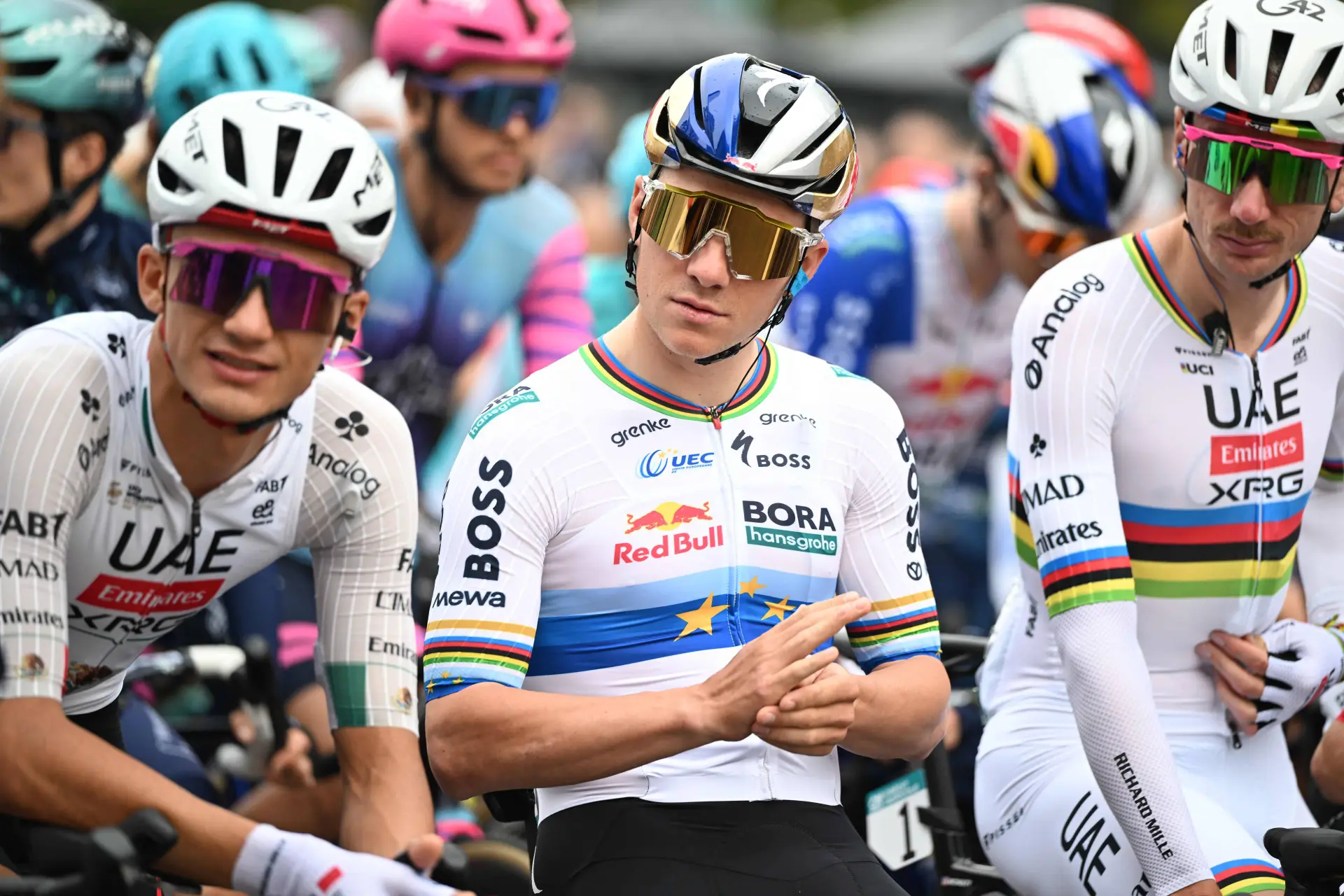
Remco Evenepoel addressed the crowd following a week in which a delivery van entered the Coppa Bernocchi course and two of Tom Pidcock’s teammates were struck by an oncoming police motorcycle at Tre Valli Varesine.

Peloton protest at Il Lombardia 2026
Gouvenou calls for action on speed
“Races have evolved – the riders are moving much faster, which makes it significantly harder for organisers to secure the course,” Gouvenou said, without identifying a particular measure he wants introduced to bring speeds down.
Earlier this season, riders including George Bennett and Jack Haig had called for greater attention to route inspections, with Bennett questioning whether changes to equipment could address the dangers posed by narrowing roads, unexpected corners and road furniture.
The Lombardia protest was organised by riders themselves, with Pidcock and Ben Healy central to discussions involving representatives from all 25 teams. Finlay Tarling’s death at the Volta a Portugal on 14 August, following a collision with a driver unconnected with the race, remained at the heart of their demands for protection.
“I can understand the riders; they don’t get on their bikes with the intention of ending up disabled or dead,” Gouvenou said. “We are going to sit down around a table; that’s clear. I’m part of the SafeR group, so we’ll be having plenty of discussions.”
Riders protest 🪧 Il Lombardia begins with riders taking a stand over safety concerns following incidents throughout the season 🚴 https://t.co/T3imCRCZe8
— Cycling on TNT Sports (@cyclingontnt) October 10, 2026
“You cannot station a police officer in front of every single house”
Gouvenou described the Tour de France’s roads being closed three hours before the race arrives, supported by extensive communication with the public. Even with those resources, he said, “no race organiser can ever guarantee that an incident will not occur during their event”.
“The true nature of cycling is that it takes place in an open environment, not within a stadium,” he continued. “Races are held on public roads, where some individuals may choose to disregard the rules, ignore course marshals, or even venture onto the race route itself.”
Four days after the Lombardia protest, another car entered the men’s Eneco Tour route ahead of the breakaway. A motorcycle marshal directed it aside, allowing the riders to pass safely.
“We invest a significant amount of money into safety, yet maintaining the financial balance of these events remains extremely difficult,” Gouvenou told road.cc. “After all, you cannot station a police officer in front of every single house or on every corner. But people – humanity in general – are becoming less and less respectful of the rules.”
The organisers’ association AIOCC has requested coordination with national authorities over the protection of race convoys, alongside discussions about funding consistent safety requirements. Its response to the protests on 12 October also called for uniform signage and procedures.
For the riders’ union, the authority to enforce changes remains unresolved. CPA president Adam Hansen recently said SafeR had recommended avoiding a cracked section of road at the Renewi Tour, only for the route to remain unchanged and two crashes to follow. He wants analysts given greater powers and has proposed certification of the final five kilometres of sprint finishes.
Read also
Teams request uniform danger signs for 2027
According to Gouvenou, regulations coming next year will standardise directional and hazard signage across UCI-regulated races. “This was a request put forward by the teams, and the organisers have agreed to change how races are marked,” he explained. “When you have a danger, a descent or a corner, it will always be the same signal, and that will provide some improvement to the security for sure.”
He also identified airbags, GPS technology and rider education among SafeR’s current discussions, alongside speed. “There are many initiatives underway that are beginning to take shape,” Gouvenou said. “I believe we’ll soon be in a position to make some announcements.”
GPS safety tracking was used at the Montreal World Championships, but its wider introduction remains unfinished. In its September decisions, the UCI said the regulatory framework, operating protocols and implementation timetable for professional road races still had to be developed, with WorldTour and Women’s WorldTour events the initial priority.
Kieran WoodDeputy Editor-in-Chief
Kieran Wood is a sports journalist based in Wales and has been active in journalism since 2022. He regularly contributes to DartsNews.com and CyclingUpToDate.com, where he covers professional cycling and darts. In cycling, his work includes liveblogs from major races, including the Tour de France, the Giro d’Italia, and La Vuelta a España, alongside race reports and analysis. He has also conducted interviews with professional riders.
His reporting spans the full racing calendar, from one-day classics to stage races, with a focus on accurate, real-time coverage and clear contextual analysis. For statistics, results, and historical context, he regularly uses resources such as ProCyclingStats. To support reporting on rider activity and training context where relevant, he also references Strava.
In his work, Kieran places strong emphasis on careful sourcing, editorial accuracy, and updating articles as new, verified information becomes available.
claps 0visitors 0
Just in

Popular news
Latest comments
- jonas looked so far behind pogacar that pogacar was 4min ahead in a blink in week one, thats how superior pogacar is now. Vingegaard himself was dropped by seixas and even del toro 3 times in the tour :( Piganzoli is coping so hard this is embarassing to read how unrealistic it is in reality when jonas was dropped several times by seixas and del toro ..wtfmiguel16-10-2026
- another tough one for Ineos. NSN is surprising, but they are making moves. Not sure who else is there to support Richard, but he does well as a solo rider.mij16-10-2026
- Impressive
 Rafionain-Glas16-10-2026
 - Like father, like son. Remco's father is also a BS-er.PogiSloFans16-10-2026
- No they wouldn't, because Pogi would beat him. Considering he crushed Pogi's balls 3X in a row the Belgians will have sympathy :))PogiSloFans16-10-2026
- Montmatre offers everybody a chance including the sprinters as seen from this year. So it should stay.abstractengineer16-10-2026
- Bassons: “How are we supposed to believe this world is clean? If it were, it would open itself up to the outside world. Everyone protects everyone else." I agree, the world is not clean, despite cycling, the world has become a shit hole. Big powers attacking smaller countries. Russia attacking Ukraine... more than half a million soldiers have likely died on both sides combined, with additional civilian deaths. Hamas attacking Israel, killing 1.300 people, Israel attacking Palestine, over 70.000 dead (20.000 children). Now how about the USA? The worst country in the world at this moment. Attacking Iran unlawfully, losing the war to them and creating a world wide energy crisis. Trumps ICE agents also deporting innocent people, tearing parents from their kids, killing american citizens, around 25 to 30 school shootings every year, no health care, bad education if you don't have money, stupid maga citizens, the most hated and ugliest president in the world, pedophile Donald J. Trump. Yeap, how are we supposed to believe this world is clean? We're all f***in doped, living in a delusional democracy.PogiSloFans16-10-2026
- Well they need to get rid of 11 riders and they are doing an OK jobRafionain-Glas16-10-2026
- the hype comes from Remco. Give me leadership he says and then finishes lower than a domestique on other teams. He criticizes other riders for his tactical mistakes and crashes. He demands his co leader to help him in a sprint. He calls other riders no balls and then does not even challenge Pogi, in fact he sucks up to Pogi. Every time he fails , he has an excuse about how it was not his fault. Basically he makes himself unlikable regardless of how he performs.abstractengineer16-10-2026
- In 2024 Pogačar would have been able to pull all the way up a climb like Plateau du Solaison and still beat Evenepoel. He couldn't this timeRafionain-Glas16-10-2026
Loading
Write a comment