"Sanremo, Roubaix, Tour de France stages and the yellow jersey — he nailed everything”: Mathieu van der Poel didn’t put a foot wrong in 2025, claims Italian ex-pro
Cycling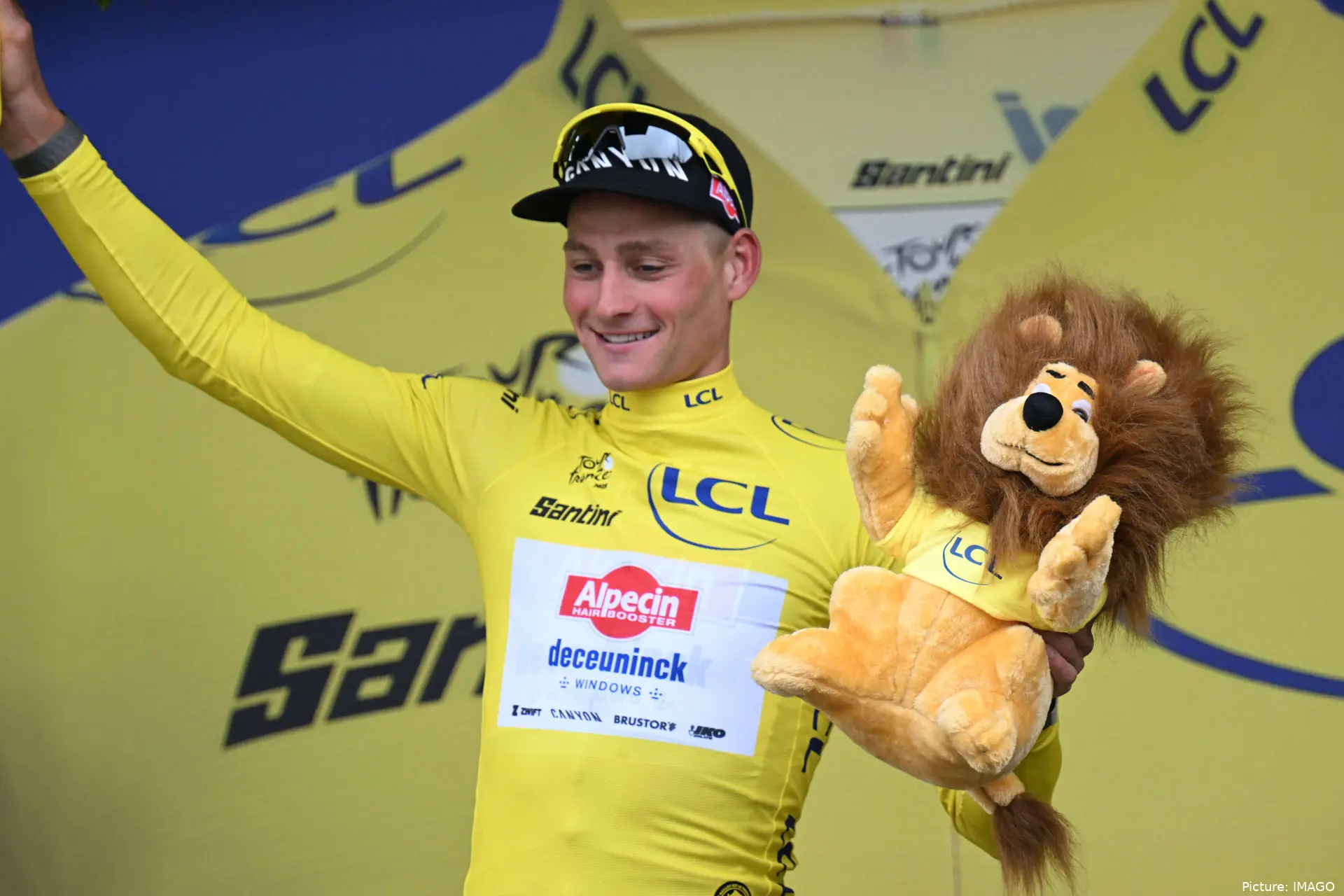
Mathieu van der Poel’s 2025 season was as close to flawless as cycling gets. Victories at Milano-Sanremo and Paris-Roubaix, two stage wins and the yellow jersey at the Tour de France — all achieved with a trademark blend of aggression and mastery that has come to define the Dutchman’s racing style.
For Italian former professional Moreno Moser, now a commentator with Eurosport, it was the season of a rider who has learned to fully exploit his physical gifts — and, crucially, to accept his limits. Speaking to Bici.Pro, Moser offered a detailed dissection of what makes Van der Poel such a unique force in modern cycling.
“I don’t think Van der Poel makes mistakes,” Moser explained. “On the contrary, I think he’s one of the riders who best optimises his own characteristics and his engine.”
A fragile engine, perfectly tuned
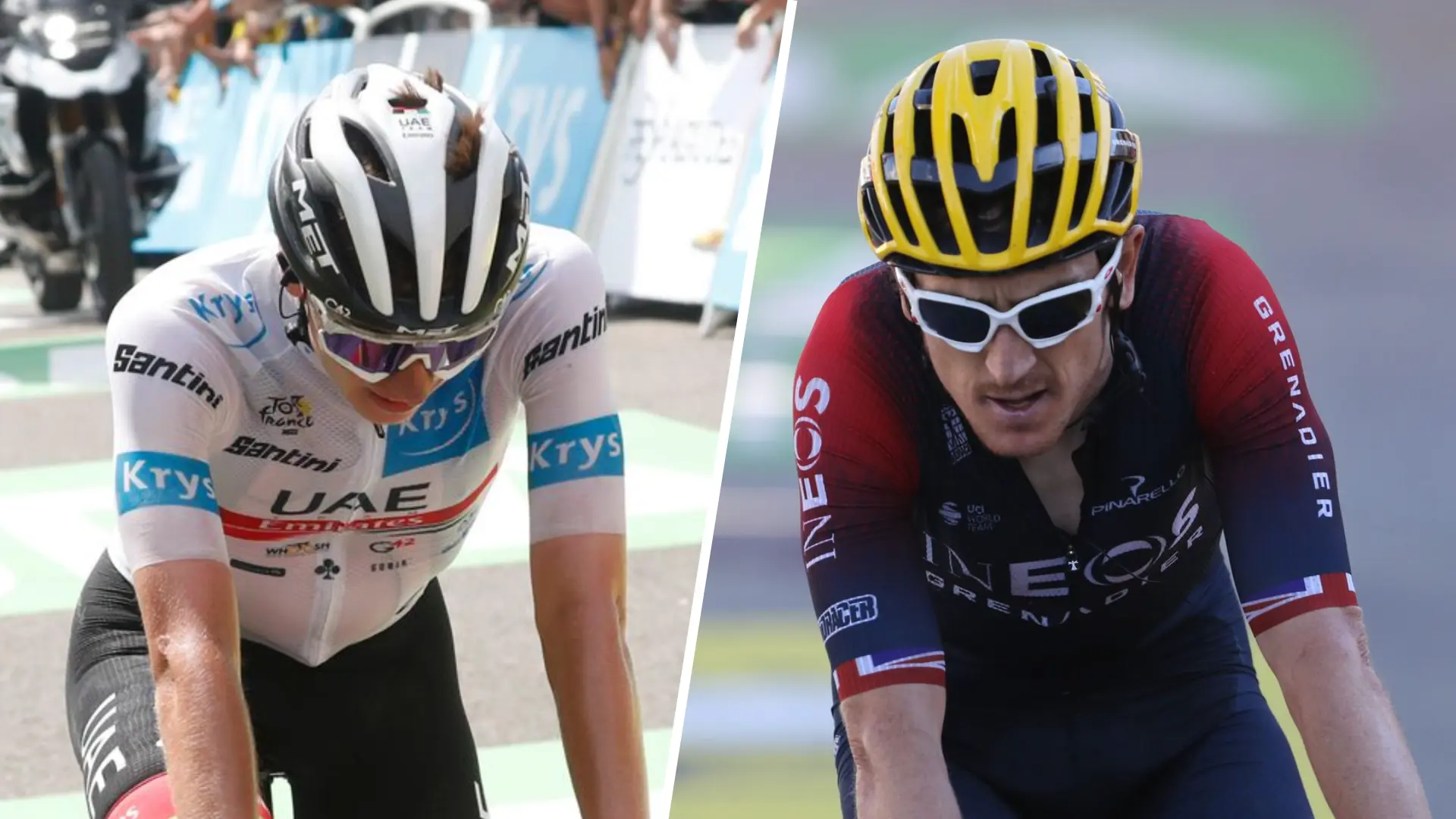
Where others see only raw power, Moser sees a delicate balance — a rider who must manage his immense strength carefully to avoid burning out. “His ‘engine’ is more delicate than Pogacar’s,” he said. “Tadej can go strong every day and recover whenever he needs to. Van der Poel gives the impression of having a more fragile system: if he overdoes it, he blows up. In stage races he can have one great day, but not two in a row. And climbing really costs him — those extra watts take a heavy toll.”
That physiological difference, Moser suggests, defines Van der Poel’s profile as a racer. “He’s a classic glycolytic rider,” he explained — a rider built for explosive, high-intensity efforts rather than sustained aerobic power. “He doesn’t have the same aerobic capacity as Pogacar or the pure climbers, but he’s incredibly powerful and full of fast-twitch fibres. When his supply of sugars runs low, his efficiency drops off a cliff.”
It’s a distinction that explains why Van der Poel thrives on the cobbles but fades over long mountain stages, why he can destroy fields in one-day races but struggles to repeat those efforts across multi-day events. “In stage races he never fully recovers,” Moser added. “Those easier days at the back of the peloton are vital for him.”
One-day racing: his natural habitat
For Moser, the contrast between stage racing and one-day performance is stark — and deliberate. “On a single day, when he’s in form, he can do whatever he wants,” he said. “He makes perfect use of the carbohydrates he starts with. In stage races, the recovery deficit catches up with him.”
That’s why, Moser continued, nutrition is especially crucial for a powerful rider like Van der Poel. “Being able to take in 120–130 grams of carbohydrates per hour is massive for him. He benefits far more than a lighter climber like Pogacar. His muscles can then deliver high-quality work because the fuel is high quality too. We’re talking tiny margins, but they’re exactly what define one type of rider from another.”
The art of attacking — and when to stop
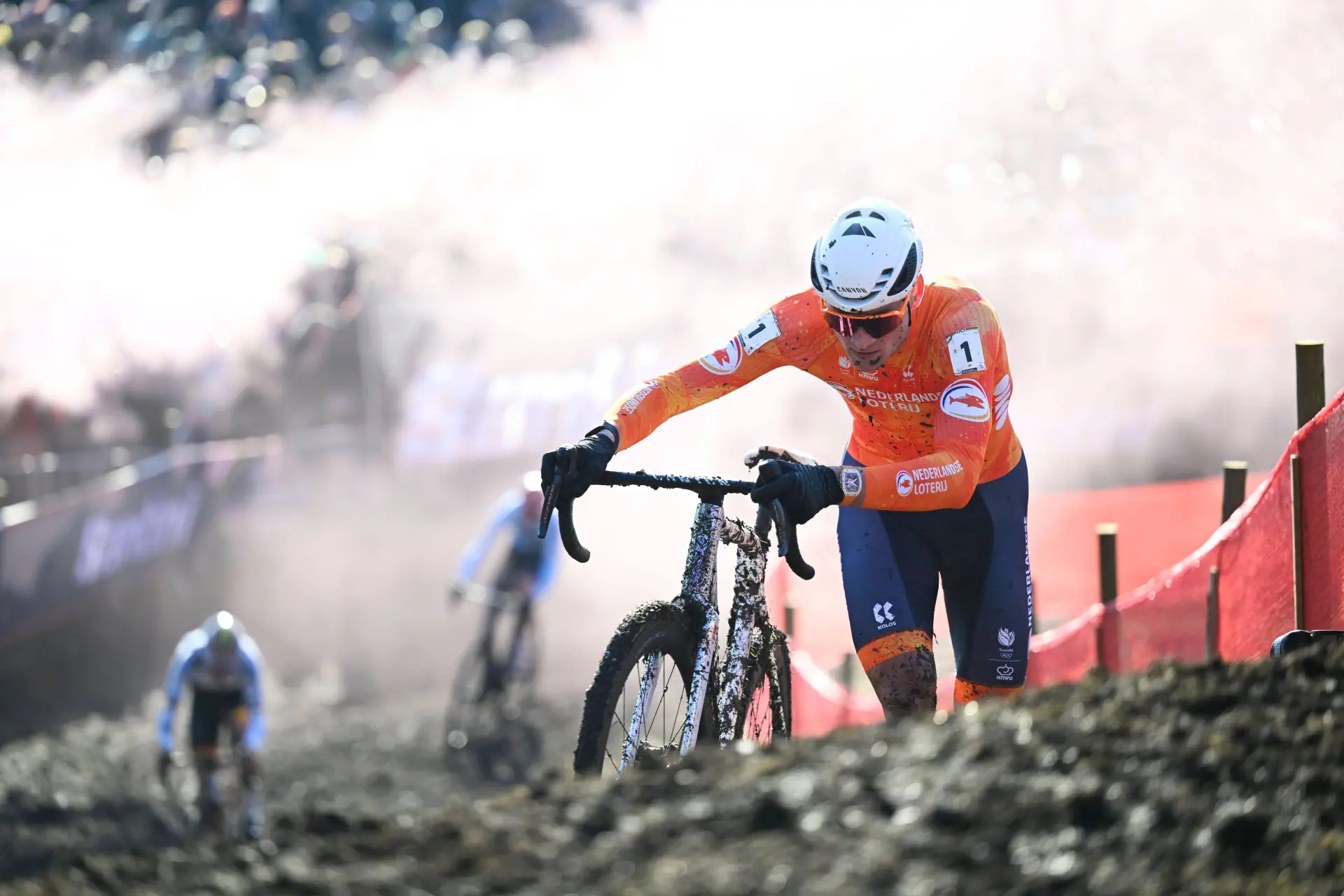
Even with that understanding of his limits, Van der Poel remains one of the sport’s most attacking riders. His 2022 Giro d’Italia — a campaign of relentless aggression that yielded just one stage win — is often cited as an example of over-exuberance. But for Moser, that’s simply part of who he is. “At times he could ration his efforts a bit better,” Moser conceded, “but that’s his way of racing. Spending energy every day means he’ll pay for it in the finales, especially when there’s a little climb, as often happens at the Giro. Still, when he attacks, he’s a killer — even on the short climbs.”
When comparing Van der Poel to his long-time rival Wout van Aert, Moser is clear: “Wout is heavier, but he’s a stronger climber. Yet Van der Poel still has something extra. Van Aert is more of a hybrid, but when it comes to winning, Mathieu always has that decisive edge.”
The 2025 season, he insists, left nothing to criticise. “He didn’t put a foot wrong,” Moser said. “He won Milano–Sanremo and Roubaix, took stages and wore yellow at the Tour — that’s a perfect season.”
“He’s not afraid of Pogacar”
Despite missing the latter part of the season, Van der Poel’s impact remained unquestionable. For Moser, one of the Dutchman’s greatest strengths lies in his mentality — his willingness to take on the sport’s biggest names head-to-head. “When he’s in good shape, he’s not afraid and shows no reverence towards Pogacar,” said Moser. “He goes at him face to face. Think about it: the only rider to beat Pogacar on the road this year was Van der Poel. I love that he’s so incisive and decisive.”
That fearlessness, combined with almost unmatched bike-handling, is what makes him so compelling to watch. “What impresses me most is his ease on the bike,” Moser continued. “Anyone who’s raced will notice it straight away. Not even Pogacar has that same fluidity. He knows how to move through the bunch, how to position himself, how to hit climbs from the front. In that respect, Van der Poel is truly one of a kind.”
The master of precision
If 2025 will be remembered for anything, it’s how Van der Poel turned selectivity into supremacy. With just 41 race days, he still claimed two Monuments, Tour stages, and the maillot jaune, plus Classics victories and a stage success at the Renewi Tour — proof that, when his engine is perfectly tuned, nobody in the world can match his combination of power, precision, and poise.
As Moser put it: “He’s learned to optimise his characteristics better than anyone. When he’s good, he doesn’t just win — he dominates.”

Kieran WoodDeputy Editor-in-Chief
Kieran Wood is a sports journalist based in Wales and has been active in journalism since 2022. He regularly contributes to DartsNews.com and CyclingUpToDate.com, where he covers professional cycling and darts. In cycling, his work includes liveblogs from major races, including the Tour de France, the Giro d’Italia, and La Vuelta a España, alongside race reports and analysis. He has also conducted interviews with professional riders.
His reporting spans the full racing calendar, from one-day classics to stage races, with a focus on accurate, real-time coverage and clear contextual analysis. For statistics, results, and historical context, he regularly uses resources such as ProCyclingStats. To support reporting on rider activity and training context where relevant, he also references Strava.
In his work, Kieran places strong emphasis on careful sourcing, editorial accuracy, and updating articles as new, verified information becomes available.
claps 0visitors 0
Just in

Popular news
Latest comments
- The article makes it sound like a great thing and something to be applauded. The reality is is gives the Americans another 6 years to fleece European cycling fans or force them to hunt around Europe with VPN’s for free feeds. Not something to be celebrated in my book. Before someone points out that coverage of this depth costs money, yes, I agree but not £30+ per month a fee I will wager will gradually increase now this deal has been cemented.Paul53119-10-2026
- Great. Thrilled. (Satire) Oh, how I miss the days of GCN. Still wear my GCN hoodie with pride.anonymouscyclist19-10-2026
- You could also look at it another way. How many riders have had better or more consistent results since the Tour?Jumpyjohn19-10-2026
- Whilst I love Tadej (and Remco, who deserves to be mentioned here, too), @JumpyJohn makes a valid point, and he isn’t wrong @MajorPayne. It is a fact that today’s official broadcasters of cycling struggle to keep our attention once the likes of Tadej (or Remco) attacks at ~80km or so. In the 142nd issue of Rouleur, Ned Boulting reflects on the often stressful paradox of commentating on a race that is effectively over before the broadcast window even hits its stride. In this edition, he centres on Remco’s 1hr solo at the Challenge Mallorca this year, and captures the panic and dread shared by the commentators when a dominant rider kills off the racing tension early. I recommend you read it, it’s a fascinating insight into the world of commentary, and the true viewing figures of today’s cycling. I must add here, I love Tadej and Remco, but I would be lying if my heart rate wasn’t higher when watching the World Championships this year. And I’m sure Rob Hatch would say something akin regarding his commentary!anonymouscyclist19-10-2026
- The shattered women’s marathon record was clean and highly surprising and then a few months later the athlete was very positive in another test for something not taken by mistake when recording far less impressive results. Sounds to me like the problem is still the age old one, detection is often way behind. Just like with crime, it’s not because you can’t catch the criminals that you aren’t aware of the crime.Jumpyjohn19-10-2026
- Listen, you have a point but on the other hand in cycling, once some of the riders go solo and build a minute’s gap, there’s hardly any action left to watch. Cycling is definitely not for today’s generations of accelerated viewing. Other people find skydiving or chess exciting but you can’t force everyone to feel the same.Jumpyjohn19-10-2026
- That’s a funny one. Yeah obviously he’s more aero than some but most of the aero effect at elite level is the bike. Now you have me starting to feel sorry for the guy behind him when he pulls a groupetto.Jumpyjohn19-10-2026
- Knew a World Tour promotion was coming for Ben this season. Thrilled for him, and can't wait to see what he can do at this level. Another one to watch at the TTs.anonymouscyclist19-10-2026
- It honestly breaks my heart to see this. I had a feeling this might happen over the last few years, but I kept praying it wouldn't, and that Joey would find his niche, especially back racing alongside his brother. After growing up racing alongside PH-MAS, the Pidcock brothers have always felt like one of our own, as we’ve watched them grow from Club level all the way up to PC and WT. I wish Joey nothing but the best of luck in whatever he does next, but selfishly… I do wish for him to move into the role of Q36.5 team staff.anonymouscyclist19-10-2026
- Predictable, sure! But boring??? OMG! Was Mike Tyson predictable and boring in his prime? Air Jordan? Schumacher or Senna? OMG!!!MajorPayne19-10-2026
Loading
3 Comments