"Right now there really is nothing" - Tom Dumoulin defends Tadej Pogacar amidst resurgence in doping accusations
CyclingFriday, 10 July 2026 at 16:55
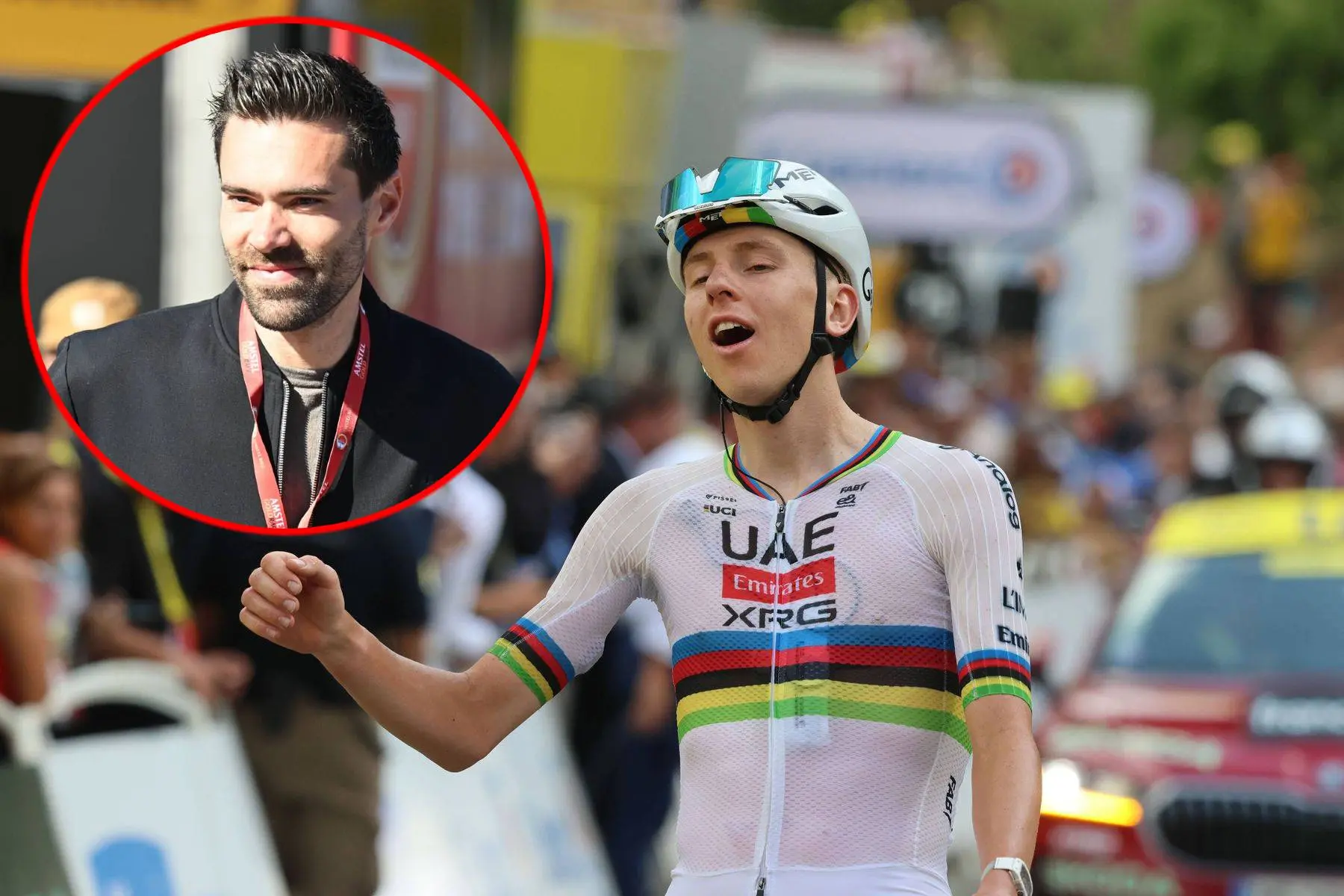
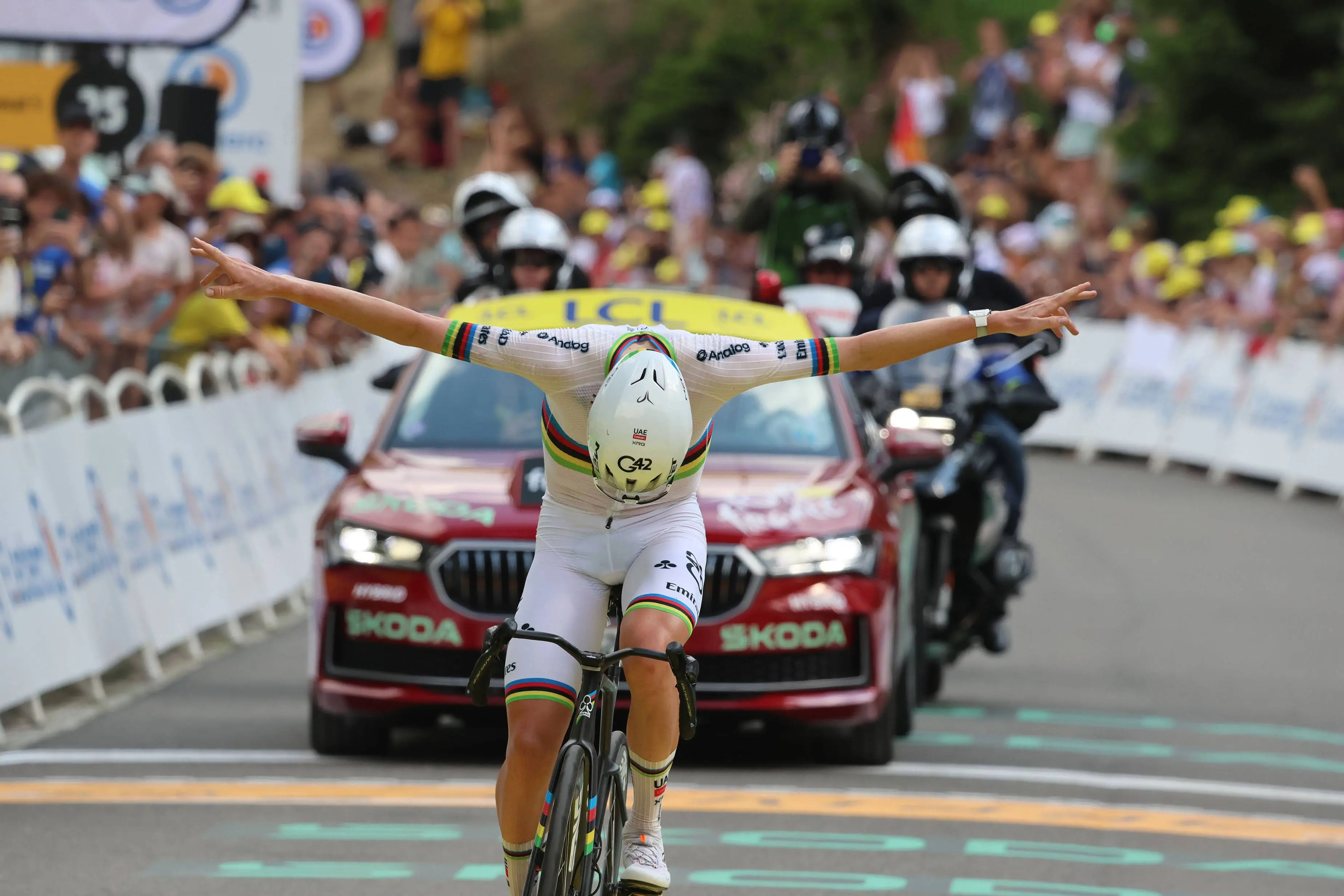
Tadej Pogacar has dominantly won stage 6 of the Tour de France and carved 2:38 minutes on Jonas Vingegaard; as well as more over the rest of the field. Such a dominant performance has sparked questions once again, and social media has seen the resurgence of multiple doping accusations. Tom Dumoulin has addressed this matter.
“I think we are simply looking at a super talent,” the former pro said on De Avondetappe. “At the same time, I completely understand that people ask questions, especially given cycling’s past. I understand why those questions come up. Of course, the cycling world has partly brought that on itself in the past.”
Pogacar's dominance over the sport in the past few years has often brought up accusations on the Slovenian, whilst UAE Team Emirates - XRG has in its staff members that have been part of disgraced structures in previous decades.
The questions are always inevitable by the time the Tour de France comes, but with Pogacar strongly making an argument for a third consecutive overall win already on stage 6, these have come earlier than expected in the race. These questions are likely to fall on Pogacar and UAE directly over the coming weeks.
“But I absolutely do not want to go down the road of insinuations here. First and foremost, I am watching a cyclist I enjoy enormously. As I was trying to explain earlier with those images of the descents, he is simply a fantastically good rider. I hope everything is completely fair, and for now, that is also what we should assume.”

Pogacar dominated stage 6 of the Tour de France
Read also
No evidence against Pogacar
The rainbow jersey dominates in multiple aspects of the sport, putting forward the image that he is a rider who is genetically above the rest of the peloton, whilst following training and nutrition programs that help him reach his best physical level - whilst being part of the sport's best team at the moment.
The helplessness of his rivals at the Tour makes it a dramatic image, with the best climbers in the world going head-to-head against him in their best form. Dumoulin does not go down the path of insinuations, but does not ignore the need for strong and consistent testing.
“There is no reason or evidence whatsoever to suggest otherwise. In the past, that evidence and those signs did exist, but right now there really is nothing. Of course, we should not all be naive either, but in a way it is also a compliment to him. That you are so good people immediately start thinking along those lines," the Dutchman argues. "Again: I understand the question, and I hope I have answered it as well as possible.”
“Sometimes in sport, we try to explain those rare super talents — the ones who come along once every so often — in our own human way. We try to explain why a Messi is so good, but in reality we simply do not understand it," Dumoulin compares.
But with the exposure to cycling higher than ever in July, the accusations spread like wildfire internationally. "That can sometimes create a bit of resistance, especially in the Netherlands. We do not understand it, but above all, we should enjoy it. Every now and then, someone comes along with that kind of enormous mega-talent.”
Dumoulin puts into question Jonas Vingegaard's equipment
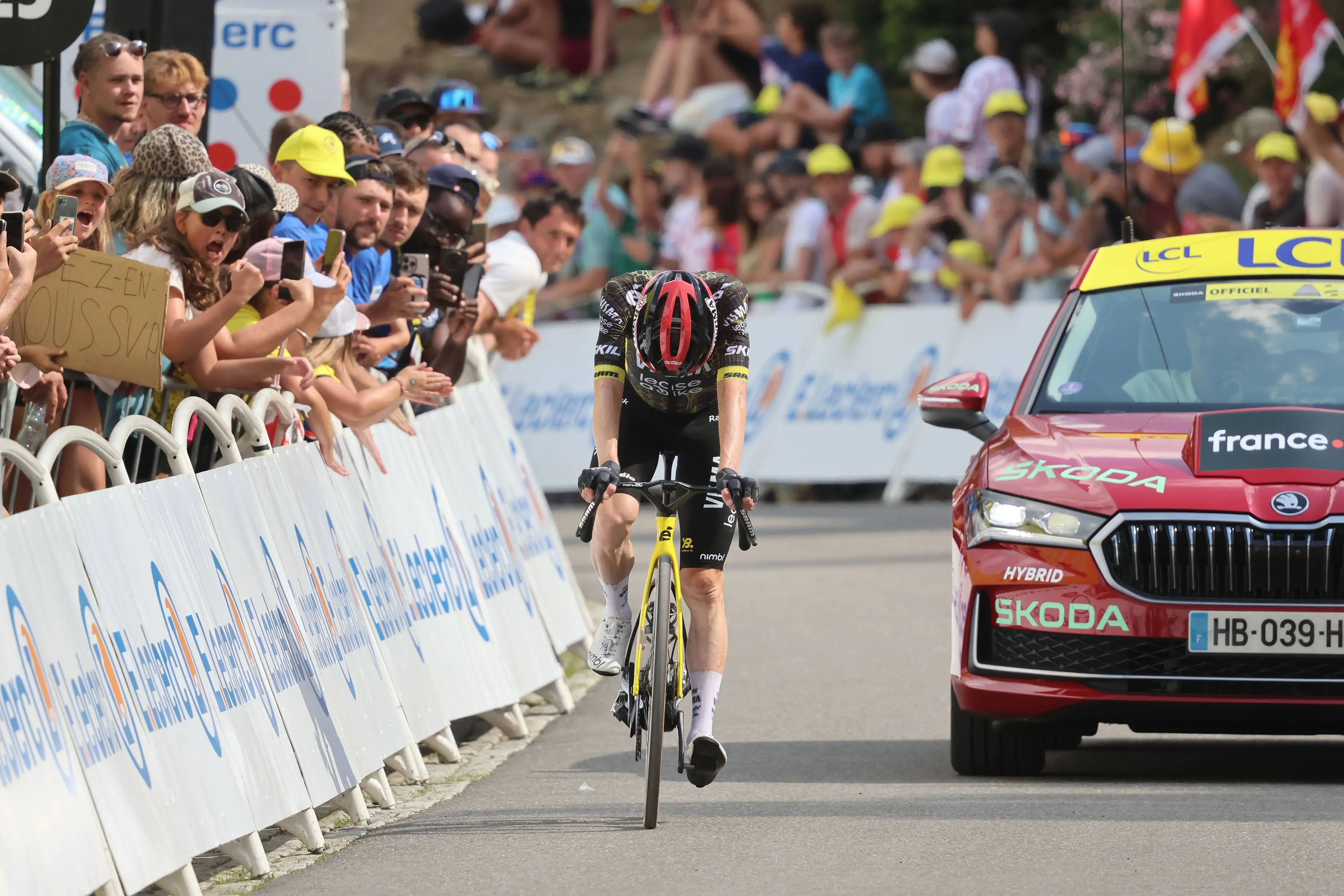
Simultaneously, Dumoulin has put into question Jonas Vingegaard's equipment during the first key stage of the race. Most specifically, the use of a one-ring chainring.
“What stood out most on the Tourmalet, where we briefly got a good look at it, was his equipment choice. He was riding up the Tourmalet on his big ring. You think, wow, on the big ring? But the point is that he only has one chainring.”
Vingegaard's defeat over the Slovenian was a tough hit. But as it stands, the Dane looked by far the second best on the Col du Tourmalet, and was professional after a difficult result at the finish line in Gavarnie.
“It’s quite something to see. Straight after the finish, all the journalists were around him again. You can imagine that when you lose almost three minutes on day six of the Tour, in the first real mountain stage, the only thing you want to do is go straight to the team bus. But he didn’t do that. He really took the time," Dumoulin, a former teammate of the Dane, pointed out.
“Jonas has specifically chosen a single chainring at the front. That automatically means you only have eleven or twelve gears at the back to work with. So you have to manage that on the steepest climbs, but also in the fastest descents where you want to push a much bigger gear.”

Was Vingegaard's gear choice on the Tourmalet sub-optimal?
“And what is he doing all this for? To save a tiny bit of weight compared to a double chainring. We might be talking about 40 or 50 grams. That’s hardly anything. Spray your bottle one time less and you’ve already saved that.”
Dumoulin argues that there is no reason to change from a traditional chainring setup, as is used by the majority of the peloton. On the very fast descent off the Tourmalet and gentle climb to the finish, the lack of a larger chainring might have aided in the creation of such a large gap between the two. But even uphill, a difference may be felt.
It comes down to personal choice, but in Dumoulin's eyes, it's not a worthy change. “You also risk pure energy loss. Because the chain, without a second chainring, is more often at an angle, there is extra friction in the drivetrain. That is simply power loss. Not all the energy you put through the pedals reaches the rear wheel as effectively.”
Rúben SilvaEditor-in-Chief
A founding contributor to CyclingUpToDate since its launch in January 2022, Ruben Silva has played a central role in shaping the site’s editorial direction and long-term growth. Before joining the project, he built his experience through independent blogging at Echelons Hub and by producing race previews for Ciclismo Internacional, developing a strong analytical voice rooted in daily engagement with professional cycling.
Beyond editorial work, he has been closely involved in the expansion and coordination of CyclingUpToDate’s wider network, helping establish and support sister platforms across multiple languages. This includes ongoing collaboration with CiclismoAlDia (Spanish), CiclismoAtual (Portuguese), WielrennenUpToDate (Dutch), and RadsportAktuell (German), contributing to a shared editorial vision and consistent international coverage.
He also helps oversee editorial governance across the network, setting standards for accuracy and consistency and coordinating updates or corrections when needed.
Originally from the Porto metropolitan area in Portugal, he holds a bachelor’s degree in Geography. His path into cycling journalism was shaped not through formal media training, but through independent reporting, community engagement, and sustained on-the-ground involvement in the sport.
Over the course of his career, he has conducted approximately 100 interviews across road cycling and cyclocross, ranging from one-to-one conversations and online formats to press conferences and on-site pre- and post-race coverage. His interviews include leading riders, team managers, and prominent figures within cycling media: Tadej Pogacar, Jonas Vingegaard, Mathieu van der Poel, Primoz Roglic, Wout van Aert, Joao Almeida and Tom Pidcock; managers like Patrick Lefevere and Joxean Matxin; and YouTube personality Bryan Kennedy (BKXC)...
Within 18 months of launch, he helped grow CyclingUpToDate’s English-language platform into one of the most-read cycling news websites, built entirely from the ground up. As both a professional journalist and lifelong cycling enthusiast, his focus remains on delivering accurate, timely, and well-contextualized coverage.
claps 4visitors 4
Just in
Popular news
Latest comments
- “Clenching my buttocks 😂😂”Crashjames10-07-2026
- You’re confusing me now and not only whether it was 20s or 30s So Del Toro was really chasing and Lipo just sucking? So first he was holding back to help Remco voluntarily but then he refused to help Remco when asked and held back again?Mistermaumau10-07-2026
- Oh shutup
 Johnnys210-07-2026
 - If doping made Pogi, there'd be a lot more Pogis.bobo10-07-2026
- Never mind, take a break and look forward to the expanding family. As the women show, it’s always possible to make a comeback and if you discover you can’t be bothered then you know you didn’t miss out on anything. The team’s going to have to get used to you being gone anyway.Mistermaumau10-07-2026
- If you’re going to claim people were beating Merckx in the Tour then maybe also explain how. « mi). Eddy Merckx was attempting to win his sixth Tour de France, but became a victim of violence. Many French spectators were upset that a Belgian might beat the record of five wins set by France's Jacques Anquetil. During stage 14 a spectator leapt from the crowd and punched Merckx in the kidney. Frenchman Bernard Thévenet took over the lead. After Merckx subsequently fell and broke his cheekbone, he was unable to challenge Thévenet, who went on to win the Tour with Merckx second.« That’s the point (though the dirty trick to disqualify him from the Giro probably influenced things too) at which he (kind of understandably) lost interest in continuing to build his legacy. Tadej will also not be winning the Tour much longer. Other than that, very one dimensional article, only revolving around mediatised sports and completely ignoring women.Mistermaumau10-07-2026
- The f* french media and the f* Pogi haters want to, once agian, to get into Pogi's head and they are talking about f* doping again. Every f* year the same shit. Pogi should show cycling the middle finger and leave all these f* behind. He's got enough money, and your f* french, belgian, dane, dutch etc. amateurs will start winning again, in your own cycling bubble. Enough is enough!!!mus-musculuspeedypogigonzales10-07-2026
- If Jonas can already feel it in his guts that he's still fatigued from the Giro, but then considers winning the Vuelta again, then Wiggins' comment might make sense.Ride197410-07-2026
- lipo did not work with the group because remco was 30 sec back. had he worked with the group, maybe the groups wouldn't even have joined again. moreover, all of this doesn't change the unsportsmanlike conduct against his team(members). in industry you would be fired for this.Ketterechts10-07-2026
- LOL! Is something unclear to anyone?MajorPayne10-07-2026
Loading
4 Comments