OPINION - Is Tadej Pogacar the greatest athlete in sports history?
CyclingFriday, 10 July 2026 at 15:30
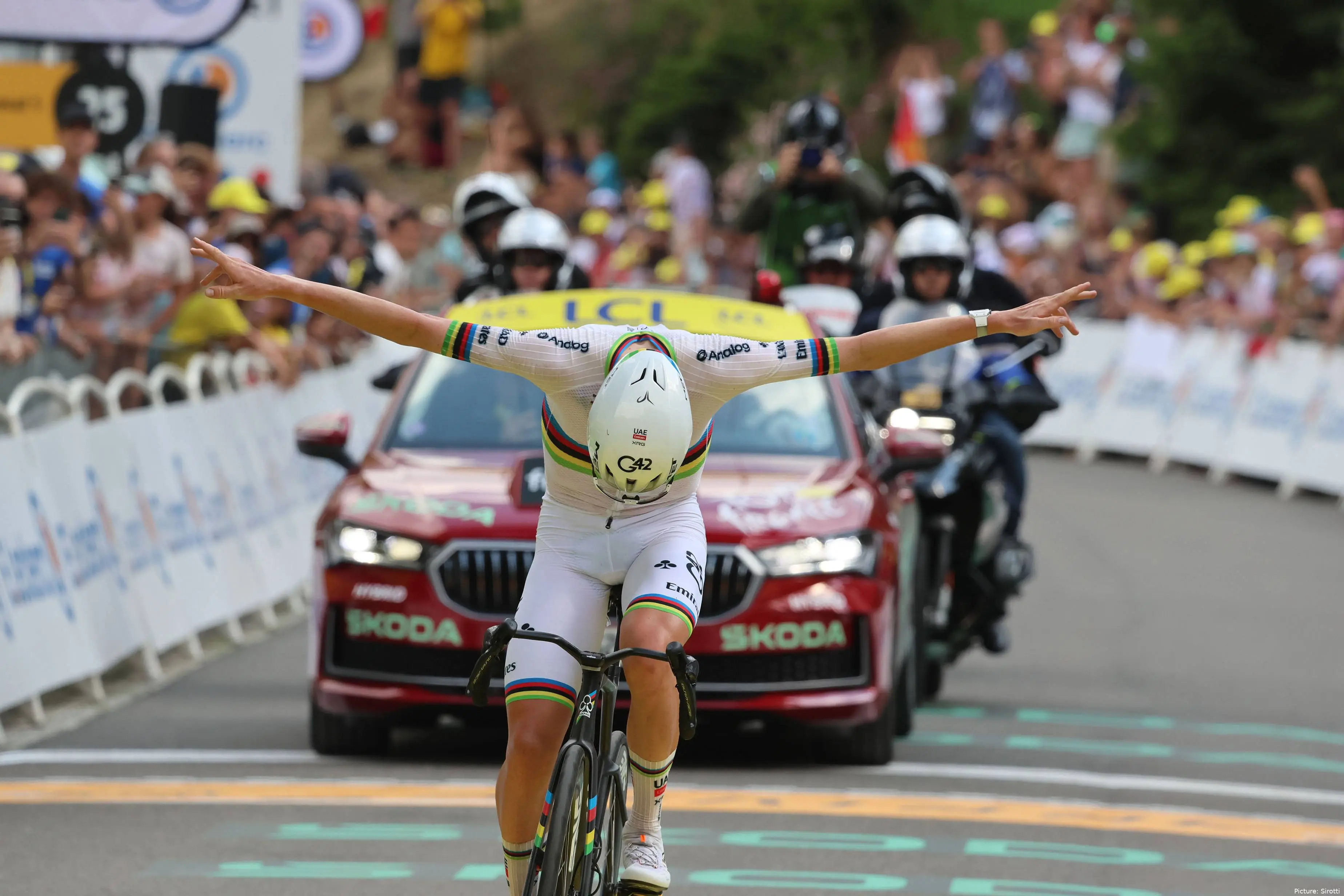
There are performances that win races, and others that reshape how we see an athlete. What Tadej Pogacar did on the Tourmalet belongs clearly to the second group. It was not just a stage win at the Tour de France. It was such an overwhelming show of superiority that it forces a question that goes beyond cycling: are we watching the best athlete on the planet? And, if we stretch the debate further, can he already enter the conversation about the greatest athlete of all time?
The Tour de France, barring a major surprise, looks virtually decided. Jonas Vingegaard, the only rider in recent years able to challenge the Slovenian’s hegemony, no longer seems at his level. He held on reasonably well on the Tourmalet, but then again exposed his shortcomings versus Pogacar elsewhere: he lost more time on the descent and across the flatter, faster section of the stage. That is precisely the big shift we are witnessing.
We are no longer talking only about the best climber in the world. Nor merely the best Classics rider. We are talking about a cyclist who commands almost every facet of the sport. He climbs better than anyone, descends better than his direct rivals, cruises the flats with extraordinary power and, on top of that, keeps an explosiveness and endurance ability that very few can match. Not even riders with exceptional changes of pace can hold his wheel when he decides to accelerate.
That turns any race into an exercise in survival for the rest.
It is true that Mathieu van der Poel can still challenge him at certain Monuments, especially those that are less physically selective, and that Paris-Roubaix remains a race where the Dutchman starts with an edge. But even there Pogacar has already shown he can go toe to toe. In almost any other setting, the outright favourite bears his name.
Read also
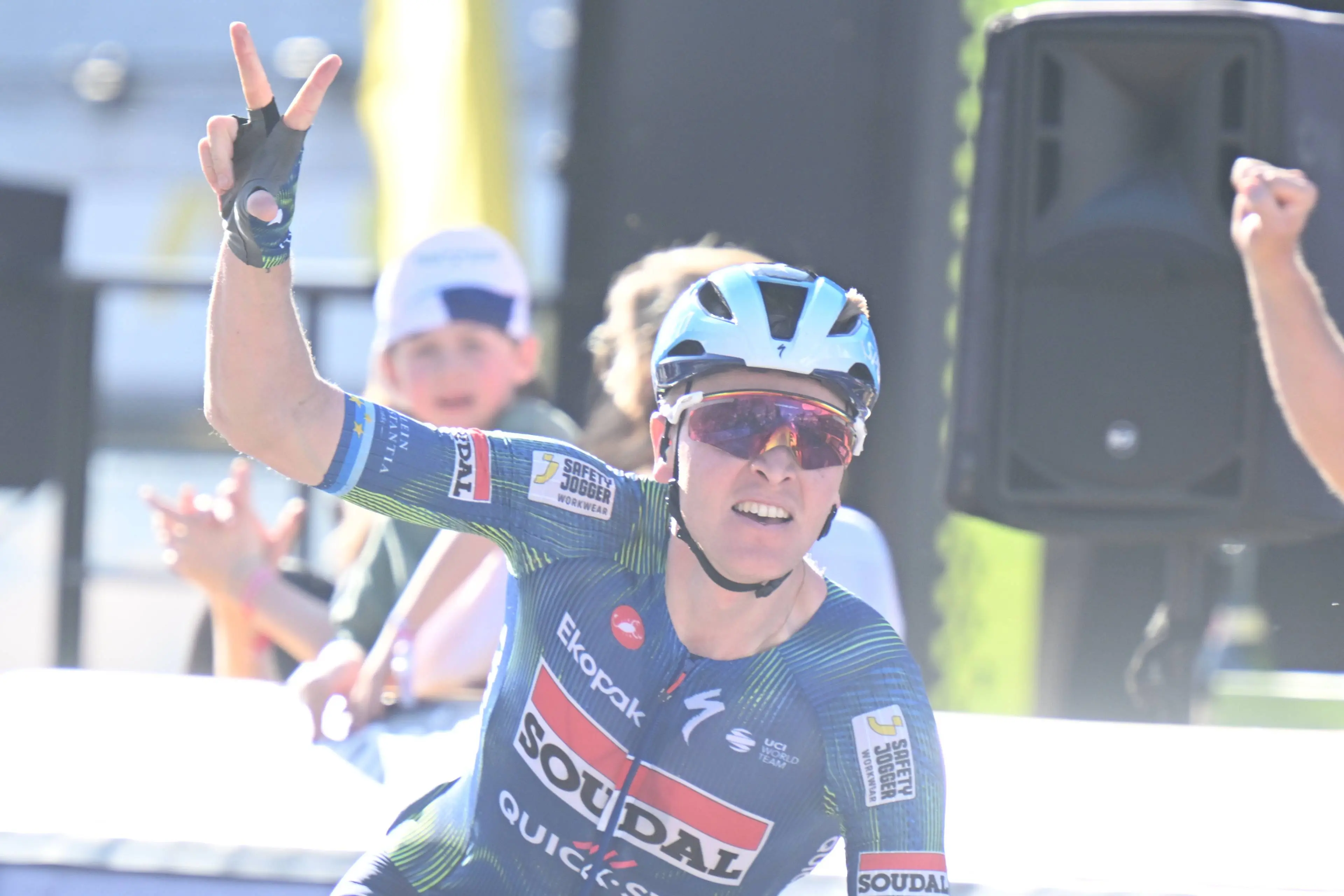
That is why the debate ceases to belong exclusively to cycling.
Across today’s sporting landscape it is hard to find a comparable level of dominance. In Football we are no longer watching Messi at his peak. In Basketball LeBron James remains a legend, but no longer in full athletic prime. In Tennis, Carlos Alcaraz and Jannik Sinner share a superb rivalry precisely because neither clearly imposes himself over the other. In Formula 1, even the most dominant champions have always depended in part on the car they drive.
Pogacar, however, gives the sense of being superior in and of himself.
That is extraordinarily hard to achieve in modern sport, where physical, technological and scientific parity among the best teams grows tighter each year.
The next question is even tougher: could he be the greatest athlete in history?

Tadej Pogacar has been ruling over the ongoing Tour de France
A blunt answer would be a mistake. Comparing eras is always unfair. Contexts change, preparation evolves, and sports transform. It makes little sense to measure Eddy Merckx, Michael Jordan, Lionel Messi, Michael Phelps or Novak Djokovic with the same yardstick.
But it does make sense to include Pogacar in that conversation.
Because even within cycling he is doing things that are hard to find in any era. Merckx amassed a palmarès that is probably unreachable, but even he found rivals who could challenge him in the mountains or beat him in the Tour de France. Pogacar, by contrast, is reaching a level of all-round superiority that is hard to recall.
There is also another aspect that often goes unnoticed.
Great athletes usually need years to build their definitive reign. Michael Jordan suffered before conquering the NBA. Other champions also needed a long learning curve before dominating their disciplines.
Pogacar’s greatness
Pogacar won the Tour de France at a very young age. He then lost two editions to Jonas Vingegaard. Far from crumbling, he returned an even more complete rider, to the point of turning his greatest rival into a clearly inferior cyclist; whilst almost everyone in the sport has gone out of reach to even challenge him.
That process of evolution speaks volumes about his greatness.
We are not talking about a champion who exploited a weak generation. We are talking about an athlete who was beaten by an exceptional rival and responded by raising his level even further, transforming the rivalry into a new hegemony.
Perhaps in ten years we will be able to answer that big question with more perspective. Perhaps by then we will know whether he truly was the greatest athlete of all time.
What does seem indisputable today is something much simpler: we are witnessing one of the greatest displays of dominance modern sport has offered. And that, regardless of where he ultimately sits in history, makes Tadej Pogacar a privilege for any sports fan.
Juan LarraCycling Journalist
Juan Larra is a writer for Cyclinguptodate and editor-in-chief of Ciclismoaldia, where he has played a central role since its inception. Under his leadership, the website has become a trusted source for professional cycling coverage, offering in-depth analysis, news, and feature stories.
A sports journalist with over 20 years of experience, Juan earned his degree in Journalism from the University of Seville in 2007. He began his career covering a wide range of sports—including football, basketball, Formula 1, MotoGP, tennis, and cycling—for platforms such as the official La Liga app, Vodafone and Movistar websites, NBA Blogdebasket, and Cadena Cope, honing his skills in writing and editorial management.
In addition to his work at Ciclismoaldia, Juan contributes to Cyclinguptodate and serves as editor-in-chief for the tennis-focused site Tenisaldia. Throughout his career, he has conducted exclusive interviews with cyclists and sports figures, provided detailed analysis of competitions ranging from local Spanish races to major international events, and acted as a special correspondent at prestigious races including Paris-Roubaix, the Tour de France, and the Vuelta a España.
Juan’s combination of experience, expertise, and direct access to athletes has established him—and the platforms he leads—as authoritative voices in professional cycling.
claps 4visitors 2
Just in
Popular news
Latest comments
- The f* french media and the f* Pogi haters want to, once agian, to get into Pogi's head and they are talking about f* doping again. Every f* year the same shit. Pogi should show cycling the middle finger and leave all these f* behind. He's got enough money, and your f* french, belgian, dane, dutch etc. amateurs will start winning again, in your own cycling bubble. Enough is enough!!!mus-musculuspeedypogigonzales10-07-2026
- If Jonas can already feel it in his guts that he's still fatigued from the Giro, but then considers winning the Vuelta again, then Wiggins' comment might make sense.Ride197410-07-2026
- lipo did not work with the group because remco was 30 sec back. had he worked with the group, maybe the groups wouldn't even have joined again. moreover, all of this doesn't change the unsportsmanlike conduct against his team(members). in industry you would be fired for this.Ketterechts10-07-2026
- LOL! Is something unclear to anyone?MajorPayne10-07-2026
- Unfortunately, it’s human nature. When one’s favorite is not the one attacking 40km out, then the race is considered “boring”. But if their favorite rider was the one doing it then it’s “exciting”. I enjoy it whether it’s Pogi, Vingo, Seixas, Remco, or any GC contender that can put a 2 min gap in week one. It’s called competitive sport and if you can show dominance, that’s exciting regardless of the athlete. Or maybe it’s simply because some folks are mad that they’ve lost $$$ in betting on the wrong rider ;)b3tlla10-07-2026
- Leaving the race because you finished second all the time? Naaah. What kind of champion will give up? If Jonad leaves the Tour isn't because he is a broken man, but he is fatigued from the Giro. What an odd prediction! We gotta give Jonas credit. He is mentally strong.jelantik10-07-2026
- Sometimes I think that Bradley Wiggins will say absolutely any old thing, just to hear the sound of his own voice.
 santiagobenites10-07-2026
 - Yes, he is paid to race but a rider of his caliber is also trying to build legacy. It's doubtful he would stop racing the Tour this year.awp10-07-2026
- I guess it could happen, this is the best I've seen Jonas since that really bad crash in 2024. In my own opinion, I would doubt that he quits, I don't consider him a quitter.awp10-07-2026
- he is paid to race, what is this Wiggins going on about?? Jonas is not here as a recreation rider.foothead10-07-2026
Loading
2 Comments