Results Milano-Sanremo Women 2026 | Lotte Kopecky adds another Monument win to palmares as crash chaos ruins hopes of many
CyclingSaturday, 21 March 2026 at 14:28
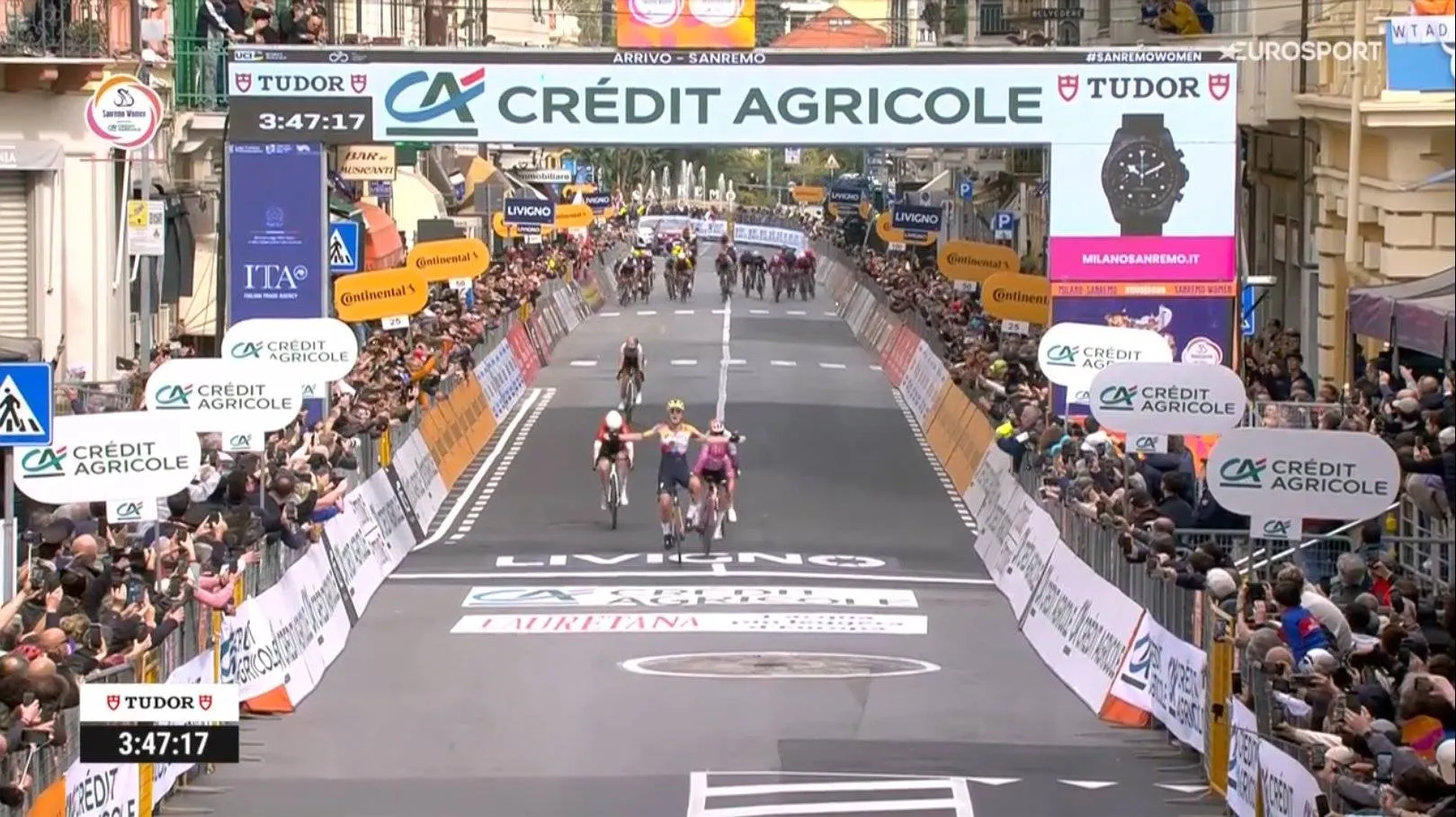
Lotte Kopecky claimed a brilliantly timed victory at Milano-Sanremo Women 2026, winning from a select group after a race shaped by Cipressa chaos and a decisive Poggio selection.
The Belgian positioned herself perfectly in the closing kilometres, launching her effort from the front group of five to secure victory ahead of Noemi Ruegg and Eleonora Gasparrini, who completed the podium after a tense run-in to the Via Roma.
Cipressa chaos reshapes the race
The race had initially followed a controlled pattern, with SD Worx-Protime managing the peloton for much of the day as a breakaway was brought back ahead of the Cipressa.
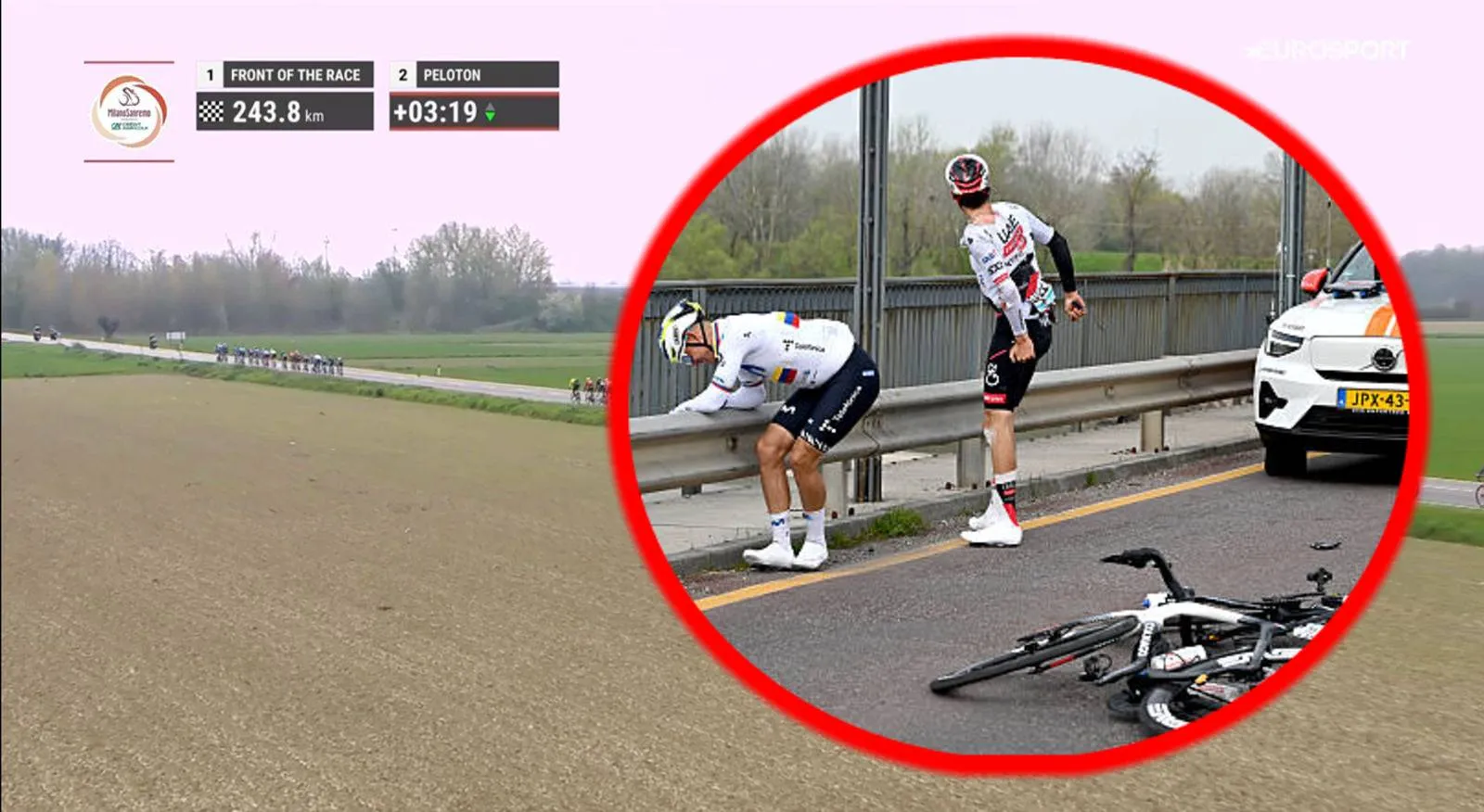
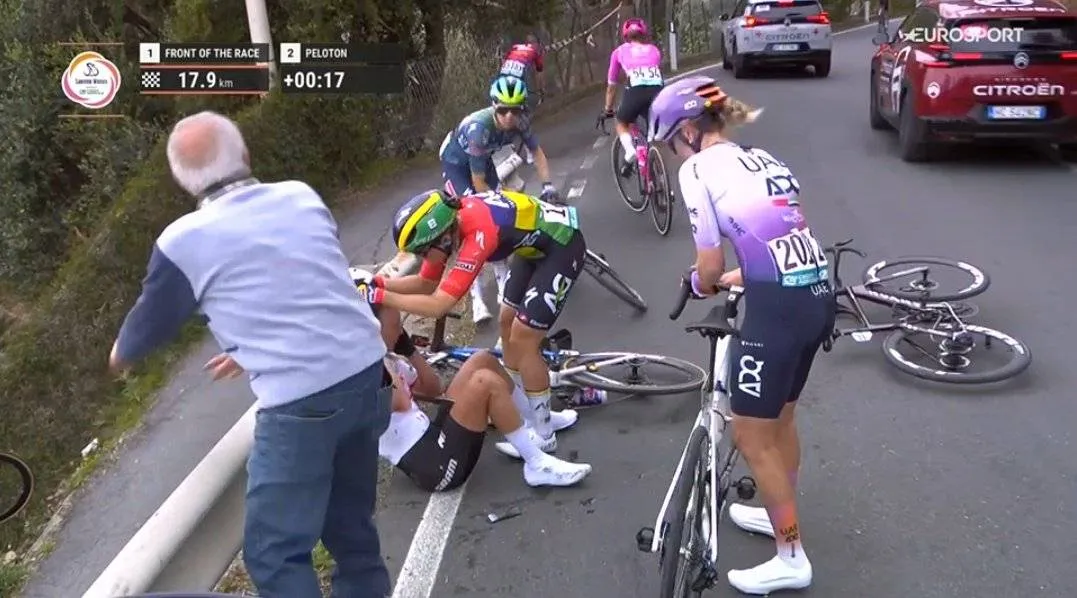
However, the race was thrown into disarray on the descent of the climb, where a heavy crash eliminated key contenders, including Kasia Niewiadoma and Kim Le Court. That moment proved pivotal, removing two of the most aggressive riders and disrupting the rhythm of the race just as the decisive phase was beginning. The aftermath allowed a larger group to briefly reform, reopening the possibility of a sprint, but that scenario would not survive the final climb.
Poggio delivers the decisive move
On the Poggio, the race finally split under pressure. A powerful acceleration from Puck Pieterse helped form the decisive selection, with Kopecky among those able to respond and position herself in the front group. That move reduced the race to a handful of contenders, including Ruegg and Gasparrini, while sprint favourites such as Lorena Wiebes were left chasing behind.
Despite the selection, the race remained finely balanced over the top, with only a small gap separating the leaders from the chasing group and uncertainty over whether the move would hold.
Five riders, one winner
The leading group of five, Kopecky, Ruegg, Gasparrini, Pieterse and Dominika Wlodarczyk, worked just enough to maintain a narrow advantage into the final kilometres, holding off the chase as the race built towards its conclusion.
In the finale, Wlodarczyk emptied herself on the front in support of Gasparrini, while Kopecky remained composed in second position, tracking the decisive moves and waiting for the right moment.
When the sprint opened, Kopecky delivered the winning acceleration, confirming her strength after a race in which she had briefly been caught out of position earlier on the Cipressa.
From uncertainty to control
Kopecky’s victory caps a race that never fully settled into a single pattern. What began as a controlled scenario for a sprint was first opened by attacks on the Cipressa, then reshaped by the crash on the descent, before finally being decided by the selective effort on the Poggio.
In the end, it was not the strongest attacker or the fastest sprinter who prevailed, but the rider who best navigated every phase of the race. And on a day of constant shifts in momentum, Lotte Kopecky proved she was the one who understood Milano-Sanremo best.
Read also
Results powered by FirstCycling.com
claps 0visitors 0
Just in

Popular news
Latest comments
- Now that was a race! I was sure Pidcock was going to get Pog in a sprint. Pogacar did a great race. One of the best Milan San Remo's I've watched. Paris Roubaix next?Cyclingsbestfan21-03-2026
- He’s been on the podium for the last 8 monuments, and he’s won 6 of the last 8. Even Merckx didn’t do that.RidesHills21-03-2026
- I feel most sorry for Pidcock. I really like him a lot. I wish him many victories.MajorPayne21-03-2026
- to me the question is no longer will Tadej win all 5 monuments, but instead will he win all 5 this year? He is almost unbeatable in Flanders. Liege and Lombardia forget about. Just needs Roubaix. and the way he looked today - it’s more than possible.mij21-03-2026
- Yes, i really hope he can be the 1st rider to win all Monument in single season after he created history as the 1st rider to step on the podium in all 5 monument last yearZamorano21-03-2026
- MrM if it is that shitty why are you so active in it?Cyclingsbestfan21-03-2026
- Big Chapeau to Pidcock!! Chapeau to MVDP! And I must say chapeau to WVA! And chapeau to Mads! But!!! Biggest chapeau to THE GOAT!MajorPayne21-03-2026
- Pidcock would have won if he'd been a bit to the left of Pog when he began his sprint. Poor positioning but great ride by them both.Renz21-03-2026
- The messages on this website are very confusing. What I intend to do now to avoid confusion is to name in full (or with an abreviation) at the start of a comment the name of the recipient. This lets everyone who is following the thread know who the comment is directed at.Cyclingsbestfan21-03-2026
- Chapeau to Pidcock...I also love that guy. He uses the "F" word alot, just like me. He'll tell everyone off if you piss on him... that's real heart and soul.Mou-Cro-HR21-03-2026
Loading
1 Comments