"Racing with Tadej is a dream situation" – Pogacar's loyal right-hand man ready to give his all in search of Rainbow Jersey at Rwanda World Championships
Cycling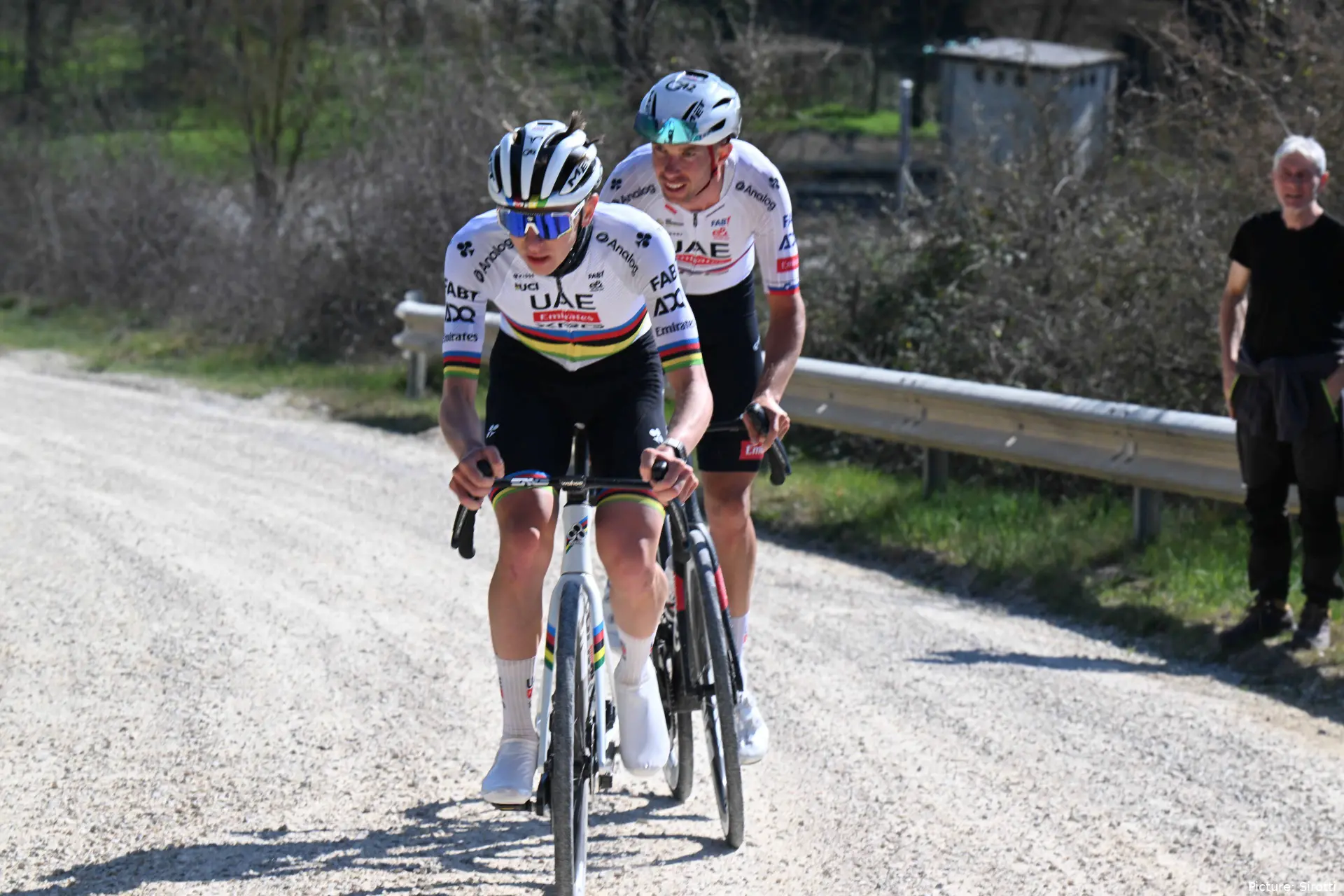
When Domen Novak describes riding alongside Tadej Pogacar as “a dream situation”, it is not said lightly. The 30-year-old has played the role of loyal right-hand man for both UAE Team Emirates - XRG and the Slovenian national team, and at the UCI Road World Championships in Rwanda, he will once again dedicate himself to protecting cycling’s most devastating all-rounder.
“It’s special to race at Worlds because with the national team it’s always a bit different,” Novak told Cycling News. “In UAE, we know each other, and in the national team there are other riders you don’t know so well. But for me, racing with Tadej is a dream situation – always. It’s sometimes more pressure when you race, but you also feel very proud.”

From ‘easy day’ in Zurich to new challenges in Rwanda
Twelve months ago in Zurich, Novak’s job was made simple when Pogacar launched his audacious solo attack with 100 kilometres remaining. “Last year it was like that,” Novak recalled with a grin. “But this year, we will see how it’s going. I think the course is pretty good for him, so we will try our best to win it again.”
Defending the rainbow jersey on the brutal Rwandan parcours is a different challenge altogether, with repeated climbing at altitude likely to shred the bunch. “It’s hard to say if the course will be more difficult – really it’s the riders who make a race hard. There’s certainly a lot of climbing, like in a Classic, and by the end in those races, after 200 kilometres not a lot of riders still have the legs.”
Novak, who recently emerged from a gruelling Vuelta a Espana, admitted his condition is not quite as sharp as in 2024, but insisted: “I’ll step up for the Worlds. It’ll be special to be racing in Africa, but also it’s special racing for Tadej in these kinds of events too. I’ll try to do as much as possible for him, and that’s what matters.”

Pogacar was dominant in Zurich last year
Slovenia’s firepower – and the Roglic factor
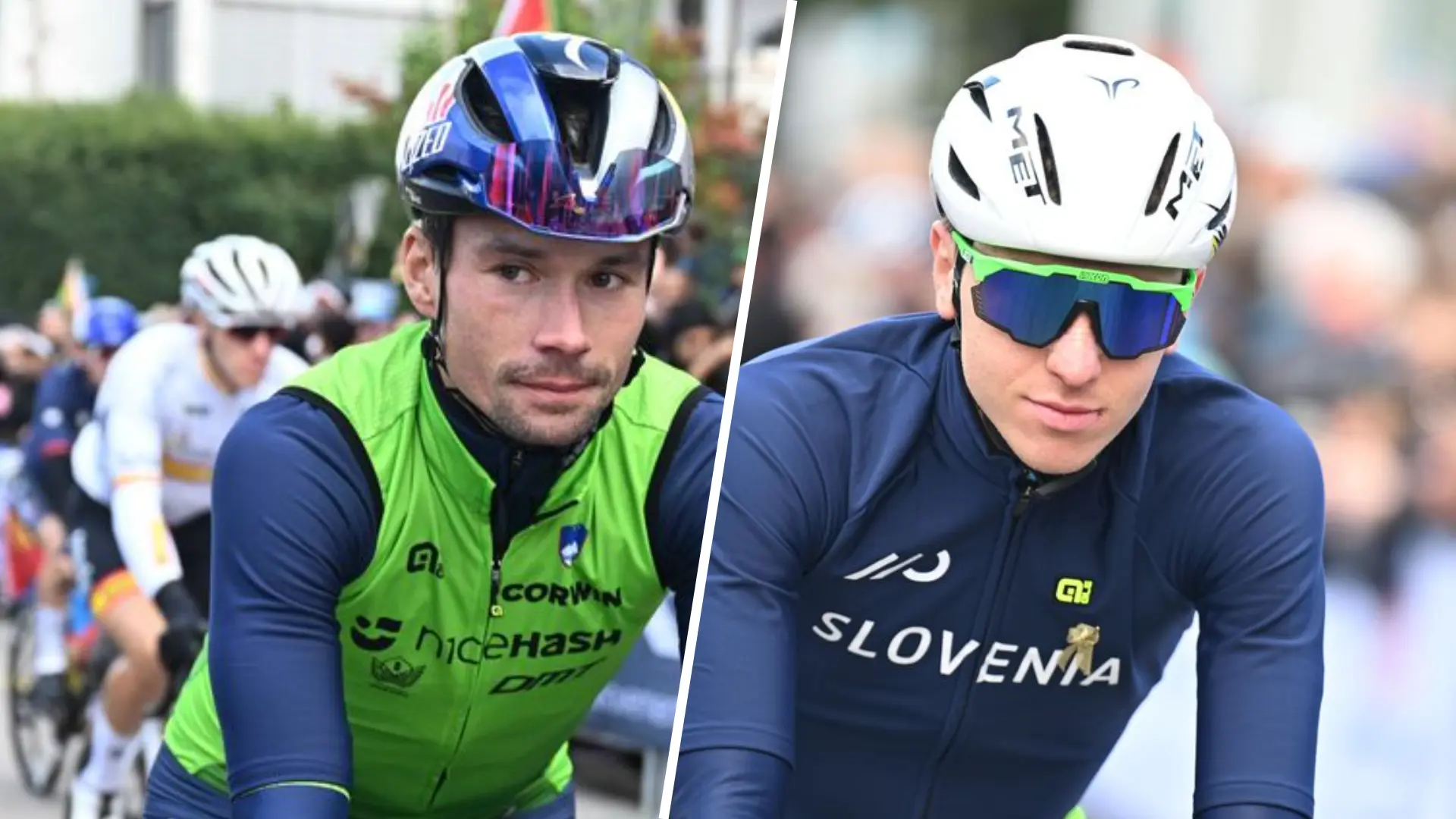
Novak will line up in Rwanda alongside Primoz Roglic, Matej Mohoric, Luka Mezgec, Gal Glivar, Matevz Govekar, Jaka Primozic and Matic Zumer. Missing, however, is Jan Tratnik, whose absence removes Slovenia’s traditional road captain and a vital link in the chain of support. “We’ve lost a lot with no Jan Tratnik because he’s a strong rider and he’s got some problems with injuries right now,” Novak explained. “But we will see how the race is going. Maybe I will need to take his place. In any case, everybody will try their best and we’ll try to win.”
How Roglic is deployed remains a major point of intrigue. National coach Uroš Murn has so far kept strategy close to his chest, acknowledging both the opportunity and the complexity of managing two of the sport’s most formidable riders in the same jersey. “We are lucky to have them both,” Murn said earlier this month. “It’s not a problem – it’s a luxury.”
Novak himself is happy to keep his own remit flexible. “I don’t know specifically what my job is but I think I’ll start pulling after 150 kilometres and try to make some selection and then we will see,” he said.
“When Tadej plans to be ready, he’s ready”
What unites Slovenia’s riders is the belief that Pogacar’s form, sharpened in Canada after his Tour de France triumph, is on point for Rwanda. “You know Tadej, he can win almost every day, and I think he will come in the best shape,” Novak insisted. “We have quite a good team, and we’ll try to bring him into the best place possible so he can go for the win.”
That conviction comes with the weight of experience. Novak has seen first-hand how Pogacar thrives when his targets are clear. “When Tadej plans to be ready, he’s ready. I think he needs a few race days and that pace to open up the engine, and then we’ll see.”
For Novak, pride in being part of Slovenia’s golden generation outweighs any personal ambition. Last year, while Pogacar was paraded as a national hero, Novak quietly returned to work in Croatia. “For me, it was normal, but with Tadej it’s very different,” he said. “But racing with Tadej is a dream situation – always.”

Kieran WoodDeputy Editor-in-Chief
Kieran Wood is a sports journalist based in Wales and has been active in journalism since 2022. He regularly contributes to DartsNews.com and CyclingUpToDate.com, where he covers professional cycling and darts. In cycling, his work includes liveblogs from major races, including the Tour de France, the Giro d’Italia, and La Vuelta a España, alongside race reports and analysis. He has also conducted interviews with professional riders.
His reporting spans the full racing calendar, from one-day classics to stage races, with a focus on accurate, real-time coverage and clear contextual analysis. For statistics, results, and historical context, he regularly uses resources such as ProCyclingStats. To support reporting on rider activity and training context where relevant, he also references Strava.
In his work, Kieran places strong emphasis on careful sourcing, editorial accuracy, and updating articles as new, verified information becomes available.
claps 1visitors 1
Just in
Popular news
Latest comments
- Strade? Never saw him as a gravel rider that can handle it.mij18-10-2026
- It surprises me that anyone still believes any professional sport is clean--much less wants it to be. The best you can hope for is a reasonably level playing field that doesn't expose young, ambitious athletes to health risks they don't understand. In that regard, World Tour cycling appears to do a better job than almost any sport with independent, random testing. There are certainly fewer mysterious midnight "heart attacks" these days. If you want to see what an uneven playing field looks like, show up to masters nationals. If you don't like that all sports run on PEDs these days and you can't be bothered to contribute as a tester, a federation official, or pharmaceutical representative, then just turn off the TV and play outside.
 MarkFour18-10-2026
 - Good grief, who proofreads this stuff? Errors abound.wrsty18-10-2026
- You can add weight to a bike and limit gears or make it single speed if you like. I doubt that would reduce crashes. It would just add another dymanique. All good and well, but It wont stop cars getting on to the course.Cyclingsbestfan18-10-2026
- Seixas is probably second best in the World on short climbs. But that hasn't translated as well to long climbs
 Rafionain-Glas18-10-2026
 - Idiotic fellaRafionain-Glas18-10-2026
- Nothing. Against Pogi nothingabstractengineer18-10-2026
- He didn't even try to sprint all outvappaxbipmv18-10-2026
- Campenaerts looked like a rolling pumpkin with that all orange leaders skinsuit !frieders318-10-2026
- He can take his dumb a$$ politics somehwere else !frieders318-10-2026
Loading
Write a comment