From the 12th to the 16th of June, the peloton will embark on the Tour of Slovenia. This race has gained popularity in recent years due to the emergence of new stars from the country and serves as a preparation race for the Tour de France for some riders. Let's delve into its profiles.
Read also
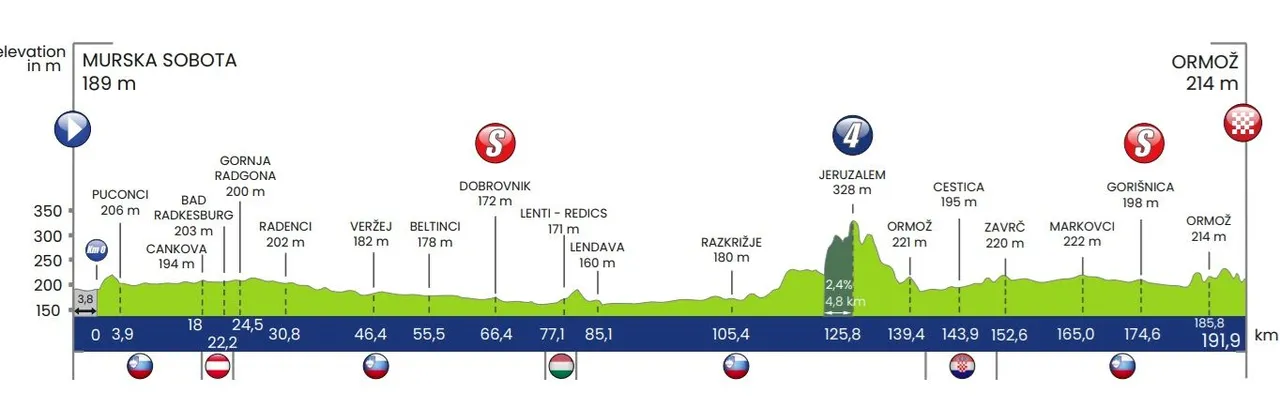
Stage 1: Muirska Sobota - Ormoz, 191.9 kilometers
The first stage of the race takes place from Muirska Sobota to Ormoz and is the longest day of the race. It is not the hardest day of the race, however the finale should be fit for a bunch sprint to take place.

Stage 2: Zalec - Rogaska Slatina, 177.9 kilometers
Stage 2 will be a tricky day. In the hills of Slovenia the peloton will tackle a 7.6-kilometer climb at 6.3% which can open things up, but the last kilometers of the day features a lot of small ascents where an attack can take place at any moment.
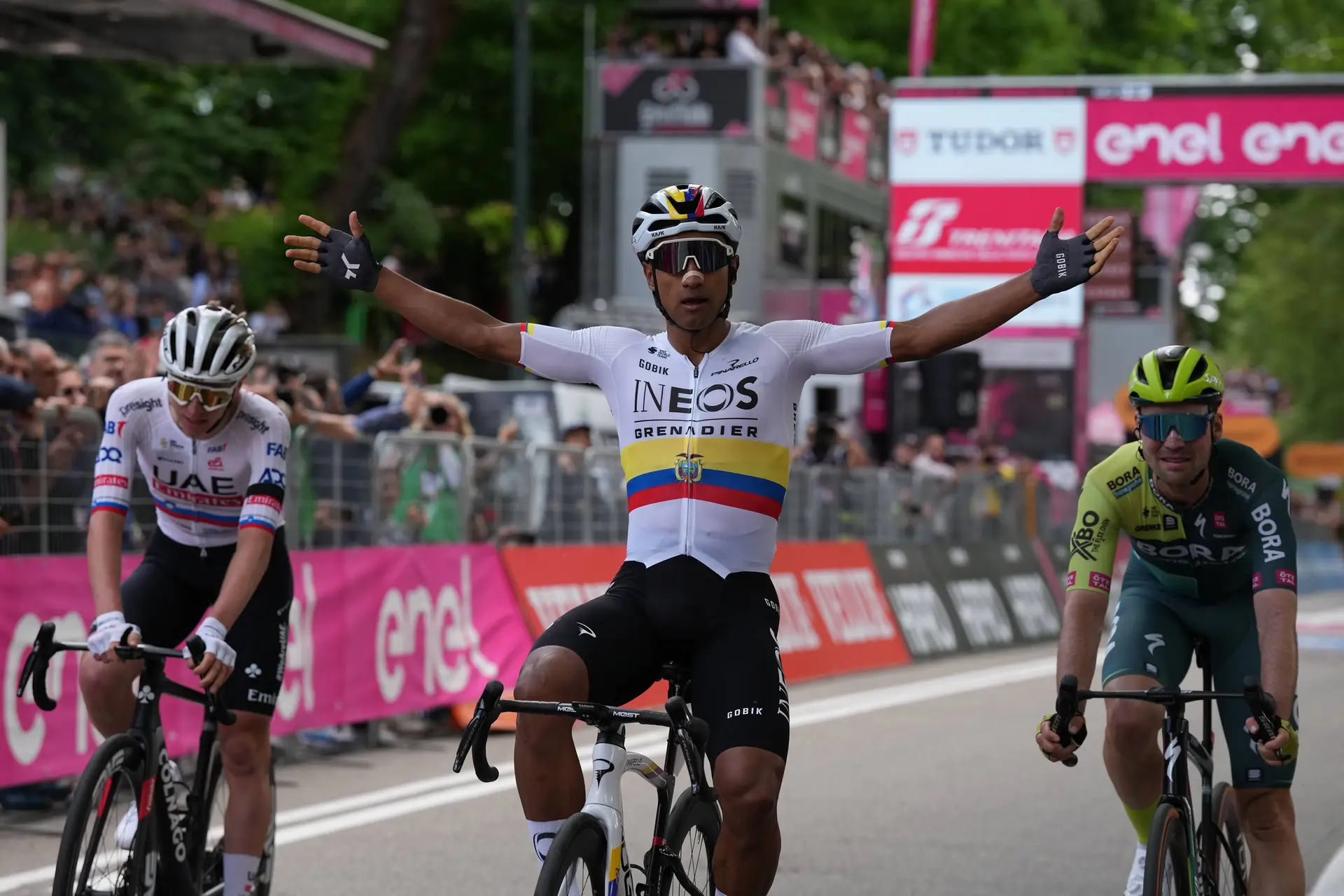
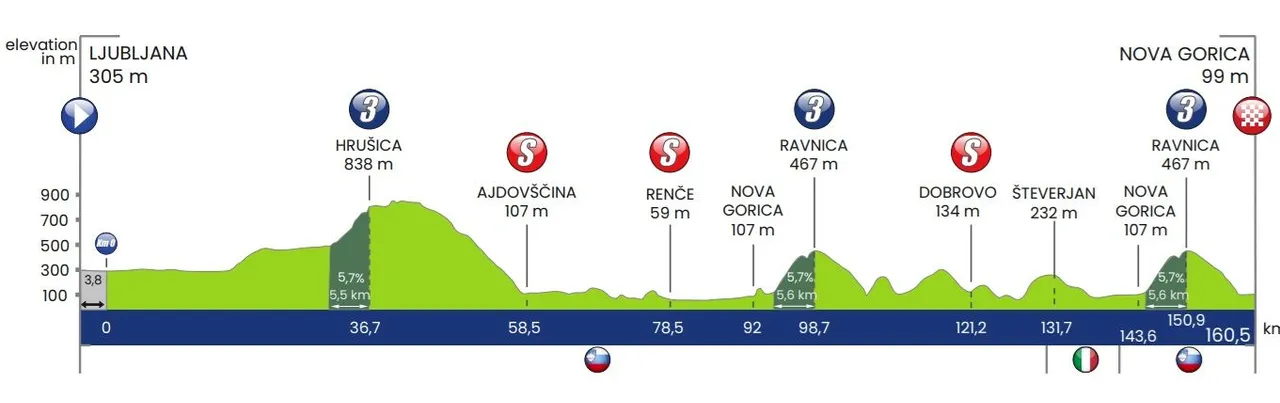
Stage 3: Ljunljana - Nova Gorica, 160.5 kilometers
Stage 3 ends in Nova Gorica after 160 kilometers and is another open day of racing. It features a few small climbs, but these ones are harder and can involve the GC contenders. This can open up the fight for the overall classification, the day before the queen stage.
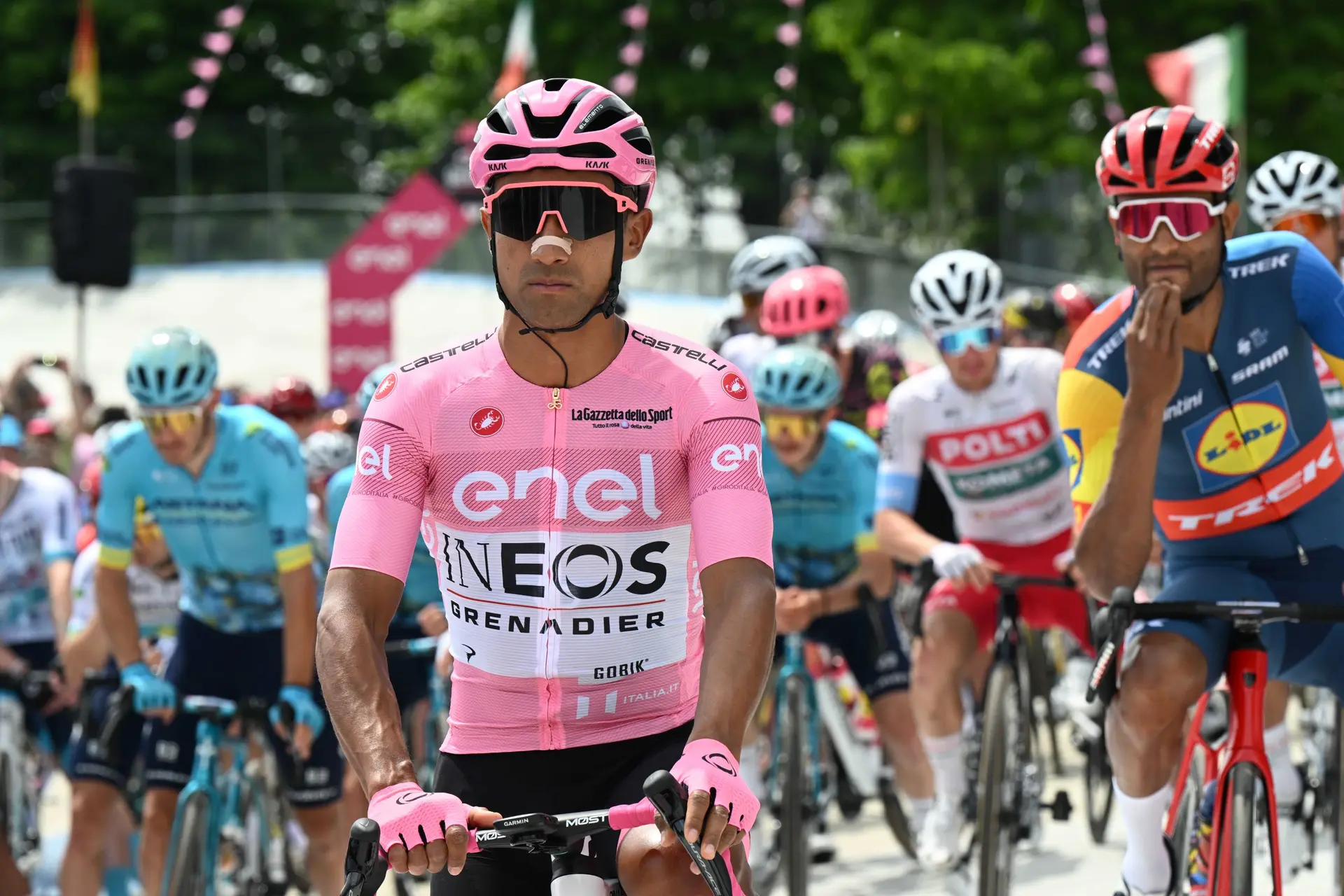
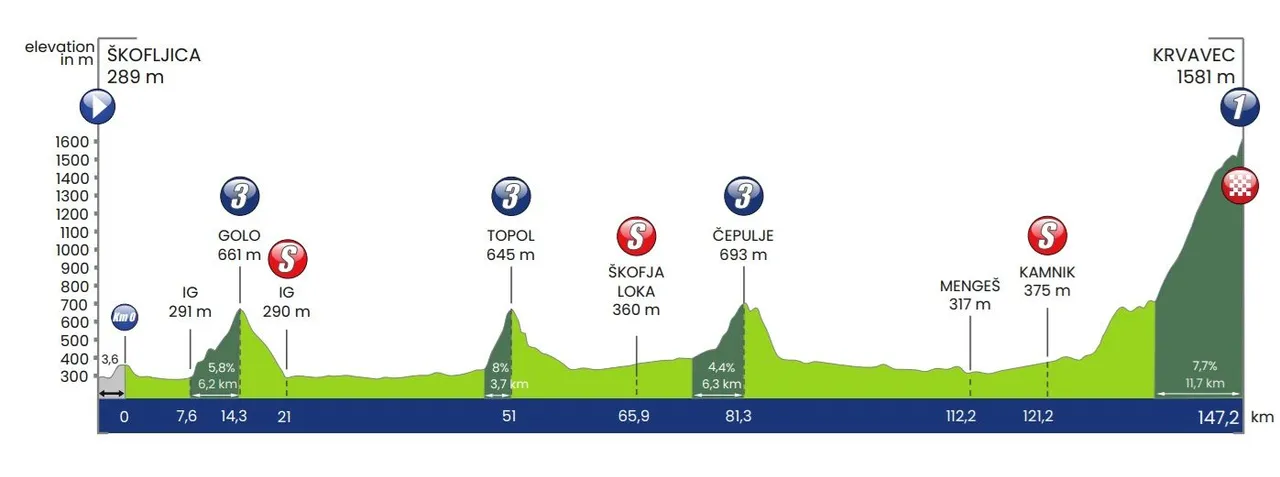
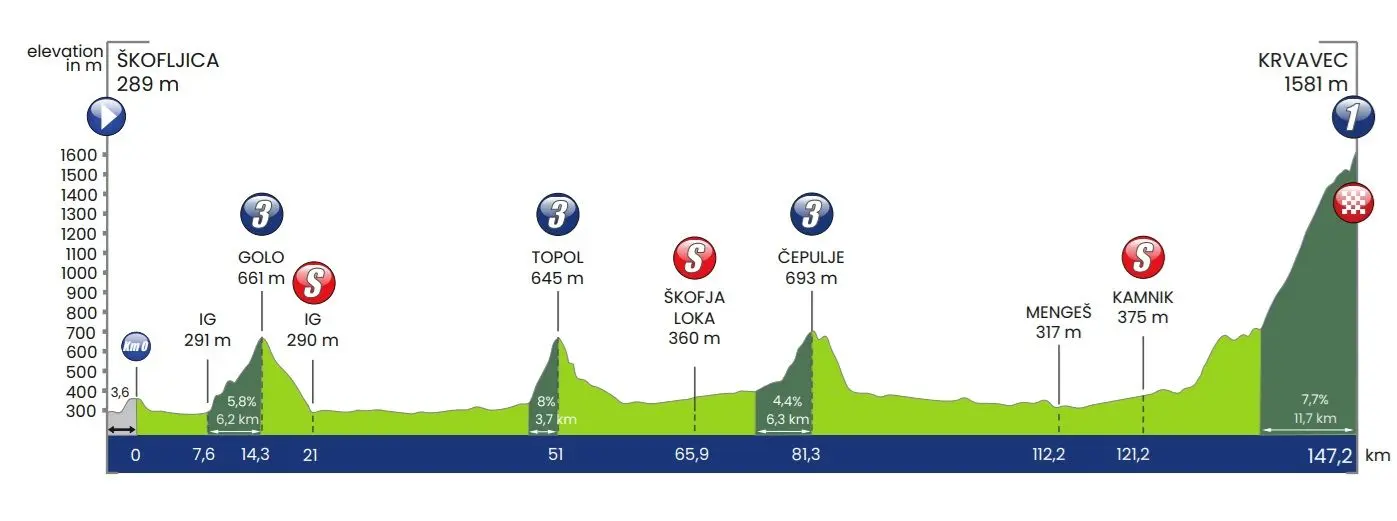
Stage 4: Skofjica - Krvacek, 147.2 kilometers
The queen, but also shortest stage of the race. The summit finish in Krvacek is 11.7 kilometers at 7.7% and will create very big differences. It is without a doubt the most important stage of the race and where the pure climbers can make the difference.

Stage 5: Sentjernej - Novo Mesto, 156.9 kilometers
The final stage of the race could be very dangerous, and the race has the potential to be turned on it's head here. The final day ends in Novo Mesto, and has a 1.5-kilometer climb at over 10% close to the finale where dangerous attacks may take place.
Read also
Rúben SilvaEditor-in-Chief
A founding contributor to CyclingUpToDate since its launch in January 2022, Ruben Silva has played a central role in shaping the site’s editorial direction and long-term growth. Before joining the project, he built his experience through independent blogging at Echelons Hub and by producing race previews for Ciclismo Internacional, developing a strong analytical voice rooted in daily engagement with professional cycling.
Beyond editorial work, he has been closely involved in the expansion and coordination of CyclingUpToDate’s wider network, helping establish and support sister platforms across multiple languages. This includes ongoing collaboration with CiclismoAlDia (Spanish), CiclismoAtual (Portuguese), WielrennenUpToDate (Dutch), and RadsportAktuell (German), contributing to a shared editorial vision and consistent international coverage.
He also helps oversee editorial governance across the network, setting standards for accuracy and consistency and coordinating updates or corrections when needed.
Originally from the Porto metropolitan area in Portugal, he holds a bachelor’s degree in Geography. His path into cycling journalism was shaped not through formal media training, but through independent reporting, community engagement, and sustained on-the-ground involvement in the sport.
Over the course of his career, he has conducted approximately 100 interviews across road cycling and cyclocross, ranging from one-to-one conversations and online formats to press conferences and on-site pre- and post-race coverage. His interviews include leading riders, team managers, and prominent figures within cycling media: Tadej Pogacar, Jonas Vingegaard, Mathieu van der Poel, Primoz Roglic, Wout van Aert, Joao Almeida and Tom Pidcock; managers like Patrick Lefevere and Joxean Matxin; and YouTube personality Bryan Kennedy (BKXC)...
Within 18 months of launch, he helped grow CyclingUpToDate’s English-language platform into one of the most-read cycling news websites, built entirely from the ground up. As both a professional journalist and lifelong cycling enthusiast, his focus remains on delivering accurate, timely, and well-contextualized coverage.
claps 0visitors 0
Just in

Popular news
Latest comments
- LOL...it's a predetermined finish ! N one is 'clashing' at these exhibition crits!frieders307-11-2026
- Surely the UCI and the race organisers have a responsibility to ensure the best medical care is available to riders when incidents like this happen. All very well pushing for global expansion but not so good if riders lives are put at risk because medical support is not up to scratch.Andy12306-11-2026
- Well it clearly helps that this was Pidcock's own car, no?Occam06-11-2026
- The American performance at the World's road race was a masterclass in cycling tactics. If it wasn't McNulty, it might well have been Jorgensen or Simmons to take off and win in a solo break.Occam06-11-2026
- What a gimmick
 Rafionain-Glas06-11-2026
- Thats only cause he rides for UAE. In any other team he would be captain in many races atleast. UAE is just to crazymiguel06-11-2026
- He seems to be the rare athlete whose passion and curiosity about life beyond his sport equals his extraordinary achievements in it. It would be great for him to risk less of that life. He seems very grateful and joyful for what he has already attained.
 MarkFour06-11-2026
- As much as I admire and even revere Wout, the less I know about his backside the better.MidnightRider06-11-2026
- Ok, Walt 🤣... Vingegaard would be lucky to get on the poduim. He would not beat Seixas or Del Toro, let alone TP. Then there are the Americans...BD06-11-2026
- So, for starters. Cycling is a saturated, static/dying sport in traditional lands, it will not have resurgences like eg running occasionally does because of several obstacular (yes, I know that’s not a word but don’t make me point out the obvious at your expense) factors. Obviously, like almost everything involving money, there is a desire/need/advantage to growth and that can only come from (developing or just testing) new markets. For me, the WC is the obvious and best choice for several reasons, it comes at the end of the season so is less critical season risk wise, it is not a “pro” team race but nation based which makes integration of uncommon participation more natural. It is a vehicle for redistribution (one of a very limited number of available mechanisms to develop new markers fairly) that the fixed calendar doesn’t allow and it helps make budgets fairer over the long run (moving the whole circus to everywhere evens out everyone’s budget as opposed to having everyone always come to the same location.Jumpyjohn06-11-2026
Loading

Save the date to watch, cheer and enjoy cycling fever all over Slovenia! @TourofSlovenia takes place from 12 to 16 June, and we are ready to cheer for the next generations of Primož Roglič and Tadej Pogačar! #ifeelsLOVEnia #TourOfSlovenia 📸 Vid Ponikvar, Sportida d.o.o.

Write a comment