“Pogacar, Van der Poel, Evenepoel, Van Aert – they go beyond being specialists”: Premier League manager Andoni Iraola hails cycling’s ‘best era ever’
Cycling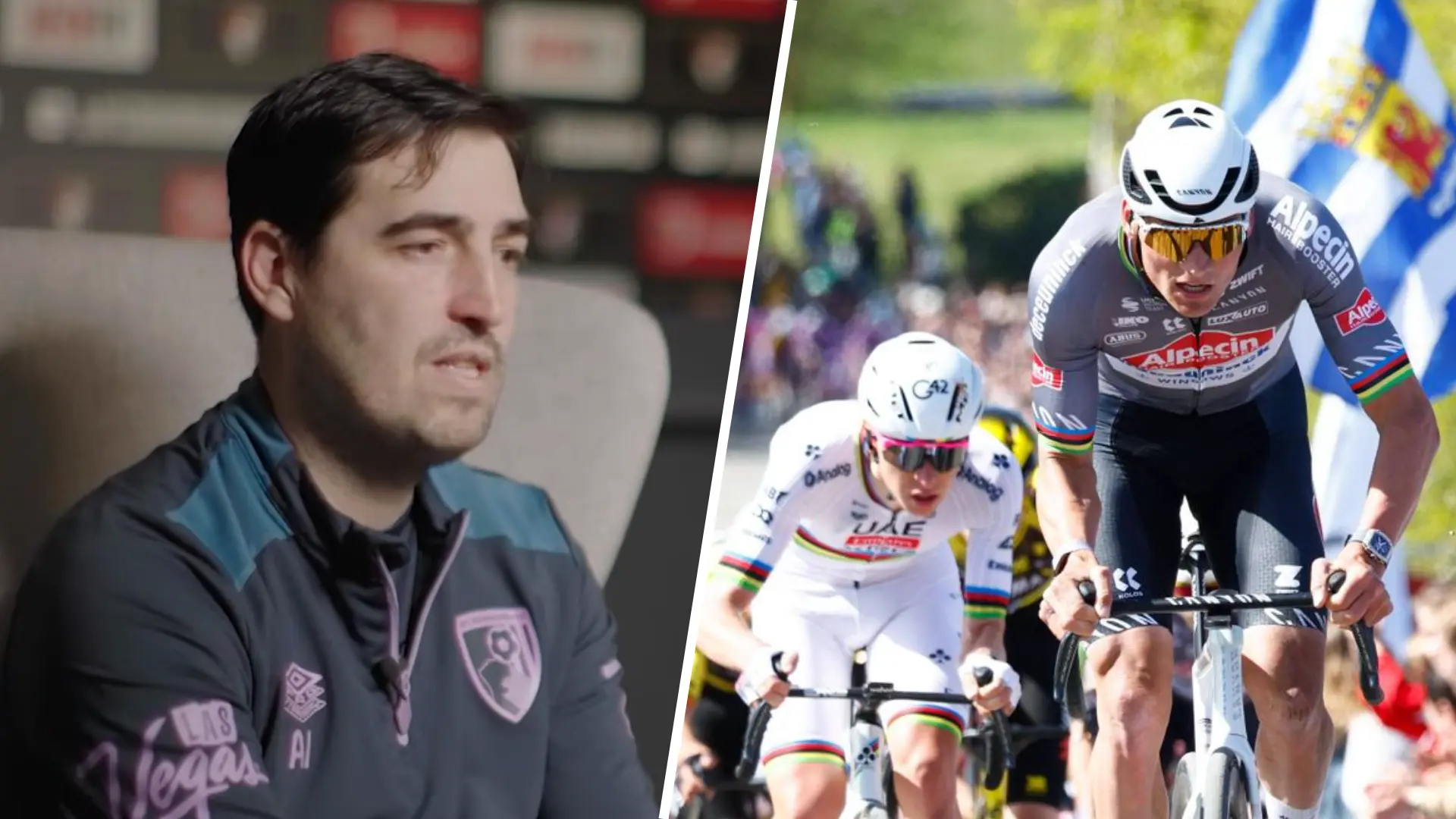
The demands of elite football leave little room for distraction. Training sessions, tactical meetings, match preparation and the relentless Premier League calendar define the week. Yet between it all, Andoni Iraola is muting WhatsApp groups to avoid spoilers from the cobbles.
The AFC Bournemouth manager has long followed professional cycling closely. Speaking on TNT Sports’ The Gruppetto, he offered a detailed defence of the modern peloton and argued that the current generation has reshaped what it means to be a champion.
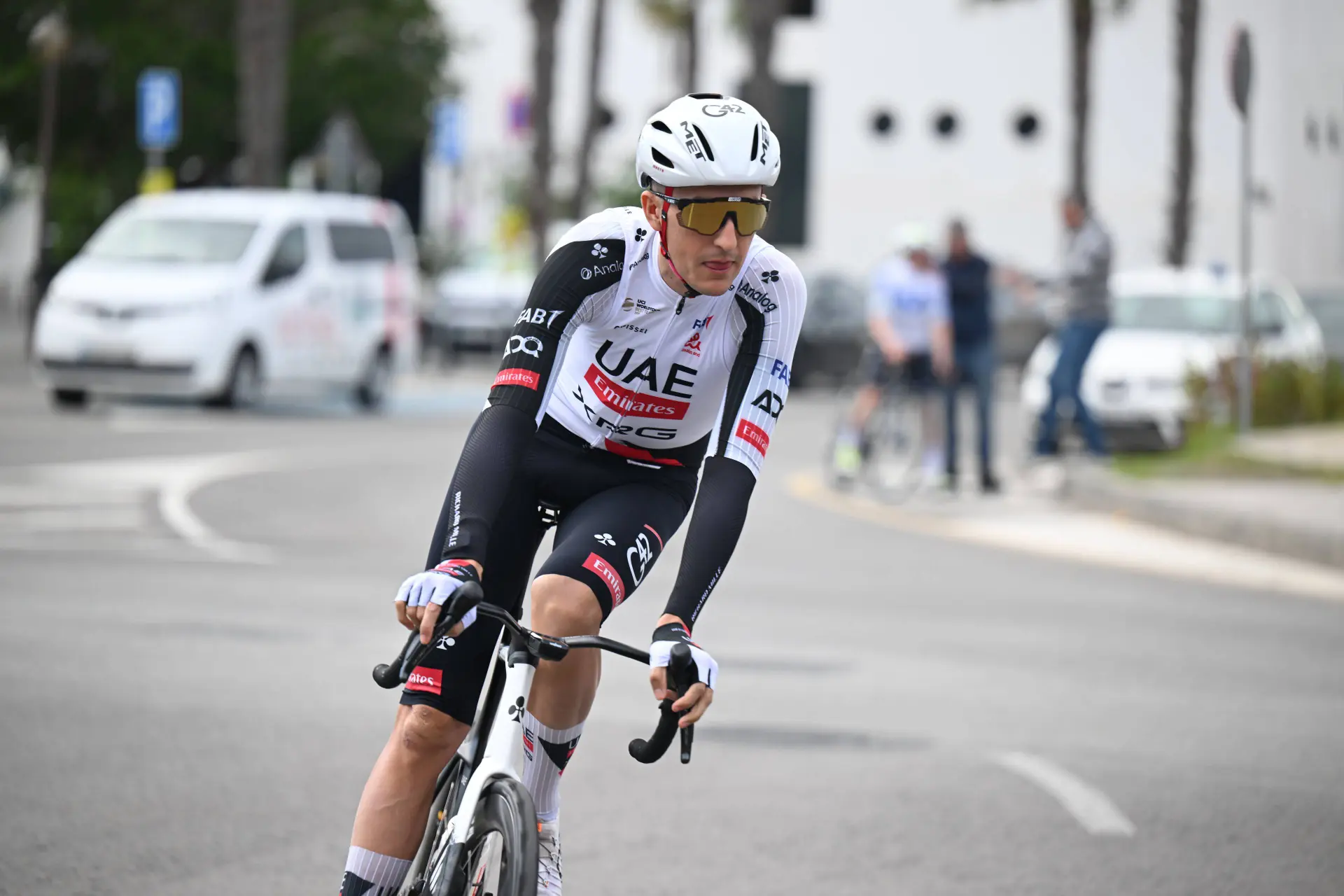
“I think we’re in the best era to watch cycling ever,” Iraola said in conversation with TNT Sports commentator Rob Hatch. “Pogacar, Van der Poel, Evenepoel, Van Aert… there are a lot of amazing cyclists that have gone a little bit outside of what cycling was before."
“Before, I’m a specialist and I focus on my goal, and then I rest for three months and focus on the next one," continues the seven-time Spanish international. "Now we have riders who are very ambitious. They want to be competitive almost all the season. I think we are enjoying it.”
From the Basque Country to the Premier League
Born in 1982 and raised in the Basque Country, Iraola’s attachment to cycling predates his own professional football career. “When the Tour de France started in 1992 in San Sebastián, I was 10,” he recalled. “For us, the Tour was everything. And suddenly we had it there in front of our eyes."
“I followed every stage," continues Iraola. "Especially the Tour, and also the Clasica San Sebastian. But the Tour was the main thing.”
That immersion in cycling culture has never left him. Even now, navigating his first season in England, he still finds ways to follow the sport. “It’s difficult,” he admitted. “But especially during pre-season, we always follow the Tour. I love the Classics. Sometimes you are about to play a Premier League game, and you are checking your phone. I try not to see the stage so I can enjoy it later. I have to turn off all notifications and mute my WhatsApp groups just to get one hour to watch the Classics.”
Cycling suffering vs football recovery
For a man operating at the top of English football, Iraola has no hesitation in saying cycling’s physical demands exceed those of the sport he coaches.
“In the moment, what cyclists do is harder,” he said. “They make an incredible effort for five or six hours, and then they have to do it again the next day, and the next day, almost without recovery. For a football player, that would be impossible. You could maybe do it for two days, but by the third day, everyone would get injured.”
He is careful not to diminish football’s intensity, pointing to its contact and explosive demands, but the cumulative load of stage racing leaves a particular impression.
“Football is very demanding physically because there is contact, jumps and different muscular demands,” he explained. “The suffering might not be as high as in cycling, but the body doesn’t recover as well after you play football.”
Tactics, sacrifice and the Classics
Beyond the physical comparison, Iraola also sees clear tactical parallels between the two sports.
“Cycling is much more tactical than it looks,” he said. “People think the fastest rider wins, or the best climber wins, but there is a lot of strategy. How you protect your leader, how you create other options in the team, how everyone sacrifices for the best rider, in that mentality, we can take things from cycling.”
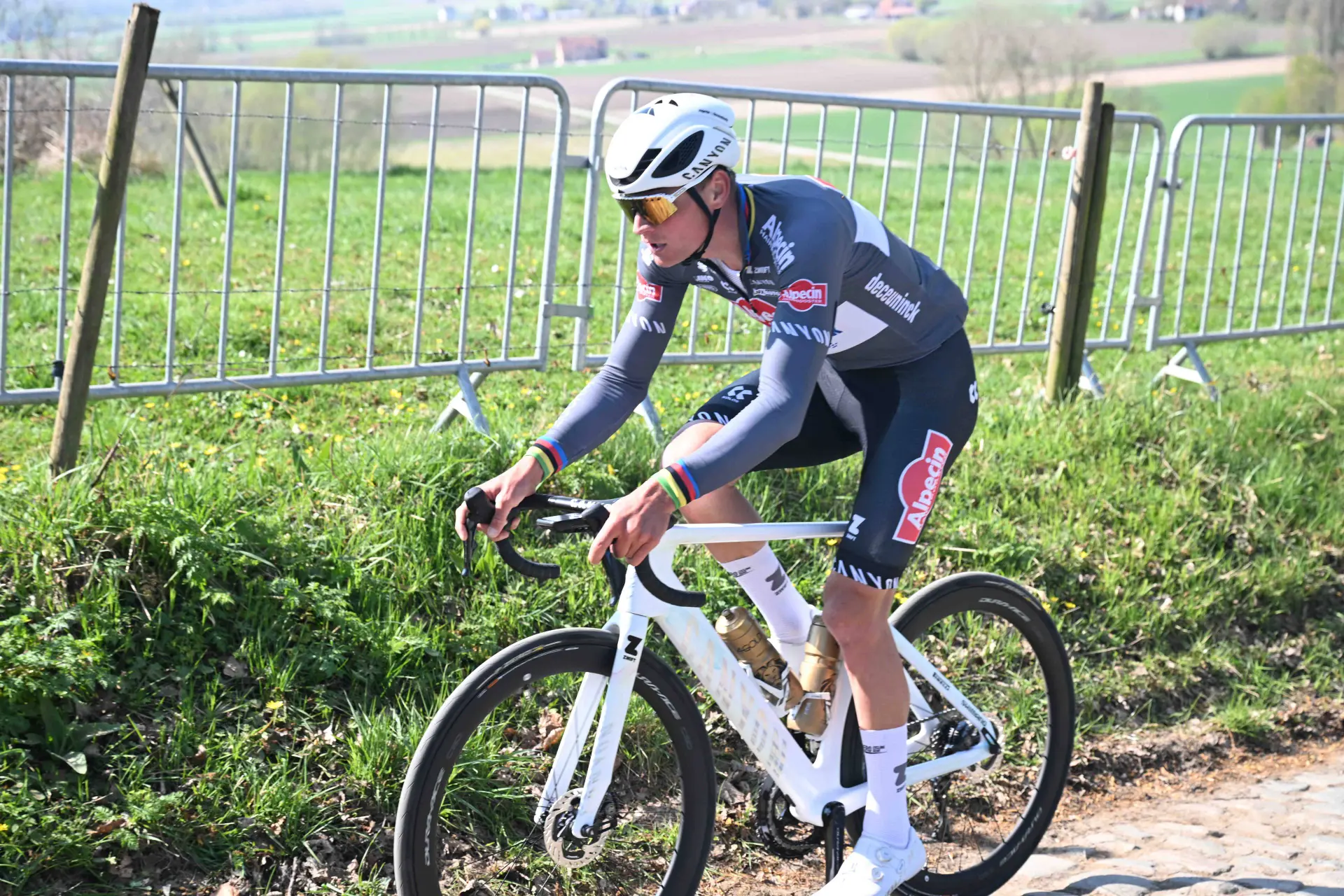
That appreciation extends to the terrain that defines spring. “The Koppenberg for me was incredible,” he said. “Those smaller hills are mythical.”
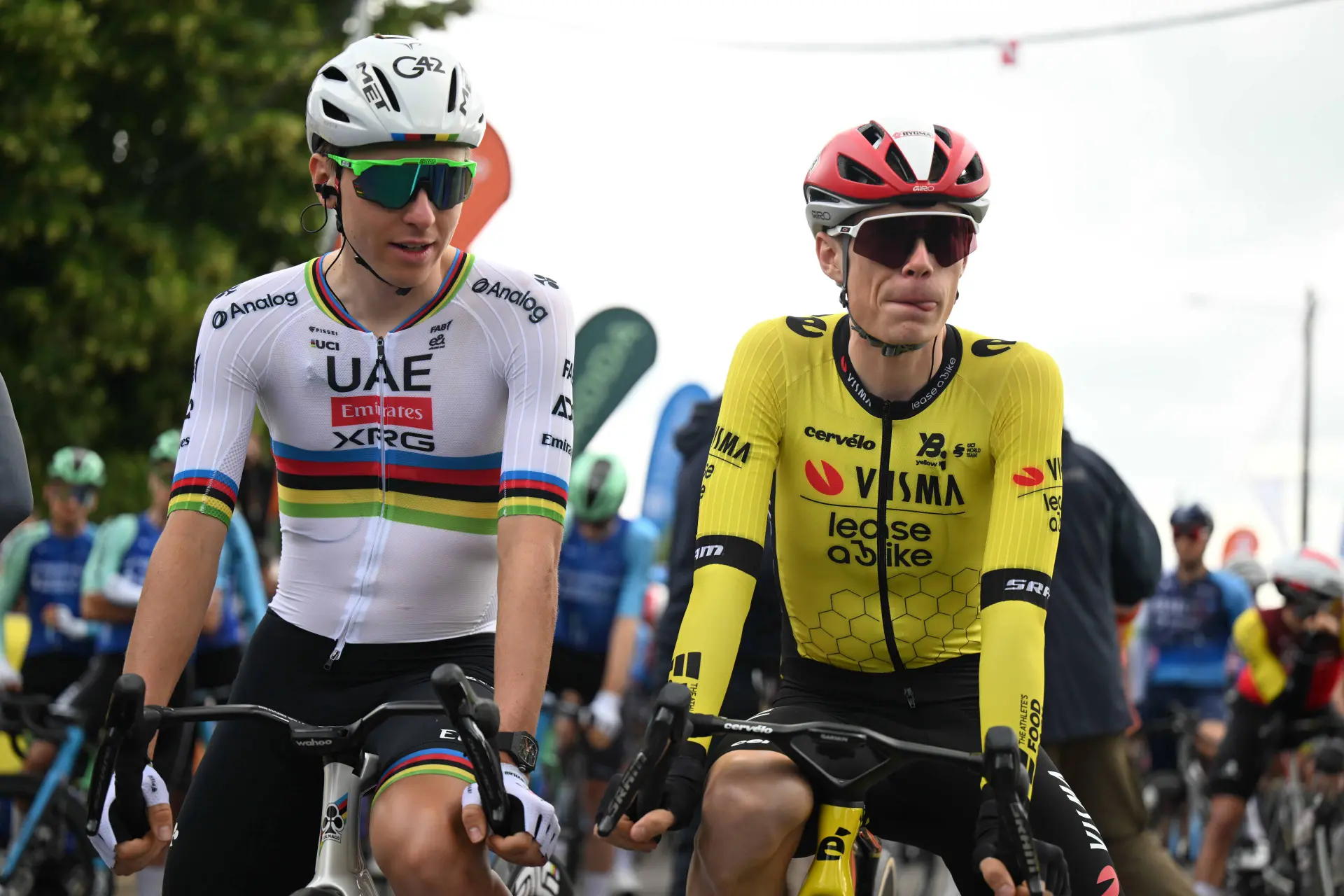
When asked about the likely winner of the Tour of Flanders, he pointed to the riders who dominate today’s narrative. “With Pogacar, you never know,” he said. “If he goes for it, he is probably the main favourite. Everyone expects the duel with Mathieu van der Poel.”
A Landa loyalist in a new era
While he celebrates the sport’s current giants, Iraola’s loyalties remain rooted closer to home. “In recent years, I’ve been a big Mikel Landa fan,” he admitted. “But everyone is getting older, and maybe we are in his final moments at the top. I hope he still has a big stage in him. I like many riders at the moment. When I was younger, I had idols. Now I just enjoy a lot of cyclists.”
It is a perspective shaped by decades of watching the sport evolve, from the Basque roadside in 1992 to the dugout of a Premier League club.
In a football environment where every marginal gain is analysed, Iraola still finds inspiration in the peloton’s blend of sacrifice, ambition and all-season daring. In his view, the current generation has moved beyond specialisation and made the sport more compelling than ever.
Kieran WoodDeputy Editor-in-Chief
Kieran Wood is a sports journalist based in Wales and has been active in journalism since 2022. He regularly contributes to DartsNews.com and CyclingUpToDate.com, where he covers professional cycling and darts. In cycling, his work includes liveblogs from major races, including the Tour de France, the Giro d’Italia, and La Vuelta a España, alongside race reports and analysis. He has also conducted interviews with professional riders.
His reporting spans the full racing calendar, from one-day classics to stage races, with a focus on accurate, real-time coverage and clear contextual analysis. For statistics, results, and historical context, he regularly uses resources such as ProCyclingStats. To support reporting on rider activity and training context where relevant, he also references Strava.
In his work, Kieran places strong emphasis on careful sourcing, editorial accuracy, and updating articles as new, verified information becomes available.
claps 3visitors 3
Just in
Popular news
Latest comments
- Ah sigh, the end of the Italian fall classics. I don't know why I love these so much, but I do. I wonder if there is a way to make a racing series out of the races that go off pavement, creating a points competition out of races like Strade Bianchi, Flanders Field, Tro Bro Leon, Paris-Tours, the Veneto Classic, and the others that add some gravel and farm paths. We talk about the cobbled classics, but there are enough gravel classics for some branding, no?RidesHills18-10-2026
- If many commenters here absolutely believe that the top cyclists in the world are doping than the only logical conclusion based on actual results is that Pogacar is the greatest and best at doping cyclist the sport has ever beheld.Is this your conclusion or do I have to be assailed by more hemming and hawing by "thats not quite what I meant" isms.
 Brucegel18-10-2026
 - he was cut off i believe. To be in UAE is like to be in real madrid and barcelona combined. And he simply wasnt up to par and hence cut by the team..Starting to feel like a gossip site with these fake headlines.miguel18-10-2026
- what a misleading headline, again - he wasn't even on the main team. it is written like such a big loss. this is meaningless.mij18-10-2026
- what a demolition by Remcomij18-10-2026
- what are you saying, was Vine drafting off Remco? I didn't see it.mij18-10-2026
- There is nothing wrong with suspicion in this sense. It is not like any of those guys are on trial or paying for it, on the contrary, they are the ones reaping rewards whilst there is no proof. If you can’t be suspicious, you never search for proof or create pressure for it (and it never falls from the sky). Plenty of the older guys have either admitted or crossed the threshold of reasonable doubt. That creates a pattern which any thoughtful person or AI would consider as representative of some constant average reality. If I see young guys driving super sportscars in trashy neighbourhoods , I (and you) will suspect many things without specifically accusing anyone of anything because there is always some unlikely possibility it’s legit for a few but we can all assume most cases are not.Jumpyjohn18-10-2026
- MG is much worse than you describeJumpyjohn18-10-2026
- Ask the middle east to fund your sports and you can be rid of political interference ;-)Jumpyjohn18-10-2026
- Thank you for your experience which completely mirrors what my environment taught me. Obviously I wouldn’t be getting any secret admissions from those who made it to the very top (but the levels they fall back to post career is already quite revealing in itself) but almost all those who were on their way and stopped of their own accord tell the same story. And those who believe cycling is so well checked, easy to say when you compare to sports that hardly care but explain why so few are caught and banned in comparison to e.g. athletics (if you even know some of the numbers).Jumpyjohn18-10-2026
Loading
Write a comment