"Top riders like Pogacar, Vingegaard or Del Toro don’t have weaknesses anymore" - Stefan Küng sees era of enigmatic figures like Thibaut Pinot dying out
Cycling
For Stefan Küng, the difference between winning and merely being present in the Spring Classics is no longer just about form. It is structural. The Swiss rider believes cycling’s elite has evolved into something far harder to crack, with the sport’s biggest names now almost immune to the weaknesses that once defined even its greatest champions.
Speaking in conversation with Wieler Revue, Küng offered a stark assessment of the modern peloton.
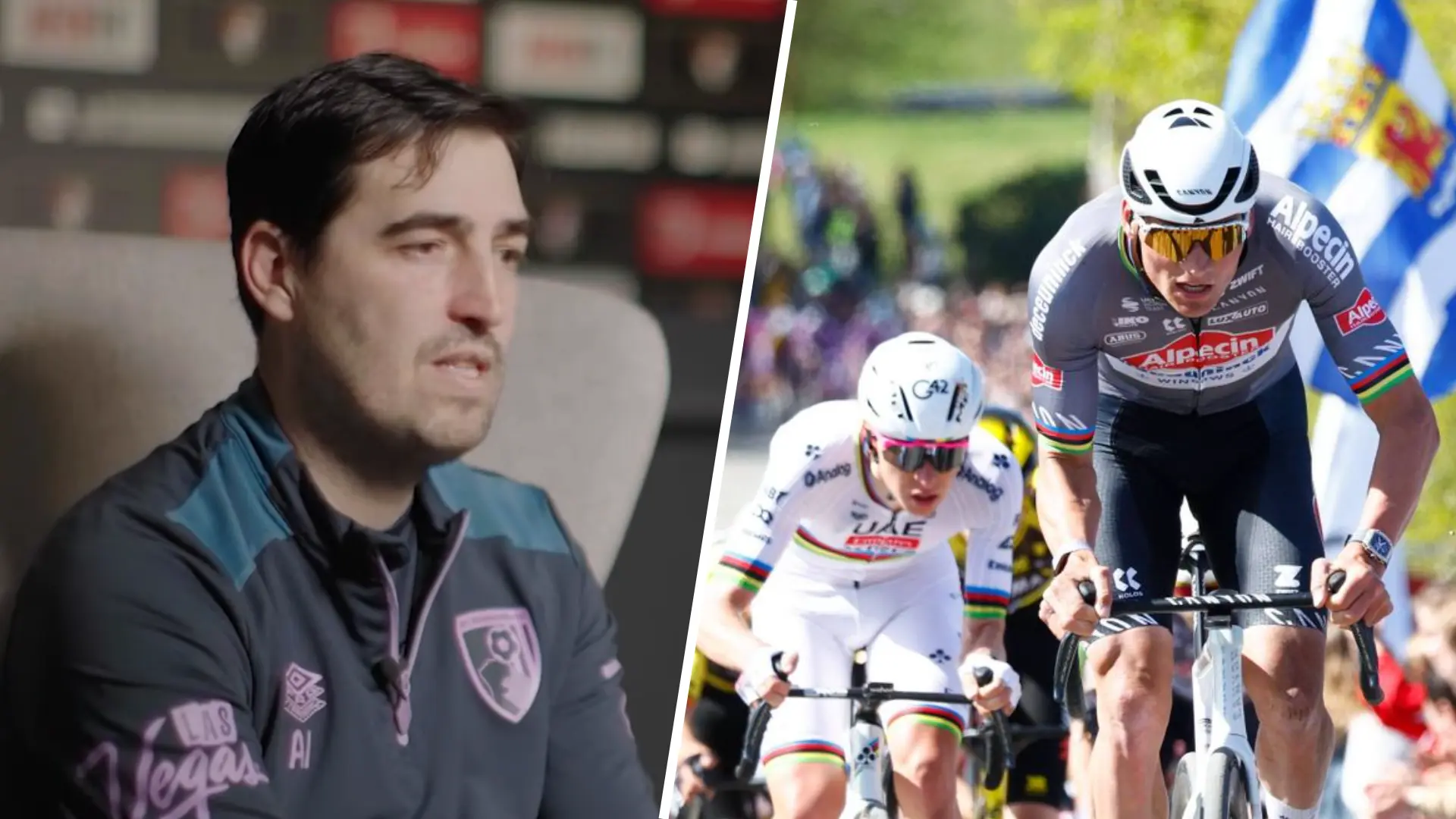
“The top riders don’t have weaknesses anymore. I’m thinking mainly of Pogacar, but just as much of Jonas Vingegaard or Isaac Del Toro.”
It is not admiration for talent alone. It is recognition of completeness.
From brilliance with flaws to near-perfection
Küng’s reference point is telling. He rode alongside Thibaut Pinot at Groupama - FDJ, a rider capable of breathtaking mountain victories and a Monument triumph at Il Lombardia in 2018. Pinot was one of the purest climbers of his generation and stood on the Tour de France podium in 2014.
At the 2014 Tour, Pinot lost second place in the long individual time trial on Stage 20, a result that cemented a long-running perception: for all his climbing brilliance, he could be exposed against the clock. That duality, immense strength coupled with visible weakness, made him compelling and unpredictable.
Küng sees that archetype fading. “I used to ride with Thibaut Pinot. He had some enormous qualities, but he also had weaknesses,” he explained. “The modern top riders don’t have weaknesses anymore.”
The implication is clear. Where Pinot might soar in the mountains and struggle in a time trial, today’s leaders do both.
The complete rider template
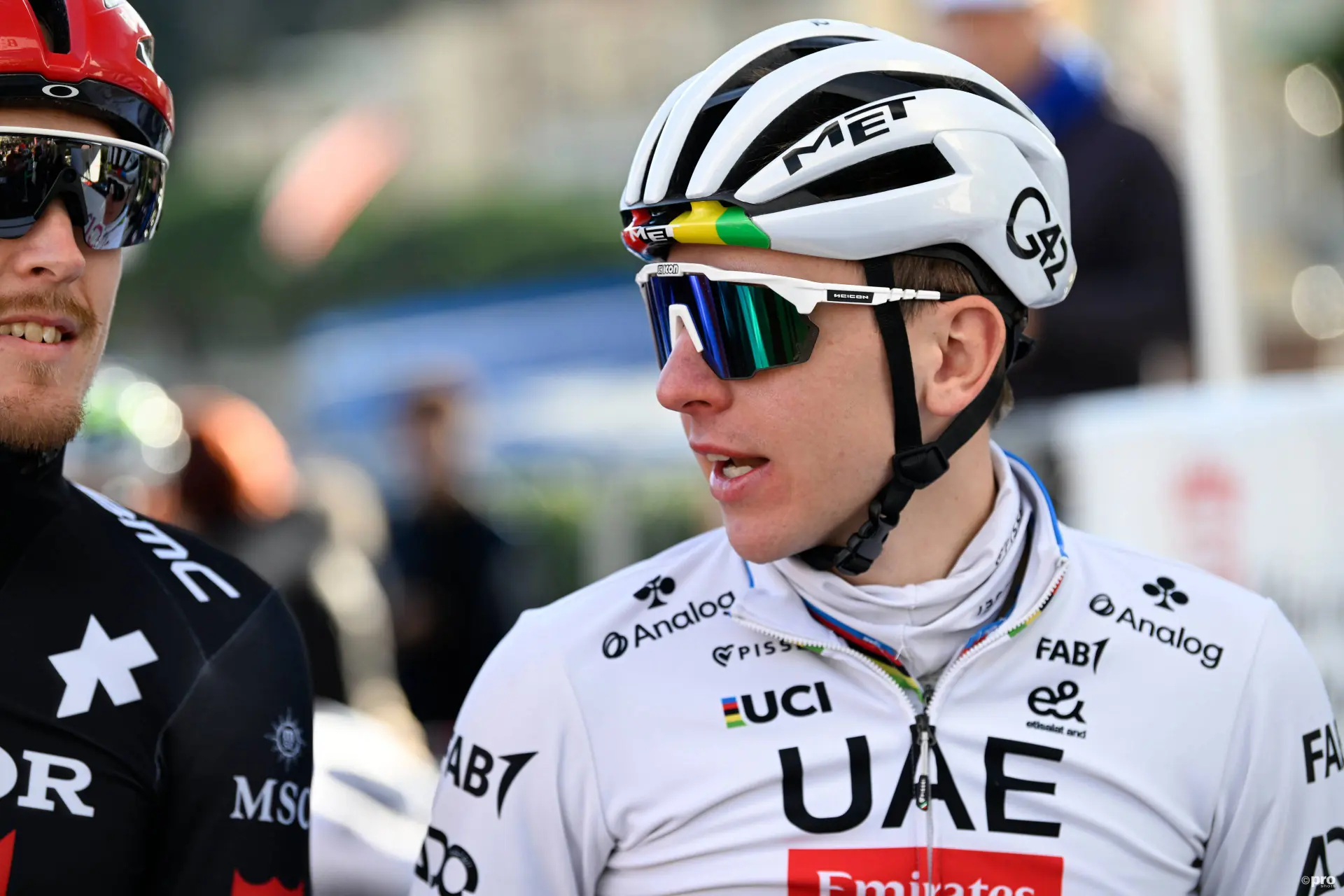
Consider Tadej Pogacar. Over recent seasons, he has won the Tour de France, conquered cobbled Monuments such as the Tour of Flanders, dominated Il Lombardia, and delivered decisive time trials in Grand Tours. He has proven competitive on steep, punchy climbs, long Alpine ascents, cobbles and against the clock.
The same pattern applies to Jonas Vingegaard. Once viewed primarily as a pure climber, Vingegaard famously demolished the field in the 2023 Tour de France time trial to Combloux, beating Pogacar by over a minute and effectively sealing overall victory. His time trialing, positioning and crosswind resilience have improved markedly since his early WorldTour seasons.
Even the youngest name Küng cites, Isaac Del Toro, has already demonstrated breadth. A Giro d’Italia stage winner and overall podium finisher in 2025, Del Toro has also claimed hilly one-day victories such as Milano-Torino and shown increasing strength against the clock. His profile spans Grand Tour durability and punchy Classics explosiveness before his 23rd birthday.
“They can time trial, they know how to position themselves in the peloton, they can ride in crosswinds,” Küng said. “Of course, they can rely on a strong team around them, but their skill set is very broad. That’s a big change compared to ten years ago.”
A shrinking margin in the Classics
For Küng, that evolution has practical consequences.
The Tudor Pro Cycling leader has built a career on consistency. He has stood on the podium at Paris-Roubaix, collected European time trial titles, and repeatedly finished in the top five of the sport’s toughest one-day races. He is almost always there.
Yet in an era of near faultless superstars, being “almost” complete is rarely enough.
Even at Omloop Het Nieuwsblad, where he was caught inside the final kilometre last year, Küng admits the odds are stacked. “Nine times out of ten, they will be better than me, but I focus on that one time when it happens that one of them doesn’t win. You never know what happens in the Classics. That’s what makes these races so special.”
It is both realism and defiance. “I’ve been on the podium in some races, and in almost all of them I’ve finished in the top five at some point. If you’re always there, eventually it will fall your way. A moment like that can define a career. The chance may be very small against Van der Poel and Pogacar, but you always have to keep believing.”

Küng enters his 12th season as a pro rider in 2026
The end of visible flaws?
Whether or not the era of Pinot-style brilliance has truly disappeared is open to debate. Even today’s champions have off days, bad luck or tactical misfires. But what Küng is articulating is harder to dismiss: the margin created by a single exploitable weakness has narrowed dramatically.
Time trials no longer reliably undo climbers. Crosswinds no longer reliably expose mountain specialists. Cobbles no longer automatically eliminate Grand Tour contenders.
In that sense, Küng’s words are less about nostalgia and more about adaptation. To win in 2026 is not simply to be strong in one domain. It is to be strong everywhere.
For riders like Küng, that reality does not remove belief. It simply redefines the odds.
And in the Spring Classics, where chaos still reigns, sometimes one chance out of ten is enough.

Kieran WoodDeputy Editor-in-Chief
Kieran Wood is a sports journalist based in Wales and has been active in journalism since 2022. He regularly contributes to DartsNews.com and CyclingUpToDate.com, where he covers professional cycling and darts. In cycling, his work includes liveblogs from major races, including the Tour de France, the Giro d’Italia, and La Vuelta a España, alongside race reports and analysis. He has also conducted interviews with professional riders.
His reporting spans the full racing calendar, from one-day classics to stage races, with a focus on accurate, real-time coverage and clear contextual analysis. For statistics, results, and historical context, he regularly uses resources such as ProCyclingStats. To support reporting on rider activity and training context where relevant, he also references Strava.
In his work, Kieran places strong emphasis on careful sourcing, editorial accuracy, and updating articles as new, verified information becomes available.
claps 1visitors 1
Just in
Popular news
Latest comments
- I hope he takes Lombardia. It will be interesting to see him with Remco - guaranteed Primoz doesn't work for him.mij09-10-2026
- Maybe Net Company INEOS should be signing Roglic. Feels like they have been mostly irrelevant since G hung up the shoes. At least they would have someone who is there or there abouts on GC.MASnell09-10-2026
- Maybe Net Company INEOS should be signing Roglic. Feels like they have been mostly irrelevant since G hung up the shoes. At least they would have someone who is there or there abouts on GC.MASnell09-10-2026
- i guess there's journalism and then there's journalism. this website simply collects cycling stories and aggregates them in one portal for us fans to access. they aren't really investigative reporters, and their team likely isn't big enough to go into real depth... which is fine by me since i don't expect much more from them. that said, i agree with your view. it would be nice to see a bit more follow-up that pushes the people in charge to actually take a stance.Ketterechts08-10-2026
- UAE was really badly positioned at the last climb, and Ineos did a great job of making that happen at the bottom. That must have affected del Toro and the rest. His attack wasn't spectacular, and they hadn't ripped apart the bunch enough, letting a large group remain in back to reel him in. UAW lost the race on the road to the climb and the bottom third of it, I think.RidesHills08-10-2026
- He won in exactly the same way as others. By being the fastest to complete the stages.mobk08-10-2026
- Very surprised del toro couldn't beat everyone here against lesser competition. He's well on his way to being top 5 in the worldbruins3008-10-2026
- Being the best rider left in the race is pretty much the only way to win in any edition, surely? Seems reductive to say "they only won because the entire peloton wasn't as absolutely stacked as it could've been" - you can only beat who is in front of you.wrsty08-10-2026
- I’m sorry but generally the coverage on your site is first class but this incident highlights something I just don’t get with cycling journalism. This accident should never have been allowed to happen, it comes uncomfortably close to the Finlay Tarling tragedy and two other incidents took place within days of this. I checked all of the cycling websites and you all put out basically the same story. Pidcock gave journalists the perfect opening to blow this sky high, what has the UCI got to say? What is Adam Hansen doing? What do the organisers say? Nothing, you all trot out the same easy quotes taken from Pidcocks interview after the race but do nothing to follow it up. I see it time and time again, journalists taking the easy way out but being outraged when it happens again as it surely will. Riders can’t do this but journalists should be independent and should be able to raise these uncomfortable questions but cyclinguptodate and every other on line publication prefer to take the easy way out. That’s the real tragedy here.Paul53108-10-2026
- Happy to help :-)Mistermaumau08-10-2026
Loading
Write a comment