Pogacar launches a bid for the Vuelta, but could he pay the price at the Worlds? Bruyneel weighs in
CyclingSaturday, 15 August 2026 at 13:20
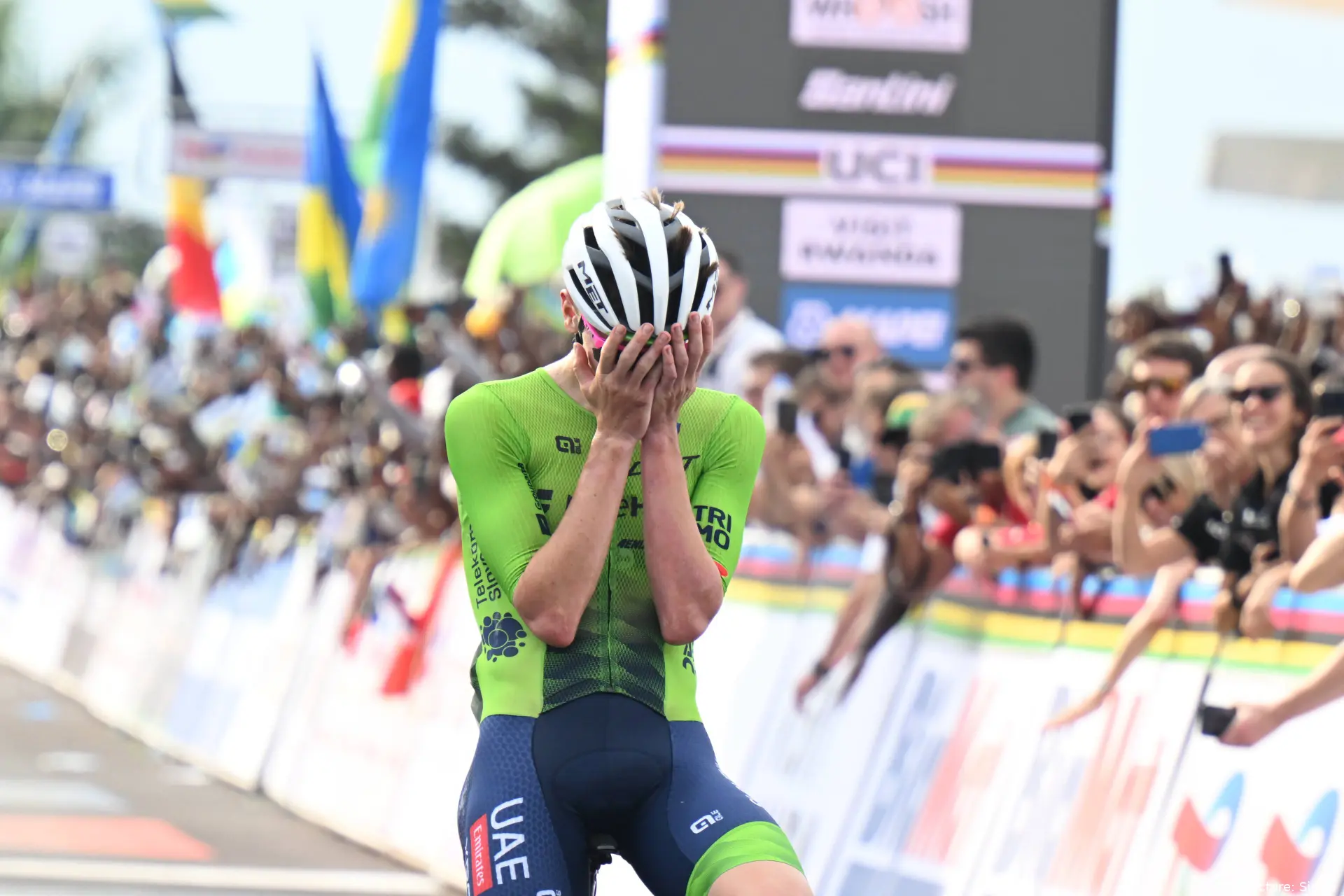
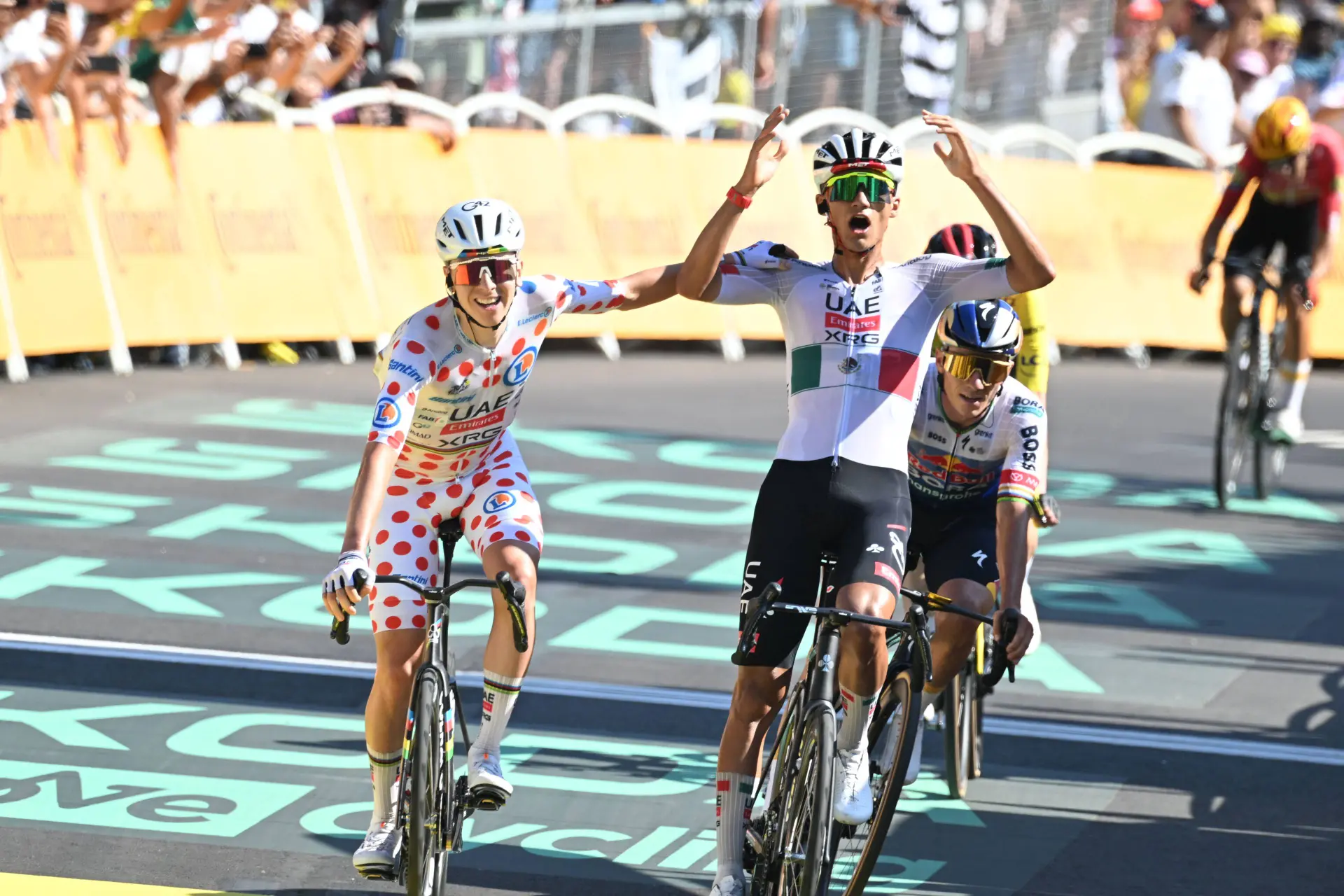
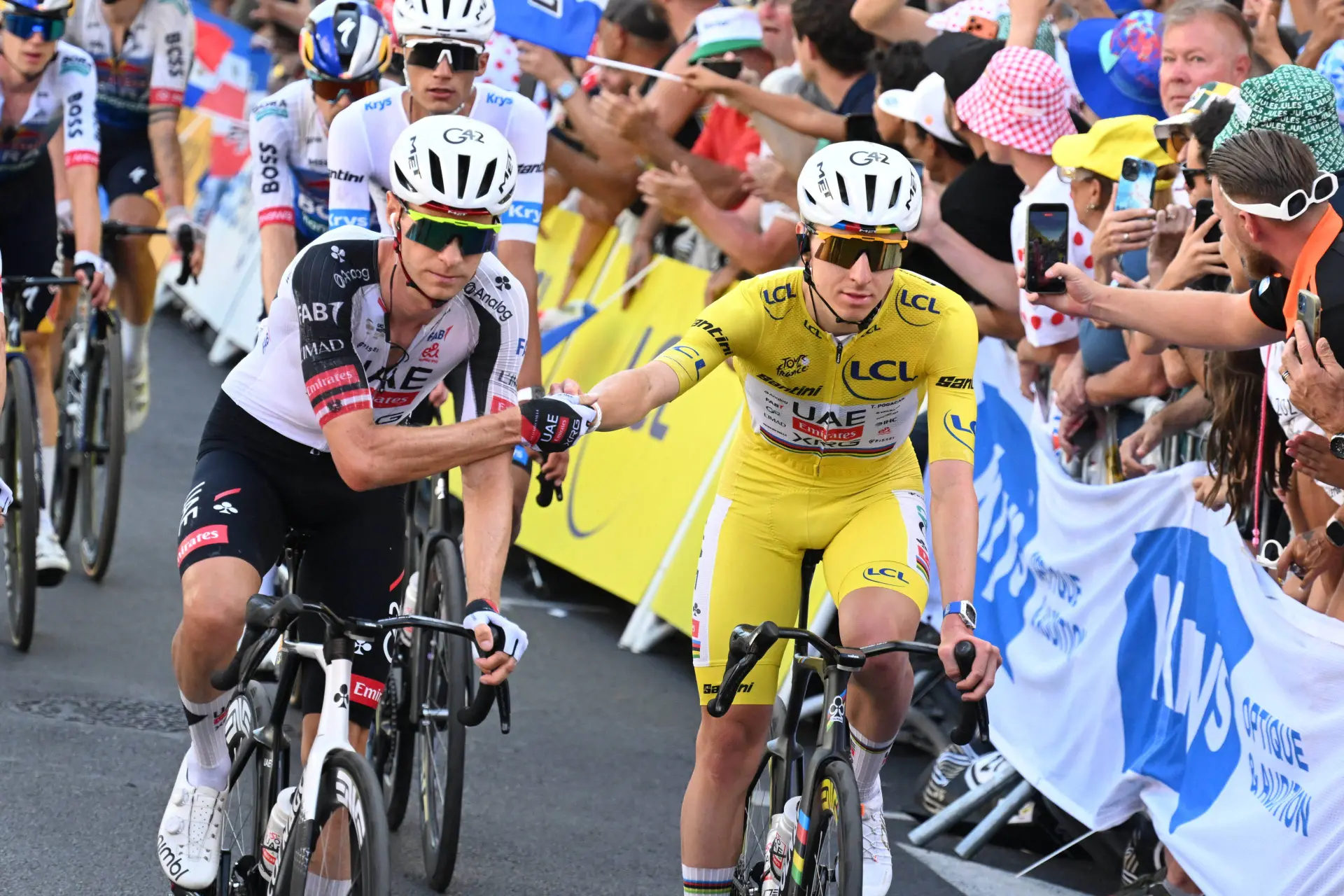
Tadej Pogacar faces a new challenge in a season once again defined by his dominance. After conquering the Tour de France, the Slovenian has chosen not to ease off and will line up at the start of the Vuelta a España.
This is a decision Johan Bruyneel and Spencer Martin analyzed in depth on The Move. For both, the aim is clear: Pogacar wants to complete his personal Grand Slam of the three Grand Tours. Even if that could cost him in his bid to win the World Championships in Montreal.
Bruyneel believes the decision shows that the UAE Team Emirates-XRG rider has set his sights on joining the select group of cyclists who have won all three Grand Tours during their careers. “It shows he absolutely wants to have those three Grand Tours in his pocket,” explained the former rider and sports director.
According to Bruyneel, Pogacar also approached the final week of the Tour de France without pushing himself to the absolute limit, already thinking about what came next. The former director said he had received information from people close to the team indicating Pogacar “never went all out” during the Tour’s last week.
“He was basically trying to help Del Toro get onto the podium and already thinking about the Vuelta. Seen now, it makes sense,” Bruyneel noted. That strategy would explain some of the Slovenian’s performances in the closing stages of the Grande Boucle and, in his view, shows how carefully he is planning the entire second half of the season.
Pogacar does not need to be at 100% for La Vuelta
Spencer Martin shares the view that Pogacar starts as the outright favorite in Spain. In fact, he went further: he believes Pogacar does not need to be at his peak to win the Vuelta a España.
“Pogacar doesn’t need to be in top form to win the Vuelta. He’s going to win the Vuelta. If there are no crashes or some unfortunate event, Pogacar wins the Vuelta,” Martin stated.
Bruyneel agrees. The Slovenian arrives without having raced the Giro d’Italia, with a very selective spring build-up, and with the sense that he is still in great physical condition. Moreover, as he explained, those who know Pogacar well stress that he is a rider who simply loves to race.
There is another factor: records. “Some say he doesn’t chase records or statistics. Personally, I don’t believe that one hundred percent,” Bruyneel admitted. In his view, Pogacar is “ticking things off the list,” and completing the set of all three Grand Tours is clearly one of them.

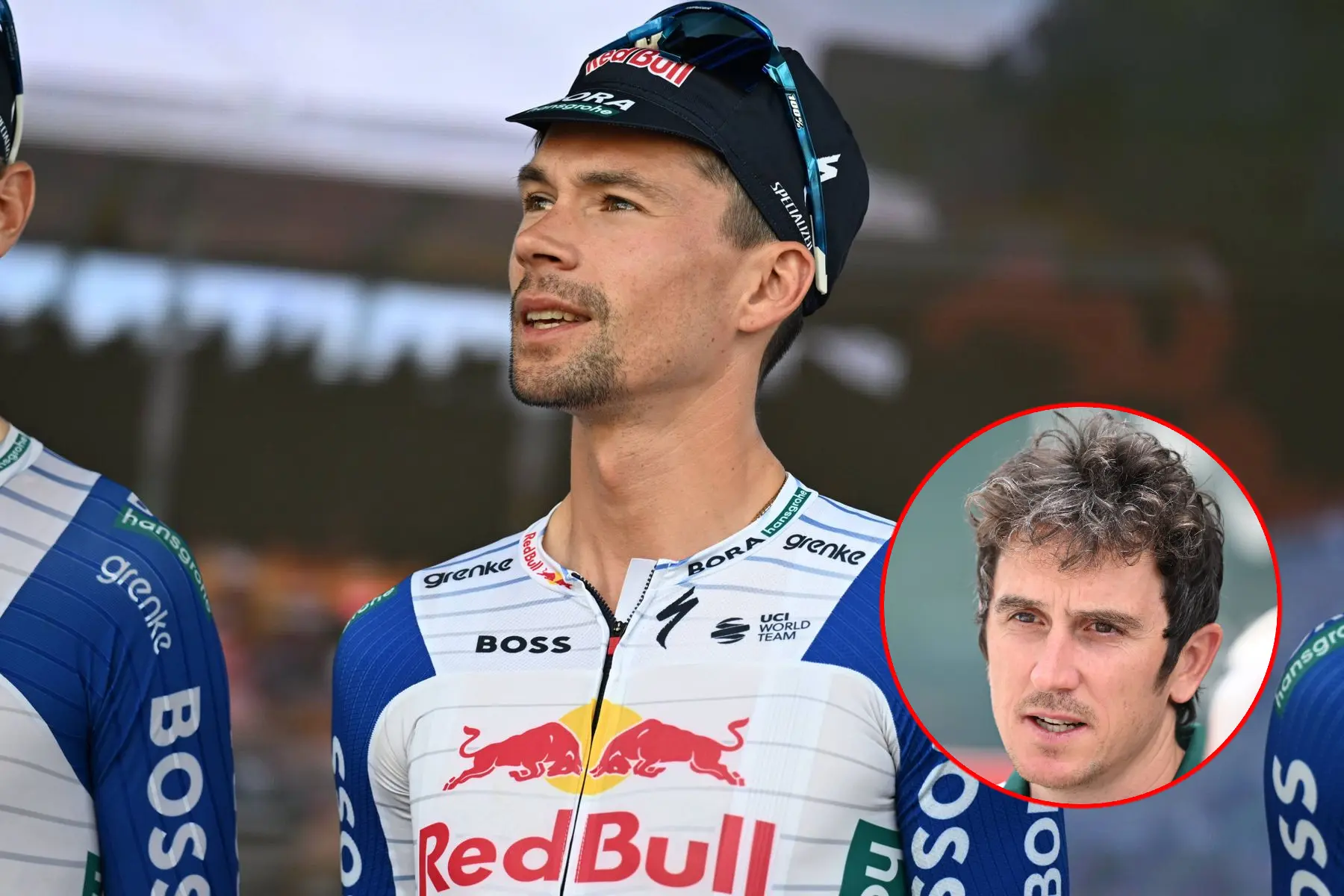
Tadej Pogacar, favorite to win La Vuelta
Eight riders have already done it
Victory at La Vuelta would admit Pogacar to an ultra-exclusive club. To date, only eight riders have won all three Grand Tours over their careers: Jacques Anquetil, Felice Gimondi, Eddy Merckx, Bernard Hinault, Alberto Contador, Vincenzo Nibali, Chris Froome, and Jonas Vingegaard.
Pogacar could become the ninth. Bruyneel, who led Alberto Contador’s teams when the Spaniard claimed his first Grand Tours, recalled that feat. Contador won the Tour de France in 2007 and then the Giro d’Italia and Vuelta a España in 2008. “I think he has to do it. There’s no better time than the present,” Bruyneel summed up.
The big risk: the Worlds
The key question is whether three weeks of racing at the Vuelta could end up hurting Pogacar’s main target afterwards: the World Championships.
And here lies the main doubt. Winning the Vuelta may look straightforward for a rider of his level, but three weeks of racing, heat, mountains, and attrition do not come free, even for the world’s best rider.
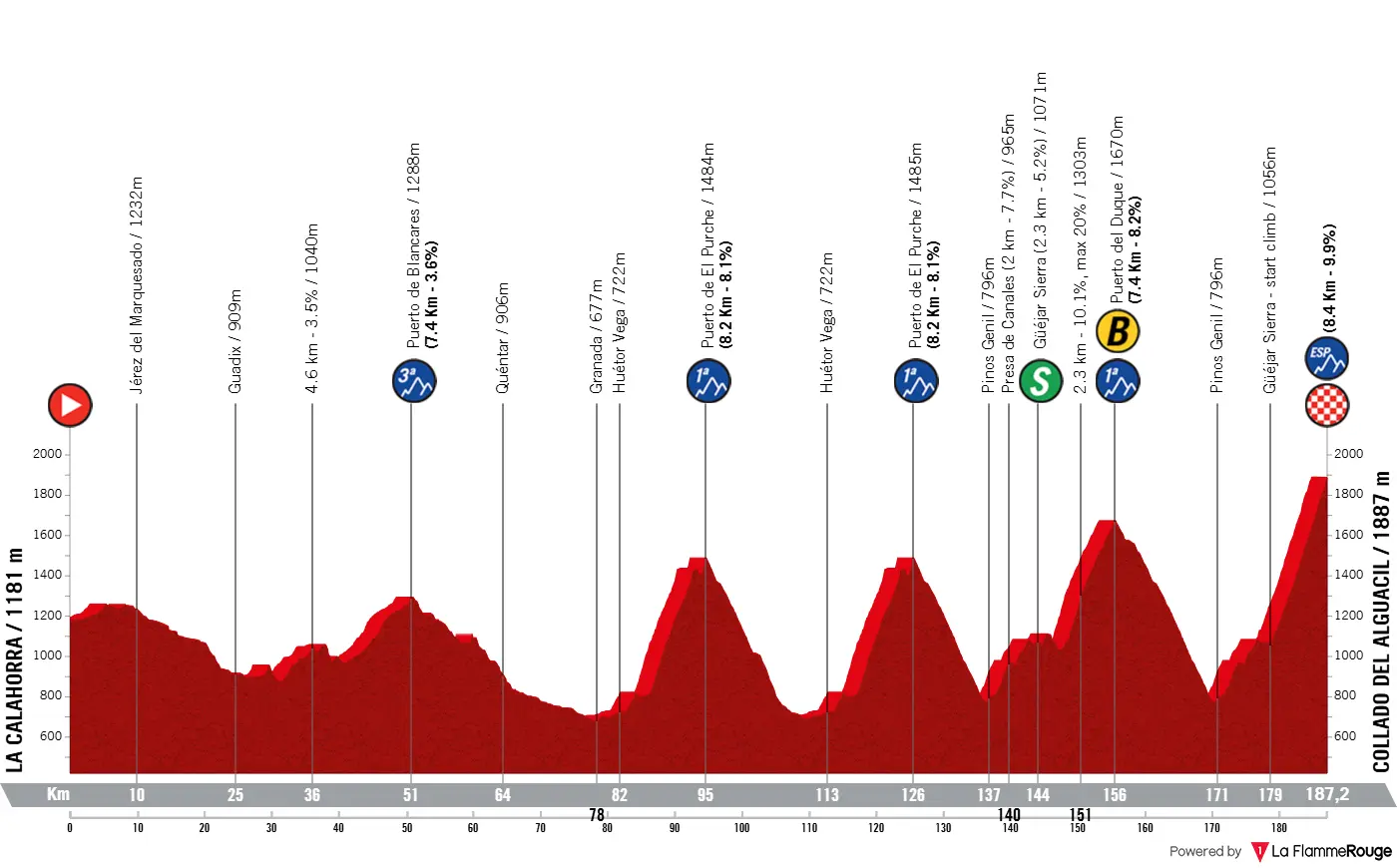
Bruyneel acknowledged that the Vuelta “wears you down,” especially given the conditions he could face in Spain. The 2026 route will run largely through the south of the country, with stages in regions like Valencia, Andalucía, and Granada, where temperatures can be high in late August and early September.
However, Bruyneel himself believes Pogacar can approach the Vuelta very differently from a Grand Tour fought flat out for the general classification.
The idea would be to use the Spanish race as top-quality competitive training, without having to go full gas every day. “I think they’ll do Visma’s strategy at the Giro: circle four days when they’re going to go hard, basically win the race, and plan Pogacar’s training for the Worlds around the Vuelta,” Spencer Martin suggested. That approach would allow the Slovenian to win the Vuelta without a constant three-week effort.
Read also
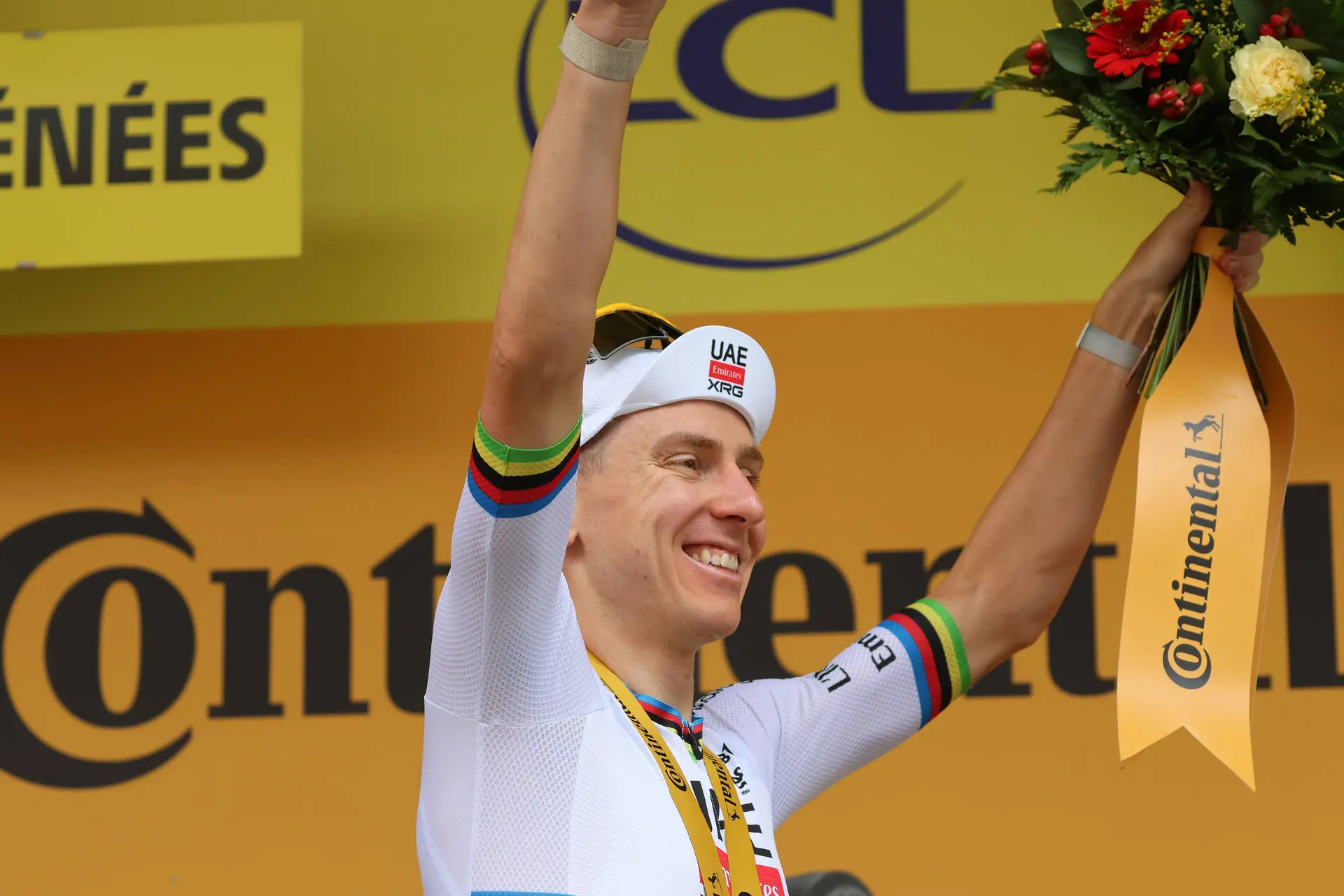
Can he win the Vuelta and then the Worlds?
This is the crux. Bruyneel believes 2026 is probably the best time for Pogacar to try to complete the three Grand Tours, precisely because this year’s Worlds demands less specific preparation than what awaits in future seasons. “This year is probably the best year to do it because the Worlds needs less specific preparation than the upcoming World Championships,” he explained.
Pogacar will, naturally, be one of the leading favorites at the Worlds. But Bruyneel warns the calendar could change a lot in future. “If he goes back to the Tour, which he’ll probably want to do, I’d say it would be better to skip the Vuelta and prepare specifically for the Worlds,” he noted.
In other words, the 2026 Vuelta could be the exception rather than the rule. Pogacar now has a chance that may not come around so easily again: he reaches the end of the Tour in peak form, he hasn’t raced the Giro, and he can use the Vuelta as an extension of his build-up before the Worlds.
La Vuelta, a race for second place
Martin and Bruyneel reached a near-unanimous conclusion: Pogacar is the overwhelming favorite and the real battle lies behind. Bruyneel put Felix Gall as the main candidate for second place, while Martin also rated Oscar Onley’s chances, especially given his freshness and motivation.
But both agreed on one idea: while the other contenders fight for the podium, Pogacar could be racing on a completely different level. “We’re rearranging deckchairs on the Titanic. These riders are going to fight for second place,” Martin joked.
The line captures the scenario perfectly. If Pogacar avoids crashes and mechanicals, his superiority looks too great for anyone to challenge his victory.
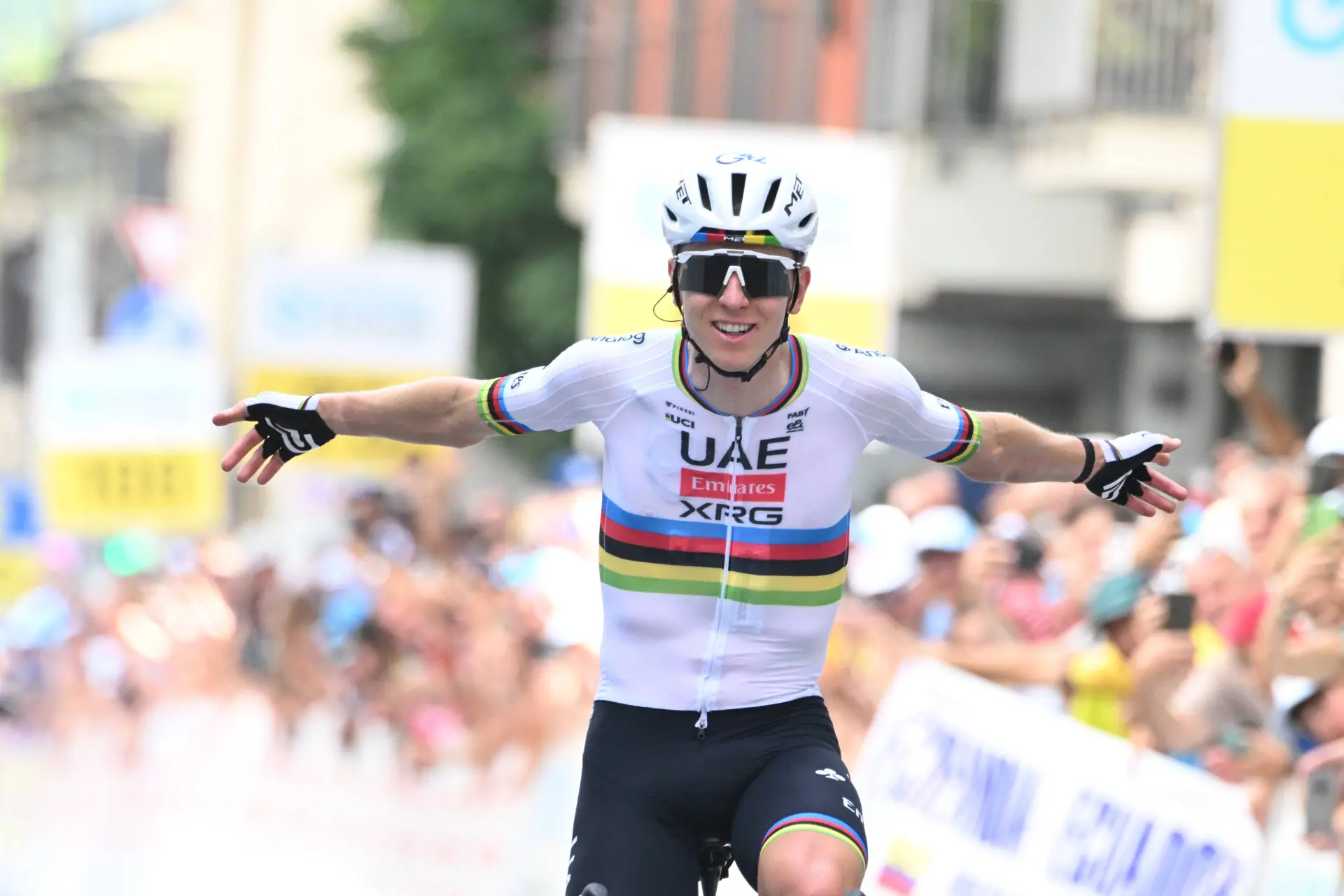
Pogacar wants to write another chapter of history
The Slovenian faces a historic opportunity. Winning La Vuelta would complete his set of Grand Tours and make him the second rider to do so in 2026, after Jonas Vingegaard. And all with the Worlds just a few weeks later.
The big debate is not whether Pogacar can win La Vuelta. Bruyneel and Martin seem clear: barring incident, he should. The real unknown is another: how much will winning La Vuelta cost him when it’s time to fight for the rainbow jersey? Pogacar seems convinced he can have it all. La Vuelta, the Worlds, and then Il Lombardia. His season is far from over. And that ambition could turn the end of 2026 into another historic chapter in his career.
Juan LarraCycling Journalist
Juan Larra is a writer for Cyclinguptodate and editor-in-chief of Ciclismoaldia, where he has played a central role since its inception. Under his leadership, the website has become a trusted source for professional cycling coverage, offering in-depth analysis, news, and feature stories.
A sports journalist with over 20 years of experience, Juan earned his degree in Journalism from the University of Seville in 2007. He began his career covering a wide range of sports—including football, basketball, Formula 1, MotoGP, tennis, and cycling—for platforms such as the official La Liga app, Vodafone and Movistar websites, NBA Blogdebasket, and Cadena Cope, honing his skills in writing and editorial management.
In addition to his work at Ciclismoaldia, Juan contributes to Cyclinguptodate and serves as editor-in-chief for the tennis-focused site Tenisaldia. Throughout his career, he has conducted exclusive interviews with cyclists and sports figures, provided detailed analysis of competitions ranging from local Spanish races to major international events, and acted as a special correspondent at prestigious races including Paris-Roubaix, the Tour de France, and the Vuelta a España.
Juan’s combination of experience, expertise, and direct access to athletes has established him—and the platforms he leads—as authoritative voices in professional cycling.
claps 2visitors 2
Just in

Popular news
Latest comments
- The 10 best male pro riders of the last 8 decades - From Merckx to Pogačar to...??? Won't mention them all but only the first two: no. 2 Eddy Merckx and NO. 1 - The one and the only...The Greatest Of All Time - The G.O.A.T. ... TADEJ POGAČAR alias POGI alias BABY HULK alias THE SLOVENIAN ALIEN Anyone got anymore names?😃😃😃PogiSloFans15-08-2026
- Volta Portugal is incompetent race organizers and not fit to orginaze a race. Total amateurs.miguel15-08-2026
- Johan, don't you worry, Pogi can do it all... the Vuelta, the WC and Lombardy... o yeah, let's not forget the European Championships in Slovenia. He's gonna win everything, if he doesn't crash or become ill.PogiSloFans15-08-2026
- What Trine actually meant: “I exactly know which races would be the obvious ones for my hubby Jonas, NONE!!! And I know he will never recover from that collarbone injury. Maybe next year... MAYBE!!! So no racing till then. Jonas still has to finish of the chidrens rooms and the bathroom. Capish?" PS: Sarcasm press.PogiSloFans15-08-2026
- If that is so, then he has a great wife👏🏾👏🏾👏🏾cyclingfan2615-08-2026
- I’m not necessarily an Ayuso fan, but definitely not a hater. But I feel bad for the guy. Wins a stage race, 2nd in another. Top 10 at the TdF. And they call it a rocky season. He’s 23, ten years ago this would have been his first season after coming out of U23 racing. Yes it was rocky in regards to the crash, but historically if a team had a 23 year old that won a stage race, 2nd in another, and top 10 in the TdF he would be hailed as a second coming. Today they almost call him washed up.mij15-08-2026
- Trine said "You are not going to Canada and that`s final"...........😂
 Senna196015-08-2026
 - well this position is a leap of faith for PL to make LOLmij15-08-2026
- I actually love a combination of a run in and then a circuit. gives the best of both worlds, and easier to control a 50km run in than 150km of an open road.mij15-08-2026
- Nobody controls 1300 km, they do rolling closures for sections upto 1-4 hrs. the biggest problem is that riders who are stragglers should not be left alone and also not press hard on a downhill. Crashing at 100 kph poses serious risks left alone a head on collision with a car.abstractengineer15-08-2026
Loading
1 Comments