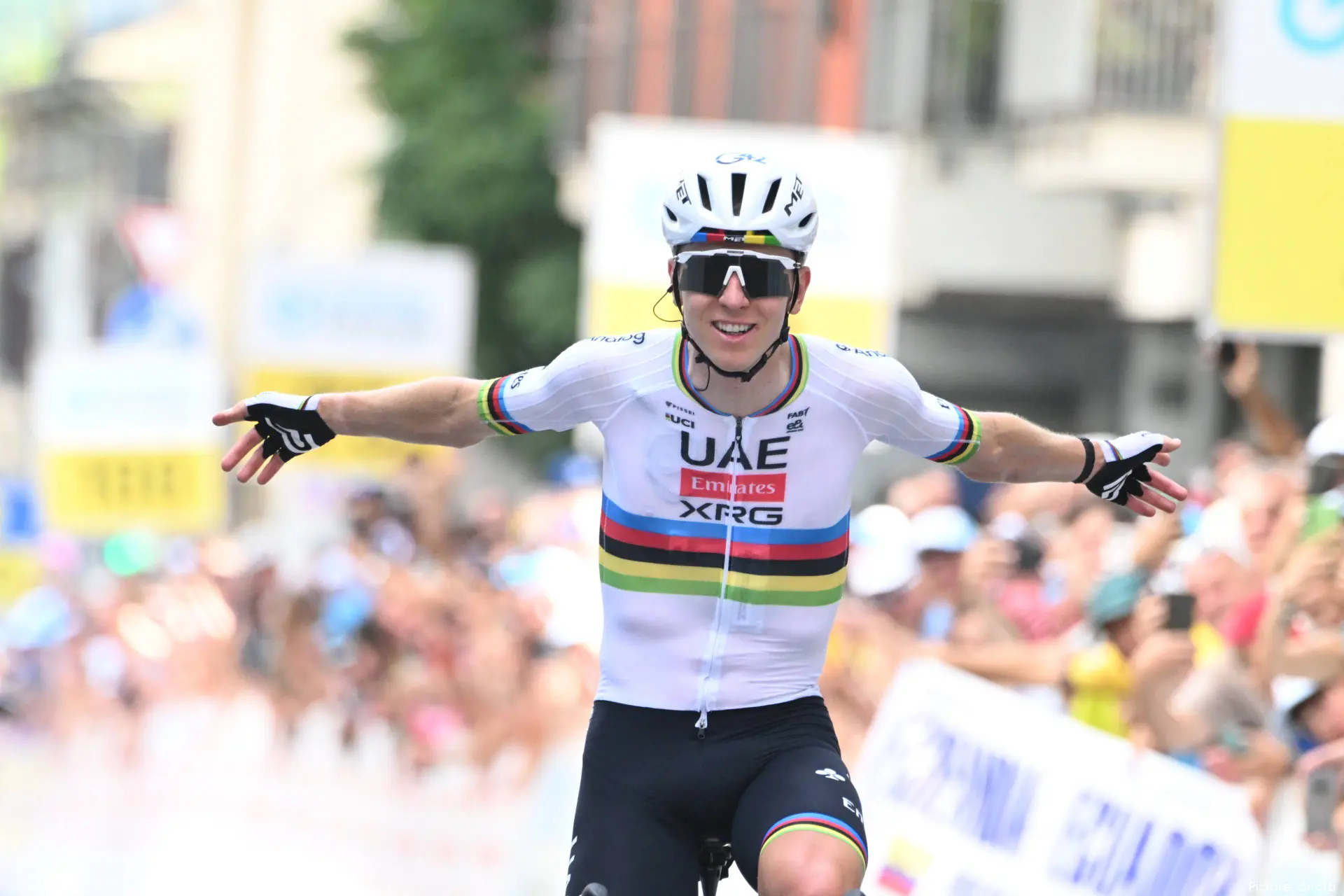
The Vuelta a España 2026 starts with such a clear favourite that it is hard to find a rider truly capable of challenging him. Tadej Pogacar lines up for the season’s final Grand Tour as the standout pick, chasing a historic goal: completing the Grand Tour triple crown.
The Slovenian only needs to conquer La Vuelta to add it to his five Tours de France and the Giro d’Italia he won in 2024. Jonas Vingegaard was the last rider to achieve it, doing so this year after winning the Giro d’Italia 2026.
Pogacar has raced the Vuelta a España only once. It was in 2019, before he became the absolute ruler of the modern peloton, and he finished third. Seven years later he returns as the overwhelming favourite.
But a Grand Tour lasts three weeks, and anything can happen in that time. A crash, an illness, a mechanical, or simply an off day can flip the general classification. So, although no one seems able to beat Pogacar if he arrives at a normal level, there are five riders who could seize on any setback to take the red jersey.
Among them are some of the bunch’s best climbers, such as Felix Gall, Oscar Onley, Mattias Skjelmose, Primoz Roglic, Enric Mas, Cian Uijtdebroeks, Richard Carapaz, Matthew Riccitello, Léo Bisiaux, Harold Tejada, Santiago Buitrago, Mikel Landa, or Valentin Paret-Peintre. But five clearly stand above the rest.
Read also
1. Felix Gall
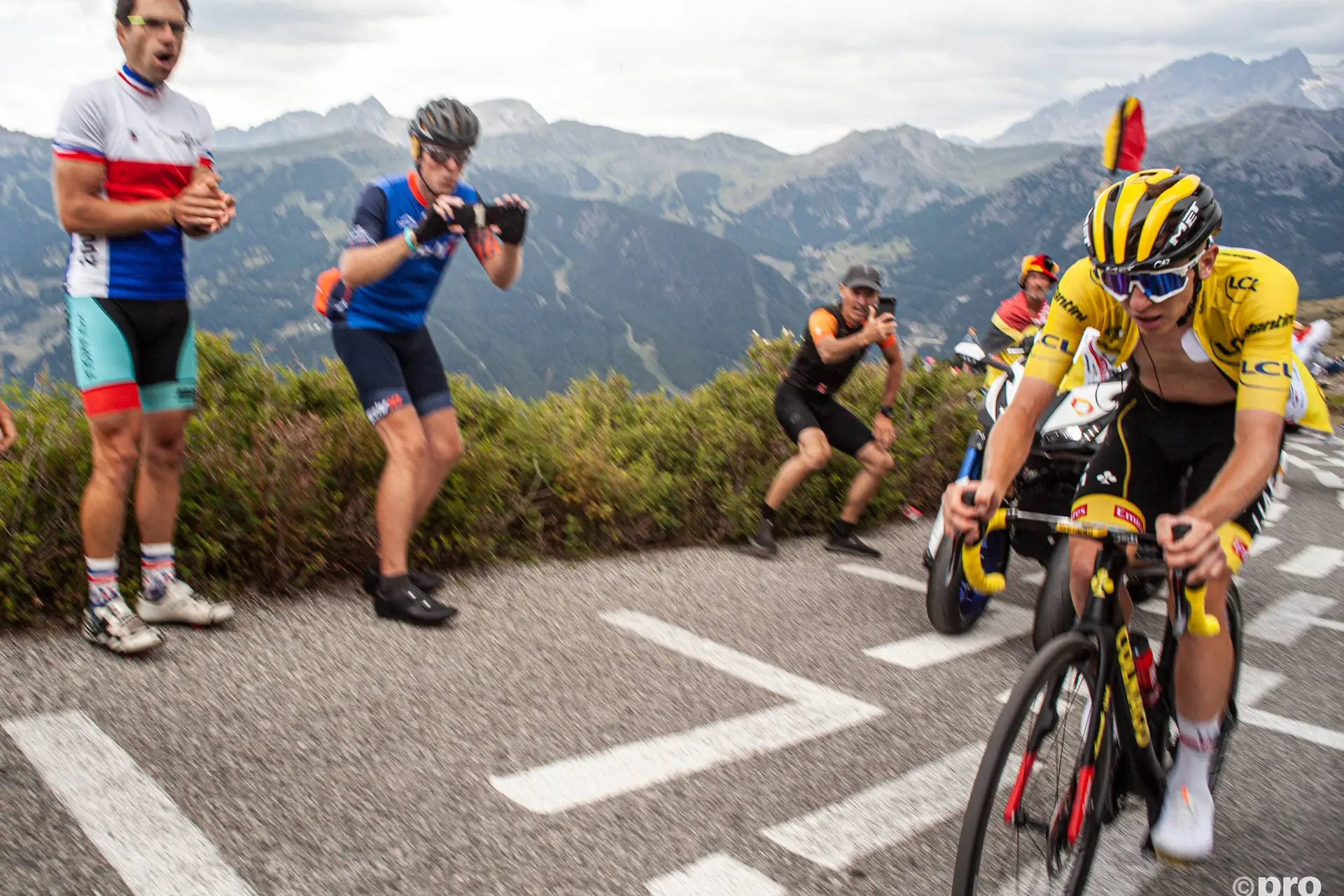
Felix Gall looks the closest to Pogacar right now. The Austrian arrives at the Vuelta a España after winning the Vuelta a Burgos, where he beat Oscar Onley and other riders who will also be at the final Grand Tour of the year. A result that confirms the superb condition he brings into La Vuelta.
Gall also already knows what it means to fight for a Grand Tour in 2026. He finished second at the Giro d’Italia, only behind Jonas Vingegaard, showing he can sustain a very high level over three weeks.
If Pogacar runs into trouble, Gall is probably the best placed to capitalise. And he will not be alone. Matthew Riccitello and Léo Bisiaux will support him in the mountains, which could prove decisive when the toughest stages arrive.

Felix Gall, contender for the Vuelta a España 2026.
2. Oscar Onley
Second place goes to Oscar Onley, who comes to Spain after clawing back the time lost through his absence from the Tour de France.
The Briton suffered a heavy crash at the Tour Auvergne Rhône-Alpes that ruled him out of the Grande Boucle, but his return has been outstanding.
At the Vuelta a Burgos he finished second overall, just five seconds behind Gall. His climbing once again showed he has the legs to compete with top-tier riders.
Onley still has plenty of room to grow and will tackle La Vuelta hungry after missing the Tour.
Pogacar remains several steps above, but if the race opens up for any reason, Onley is one of the young riders best placed to profit.
3. Mattias Skjelmose
Mattias Skjelmose is one of the few riders who can claim to have beaten Pogacar in a major classic when the Slovenian was at full strength.
He did it at the Amstel Gold Race 2025, winning a reduced sprint that also featured Remco Evenepoel.
He now arrives at the Vuelta as Lidl-Trek’s leader after a superb Tour de France. The Dane was sixth overall thanks to a brilliant final week, gaining places and even overhauling his teammate Juan Ayuso, who had started the race with leadership status.
That level allows him to approach La Vuelta with real confidence.
Skjelmose also knows what it takes to race against Pogacar and has already shown he can beat him on a given day. Beating him across three weeks is another matter, but if the Slovenian falters, the Dane has the tools to become a genuine threat for the red jersey.

Mattias Skjelmose beat Pogacar at the Amstel Gold Race 2025.
4. Primoz Roglic
Fourth place in this ranking goes to Primoz Roglic, with one key caveat: his participation in the Vuelta a España 2026 is not yet confirmed. If he does start, it would be impossible not to list him among the prime contenders.
It is true the Slovenian no longer seems to be the rider of his very best years. But there is one race he knows better than almost anyone: La Vuelta.
Roglic stands alongside Roberto Heras as the race’s all-time record holder, with four overall victories. His experience here is unmatched, and he knows exactly how to manage three weeks, time bonuses, mountain stages, and moments of tension. He is also a compatriot of Pogacar and knows his capabilities inside out.
If he does line up, he will be one of the riders the UAE Team Emirates XRG leader must watch most closely. As long as the legs respond, Roglic can never be ruled out at the Vuelta a España.
Read also
5. Richard Carapaz
The final spot goes to Richard Carapaz, although the Ecuadorian has already made it clear that the overall is not his main objective. That does not mean he should be discounted.
Carapaz arrives after finishing eighth at the Tour de France, where he approached the race with a stage-hunting strategy. It worked: he took two wins at the Grande Boucle.
The difference is that the level of GC competition at the Vuelta a España will, in principle, be lower than in France. So if Carapaz finds a couple of good days and decides to switch plans, he could throw himself fully into the fight.
He also has something few possess: the courage to attack even when it looks impossible.
Neither Enric Mas nor Cian Uijtdebroeks seem to have, at present, enough arguments to really trouble Pogacar in normal conditions, which is why Movistar Team are not included in this ranking, but Carapaz can certainly try. The Locomotive of Carchi has already proved he does not need to be the top favourite to end up as a main protagonist.
Pogacar’s five main rivals
| Position | Rider | Team | Main argument |
| 1 | Felix Gall | Decathlon CMA CGM | 2nd at the Giro and winner in Burgos |
| 2 | Oscar Onley | Netcompany INEOS | 2nd in Burgos and excellent form |
| 3 | Mattias Skjelmose | Lidl-Trek | 6th at the Tour and beat Pogacar at the 2025 Amstel |
| 4 | Primoz Roglic | Red Bull - BORA - hansgrohe | Four-time La Vuelta winner |
| 5 | Richard Carapaz | EF Education-EasyPost | 8th at the Tour and two stage wins |
Of course, this ranking should be read within a very specific scenario. There is currently no rider who seems capable of beating Pogacar over three weeks if the Slovenian arrives in top shape.
The five names above appear here because they could exploit a different script: a bad day, a crash, illness, a mechanical, or even the withdrawal of the overwhelming favourite.
If Pogacar is at 100%, it looks virtually impossible. And probably even at 70–80% of his best, he would still be the rider to beat.
That is precisely the scale of the challenge his rivals will face at the Vuelta a España 2026: they will not only need to prove they can win a Grand Tour. They will have to show they can do it by exploiting any crack left open by the best cyclist in the world.

Jorge BorregueroWriter
Jorge Borreguero is a journalist with a degree from the Complutense University of Madrid and has been a writer for Cyclinguptodate and Ciclismoaldia since early 2023. In this role, he has played a key part in the evolution of the website, particularly as a specialist covering Movistar Team. He regularly writes race reports, analytical pieces, and in-depth features about the team, and has conducted exclusive interviews and attended multiple team presentations, providing readers with firsthand insights into one of the leading professional cycling squads.
Throughout his career, Jorge has maintained a strong focus on sports journalism, gaining experience across a variety of disciplines, including basketball and football. However, his current work is almost entirely dedicated to cycling, contributing extensively to Ciclismoaldia and its sister website Cyclinguptodate. For these platforms, he combines thorough research with detailed reporting to deliver high-quality content, ranging from race previews and results to expert analysis of teams and riders.
Jorge’s reporting is marked by accuracy, depth, and a commitment to providing readers with reliable and authoritative information. His direct engagement with teams, athletes, and events ensures that his coverage reflects firsthand knowledge and professional insight. Through his work, he has established himself as a trusted voice in professional cycling journalism, bridging the gap between the sport and its global audience while maintaining rigorous editorial standards.
claps 5visitors 3
Just in

Popular news
Latest comments
- Jonas is declining now. A podium next year would be a good result for him.Renz16-10-2026
- unpredictability is not an issue. Most riders not named Pogi have that. The excuses are and the blaming teammates and other riders for insufficient support and blocking are. if weight is an issue get a nutritionist. If aircon is not working switch rooms. Position yourself or get your teammates and DS to keep reminding you of basic stuff if it is difficult to remember in a long race. Dont whine about other riders not working with you, use tactics yourself or get your DS to develop the tactics. Dont talk about noballs when you yourself have no ballsabstractengineer16-10-2026
- It’s worth remembering that cycling journalism has entered it’s “Shit-Stirring Hot Takes Winter” now in order to keep the clicks and views trickling in.wrsty16-10-2026
- Well that would be a major disappointment. The last two years are the first times I have bothered watching the last day. Maybe at worst it could be the 2nd last day but two classic finishes and then wompWaranga16-10-2026
- Vingegaard was the one showing signs of weakness. He was looking more likely to lose a podium spot or two than to make inroads on Tadej.Papijan16-10-2026
- Disagree with Ardennes, he has never done well there, not even a top 10. Giro Vuelta, avoid the stacked TDF where crashes can derail the rest of the season and even if he avoid that, at best a top 5 is possible. He is 31, no more time left for testing/trying.abstractengineer16-10-2026
- Respectfully disagree. He and the team will want to qualify the result at the Tour against TP, JV, and the other GT specialists who weren't in Spain. And remember, the team is looking for a new title sponsor. Or, at least a co-sponsor. So a run at the TDF would go a long way in securing that! As a fan of the team dating back to the Indurain days, I would love to see it. But I do not think that he can really take it to them in July. But I do think he will try. I do agree that he can do good rides, if not win, in Belgium.coachjulianx16-10-2026
- Kid, you just had to keep your mouth shut, now you opened it and it's too late, everyone knows you're dumb.elosanjos16-10-2026
- “He looked less than brilliant” then Pogacar attacked and distanced all his rivals, again! I swear these support riders are purely doing pr for their leaders at this point.Pedalmasher16-10-2026
- PogiFanBoy just doesn't like you attacking his Tadej boy ! He's quite protective of him as you may have noticed. No one can say a bad thing about him or fear reprisal.frieders316-10-2026
Loading
Write a comment