Paul Seixas saved his Tour de France in Barcelona, but it took a lot of nerves - "The entire convoy was stuck"
Cycling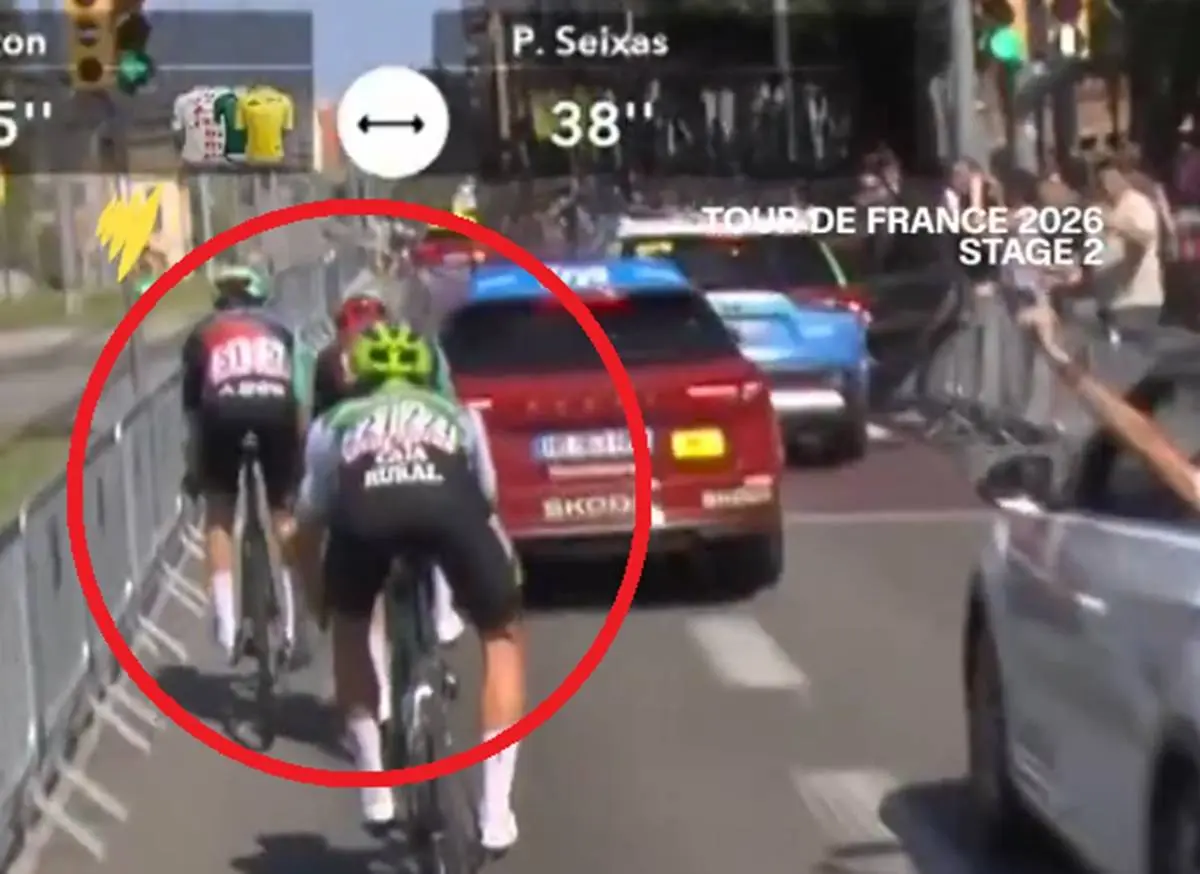
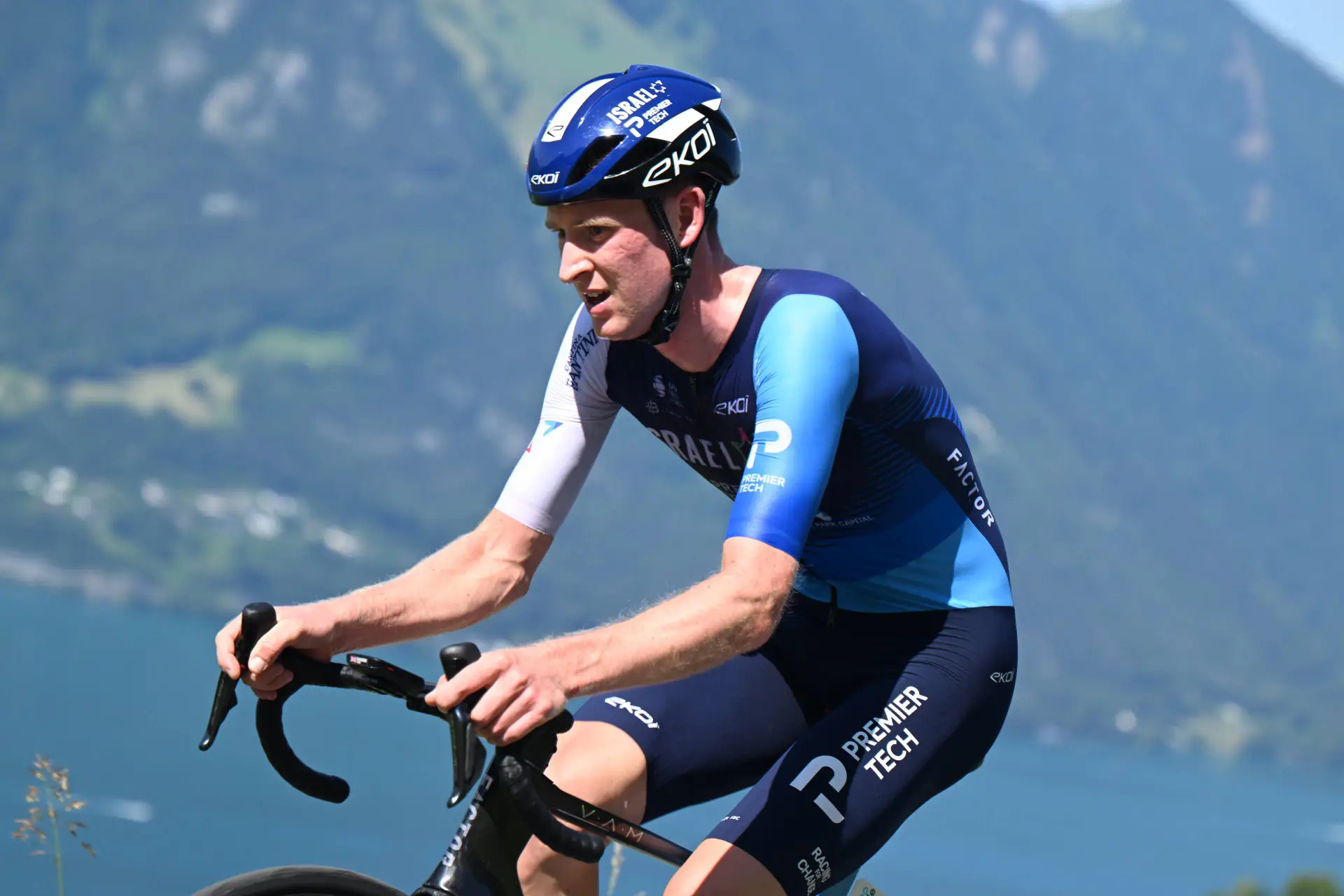
Paul Seixas started the Tour de France with high ambitions, and they could've ended on stage two. The Frenchman had a highly dramatic pursuit of the peloton through the streets of Barcelona, having a badly-timed puncture, a near-crash with an organization car radio issues; before having to battle it out with UAE and Visma on the ascents to the Alto de Montjuic.
Horribly timed flat tire
The team's problems began as the race entered Barcelona city itself. Beforehand it had been a rather calm day, whilst Cees Bol and Daan Hoole then led the French team in the positioning battle that would ensue. However, the team was quickly plagued with several punctures. Firstly Olav Kooij, which was not a major issue for the team's ambitions on the day; but shortly after also Paul Seixas.
"The final climb before entering the circuit in Barcelona started with Olav Kooij getting a flat tire while we were bringing up water bottles. Up until then, everything was going well. And at roughly the same time we were helping Olav, we got a radio call about a mechanical problem and a flat tire for Paul Seixas," Julien Jurdie, team DS, recalled in words to Cyclism'Actu. "So, car number 2 came back up to help him. Aurélien Paret-Peintre swapped bikes in the meantime. It was all planned; the measurements are almost identical to Aurélien's".
There was a quick reaction, but the timing of the mechanical still made it quite difficult. Seixas had to change bikes again and, at the speed the peloton was travelling at, it was not easy to close it down. "Then, we had to get back into the convoy, which isn't easy. We were getting close to the circuit, everyone was going all out. And then we found ourselves in a difficult position, simply due to the unfolding events of the race: the TotalEnergies team stopped for a mechanical issue on a narrow road. Overtaking was impossible at that point. The entire convoy was stuck, myself included".
Jurdie did not know but when the TotalEnergies car stopped, an organization car was going for the overtake as Seixas was also overtaking on the left - leading to an extremely tense moment that could've ended the youngster's Tour right there. Whilst he avoided a collision, the team's main car simply had no space to move around.
"We had to wait for TotalEnergies to repair their rider and get going again. Naturally, a gap opened up between the back of the peloton and Paul. He used up some energy. We chased him down before we could get back and properly reintegrate him into the convoy, then rejoin the peloton with Aurélien's help".
😬 Hard to watch! 😱
— SBS Sport (@SBSSportau) July 5, 2026
Seixas nearly was on the end of a chain reaction within the convoy after a Total Energies rider and team car stopped abruptly!
🇫🇷 #TDF2026 | July 5-July 27 | Every Stage on SBS 📺 pic.twitter.com/mDHai0jcLL
Read also
Seixas managed to regain position in the peloton, however the energy and teammates that were spent in that pursuit could have proven to be quite costly - whilst the team's solid position at the head of the peloton, previously achieved, was now gone.
"Afterwards, Tiesj Benoot brought him back to the front so we could approach the start of the circuit in a fairly comfortable position. It's clear you're expending energy, you're using up your reserves, you're leaving watts on the ground."
Radio problems hamper Seixas' strategy
But the problems did not end there. By chance, neither UAE or Visma attacked the climbs of the Montjuic with their leaders. It was Tobias Johannessen who led the thinned-down GC group up the final steep climb, putting Seixas under pressure but not dropping him.
However beforehand, the work of Tiesj Benoot looked to induce confidence of Seixas' level. That was not the case, instead, Seixas was communicating with the team car that he would not have the legs to attack but the distance between himself and the team car made the radio communications unclear - which was the basis for the decision to have Benoot working, despite going against what Seixas wanted.
"Yes, we were inevitably a bit too far back at times. It's clear there was a lot of excitement at that point, so communication wasn't perfect," Jurdie admits. "It was quite complicated, but honestly, I think we came out of it rather well. It's part of racing. It's clear that when you have two punctures in one kilometer, it shakes things up a bit, especially when it happens at a crucial moment. If it had happened 70 or 80 kilometers earlier, there wouldn't have been a problem. Take Del Toro's case: not much was happening at that moment, the peloton was riding but slowing down".
But the French team managed to save the situation. Seixas finished the stage in the group that was three seconds behind stage winner Isaac del Toro, and climbed to sixth place in the overall classification in the process.
"Without that, is he competing with the best? Yes, it's clear you're expending energy, you're using up your reserves, you're leaving watts on the ground. In the finale, especially in that sprint... there were no attacks on the final climb with 2.5 kilometers to go, it was a really tough sprint. He lost a few seconds in the process, but I don't think we'll be remembering that in three weeks in Paris".
"The main thing is that there wasn't any more damage," he sighed of relief. "We were mainly focused on getting Paul back before the foot of the climb, because we knew the peloton was going to split in two and that there would be gaps with the barriers. Commissioners. That would have really put us in a very difficult position. Despite everything, he's not doing too badly."
Rúben SilvaEditor-in-Chief
A founding contributor to CyclingUpToDate since its launch in January 2022, Ruben Silva has played a central role in shaping the site’s editorial direction and long-term growth. Before joining the project, he built his experience through independent blogging at Echelons Hub and by producing race previews for Ciclismo Internacional, developing a strong analytical voice rooted in daily engagement with professional cycling.
Beyond editorial work, he has been closely involved in the expansion and coordination of CyclingUpToDate’s wider network, helping establish and support sister platforms across multiple languages. This includes ongoing collaboration with CiclismoAlDia (Spanish), CiclismoAtual (Portuguese), WielrennenUpToDate (Dutch), and RadsportAktuell (German), contributing to a shared editorial vision and consistent international coverage.
He also helps oversee editorial governance across the network, setting standards for accuracy and consistency and coordinating updates or corrections when needed.
Originally from the Porto metropolitan area in Portugal, he holds a bachelor’s degree in Geography. His path into cycling journalism was shaped not through formal media training, but through independent reporting, community engagement, and sustained on-the-ground involvement in the sport.
Over the course of his career, he has conducted approximately 100 interviews across road cycling and cyclocross, ranging from one-to-one conversations and online formats to press conferences and on-site pre- and post-race coverage. His interviews include leading riders, team managers, and prominent figures within cycling media: Tadej Pogacar, Jonas Vingegaard, Mathieu van der Poel, Primoz Roglic, Wout van Aert, Joao Almeida and Tom Pidcock; managers like Patrick Lefevere and Joxean Matxin; and YouTube personality Bryan Kennedy (BKXC)...
Within 18 months of launch, he helped grow CyclingUpToDate’s English-language platform into one of the most-read cycling news websites, built entirely from the ground up. As both a professional journalist and lifelong cycling enthusiast, his focus remains on delivering accurate, timely, and well-contextualized coverage.
claps 0visitors 0
Just in
Popular news

Latest comments
- All very good, we know what the word means. But you missed the point of my post. There are two questions to answer. Quote: "Has there been a translation error, or is the author of the piece making a comment on the state of doping within the peleton?!Cyclingsbestfan15-10-2026
- Hey awp, what's your beef with Pogi? So Seixas wins Lombardia and now he's going to demolish Pogi next year or what? You have to understand, Pogi isn't "old" yet, he can be on his highest level until 32 or 33 years old, that's another 4 to 5 years. What more does he need? For many cycling experts he's already the G.O.A.T. and he will keep proving it for the next few years. So what are you trying to say, that 10 years from now young cyclists will be beating Pogi??? Common, pull yourself together and stop making a fool of yourself. Capish? PS: What was this BS?: "I'm not sure Tadej could have beaten him last Saturday. But with his experience he may have been able to." !?!?!? Can you hear yourself? All of a sudden you think Pogi could have lost? Why does your brain work this way?PogiSloFans15-10-2026
- An ILLUSION is something that appears real or true, but is actually false, fake BS or a misinterpretation of reality. Saying that, the anti-doping bodies are an important part of cycling. Thanks to their hard work, the community can live in an ILLUSION that the current cycling is a "clean sport." In other words, cyclists like Pogi, Remco, Jonas, MVDP, Van Aert, Pidcock, Mads Pedersen, tilted head Ben Healy... might all be doped to the gills but we'll never know it.PogiSloFans15-10-2026
- i hope they DO, so sven has to eat this stupid argument he’s making.OCexile15-10-2026
- They’ll retire anyway sooner or later, so get over it!Lozza15-10-2026
- Hope it’s not gone for good!Lozza15-10-2026
- I can no longer take you seriously here. I suppose you don't want to be a part of our community.awp15-10-2026
- Keep it coming Fabio!Cyclingsbestfan15-10-2026
- I was sorry to hear of the death of your Mother. My condolencies Valentina. The article started talking about doping and said "Thanks to their hard work, the community can live in an "illusion" that the current cycling is a clean sport." Has there been a translation error, or is the author of the piece making a comment on the state of doping within the peleton? The former surely?Cyclingsbestfan15-10-2026
- It does not take a genius to understand the situation.abstractengineer15-10-2026
Loading
Write a comment