"One day I called my mother crying, saying I didn't want to cycle anymore" João Almeida on growing in cycling abroad, Pogacar, Grand Tours and more
Cycling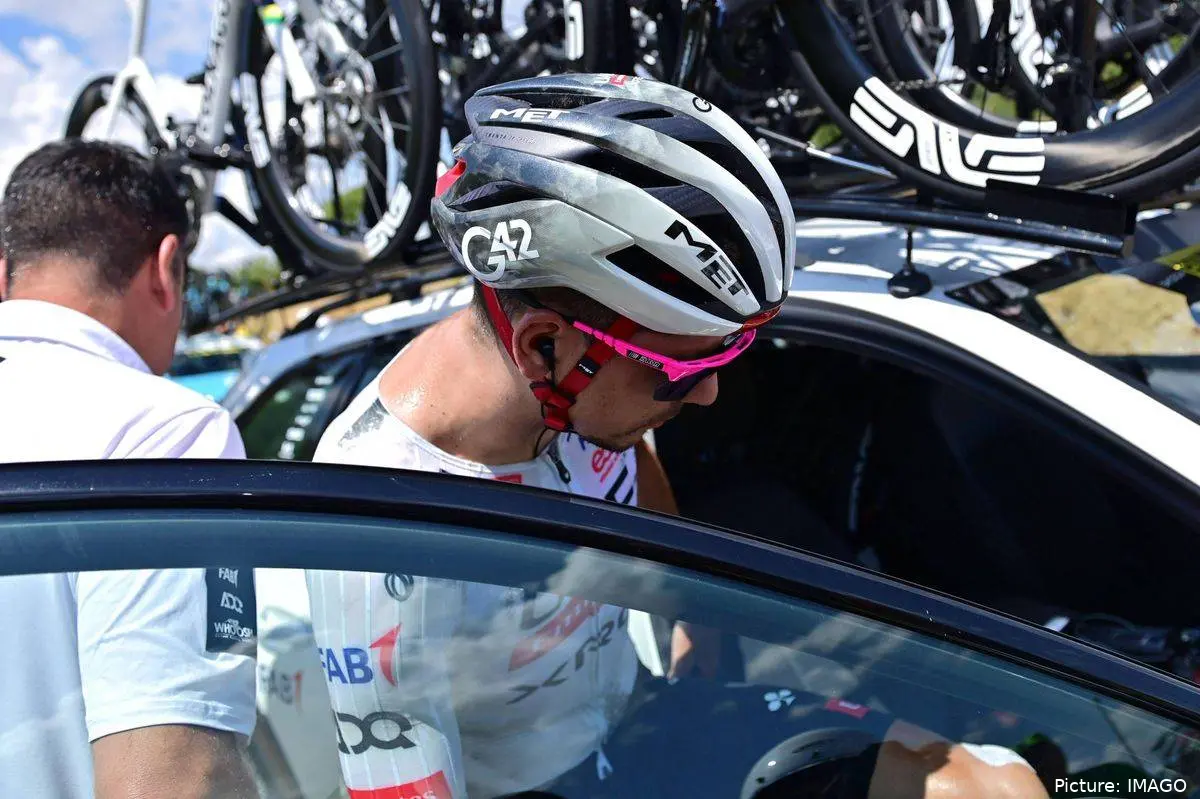
Standing out in today's peloton, marked by the supremacy of Pogacar, Vingegaard and Evenepoel, is a task for few. João Almeida is one of those exceptions, not just because of the quality he demonstrates in the races, but above all because of the way he thinks about and interprets cycling. However it has not always been bright for the Portuguese, who tells a story of a more difficult time.
There is a rare lucidity in the way he manages effort, combined with that combativeness that is so characteristic of him, which comes through in every attack and every defense of position. In an interview he gave to Ciclismo a Fondo, this directness was even more evident: he speaks bluntly, without adornment, saying exactly what he means.
Away from the pressure of competition, sitting on a sofa on a rest day, you can better understand the essence of the Portuguese: the resilient racer, loyal to his teammates, and the boy who grew up cycling with a poster of Rui Costa stuck to his wall. The shyness he felt when he met his idol for the first time contrasts with the way he inspires a new generation today. The boy who dreamed of becoming a cyclist is now the face that many young people hang in their bedrooms, as they nurture the same dream that was once his.
The time he lived through reinforced that rise. "Yes, without a doubt. I've achieved many very good victories. I feel like I've made a leap this year, a sign that I'm doing things very well," he admits, stressing that his performance hasn't surprised him.
"The truth is, yes. When you train and do things well, I'm usually a rider who knows what's in my legs. You're aware of what you can do; it's another matter to achieve it because there are aspects you can't control: If you fall, for example, as happened to me in the Tour de France".
The Tour de France crash
The fall that put him out of the Tour still marks him. He abandoned the race after a high-speed crash on stage 7 before reaching the Mur-de-Bretagne, losing minutes and sustaining harsh injuries. "A little bit, yes. I think I could have done a lot of good. Not just personally, but as a team it was painful to leave them so soon."
He recalls that, at the moment of impact, he quickly realized how serious it was: "Yes, I immediately felt in my body that it had been a very hard fall, although I wasn't seriously hurt. At the moment of impact, it's normal to feel pain; then, when I saw that I had a broken rib, it was impossible to continue. At the start, you know you're in trouble, but to get up, get on the bike and get to the finish line, you can make a sacrifice. Maybe my hands hurt more; I thought I'd broken a finger, but I didn't feel like my rib was fractured. I started to notice when I was having an X-ray and a bruise started to appear near my ribs. So I said to the doctors: "Look, can you take a look here, because when I touch it, it hurts. They examined it and indeed it was broken."
The Portuguese rider still tried to keep going, but abandoned two days later: "I knew I was trying the impossible, but I wanted to try. I didn't want to think about having to give up, especially without even trying. But I realized I couldn't go fast. I gave up when I realized that I had exhausted all possibilities."
For João, his commitment to the team is unwavering. "When I have a job, I give everything for it. In that case, I couldn't do any more, I'm not God (laughs)". He suffered watching the Tour from home, but kept his composure: "It's tough to experience it from home knowing that you should be there doing your bit, although it could have been worse."

Almeida suffered a fall and had to abandon the 7th stage of the Tour de France
Tadej Pogacar's influence
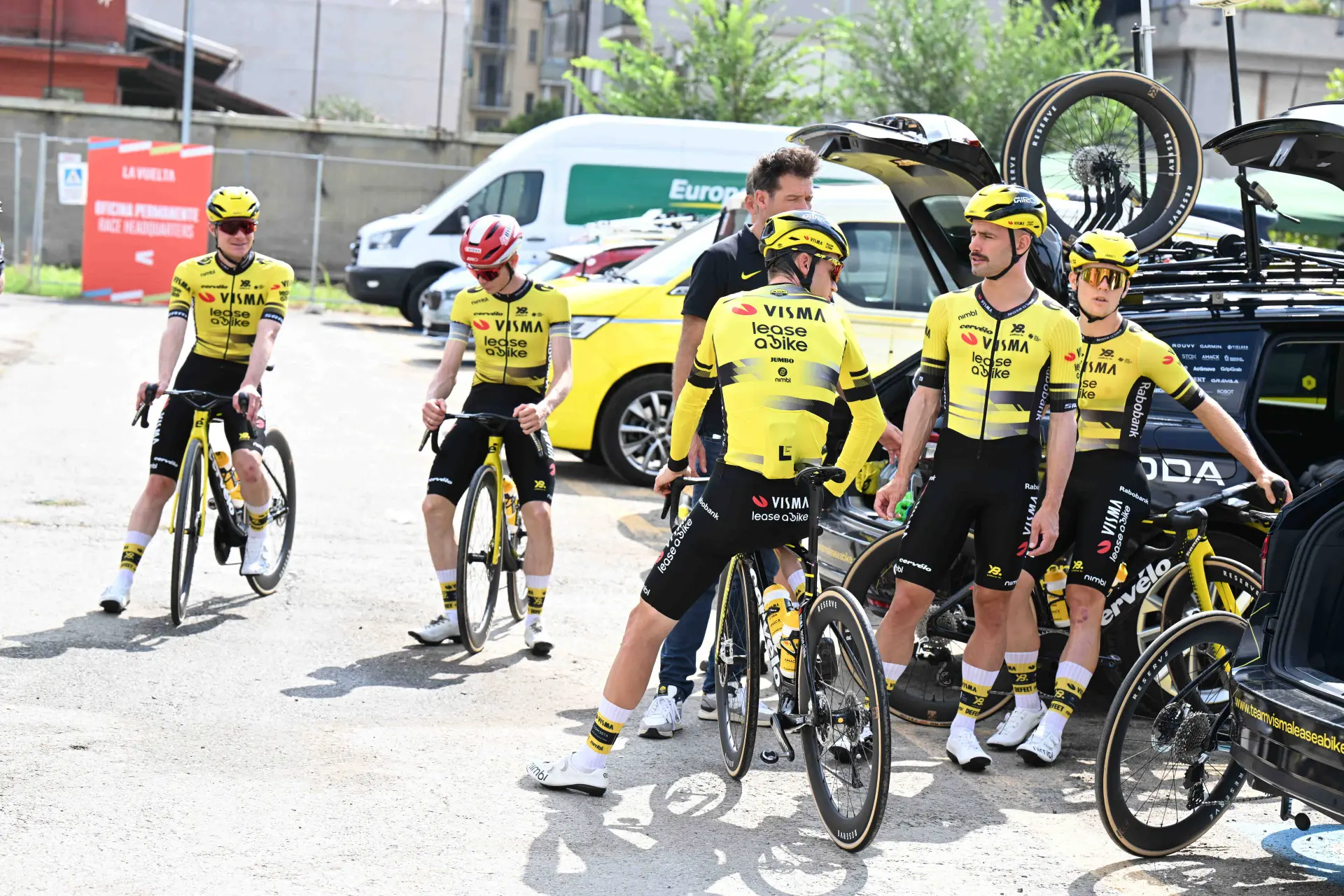
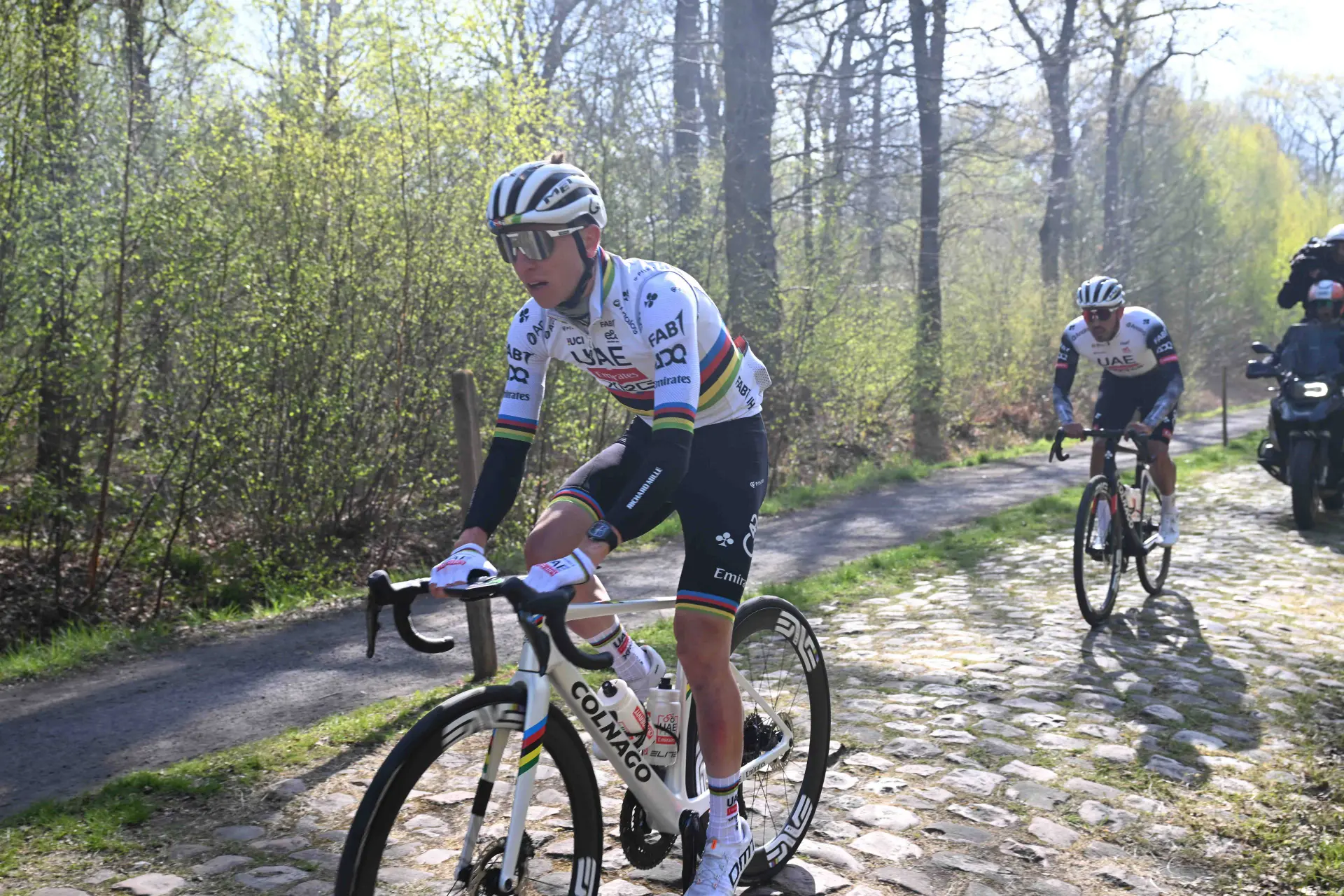
And talking about Tadej Pogacar makes him almost smile and leads him to utter a series of compliments, just as he did on the sidelines of the Velo D'Or ceremony, where he took to the stage on behalf of Emirates:
"I like it. It's challenging and, at the same time, I'm calm because we always have a plan. You're part of history when you're with him; for me he's the best cyclist ever. He's someone special. It still impresses me to watch him race because what he does isn't normal. There are times when I'm very good and Tadej is always one level above. And you say, it's not normal, he's an 'alien'."
Working to be at the level of the best is a daily stimulus. "My motivation every morning to train is to be the best version of myself... I hope it's always close to Tadej. But at the end of the day, it's about making the most of what my legs have."
In such a fertile age for talent, João Almeida has made a name for himself among the best in the world: "Yes, there's room for me too; there are a lot of races. Things don't always go smoothly or according to plan, either for me or for others. Sometimes one person's bad luck is another person's good luck. You have to take advantage of opportunities when races come up in which someone falls, someone doesn't feel well, someone gets sick... You have to be able to identify the great moments that define a race. Sepp Kuss is a good example of this, when he won the Vuelta. That happens quite often, if you think about it. The strongest doesn't always win".
The best win of the year
He defines himself as "a consistent cyclist, a fighter" and admits that it's difficult to choose the best victory: "I don't know, I have several good ones, but I really like this year's Tour of the Basque Country. It was the first stage-race I won this season. I'd also highlight the Tour de Suisse, because I won it after making up ground. I haven't won many, so they're all good and of high quality. It's hard to choose just one; they're all important and have something special about them."
Invited to go into more detail about these races, he characterized the Basque Country as a victory of strength and Switzerland as a triumph of recovery, an "Almeidada" as the fans would say. "Yes, because I knew what my form was like, even though I didn't think it was a race that suited me very much. I approached the race differently and won strongly. In Switzerland, I relied on strength as much as intelligence. I set off three minutes behind (after a winning breakaway on the first day, ed.) and from then on I started thinking: Fuck! Where am I going to make up those three minutes? Because the course wasn't very difficult, there were no steep climbs. But I did it".

Almeida sealed victory in the Tour of the Basque Country with a win on the final stage in Eibar
The beginning of beginnings and Rui Costa
His story began early, but without grandiose plans. "I used to play soccer and swim, but I got a bit tired of those sports and wanted to do something different. I'd always ridden a bike and started mountain biking. I loved the downhills. One day I tried road cycling, I was about twelve or thirteen and I really enjoyed it. I started taking part in races and, after a year, I began to win some competitions, very small, it's true, with few people, but for me it was the best thing. I fell in love with this world. I also started watching it on television; it was during the years of Contador's battles with Froome and I loved it. I also realized that this was where my greatest potential lay, so here I am. It hasn't been long, about ten years, but a lot has happened in my life since then."
He followed Rui Costa on television and he was always his idol. "He'd just won the World Championship in Florence and I remember having a big poster of him in my room." As fate would have it, he later became his teammate, something that still marks him out today: "It's amazing that one of your idols should be your teammate... Rui was a very intelligent cyclist."
Almeida pulled back the tape to remember his first meeting with Rui Costa: "I remember the first time I saw Rui Costa [in person]. It was at the World Championships in Richmond (2015, ed.). I was a junior and he was also in the national team. I just stared at him, speechless".
He even finds similarities in the characteristics of both: "I think we're the same. I have strong legs, but I always win with my head."

Rui Costa and João Almeida during the 2023 Vuelta a España
The road to the WorldTour wasn't easy: "I was with Axeon, Axel Merckx's team, and before that with an Italian continental team. Those were the most important years of my career because I developed, learned a lot and dedicated myself to what I wanted to do. I wasn't sure what I wanted to be until I was 18 or 19. That's when I told myself: either I try my hardest, or I give up for good and never cycle again. Making a living from cycling in Portugal is very difficult. Either you go far away and stay on your own, which is very difficult, or you don't achieve anything. When I moved up from the junior category, I had to make that decision".
This phase was decisive for his career: "It was the most important year of my life, the one that marked me the most. One day I called my mother crying because I wanted to go home, saying I didn't want to cycle any more... Yes, it's very difficult".
His mother's encouragement was key in this process however: "Try it, and if you don't like it, go back home. I went quite often because I was still studying at university. I lived in Padua, near Venice, with several teammates."
Fortunately, he gave it a try, and the journey has been glorious: "Yes, I would have missed everything that came after. I was studying nutrition, but I honestly didn't like it. I was definitely going to change careers. I have no idea which one. Now that I've achieved all this, I value it much more. I come from a small town; Joaquim Agostinho lived 40 or 50 kilometers from here. There's a certain cycling tradition around me, but nothing exaggerated. When I got the call from Quick-Step, it was a dream come true. Everything that followed was profit. Then you start winning a race, two... another very good team hires you, you find your place and suddenly you're fighting for a Grand Tour."
Today, in modern cycling, everything happens at a fast pace. "In races everyone goes very fast, you suffer a lot more than before... I don't think you enjoy it as much as you used to." But he still loves the process. "I enjoy training, the process from day one."
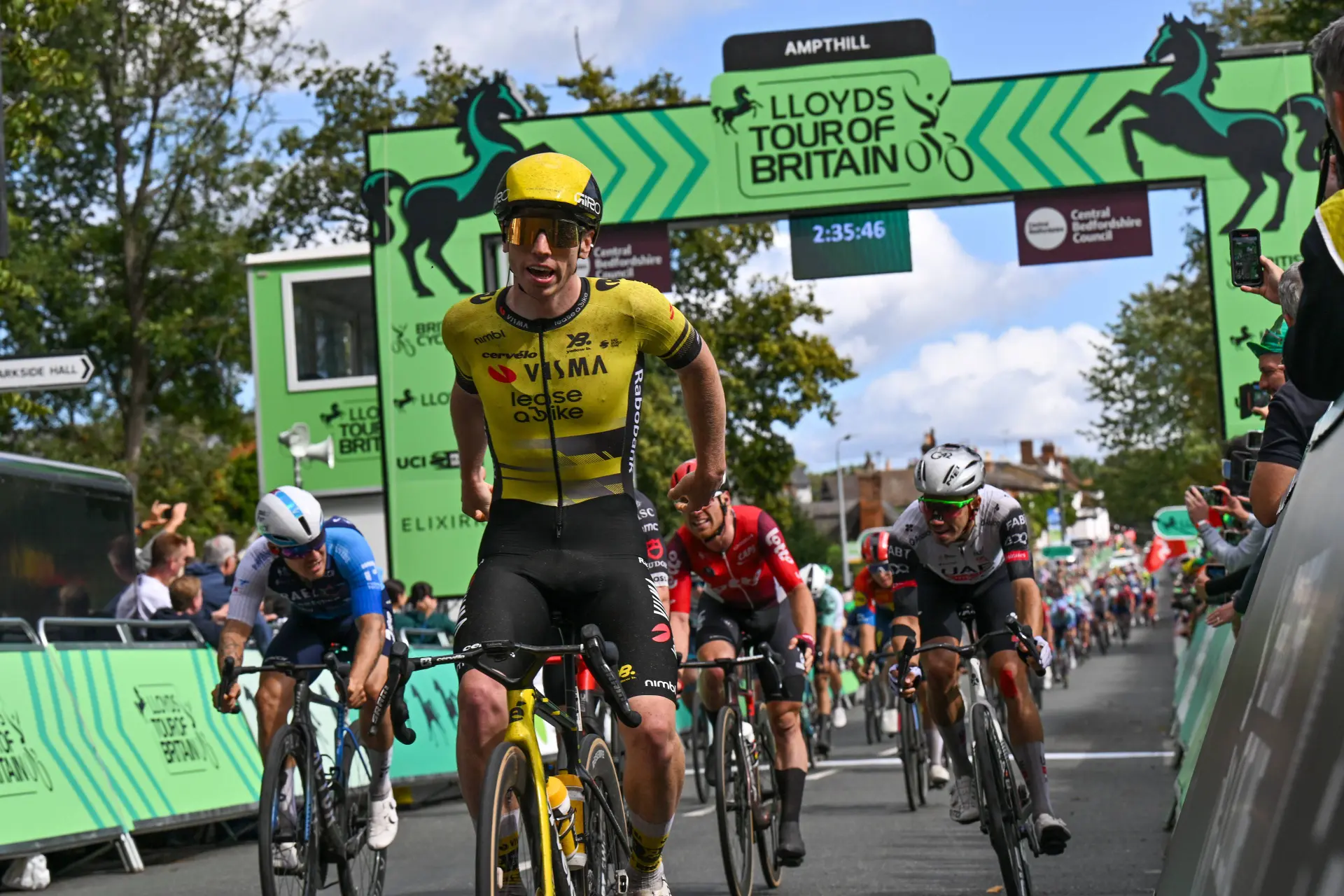
João Almeida's dream - "To win a grand tour, no matter what it is"
The main dream of his career is getting closer, after podiums in the Giro and Vuelta. "Winning a Grand Tour, any Grand Tour, would be my dream. I've already won important one-week races, and a three-week Grand Tour would be even more exciting. I'm lucky enough to be able to lead some races where Pogacar isn't competing. Maybe if I asked the team to co-lead with him, they'd give me the opportunity, but I'd rather go and help him, and if one day I get a good result, I'll do it, but without compromising his victory."
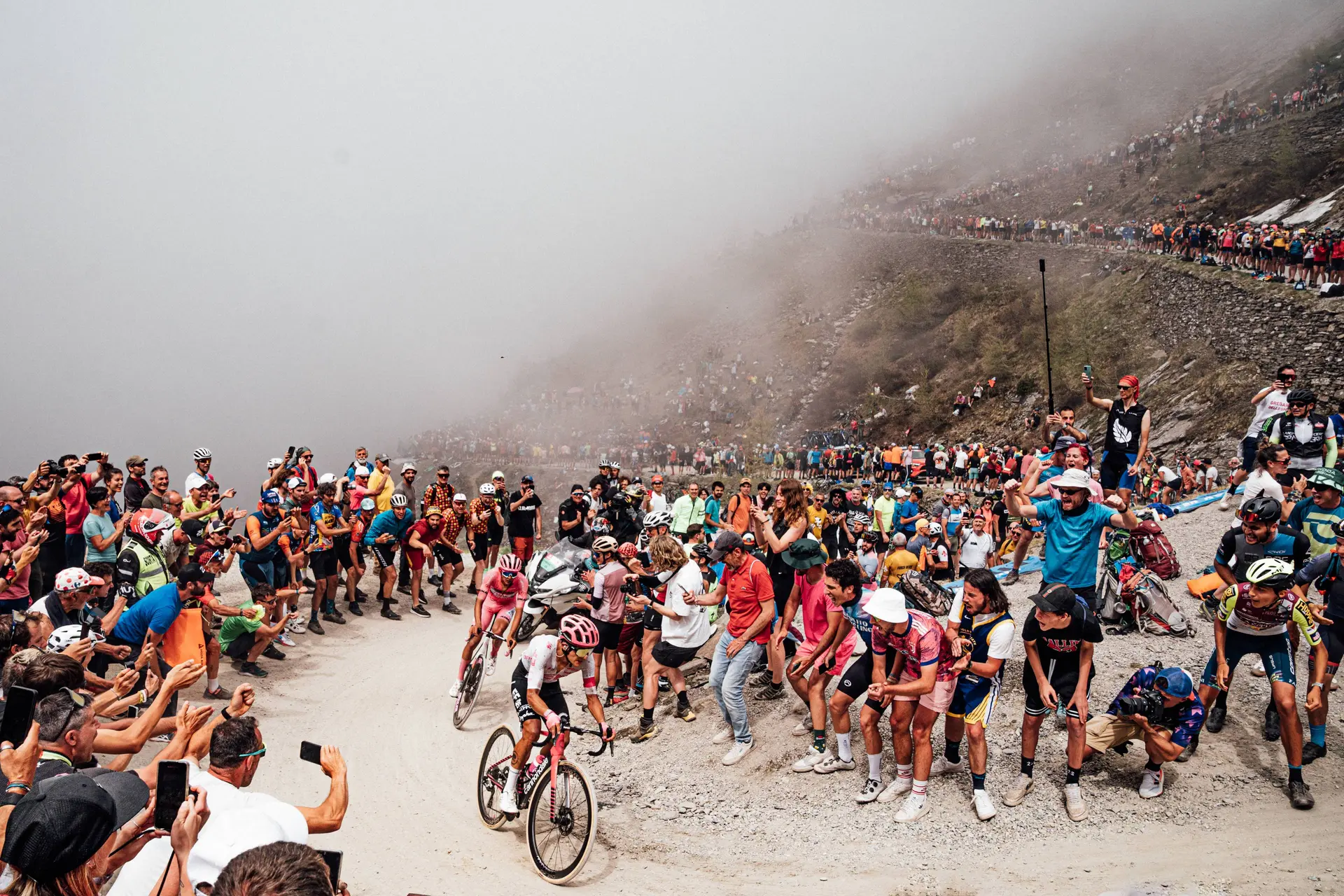
Among so many great moments, none compares to Angliru. "It's a very special victory in my career. I'm proud of what I did that day because Jonas was on my wheel the whole way up. I expected him to attack at any moment, but he didn't. I remembered the last corner from when I climbed it two years ago. I knew I had to be the first to enter it so that he wouldn't overtake me, and I did. It was an unforgettable day; I could hardly believe that I had won the stage. For me, the Angliru is the hardest climb in the world. Finishing second is a great result... I tried everything, so I can feel satisfied."
2026 is just around the corner and although we don't yet know the full calendar, there is some indication of what the Portuguese rider's season could be like, with the Figueira Champions Classic and the Volta ao Algarve being the first highlights of the year. As far as the grand tours are concerned, nothing has been decided yet, but everything indicates that he will do two of them again, although it remains to be seen which ones. Participation in the Tour seems undoubted, with Pogacar carrying a lot of weight in this decision. It remains to be seen whether he will return to the Giro, which he hasn't raced since 2023, or head back to the Vuelta, where he wants to turn this year's 2nd place into an unprecedented title.
Rúben SilvaEditor-in-Chief
A founding contributor to CyclingUpToDate since its launch in January 2022, Ruben Silva has played a central role in shaping the site’s editorial direction and long-term growth. Before joining the project, he built his experience through independent blogging at Echelons Hub and by producing race previews for Ciclismo Internacional, developing a strong analytical voice rooted in daily engagement with professional cycling.
Beyond editorial work, he has been closely involved in the expansion and coordination of CyclingUpToDate’s wider network, helping establish and support sister platforms across multiple languages. This includes ongoing collaboration with CiclismoAlDia (Spanish), CiclismoAtual (Portuguese), WielrennenUpToDate (Dutch), and RadsportAktuell (German), contributing to a shared editorial vision and consistent international coverage.
He also helps oversee editorial governance across the network, setting standards for accuracy and consistency and coordinating updates or corrections when needed.
Originally from the Porto metropolitan area in Portugal, he holds a bachelor’s degree in Geography. His path into cycling journalism was shaped not through formal media training, but through independent reporting, community engagement, and sustained on-the-ground involvement in the sport.
Over the course of his career, he has conducted approximately 100 interviews across road cycling and cyclocross, ranging from one-to-one conversations and online formats to press conferences and on-site pre- and post-race coverage. His interviews include leading riders, team managers, and prominent figures within cycling media: Tadej Pogacar, Jonas Vingegaard, Mathieu van der Poel, Primoz Roglic, Wout van Aert, Joao Almeida and Tom Pidcock; managers like Patrick Lefevere and Joxean Matxin; and YouTube personality Bryan Kennedy (BKXC)...
Within 18 months of launch, he helped grow CyclingUpToDate’s English-language platform into one of the most-read cycling news websites, built entirely from the ground up. As both a professional journalist and lifelong cycling enthusiast, his focus remains on delivering accurate, timely, and well-contextualized coverage.
claps 104visitors 17
Just in

Popular news
Latest comments
- Seixas is exactly what I would like Pogi to be mentally and in his statements. Both come across as shy and who don't talk much but with Seixas, you can see that he enjoys success, that it boosts his ego, unlike Pogačar who seems to feel increasingly uncomfortable the more he wins. He's won so many times, people are saying he's boring. The french media hate him for winning so much, the french cycling fans are booing him... etc. etc. But remember one thing, Seixas will never physically reach Pogi's level. He's excellent, but he isn't at that level nor will ever be. His talking to the media, his relationship with people is already at a high level.PogiSloFans13-10-2026
- Paul Seixas is now the second-best rider in the world.megasmacky13-10-2026
- When will they start dropping Pogi? Oh yeah, when Pogi reaches 40+ years, that's when young cyclists will start dropping him. But until then... eat your hearts out and cry. Pogi will remain the G.O.A.T. for years to come. Capish?PogiSloFans13-10-2026
- I figure he would have found out how to outsprint Paul and take the win, maybe. He's 28 now but I would say he's right at the peak of his powers. It was great race though, Paul showed me something different about himself.awp13-10-2026
- Slowly, very slowly... 5-7 yrs. ;)MajorPayne13-10-2026
- Up to this point: "It is just not yet at the level of Vingegaard and Pogacar." First Jonas, and then level of Tadej. Period!MajorPayne13-10-2026
- The sport has long had a divide between the more diesel-like riders and the more explosive riders. Where does Pogačar fit? His explosive attacks are followed by a high speed diesel climb and he's rarely been caught in the past 5 years (people can name the moments, it's so rare). Seixas is young and we have no idea where his body will end up on this spectrum (just like we didn't with Pogačar when he was 20 and being a diesel up the Vuelta mountains of 2019). Speculation is fun, being a fan while it unfolds is going to be more fun.RidesHills13-10-2026
- yeah it'll be an epoch shift when Pog can't drop people, and/or when they start dropping him.wrsty13-10-2026
- Yes, he won't ride away yet, but he will and that day will be notable
 leedorney13-10-2026
 - Expect the young French rider to slowly asphyxiate the Slovenian into retirement.
 Front24213-10-2026
Loading
2 Comments