"My dream is to win Grand Tours stages and one day a Monument” - The underrated threat ready to challenge Mads Pedersen & Jasper Philipsen at 2025 Vuelta a Espana
Cycling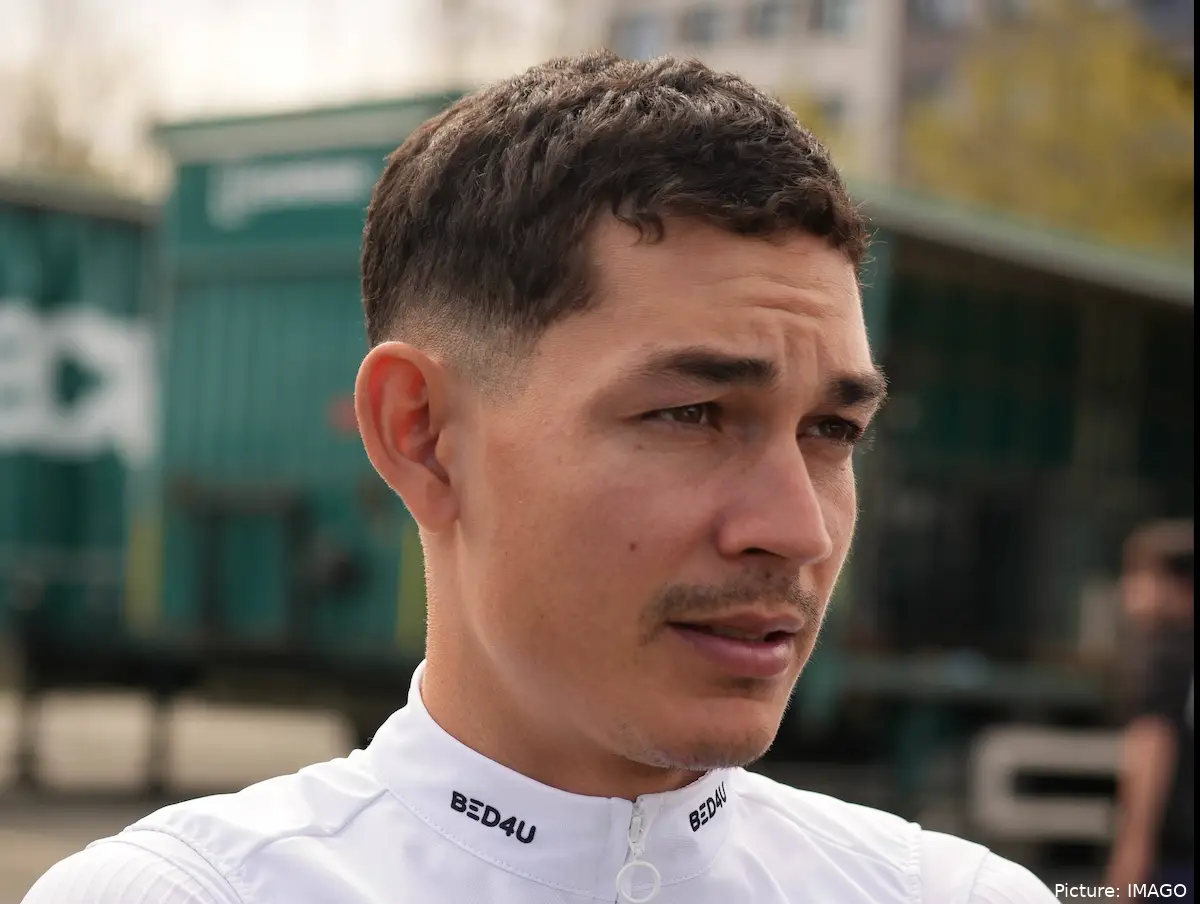
While Mads Pedersen and Jasper Philipsen dominate pre-race headlines, there's a quieter but increasingly dangerous name to watch at the 2025 Vuelta a España: Orluis Aular.
The 28-year-old Venezuelan, riding for Movistar, is flying under the radar — but not for long. After a consistent spring campaign and a promising buildup at altitude, Aular is targeting stage wins and, quietly, a run at the points jersey. He knows he’s not the bookies’ favourite. But he also knows something else: he’s ready. “My dream is to win stages in the Grand Tours and, one day, a Monument,” Aular tells EFE from Movistar’s team hotel in Turin. “This is what I’ve worked for all these years.”
That work hasn’t gone unnoticed. Last year’s second place in Oliva — where he went shoulder to shoulder with the fastest men in the sport — turned heads and helped secure his move to Movistar from Caja Rural. He now enters La Vuelta 2025 not as a wildcard invitee, but as a protected rider in one of cycling’s biggest teams. “In 2023, I finally got noticed,” he says. “Movistar saw potential in me, and now the goals are bigger. I’m no longer just here to finish—I want to win.”

A Vuelta Route for the Survivors
This year’s Vuelta doesn’t offer a traditional feast for pure sprinters. With a profile packed with uphill drags, heat, altitude, and only a handful of flat stages, the green jersey won’t necessarily go to the fastest — but perhaps to the most adaptable. Aular knows this — and it plays into his hands. “The route is tough. Sprint opportunities are limited, but I’ve prepared well, and I’ll take every chance until the last kilometre.”
Unlike the top-tier sprinters who often fade in the mountains or abandon before Madrid, Aular’s all-in for the full three weeks. He has the climbing resilience to survive beyond Stage 15, which could prove decisive in the fight for the points jersey.
In a race expected to be attritional, where opportunists and punchy sprinters could thrive, Aular represents a serious threat to riders like Philipsen and Pedersen, especially on transitional days or tricky finishes with a slight rise to the line.

Aular shone for Caja Rural, earning his Movistar move
From Nirgua to the WorldTour: A Grit-Fuelled Journey
Aular’s story is one of resilience, ingenuity, and self-made success. Born in Nirgua, in the Venezuelan state of Yaracuy, Aular didn’t grow up in a cycling hotbed. He grew up with a football and a baseball bat.
That all changed at 14, when a cousin gave him a bike frame. “My dad helped me build it — got the pedals, the groupset, everything,” Aular recalls. “That’s when the dream started.”
His road to the pro peloton was anything but straightforward: early wins in Venezuela, junior World Championship appearances, then stints in Spain, Belgium, Bolivia, and even Japan — where he earned the nickname "the Latin Samurai" while racing alongside veterans like Paco Mancebo.
Five years at Caja Rural gave him a platform — and his chance at the Vuelta. “Caja Rural was everything for me. I spent five years there and had my first Vuelta. Without that team, I wouldn’t be here.”
“A Reference for Venezuelan Cycling”
Aular now lives in Andorra, but he returns to Venezuela every off-season. There, he’s more than just a cyclist — he’s a role model. “It’s a responsibility. People follow what I do. I always try to give my best, for them and for myself.”
He credits his own inspiration to Carlos Ochoa and Leonardo Sierra, and sees himself playing that same role for today’s young talent. “There are more schools now, more kids racing. The level in Venezuela is rising again. I really believe we’ll see more Venezuelans in Europe soon.”
Not Just a Sprinter
Aular isn’t a pure sprinter in the mould of a Kittel or a Cavendish. He’s something more complex — and, perhaps, more dangerous. He’s punchy, consistent, and tactically sharp. He can handle rough run-ins, rolling terrain, and tough conditions. This spring, he made his debut in Milan–San Remo, Tour of Flanders, and Gent–Wevelgem — and finished them all. “Riding the Classics this year was a dream come true. Flanders was special. It made me stronger. It made me smarter.”
This is a rider who’s evolved beyond bunch sprints. He’s now the type who can survive reduced finishes, anticipate chaos, and pick the right wheel — perhaps even Pedersen’s or Philipsen’s.
The Latin Samurai’s Stage Targets
While he won’t reveal too much, Aular has identified several stages where he believes he can strike. “There are a few stages I’ve marked — ones where the sprinters might struggle, or where the bunch is smaller. That’s where I’ll look to make my move.”
His best shot? The classics-style finishes with slight uphill kicks or crosswind tension — where sprinters with big lead-outs often get caught out and raw positioning wins the day. “I don’t have the biggest sprint train. But I trust myself. I just need to find the right wheel.”
Watch This Space
He’s not the headline act. He’s not the name on every pre-race list. But Orluis Aular has the legs, the hunger, and the experience to turn La Vuelta upside down — especially if his rivals underestimate him. “I know who I’m up against — some of the best in the world. But I also know what I’m capable of. I’ve prepared for this. I’m ready.”
For a rider once given his first bike as spare parts, a Grand Tour stage win would be the realisation of a lifelong journey. And if things go his way in Spain, Orluis Aular might just make good on his dream. “A Grand Tour stage. A Monument. That’s what I’m chasing.”


Kieran WoodDeputy Editor-in-Chief
Kieran Wood is a sports journalist based in Wales and has been active in journalism since 2022. He regularly contributes to DartsNews.com and CyclingUpToDate.com, where he covers professional cycling and darts. In cycling, his work includes liveblogs from major races, including the Tour de France, the Giro d’Italia, and La Vuelta a España, alongside race reports and analysis. He has also conducted interviews with professional riders.
His reporting spans the full racing calendar, from one-day classics to stage races, with a focus on accurate, real-time coverage and clear contextual analysis. For statistics, results, and historical context, he regularly uses resources such as ProCyclingStats. To support reporting on rider activity and training context where relevant, he also references Strava.
In his work, Kieran places strong emphasis on careful sourcing, editorial accuracy, and updating articles as new, verified information becomes available.
claps 1visitors 1
Just in

Popular news
Latest comments
- I get the point totally. We live in the snowflake society where some riders forget they are getting paid to ride and get results. When they have a few issues they try to look outside of the real issue instead of themselves. It odd so many of the team are making no complaints and getting on with their job. If you do not like what you do find another job simples. Tough love as my mum would say.paultryan200207-11-2026
- many people advise him to grow slowly and rather do giro and/or vuelta instead of tdf. but i can totally understand that he is not satisfied with taking over once pogi declines, but instead beat him in his prime. so if he goes for tdf again, i‘m all for it. let‘s hope that pogi recovers soon!Ketterechts07-11-2026
- So gracious to offer something no-one would be prepared to pay for. The Giro is not the Tour and doesn’t command the same interest or attract the same “elite” (those willing to pay to be a part of something they consider has ego boosting potential). Roadside viewing will always largely remain free for everyone outside circuits. Introduction of a symbolic entrance to mountain climbs is worthy of exploration. Asking 1-2€ isn’t going to repulse real fans (most will spend 50-100€ on their outing that day all things included) but will prevent a portion of the total knobhead thrillseekers who will join in any large gathering as long as it’s free, just because they’re attracted to crowds, without which it it difficult for them to work up their anti-social behaviour.Jumpyjohn07-11-2026
- How is radio going to help when someone went over a cliff or bridge or off the roadside into a forest unnoticed and is laying there unconscious?Jumpyjohn07-11-2026
- Yep, next we’ll be accusing F1 drivers of avoiding Le Mans.Jumpyjohn07-11-2026
- But on what is that opinion based? Are you holding him to a different standard than others? Are you saying he should do learn to like something he doesn’t Are you saying he hasn’t achieved enough Are you saying he pretends to be better than his results? It’s actually a really strange opinion to oust if you consider it objectively or rationally. Try applying it to others or yourself by asking if not EVERYONE should then be doing more? Nobody in athletics or swimming gets criticism for not expanding their repertoire when a rival or someone else does. In fact, most who move to another event get accused of running from their rival. Opinions are boring, the reasons behind them are what count.Jumpyjohn07-11-2026
- for a medical chief to throw things like is just bad. There are already radios which were banned for spectacle. allow radios. Gps trackers are not a complete solutionabstractengineer07-11-2026
- any rider less than 25 whether they are really ready for the position of leadership of GT is probably not the case. I think Pogi himself suffered when he was defeated by Jonas in the TDF twice. But that would be the team's job to ensure support so that they can bounce back. It requires a team and time to get back up and win after getting knocked down.abstractengineer07-11-2026
- I'm very glad he got the big late Quickstep Vuelta win and I hope he has a few left for Euskaltel-Euskadi.flyer07-11-2026
- My memories of Ivan Basso aren't good but I liked his sister Elisa ok.flyer07-11-2026
Loading
1 Comments