"Maybe the best way to beat Pogacar is to play a different card" – Belgian national coach admits Remco Evenepoel might not be his nation’s best option
Cycling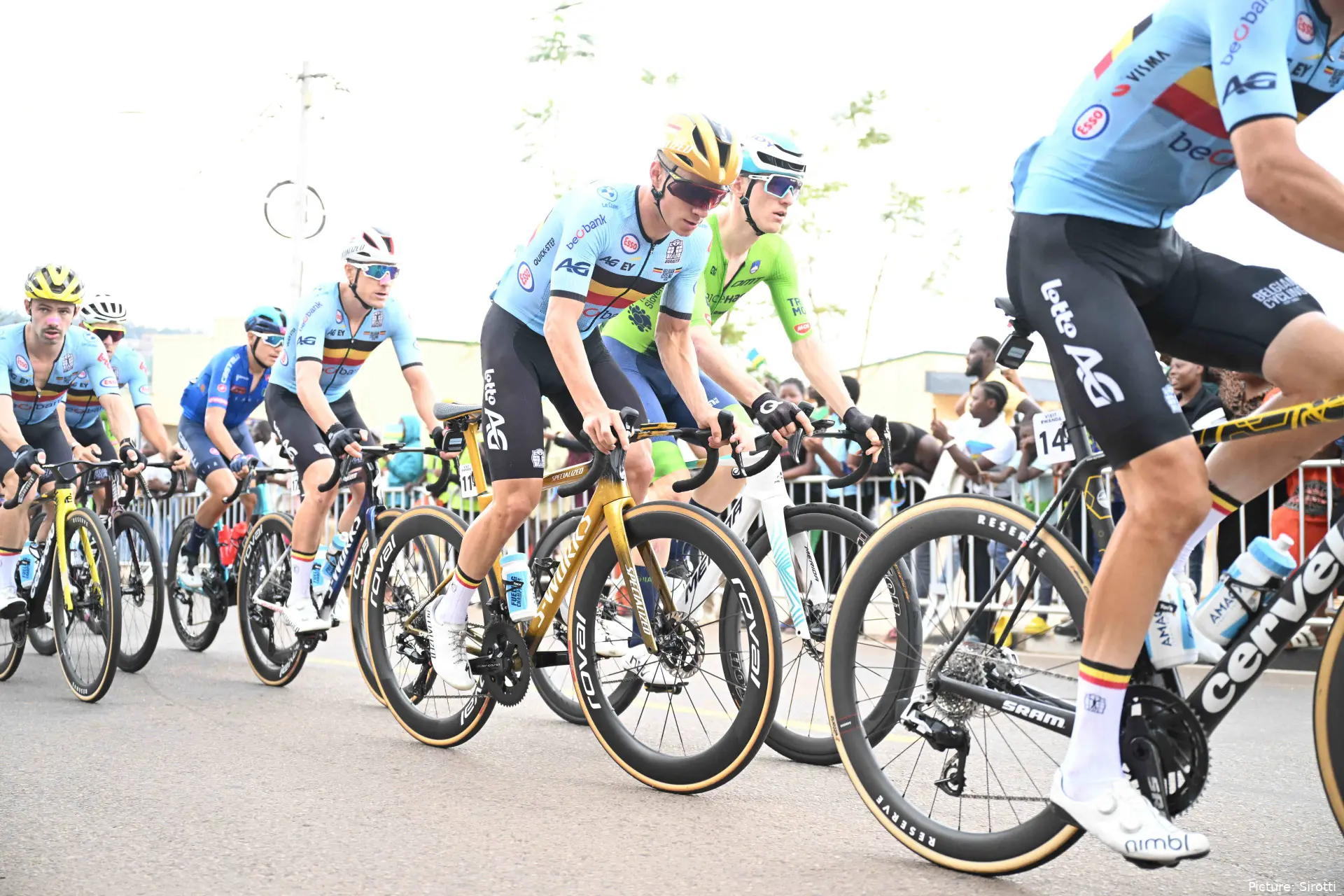
Belgian national coach Serge Pauwels has suggested that Remco Evenepoel may not always be the rider Belgium should build around when trying to defeat Tadej Pogacar at the biggest championships.
Speaking in a wide-ranging interview with DirectVelo, Pauwels outlined a more flexible vision for Montreal 2026 – one that could even involve Belgium winning without putting everything on Evenepoel’s shoulders.
Looking ahead to the punchy World Championships course in Montreal, Pauwels openly floated a scenario where Belgium backs a different leader in the finale. “If the race plays out like the last Grand Prix de Montreal, it’ll be a long race of attrition. A kind of team time trial. In that case, you have to endure, save, save, save. Sometimes a rider like Tiesj Benoot could try something opportunistic. Maybe the best way to beat Pogacar is to play a different card from Remco – who can always do his own race at some point.”
It is a striking line from a coach whose selections have often been built entirely around Evenepoel. But Pauwels insists the terrain and the brutality of modern racing mean Belgium cannot afford to lock itself into just one script.
“We have to cherish this period… it won’t last forever”
Despite the tactical nuance and the Pogacar headache, Pauwels is emphatic that Belgium is living through a special era.
“I think the assessment is very positive. If I look at my categories – Elite Men and U23 Men – we come out with eight medals in total: three at the Worlds and five at the Europeans. Remco was sublime, but someone else was even better. Without that guy, Remco would probably have two different medals… but you can’t think in those terms. Ilan Van Wilder was fantastic as well with his medal. At the Europeans, Vervenne and Van Kerckhove in the U23s took gold and silver – you can’t do better.”
For Pauwels, context matters. “We have to cherish this period. Ten years ago, we’d have signed immediately for results like these. And it won’t last forever. The only disappointment was the U23 Worlds with Widar, but he made up for it straight away with the European title.”
That balance – between maximising Evenepoel, managing expectations and nurturing the next wave – runs through the whole interview.
Why Evenepoel keeps ending up alone
One recurring talking point from both the Worlds and Europeans has been Evenepoel’s isolation once the race starts to light up. Pauwels points to both bad luck and how the sport has evolved.
“There are two reasons. Firstly, at the Worlds, Ilan Van Wilder crashed and Tiesj Benoot wasn’t there. Those are two major losses. Secondly, the finales start very early now: it’s almost mano-a-mano from 70 kilometres out. Ten years ago, you could still arrive with seven or eight riders together in the last two laps. These days, races explode much faster.”
Evenepoel’s move to Red Bull - BORA - hansgrohe, and the promise of a high-tech support structure, has inevitably been framed as the project that must bridge the gap to Pogacar. Pauwels likes the direction – but stays realistic.
“That’s our hope. I hear they’re going back to the wind tunnel, working with experts like Dan Bigham. These are ‘marginal gains’. Not a revolution – they’re already very good. To reach the level of Tour- or Worlds-Pogacar, it will certainly take more than a year. But that’s his challenge. And it also depends on Pogacar: maybe he’ll be less good… or even better. Right now, the gap is still big.”
For Pauwels, the real difference isn’t just peak power – it’s how fresh Pogacar still is by the time he launches. “I think so. A lot of people focus on the numbers of the attacks, but the key is the state you’re in when you reach the climb. In Lombardia, everyone was already ‘dead’ when he attacked. It’s not the one-minute effort that matters – it’s arriving fresh before the effort. So yes, the foundation is there. Riders need to work on their freshness when approaching the key moments of a race.”
Widar as “plan B”, Van Aert’s Montreal ambition and the U23 wave
Pauwels is clearly not thinking in terms of a one-man team for the next cycle. Jarno Widar, turning pro with an ambitious programme, is already on his radar for a secondary role. “Co-leader with Remco, not yet. But a plan B? Yes, I’m thinking about it. If his progression continues, he can aim for top tens on stages in Grand Tours. He’s already beaten Seixas twice, and we see what Seixas is doing. If he had raced with the Elites in Ardèche, he could have finished in the top ten. For Montreal, he’s already told me he’s interested.”
Then there is Wout van Aert, whose targets have also shifted towards Montreal after sitting out the Kigali Worlds route fight. “He’s told me he’s ambitious for Montreal. This year in Kigali, the course was too hard for him, but I expect a great spring from him. With Wout, it’s always a matter of dialogue and transparency.”

Kieran WoodDeputy Editor-in-Chief
Kieran Wood is a sports journalist based in Wales and has been active in journalism since 2022. He regularly contributes to DartsNews.com and CyclingUpToDate.com, where he covers professional cycling and darts. In cycling, his work includes liveblogs from major races, including the Tour de France, the Giro d’Italia, and La Vuelta a España, alongside race reports and analysis. He has also conducted interviews with professional riders.
His reporting spans the full racing calendar, from one-day classics to stage races, with a focus on accurate, real-time coverage and clear contextual analysis. For statistics, results, and historical context, he regularly uses resources such as ProCyclingStats. To support reporting on rider activity and training context where relevant, he also references Strava.
In his work, Kieran places strong emphasis on careful sourcing, editorial accuracy, and updating articles as new, verified information becomes available.
claps 6visitors 1
Just in
Popular news
Latest comments
- Doesn’t sound like it from his post-race interview. That old record you’re still playing is starting to jump a bit too often.Mistermaumau10-10-2026
- Sorry but who is this guy? If HE doesn’t know that « much » about Seixas by now, I’m recalibrating my opinion of his finish line questioning. As for PS, the most amazing thing about him so far is not what he’s won or almost won at this age, although that’s already phenomenal, it’s how consistent, numerous and long this seasons’ results have been. I don’t think there’s ever been a 19/20 year old quite as developed. Of course, you can’t expect development at this level to go backwards in time but it’s amazing to witness a rider you assume won’t be able to keep things up forever prove you wrong.Mistermaumau10-10-2026
- I agree, it was a good feeling to end the season this way... and only hope the knee injury held Del Toro back. Some how I have a feeling it wasn't just that... I wish my feelings are wrong.PogiSloFans10-10-2026
- Seixas is an amazing rider. Remco disappointed. Del Toro should rather have withdrawn if he had an injury linked to over-training. Anyway, a satisfying end to the season.Hills3310-10-2026
- History books won't care who had good legs or bad legs, or who did or didn't get laid last night; what the history books say is that Del Toro and Remco are two losers, while Seixas is a Monument winner at the age of 20. Let's not forget who was the only one that could follow Pogi in Strade Bianche. Paul Seixas, not Del Toro. Ad acta!!!PogiSloFans10-10-2026
- History books don't care who had good legs or bad legs, or who did or didn't get laid last night; what the history books say is that Del Toro and Remco are two BS losers, while Seixas is a Monument winner at the age of 20. Let's not forget who was the only one that could follow Pogi in Strade Bianche. Paul Seixas, not Del Toro.PogiSloFans10-10-2026
- Del Toro has a knee injury.Hills3310-10-2026
- UAE doesn't exist without Pogačar, and when all is said and done, that’s exactly what it looks like today. DelToro had two chances, golden opportunities and showed that he isn't the one, even though Tadej keeps pushing him to the forefront. He simply doesn't have it in him. Seixas has a Monument at age 20, while Del Toro has nothing... an empty trophy cabinet when it comes to the races that actually matter. Everything else is just empty talk. A single San Remo or a single PR or Flanders means more to Pogačar than six Montreals, 10 UAE Tours or 15 Tireno wins combined. Bravo Seixas, your the man to watch.PogiSloFans10-10-2026
- Remcos ego got between the line and success
 leedorney10-10-2026
 - Well, that is a good point but probably no one. Seixas might be close. We'll see in the next two to three years.PogiSloFans10-10-2026
Loading
Write a comment