Results Vuelta a Espana 2026 Stage 4 | Race over! Tadej Pogacar all but wins La Vuelta already and puts minutes into rivals with devastating 50km Andorra raid
CyclingTuesday, 25 August 2026 at 17:33
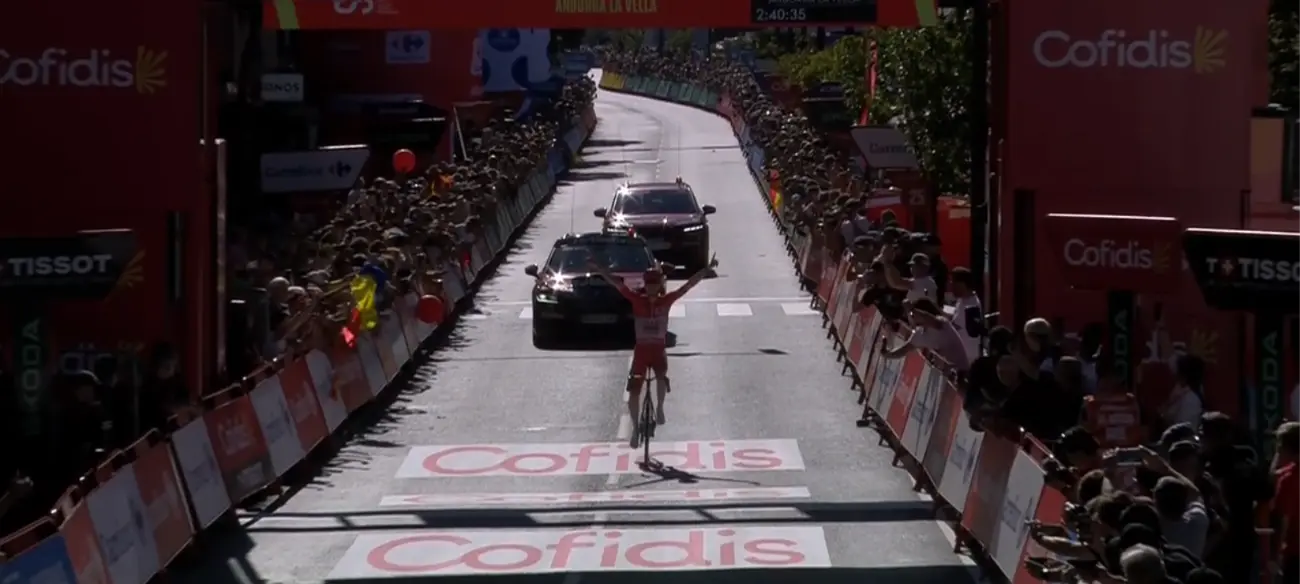
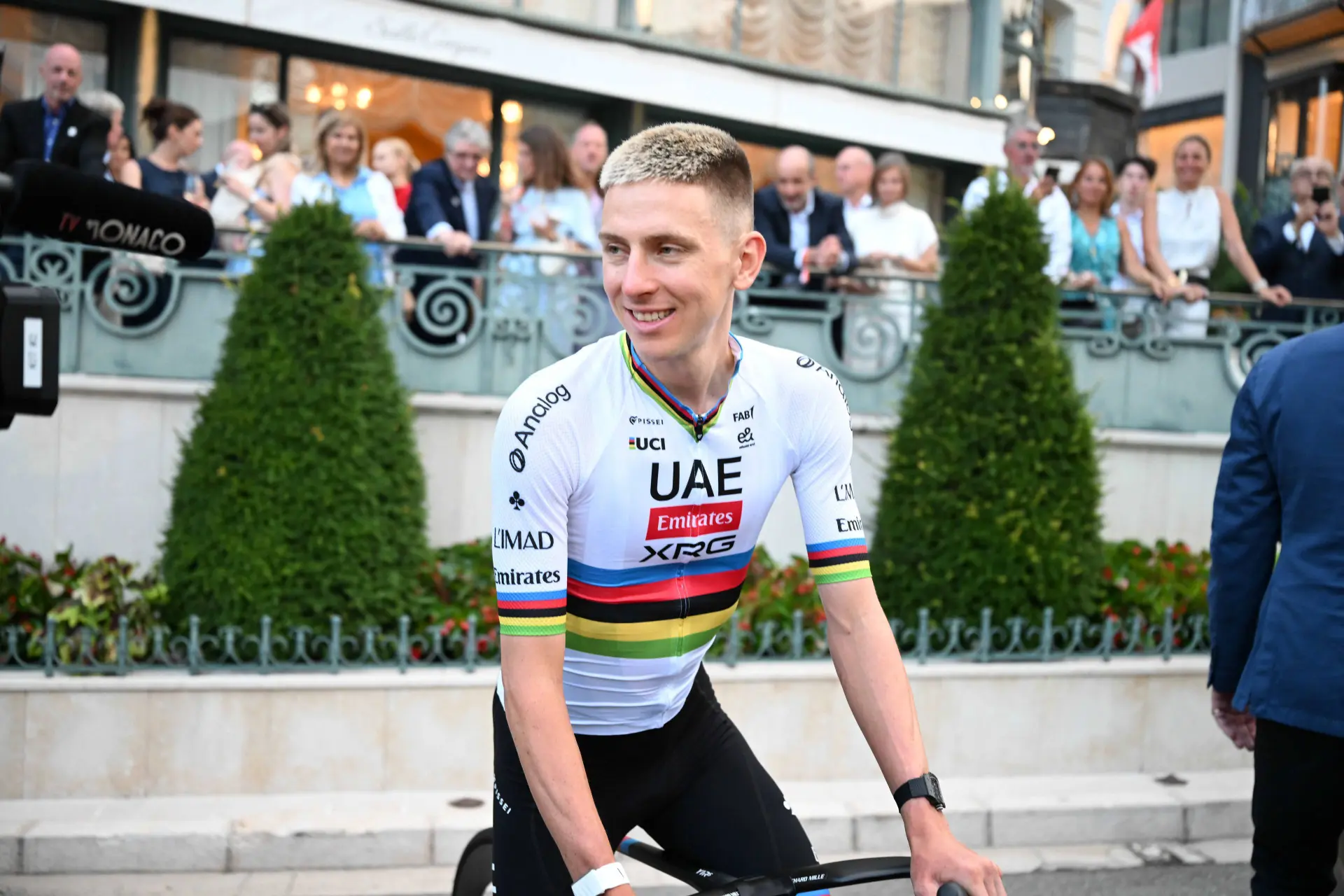
Tadej Pogacar has turned the first mountain test of the 2026 Vuelta a Espana into a demolition job in Andorra, attacking with around 50 kilometres remaining and putting minutes into his nearest general classification rivals on only stage 4 of the race.
Felix Gall was the only rider initially able to respond when Pogacar accelerated on the steepest sections of the Collada de Beixalis, but even the Austrian could stay with the red jersey for only a matter of moments. Pogacar was soon alone, cresting the first-category climb around 1:40 clear before continuing to stretch the gap on the Coll d'Ordino.
By the top of Ordino, Pogacar was already around three minutes clear of the strongest chase behind. With two descents and only the short Alto de La Comella left, the battle for red had effectively been blown apart on stage 4 of 21.
The gap remained close to inside three minutes as Pogacar reached the final climb. Even with the chasers beginning to claw back seconds on La Comella, there was no meaningful pursuit left: Pogacar was riding towards a stage win and a general classification advantage that, barring exceptional circumstances, already looked decisive for the Vuelta as a whole.
Decathlon set the stage for Pogacar's attack
The 104.8-kilometre stage had been aggressive from the opening kilometres, with the race climbing almost immediately onto the Port d'Envalira. Repeated attacks produced a large and dangerous breakaway, while UAE Team Emirates – XRG initially controlled behind before Decathlon CMA CGM Team took over the pace-setting for Gall.
Sander De Pestel drove hard on the long first-category climb, rapidly reducing both the break's advantage and the size of the peloton. Wout van Aert and Matthew Brennan were among those eventually dropped from the move, while Santiago Buitrago was one of the more notable riders losing contact from the main field.
Lorenzo Fortunato beat Paul Double to the maximum mountains points at the top of Envalira, but the remaining attackers carried only a small advantage onto the long descent and were soon swept up. Decathlon continued to press towards the Collada de Beixalis, having already split the race into several groups before the main favourites reached the steepest climb of the day.

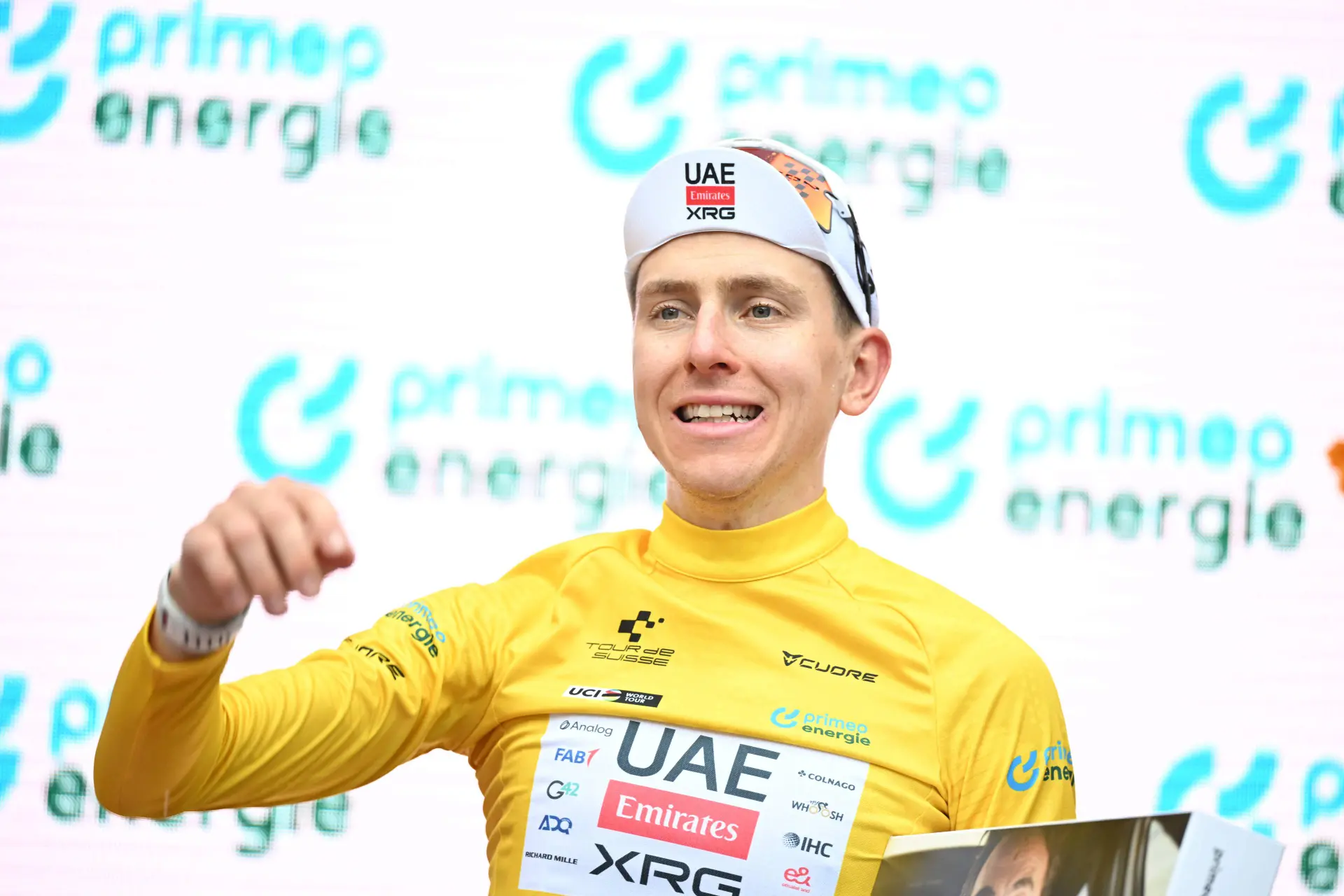
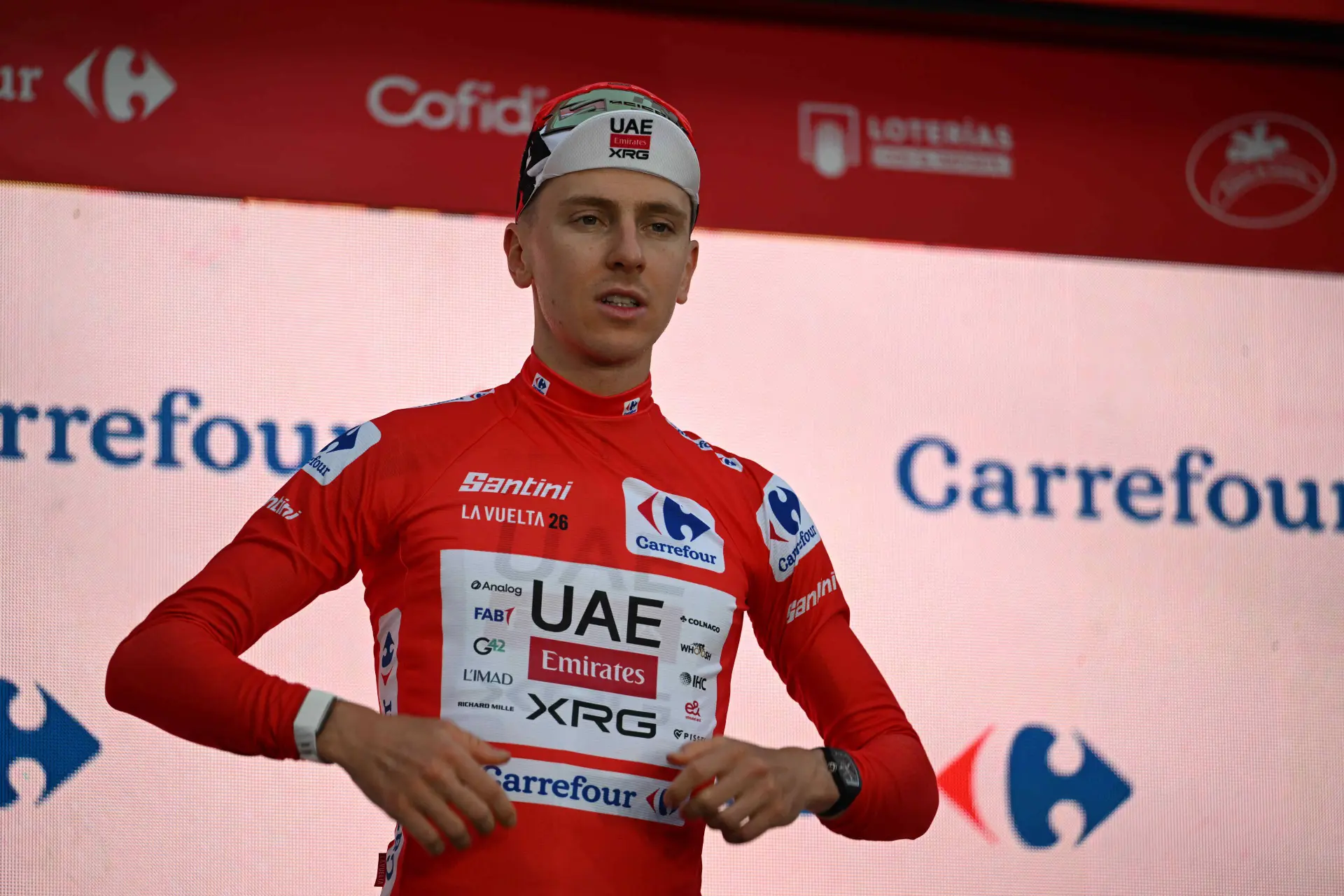
Tadej Pogacar in action on stage 4 at the 2026 Vuelta a Espana
Jay Vine briefly took over at the front for Pogacar before Decathlon again lifted the pace. On gradients reaching 16 per cent, Pogacar then launched the attack that transformed the stage and, potentially, the entire Vuelta.
Gall dug deep to follow, but quickly recognised the effort was unsustainable and allowed Pogacar to ride away. The Austrian was eventually reabsorbed by a chase containing the rest of the major GC contenders, while Pogacar continued to increase his advantage without any obvious sign of slowing.
By the summit of Beixalis, the Slovenian had already stretched the gap to around 1:40. Carapaz led the chasers over the top behind him, while Pogacar added further points to his mountains tally before collecting the intermediate sprint in Ordino as well.
The chase remained sizeable initially, with most of the main GC contenders still together as Netcompany INEOS helped control the pursuit for Onley. Mikel Landa was among those unable to maintain contact as the pace rose on the lower slopes of Ordino.
Gall then accelerated again, with Onley the only rider immediately able to follow. Roglic responded shortly afterwards and bridged across, before Kuss and Mas also made the junction to form a five-man group containing some of the strongest climbers in the race.
Even that selection made little impression on Pogacar. By the end of the Coll d'Ordino, the Slovenian was already around three minutes clear of the strongest GC chasers.
The descent brought the main chase back together before La Comella, but by then the riders behind were effectively fighting among themselves for the minor places. Pogacar still carried an advantage of around three minutes onto the final climb, where Gall tried once more to force a selection while Skjelmose slipped away from the group.
Pogacar crested La Comella with the stage already his barring disaster and threw himself into the final descent towards Andorra la Vella. What had started as the first opportunity to measure him against his main rivals had instead become something far more decisive: the contest for red had been reduced to a formality before the Vuelta had even reached the end of its fourth stage.
Carlos Silva is a writer for CiclismoAtual.com and CyclingUpToDate.com, where he contributes race reports, interviews, analysis pieces, and live coverage of the international cycling calendar. Holding a degree in Sports from the Jean Piaget Institute, he combines academic knowledge of performance, training, and competition with hands-on journalism experience in professional cycling.
Throughout his career, Carlos has conducted interviews with leading figures in the sport, including Alberto Contador, Joaquim Rodríguez, Óscar Pereiro, João Almeida, Isaac del Toro, Derek Gee, John Degenkolb and Geraint Thomas. These conversations reflect direct engagement with Grand Tour winners, Classics specialists, and emerging talents.
He has provided on-site coverage at major events ranging from the Vuelta a España to the Tour de France, alongside stage races such as Vuelta a Andalucía, Volta ao Algarve, Volta a Portugal and O Gran Camiño. Covering the mythical climbs of the Giro d'Italia remains one of his professional ambitions.
Carlos is responsible for liveblog coverage of all major WorldTour races and beyond, including the Tour de France, Giro d'Italia and Vuelta a España. His reporting integrates verified data from ProCyclingStats to ensure statistical accuracy, contextual depth, and analytical precision.
A lifelong cycling enthusiast, he approaches storytelling across written, photographic, and video formats with a focus on credibility, tactical insight, and informed race interpretation.
claps 0visitors 0
Just in
Popular news
Latest comments
- People win GTs by 2 mins which is considered a comfortable margin, Pogi is taking 3 mins in a stage, same like the TDF, GC over in a single stage. Now in training mode for the WCabstractengineer25-08-2026
- You can think whatever you want to and only Pogi knows what is important to him. But until someone else wins 7 or more Tours Armstrong still holds the title for the most. It doesn't matter if he was stripped of them for doping he still won them and against other people that were doping. And the UCI knows it that is why they didn't just give the titles to the second place finisher.Hc222825-08-2026
- And your tomorrow has become today, and yes, at this moment Pogi is 3:12 up on everyone.PogiSloFans25-08-2026
- Now you’re Slovenian????Jumpyjohn25-08-2026
- Are you guys watching Pogi's masterclass? If not... why not? I want an explanation.PogiSloFans25-08-2026
- i think this idea came from the world cup where they invited some influencers as well. But beside the stars of the world cup and the commentary team of stars, it is unlikely any influencers would greater sway. The Vuelta is not apologizing nor removing her, in fact they are still keeping her in the race, since whoever the high placed idiot/admirer who hired her does not want to lose faceabstractengineer25-08-2026
- Contador is by no means a perfect voice on the matter, but i agree with him. Tadej loves to race and is always chasing new challenges. he's never been just focused on the tour record. he's also told contador personally that he grew up wanting to race like he did, hard to believe he'd value armstrongs wins after seeing everything from 09 to 12 as a kid.typurc25-08-2026
- Maybe she is expected to do an OnlyVuelta edition?abstractengineer25-08-2026
- The Vuelta is an amateur race in every sense, compared to the Tour or Giro, in terms of organization, safety or journalism. The Spanish journalists ask Pogi questions in Spanish and he has a translater beside him??? WTF, if a journalist from any country doesn,'t understand or speak english, the No.1 language in the world (like it or not) than don't be a journalist, be a cook or a teacher or something. As for the canine hyperventilating bytch, I have no comment.PogiSloFans25-08-2026
- no kidding, great call.mij25-08-2026
Loading
2 Comments