Pedal Punditry #28 - The 2026 Vuelta a España has embarassed itself - and the sport of cycling
Cycling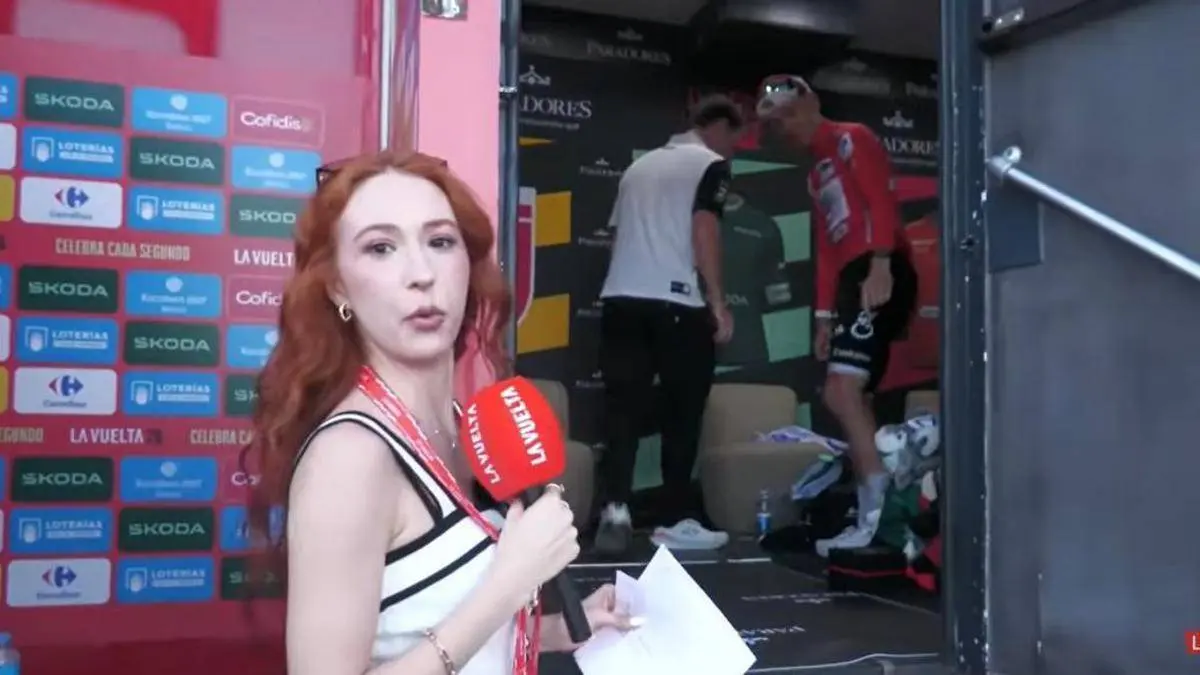
The Vuelta a España is cycling's third Grand Tour and one of the most historically rich events in professional cycling. The race invited Spanish influencer Erola Jons and her interaction with Tadej Pogacar has brought out a huge wave of indignation. And I believe all of it is fully justified.
Who is Erola Jons and why did the Vuelta host her?
I'm afraid saying 'it's simple' doesn't cut it. But I will try to provide a short and rather simplified version. The Vuelta a España is a three-week cycling event, which starts in Monaco this year, spends two days in France, and then has a full stage in Andorra before reaching Spain almost a third of the way in.
Why? Because the Vuelta, like most professional road cycling events, needs money - Organizing a cycling race of this duration costs millions. Roads and city centers have to be cut, hotels for hundreds of people have to be booked every single day, police and security have to be paid, hundreds of workers need to move around on the daily... You get the picture.
Most of this money comes from the race's sponsors and the TV rights, which are then bought by many channels or streaming services internationally, so they can show the races live. Unipublic is the company that organizes the Vuelta, and it has been owned by ASO for months. ASO is the same company that organizes the Tour de France.
So, where does Erola Jons appear in the middle of all this? In the age of social media, more and more race organizers look for ways to increase the exposure of their events.
More exposure means more views, more views means more eyes on the race's sponsors, more eyes means more revenue for the sponsors... Happy sponsors means money continues to be invested in the event. So naturally, as everything commercially viable, exposure is important.
Erola Jons is a Spanish 'influencer'. I have to admit that despite that term being passed around on the daily I didn't know its exact definition. "An influencer is a person who has the power to shape the choices, opinions, or buying habits of other people".
More specifically, a content creator. Now, I'm in no way a connoisseur of Spanish pop culture but here's the gist of it: Someone who got popular by doing videos pretending to be flirting with people (entertainment).
Through that she has developed into many other endeavors, now including acting and even writing her own book - which resembles her videos. She has 3.2 million followers on Instagram.
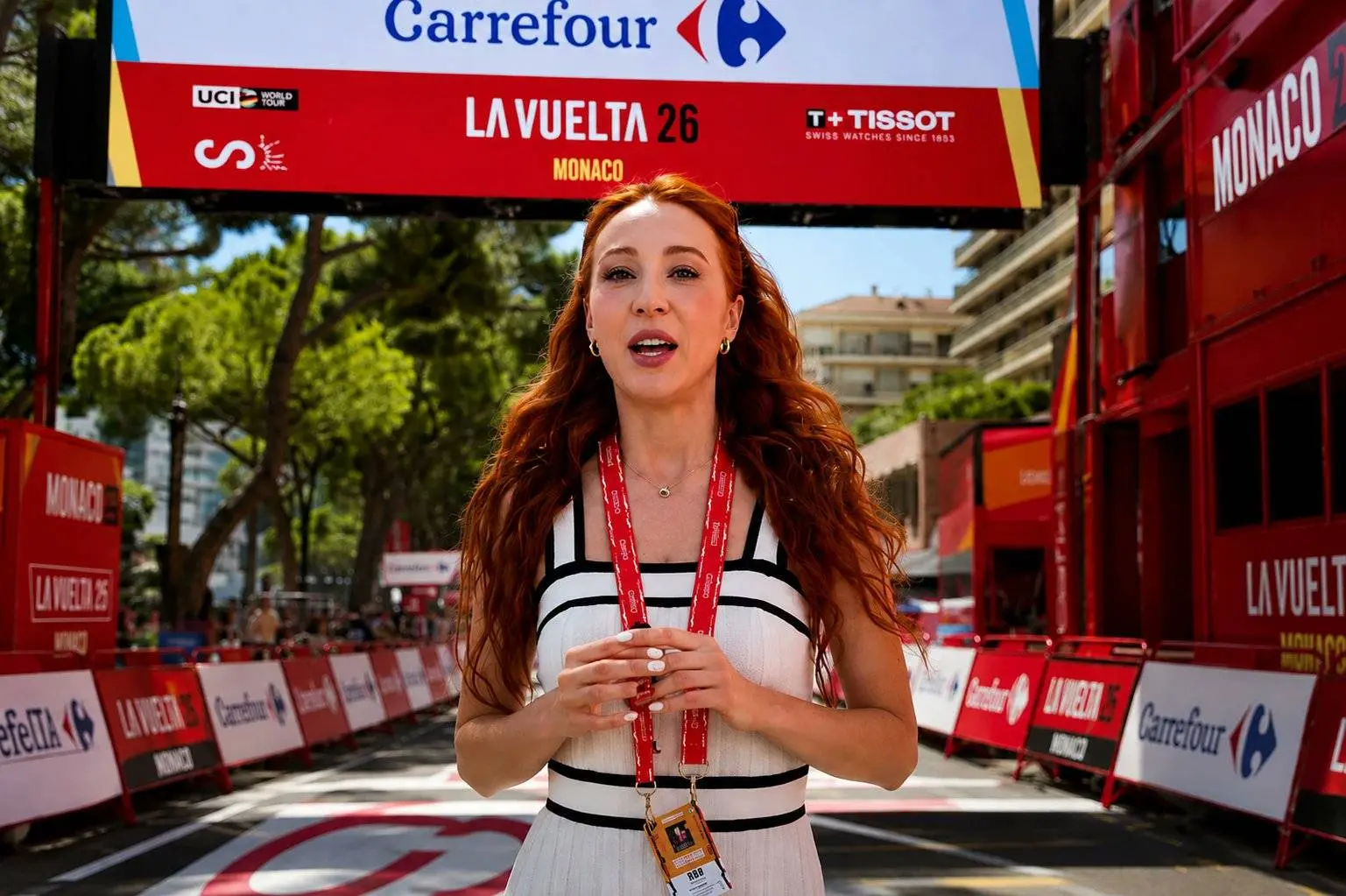
Jons was seemingly hired or invited to take part in the Vuelta a España to made livestreams following the stages, for the race's official Youtube channel. The start happened in Monaco, because foreign nations are willing to pay big bucks to host such an event.
The "incident"
Here it is, the whole 40-minute stream. 'Una Vuelta por La Vuelta by Erola Jons'. Or in English terms: A lap in a lap - no that doesn't make sense either...
The video needs little explanation, it is a livestream conducted after the end of stage 1. Tadej Pogacar won the stage and Jons is backstage in the podium area, waiting for Tadej Pogacar in an attempt to speak with him. She is accredited and has a Vuelta branded microphone. It's not a 'she looks official', she literally is official and has been assigned this task.
Now, Jons content is based on 'flirting'. So she does, with several people. At a certain point she does so with a Netcompany INEOS soigneur who was guiding Joshua Tarling through the area, and asks - I kid you not, three times - "Are you here to win, or to distract the journalists?"
I say three times because the soigneur had no idea what was happening. He is not a rider, he is not racing - something that became apparent was the lack of knowledge about anything around her - and the interaction is just about as awkward as it gets, because she keeps repeating the same thing over and over to his confusion.
Eventually, she is able to talk to Pogacar. This was after minutes of calling out for him, repeatedly calling him 'Pogachita'. UAE's press officer Luke Maguire is with Pogacar and trying to manage the situation - eventually informing her that she can talk to him after the podium procedures.
Maguire and Pogacar himself were also having a camera planted on their faces on each moment that passed where there was some proximity, effectively breaking their privacy in a very unusual and public way.
When it happens she asks: 'Why do you hyperventilate everytime you see me?' To Tadej Pogacar, the World Champion, who is non-ironically being taken out of the podium area and into the flash interview area for his post-race interview.
The sport's top riders already don't spend time around the non-racing parts of these events by themselves because there are fans that abuse their opportunity, and cycling's ability for the crowds to be close to their favourite athletes.
In this case, the Vuelta provided accreditation and free reign for an influencer to disturb riders and staff alike in the race in the middle of a time sensitive and stressful procedure. In fact you can literally feel the tension by the UAE staff throughout the stream.
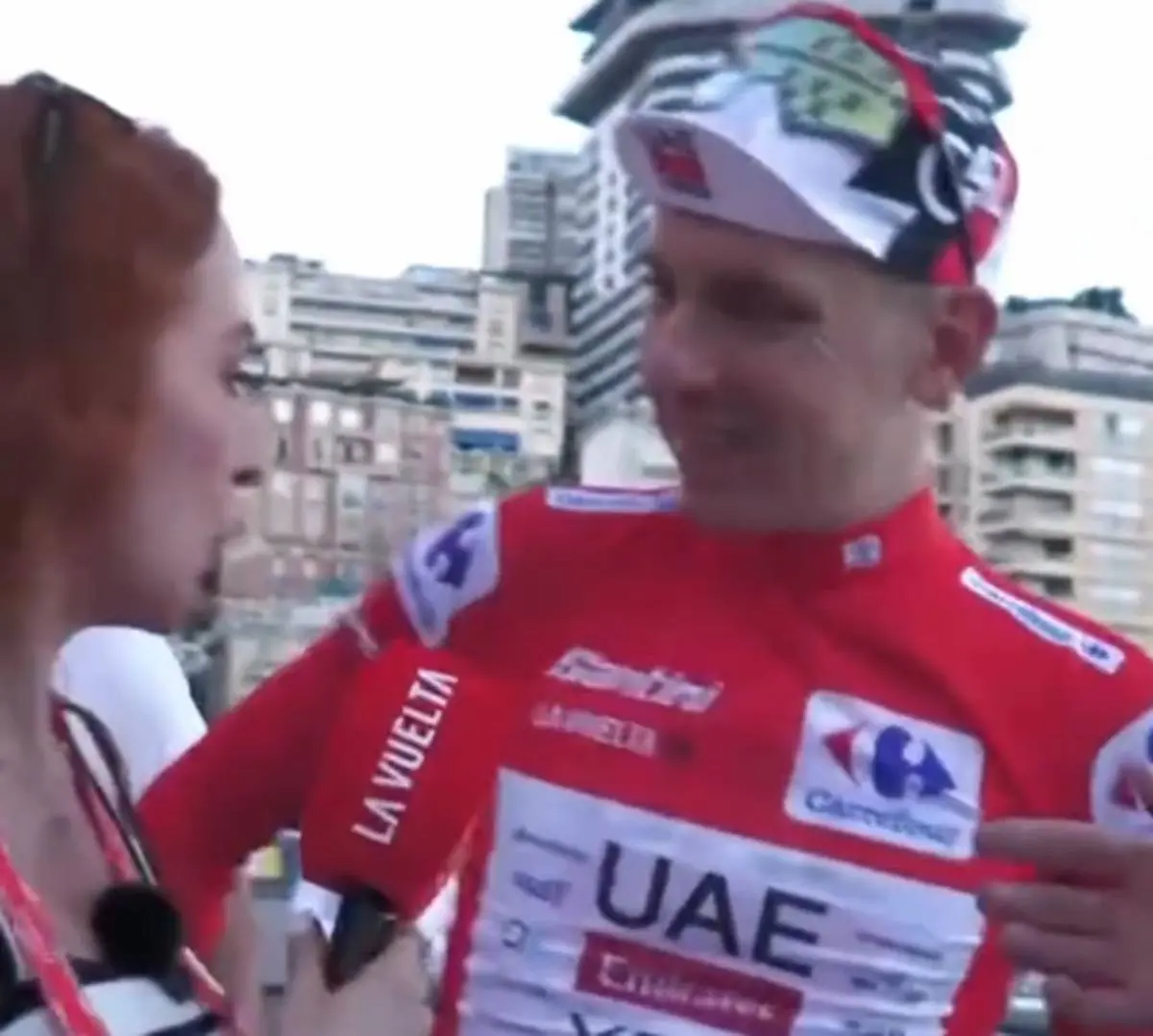
One such example was that because it was a time trial, Pogacar could not show up to the podium with the rainbow jersey he was wearing. So he and the UAE staff on site were rushing to be prepared for the ceremonies.
And the staff on site were rushing to have him, all other riders and the staff all in place for a carefully planned out procedure. In the middle of all that is a 29-year old with free reign to repeatedly disturb several people's personal space, invade their privacy and in the process make fun of the event.
I myself know first-hand, but ask any journalist and they will tell you the same: Access to riders following the stages is very hard (they have the right to their own space and privacy, naturally). And access to riders like Pogacar or Vingegaard, in such a way? You have to not only be privileged, but also incredibly good at what you do.
This instance shows exactly why the top riders wonder around the events 'protected'. And because of this, not only Pogacar but others and/or their teams may consider tightening up that protection even more because they now have to worry about the possibility of finding a person like this also in the restricted areas.
As a result, actual journalists will have even less access to riders - who now may interpret someone with a microphone as an intruder rather than a journalist.
But you can almost not even blame Jons. In fact it's not her fault, she was brought in to the race to do that. My real question is who thought this was a good idea and who allowed for this? Unrestricted access to someone disturbing the race, with no intervention... A lose cannon firing away at people trying to do their job, on the first day out of three weeks that they will be doing it.
There appears to have been no briefing on what Jons should do, how to conduct herself, how a cycling event looks like, the do's and don'ts... Well, everything that is common sense. The complete lack of common sense could not be more obvious.
In the Vuelta's own perspective, I can't grasp why they would do this? Why bring someone to disturb the big star that you have been trying to bring to the race for years, in a way that he hasn't been disturbed before in such a public way.
In fact it very much feels like there wasn't a thinking process behind this. In the age of AI, one could teasingly argue that someone asked ChatGPT 'how do I make my race reach more people' and one answer was 'invite influencers'. And the next question was 'give me a list'. And the rest goes as follows...
This interaction, this entire 40-minute video gave birth to clips that have flooded the sport's social media bubble in a way that few other topics have. Yet when we think back of this instance in a decade, it will feel like it is not real.
I found myself looking at this entire ordeal and, as Danny Glover did on Lethal Weapon, found myself thinking 'I'm too old for this s...". When fact checking, I found out that I'm actually younger than Jons. Not an age problem, I guess it is having different aspects of entertainment that I enjoy.
Now, obviously my view on the matter is not ominous, and surely some people would've enjoyed or liked it. I've seen none, and sure you could have the 'echo chamber' argument, but I have seen no actual argument on this being a positive instance.

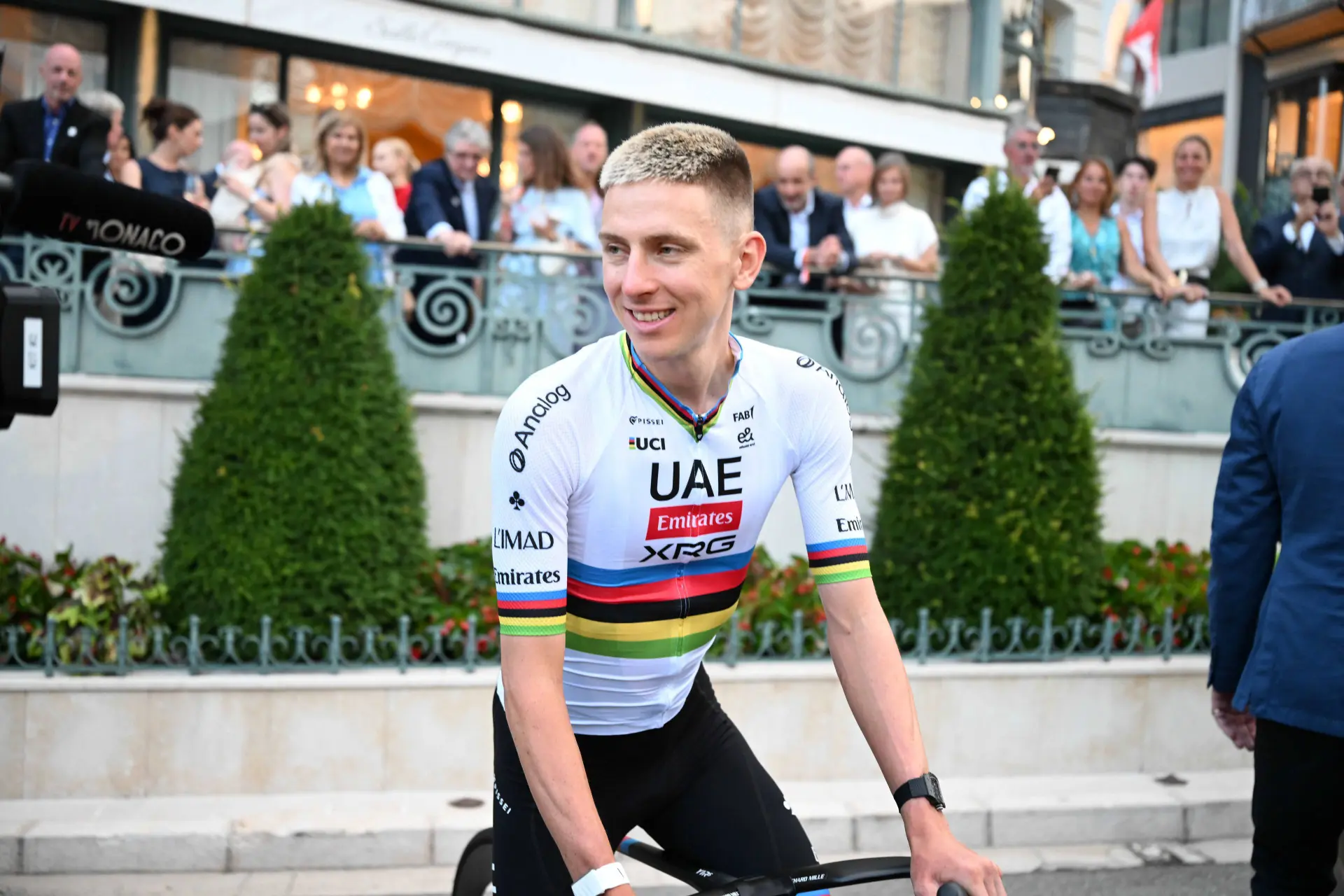
Tadej Pogacar on the podium after stage 1. Moments later, he would be approached by Jons during her livestream
Laura Meseguer steps in
I was specially, in a way, relieved, when I saw what female Spanish journalist Laura Meseguer has written on Instagram. Much of the hate on the matter, and Jons, will be based on misogyny - and this can very well have consequences on Meseguer and other female journalists.
Meseguer's words were as follows: "Many women have spent years fighting to expand our space in a male-dominated sport, so that we are treated with respect and have the same opportunities as everyone else. It is a serious mistake to hire someone with absolutely no knowledge of the sport, whose content will be based on this series of sexist comments that we women have been trying to escape from for decades!"
"It is a lack of respect towards us, towards the female professionals working here and, above all, towards the cyclists. No one should have to put up with being treated like an object, neither women nor men."
In the end that sums it up well. Not from my perspective, not from the perspective of regular social media critics who are in no way involved in the event... The perspective of a journalist on the ground who may suffer consequences from the decisions made from above.
And Meseguer is someone who fully deserves to speak up and be a voice against the decision that was taken. In my honest opinion, the Vuelta and its fans have been humiliated. Luckily the stream only reached just over 10.000 views by the time of writing (many of them from people wanting to contextualize themselves after the disaster became general knowledge). Was it really worth it? I would love an answer from those in charge.
As I watched the stream I could only find myself repeatedly cringing. And I can comfortably state that I have no idea who this content is for.
People who watch cycling have generally felt the same. Casual fans? I doubt any meaningful percentage would enjoy this kind of humour - no-one there was having fun but the host herself either.
It's content driven for teenagers if I were to take a guess, and to try and introduce them to the sport's top star. That did not happen, not even close, what you saw was a rider that was uncomfortable, bothered, and being rushed to go elsewhere. We saw a lot of glimpses of Pogacar throughout the stream, with his privacy repeatedly being broken.
Joshua Tarling was on stream. Luckily, since Jons did not know who he was and was only after one rider, there was no interaction between the two. Jons joked that the riders aren't too fond of her interviews and that she would have 20 other stages to figuratively conquer them.
If Jons had asked Tarling the question she asked his soigneur... It's hard to put into words how bad that would be.
Why it matters - Does it matter, actually?
In my head, it's as if someone were to come up with me and ask 'remember when Michael Jordan played with the Looney Toons?' That is the plot of Space Jam. If I am one day asked 'remember when Erola Jons was at the Vuelta?' I will likely react in the same manner thinking they are crazy.
Perhaps a different and final reason why this has caused such a trigger in me was because of the mockery it made of the sport and imagining myself in touch with someone who got introduced to the sport via this stream.
'Why is everyone so awkward?' 'Why does everyone in the race react so weirdly?' Moreover, with several Spanish colleagues working alongside me, I feel like they would actually get these questions. And I can't help but to feel bad for anyone who has to 'deal' with this situation and explain that what was shown doesn't represent anything.
On X, an odd anti-establishment wave formed within the Spanish community where Meseguer is the one being criticized over her criticism of Jons' stream and the Vuelta's encouragement of the matter.
I feel second-hand embarrassment over what I saw. In a sport riddled with bad decisions from authorities, the Vuelta organizers have somehow made the UCI look like a million bucks by comparison.
In the end I just help but to wonder why an influencer was flown out to Monaco with the intent of making a stream in which there was no logical outcome but to be a major disturbance to everyone around. The money spent on that has been rewarded by a 10.000-view stream on Youtube that requires minutes of searching on social media to find, and a wave of criticism that never needed to exist in the first place.
Rúben SilvaEditor-in-Chief
A founding contributor to CyclingUpToDate since its launch in January 2022, Ruben Silva has played a central role in shaping the site’s editorial direction and long-term growth. Before joining the project, he built his experience through independent blogging at Echelons Hub and by producing race previews for Ciclismo Internacional, developing a strong analytical voice rooted in daily engagement with professional cycling.
Beyond editorial work, he has been closely involved in the expansion and coordination of CyclingUpToDate’s wider network, helping establish and support sister platforms across multiple languages. This includes ongoing collaboration with CiclismoAlDia (Spanish), CiclismoAtual (Portuguese), WielrennenUpToDate (Dutch), and RadsportAktuell (German), contributing to a shared editorial vision and consistent international coverage.
He also helps oversee editorial governance across the network, setting standards for accuracy and consistency and coordinating updates or corrections when needed.
Originally from the Porto metropolitan area in Portugal, he holds a bachelor’s degree in Geography. His path into cycling journalism was shaped not through formal media training, but through independent reporting, community engagement, and sustained on-the-ground involvement in the sport.
Over the course of his career, he has conducted approximately 100 interviews across road cycling and cyclocross, ranging from one-to-one conversations and online formats to press conferences and on-site pre- and post-race coverage. His interviews include leading riders, team managers, and prominent figures within cycling media: Tadej Pogacar, Jonas Vingegaard, Mathieu van der Poel, Primoz Roglic, Wout van Aert, Joao Almeida and Tom Pidcock; managers like Patrick Lefevere and Joxean Matxin; and YouTube personality Bryan Kennedy (BKXC)...
Within 18 months of launch, he helped grow CyclingUpToDate’s English-language platform into one of the most-read cycling news websites, built entirely from the ground up. As both a professional journalist and lifelong cycling enthusiast, his focus remains on delivering accurate, timely, and well-contextualized coverage.
claps 132visitors 40
Just in
Popular news
Latest comments
- He wont get the moneyabstractengineer24-10-2026
- PogiFanSlobberBoy once again clowning here! Look in the mirror and you'll see the foolish one!frieders324-10-2026
- Yawn ! Another ridiculous comment from a bike doper !frieders324-10-2026
- What is Roll smoking? McNulty would never contend in the big mountain stages...ever!frieders324-10-2026
- blah blah blah !frieders324-10-2026
- Not countering your facts but sometimes context is also important. The TT against Roglo wasn’t exactly a TT as most people think of them, with almost 1000m gained over less than 40km it was more a mountain top stage finish without the preliminaries.Jumpyjohn23-10-2026
- I believe organizers would do well to just focus their efforts on improving safety, for both riders and spectators. Let the riders compete against each other, that is their job. The organizers' job is to provide a safe venue for the riders to exhibit their talents, for the enjoyment of the fans. Pogacar, the sport's top rider, crashing in La Vuelta in a freak accident, because of a rock strewn on the road, and missing 4 major events as a result, is just disgusting for the fans, no matter what the results may turn out to be. No justification for trying to influence the outcome in any way to favor any competitor.FredMan23-10-2026
- Good luck with that. Pogacar is the best ever and UAE best team ever. I understand why organisors try but its impossible they are to good and the combo is insane.miguel23-10-2026
- show me where he hasn't won. Tadej has won 16 individual TTs. been on the podium for 30 TTs. To say he can't TT is a joke - he won the TdF on a TT against Primoz! And Primoz is a great time trialist including the current Euro champion. So he has competed in 55 TTs. Won 16, podium 30. Those are insane stats. If he spends anytime on his TT bike he will be fine. The rest??? He won the sprinter's monument (MSR), Liege, Flanders, and more. He has contested the sprint in the final stage of the TdF. Podium Roubaix, all flat race. I'm not trying to be a fanboy, I'm stating facts.mij23-10-2026
- I predicted months ago Roglic would sign with Visma. It may not work out however the advantages are Visma need another climber since Yates retired, he's another potential threat to Pogi, his signing would probably be for 2 years giving Visma time to get another climber or two. Also, Roglic knows the Vista system, Visma needs a team leader for the other stage races Jonas doesn't ride and sentimentally, I believe, he would want to finish his career there. Of course, it remains to be seen if he signs.Paggss23-10-2026
Loading
6 Comments