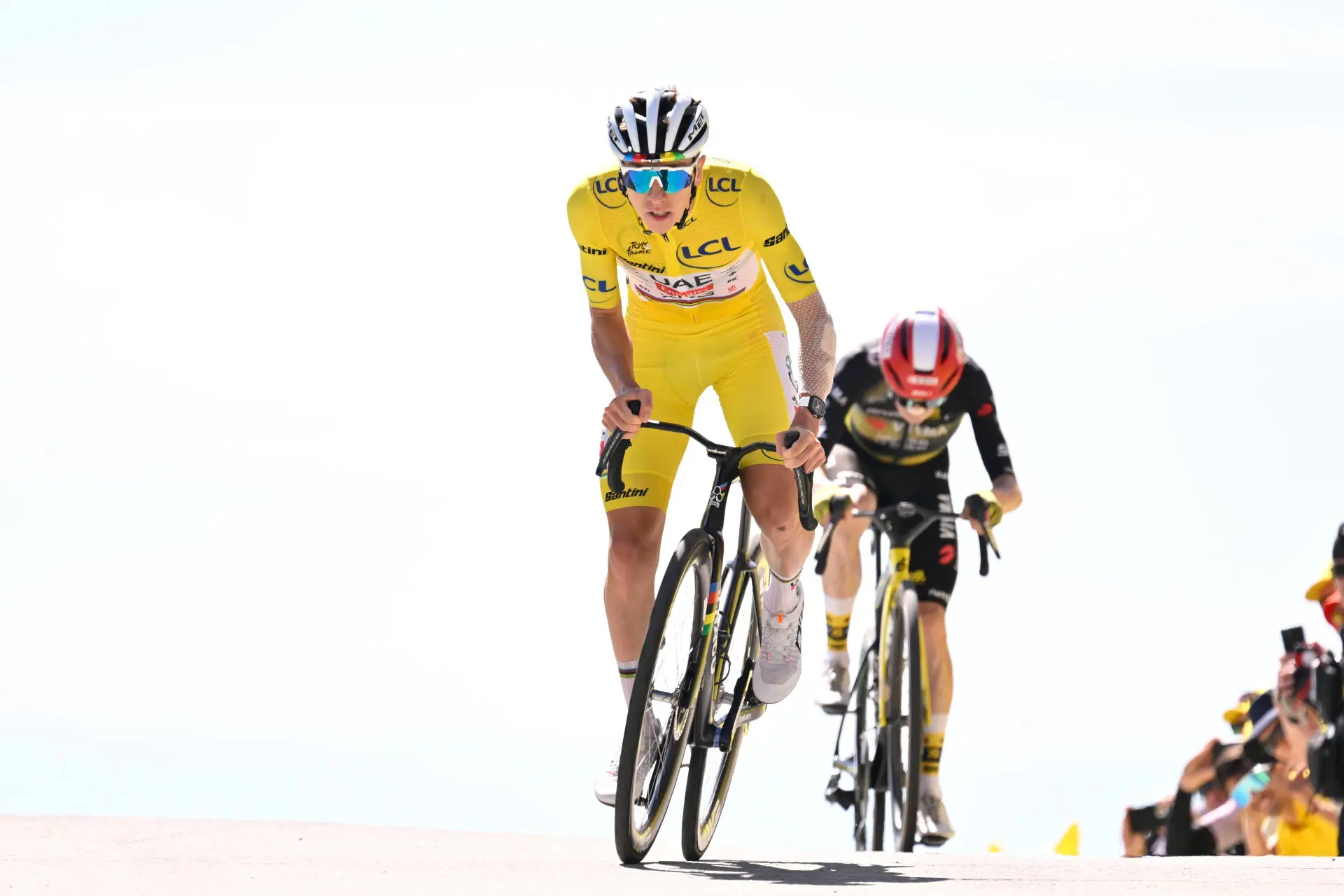
The fabled climb of La Planche des Belles Filles could soon
reappear on the Tour de France map, with French outlet L’Est Républicain
reporting that it is being lined up for the 2026 edition. For now, little is
known about the route, but early whispers suggest this climb and Alpe d’Huez
may both feature in the race. The official presentation is set for Thursday,
October 23, when full details will be revealed. Until then, history provides
the perfect reminder of why this short but brutal ascent has become one of the
defining stages of modern Tours. In fact, perhaps the most dramatic moment in
the history of the Tour occurred on this climb.
Measuring just 5.9 kilometers but averaging a punishing 8.5
percent gradient, La Planche des Belles Filles first appeared in 2012. That day
Chris Froome crossed the line first, launching into public view as a rider
seemingly stronger than team leader Bradley Wiggins. Wiggins would go on to
secure overall victory, but Froome’s display on the climb marked the beginning
of his transformation from super-domestique into future Tour champion. It was a
moment that shifted the dynamic within Team Sky and set the tone for years of
dominance that followed for the Kenyan born British rder.
The climb returned in 2014, when Vincenzo Nibali won the
stage on his way to capturing the yellow jersey in Paris. That year, La Planche
des Belles Filles was again decisive, cementing Nibali’s control of the general
classification at a relatively early point in the race.
But we all know the year that La Planche des Belles Filles
etched itself into the history books.
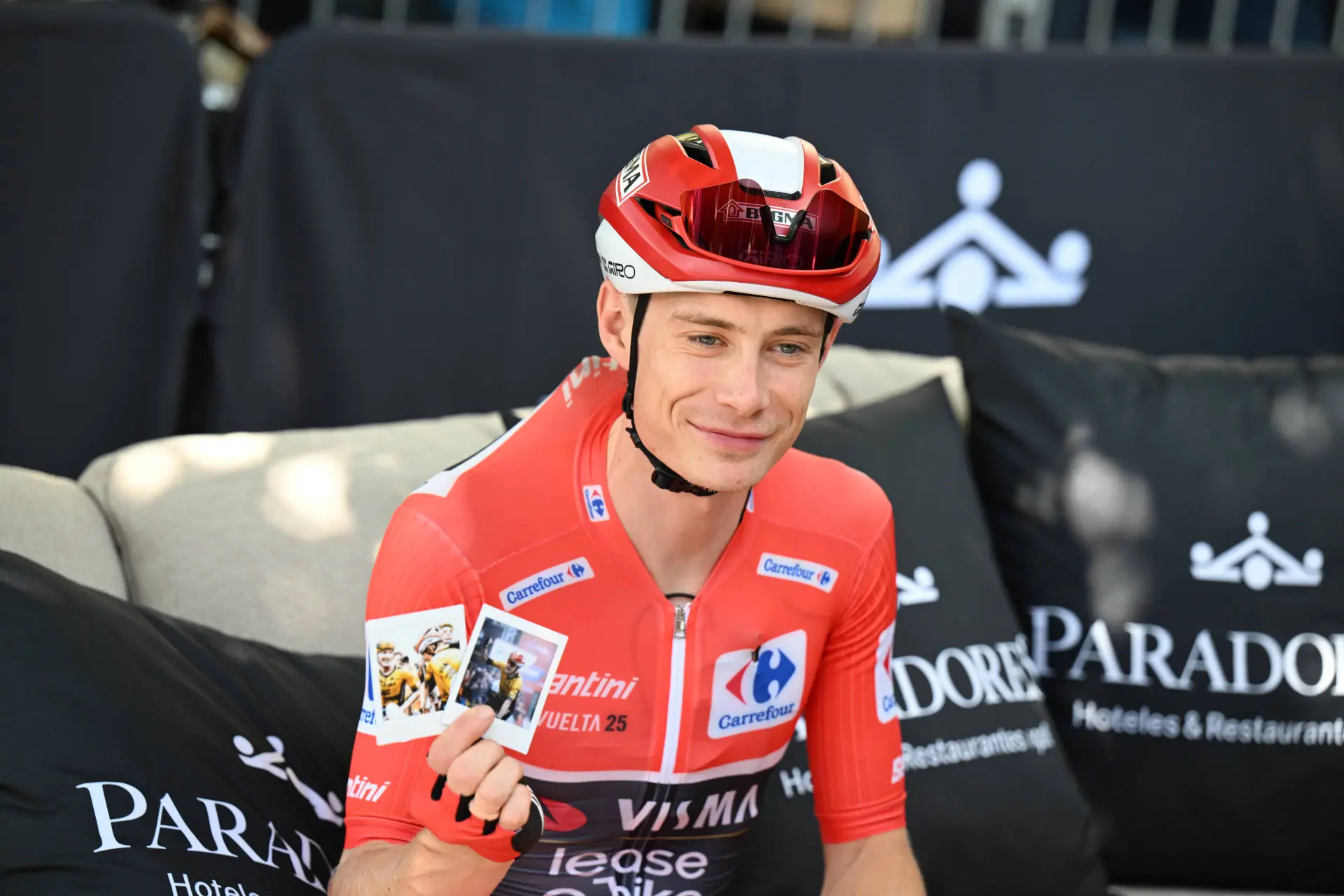
Six years later, it became the setting for one of the most
dramatic finales in Tour history. The 2020 penultimate-stage time trial
finished at the summit, with Tadej Pogacar overturning a seemingly unassailable
deficit to Primoz Roglic. Pogacar’s astonishing ride not only secured him the
yellow jersey, but also entered cycling folklore as one of the sport’s (in fact,
any sport’s) greatest upsets.
Two years on, in 2022, the climb again delivered a show.
Pogacar and Jonas Vingegaard fought wheel-to-wheel, with the Slovenian narrowly
defeating the Dane at the line when it looked like his rival had pulled ahead.
That edition introduced the “Super Planche des Belles Filles,” extending the
climb with a gravel section that made the finale even more demanding. The
addition highlighted both the physical and tactical challenges of the ascent,
pushing riders beyond the limits of traditional mountain finishes, with riders
often collapsing over the finish line.
Read also
The significance of La Planche des Belles Filles stretches
beyond road racing, or at least it does if rumours are to be believed. Earlier
this summer, the venue was named as a candidate for the 2030 Winter Olympics,
where organisers plan to introduce cyclocross. As event co-ordinator
Jean-Pierre Lefèvre explained, “We are located just a four-hour drive from
Belgium and the Netherlands, where cyclocross culture is robust. We know how to
make it work; it will be a grand celebration.”
If the rumours prove true, the 2026 Tour de France will
again revisit a mountain that has shaped modern cycling narratives. Much like
the Col de la Loze, La Planche des Belles Filles has quickly established itself
as a modern Tour de France classic, where heroes can be either made or
destroyed. From Froome’s rise in 2012, Nibali’s win 2014, Pogacar’s miracle in
2020, to his duel with Vingegaard in 2022, the summit has repeatedly hosted
decisive chapters in the sport over the past 15 years. Until October’s
announcement, speculation will continue, but we hope that the rumours are true
and we will return to La Planche des Belles Filles next July.

Fin MajorCycling Journalist
Fin Major is a UK-based writer at CyclingUpToDate and has been part of the team since 2024. He is the site’s main writer for FAQs and evergreen explainers and has written around 2,000 pieces for the platform. Alongside this work, he focuses on in-depth analysis and covers the biggest races on the calendar, including the Tour de France, the Giro d’Italia, and La Vuelta a España, providing clear context around performance trends, tactics, and key storylines.
In his reporting, Fin uses reputable data sources such as ProCyclingStats for results, statistics, and historical context. He places strong emphasis on careful sourcing, editorial accuracy, and updating articles promptly when new, verified information becomes available. Outside of writing, Fin is an active cyclist, which supports his practical understanding of the sport and its demands.
claps 0visitors 0
Just in

Popular news
Latest comments
- 'Children these days'... Wout, since the caveman learned to say "Ug", older generations have always said this about younger generations. Not every young rider is a cowboy. So what's to say that the fact that Poels was respectful meant that his peers were equally so?
 Rafionain-Glas19-10-2026
 - "...In a weakened field" Most definitely ! YAWN !frieders319-10-2026
- Noted. But I had to appease his fans.MajorPayne19-10-2026
- I wonder if he'll race Challenge MallorcaRafionain-Glas19-10-2026
- Head to head time-splits: Jay Vine vs Remco Evenepoel: 10.5 km - Vine lost 45 seconds to Evenepoel 34.2 km - Vine lost a further 1:10, and was caught in the vicinity of that checkpoint. Note: I remember Vine getting caught before the second checkpoint, and ProCyclingStats log supports that, however, the gap at the second checkpoint was less than 2 minutes. 45.4 km - Vine lost only 16 seconds Of course, Vine lost less time in the middle section than the early section, but at the final segment rate, he'd have lost 15 seconds in the opening section and and 34 seconds in the middle. It is possible that Vine paced himself very well but that seems unlikely. In comparison with Stefan Küng: Kung lost: 26 seconds at T1. A further 1:11 by T2. A further 40 seconds by the finish. Relative to Evenepoel, Küng did slow down by the end. Maxime Decomble: Lost 47 seconds at T1. A further 1:20 by T2. A further 26 seconds by the finish. Mikkel Bjerg: Lost 37 seconds at T1. A further 1:34 by T2. A further 46 seconds by the finish. It is not concrete evidence that Vine cheated though it certainly doesn't absolve him. However, watching the race, I am 100% sure that Vine did not pull over and follow a different line when Remco passed him. Remco pulled away quite quickly, but the gap did not balloon and Vine definitely got aero assistance.Rafionain-Glas19-10-2026
- That ship has sailed years agovappaxbipmv19-10-2026
- He doesn't have to. I'd be perfectly happy if he loses SB if he then wins everything elsevappaxbipmv19-10-2026
- Please don't put Remco in the same sentence as Tadej. It's disrespectful to Tadej. Please make a note of this.KissinKate19-10-2026
- ....and you just described how americans are fleecing american fans as well. We don't even get the eurosport coverage you get. What you see on yurrup HBO is not available in this country. Trust me, being a cycling fan sucks everywhere.KissinKate19-10-2026
- While media outlets point to the loss of Richard Carapaz, Kasper Asgreen, and rising talents like Steinhauser as a sign of trouble, this is actually classic EF Pro Cycling tactical pivot at play. Operating on less than half the budget of state-backed super-teams, Jonathan Vaughters smartly maximized Carapaz’s return on investment by turning high salary and health setbacks into Tour stage wins, Yellow, and the Polka Dot jersey, before freeing up vital capital when his valuation peaked. Let us be completely honest here: Carapaz’s departure to NSN is strictly about securing one final massive payday before calling time on his career, rather than building a lasting sporting legacy. EF built a squad around him and gave him tactical freedom that few teams would offer, but given his ongoing health concerns and age, keeping him at that price point represented an unsustainable risk. It is very unlikely he will match the freedom or success he enjoyed at EF with his new team, making this move a pure business decision for a veteran rider cashing in on his remaining value. In contrast, while signing Tao Geoghegan Hart carries its own physical risk, it comes at a vastly different financial scale that protects EF's bottom line while offering immense upside. Replacing that climbing depth won't happen overnight, but bringing in Tao fits EF’s proven reclamation playbook perfectly by providing a low-pressure, culture-first environment for a proven Grand Tour winner to find his magic legs again. Backed by a secured core in Ben Healy, Neilson Powless, and Sean Quinn through 2029, EF isn't crumbling; they are simply resetting their wage structure, staying nimble, and betting on high-ceiling upside where richer teams only see risk.wambo19-10-2026
Loading
Write a comment