“It’s right that fans should pay” – Italian legend Paolo Bettini backs proposals to charge roadside spectators at cycling’s biggest races
CyclingMonday, 24 November 2025 at 12:00
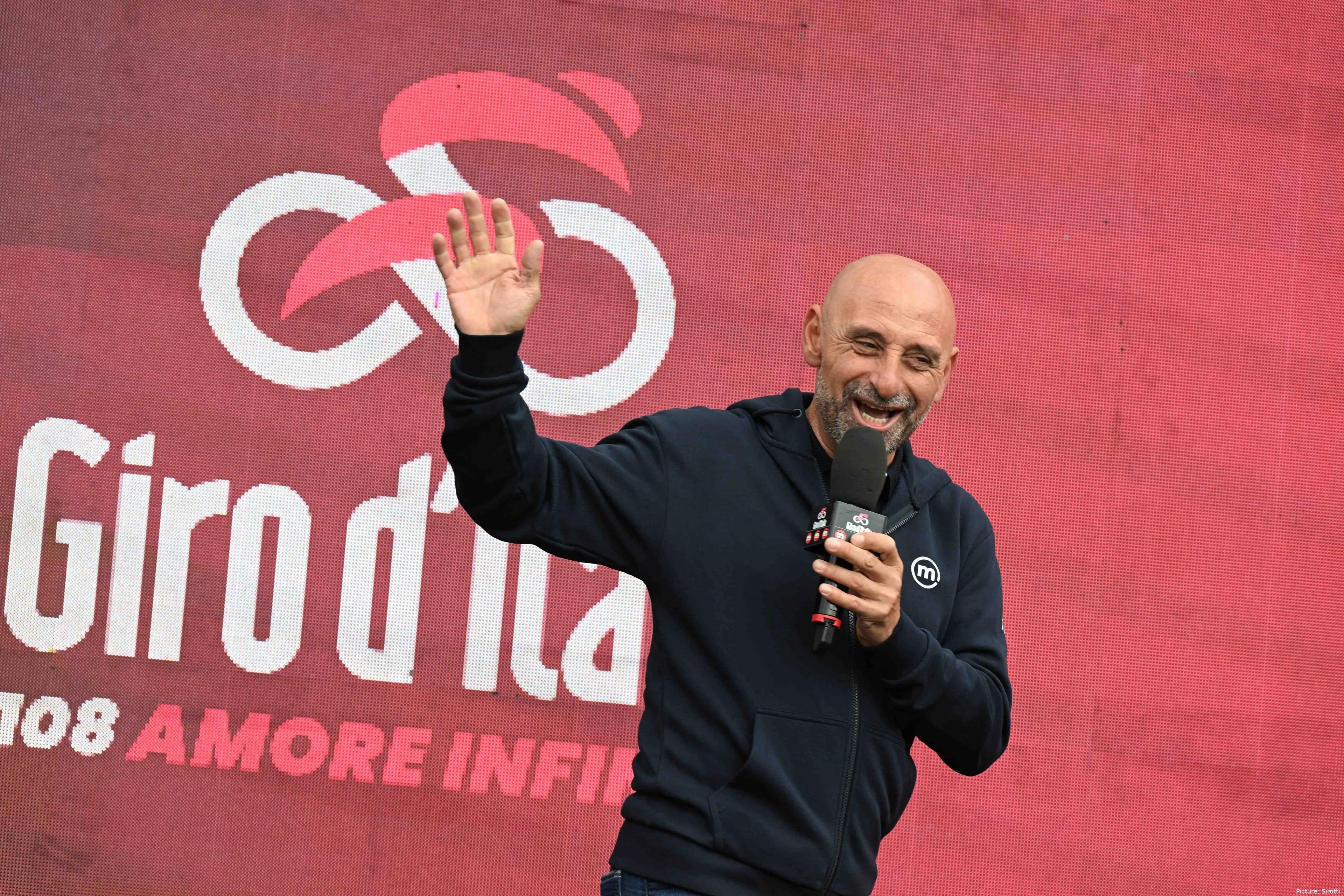
Paolo Bettini has come out in support of the controversial idea of charging fans for access to select roadside sections at major races, arguing that cycling must modernise its model and give greater recognition to the athletes out on the road.
Speaking to Bici.Sport, the two-time world champion said the sport can no longer pretend that all roadside viewing must remain free, particularly on iconic climbs and high-demand areas.
Bettini insisted he first raised the idea years ago, even while still racing. “I was one of the first – and if I’m not mistaken, I said it to Mauro Vegni – it’s right that fans should pay,” he told Bici.Sport. “Not because we want to punish supporters, but to give them something extra.”
His intervention follows comments last month from Filippo Pozzato, who defended paid-access zones at the Veneto Classic and called for cycling to adopt a more sustainable funding structure. Bettini’s endorsement adds significant weight to a debate that is rapidly moving from fringe provocation to mainstream discussion.
“Start with even €1” – Bettini argues symbolic pricing would elevate the experience
While adamant that cycling must remain accessible, Bettini believes small, targeted ticketing is both realistic and beneficial. “A 160-kilometre stage can’t be made entirely paid, of course,” he said. “But there are uphill sections, the mythical climbs, particular passages, the finishing straight. Paying symbolically – even starting with €1 – is a step forward because it gives merit to the athletes on the road.”
He contrasted cycling with other sports in which family members routinely pay high entry fees to watch their children compete. “Cycling is the only one that doesn’t charge. And that’s fine – the majority should stay free. But in certain places we have to offer a service.”
Bettini stressed that fans who don’t want to pay must always have alternatives: “Those who don’t want to pay have the whole road where they can go,” he said. “But there are particular points where something more must be provided.”

“Cycling is a platform that generates movement” – why Bettini says the sport must think bigger
More than simply funding logistics, Bettini believes paid zones could help the sport acknowledge its own value. “Finally today I heard someone say: we don’t just organise bike races,” he said. “Cycling is something that goes beyond – a platform that creates and generates movement.”
For Bettini, ticketing isn’t a threat to cycling’s soul but an overdue evolution. It’s also, in his view, a way to properly respect the riders themselves: “It’s right to give thanks and say ‘bravi’ to the actors who are in the middle of the road.”
His tone was clear: this is not a call to transform cycling into a closed-off, exclusive spectacle. Rather, it is a plea for the sport to recognise real-world economics and raise standards in the areas where demand already outstrips supply.
A growing movement — and a shift from taboo to inevitability?
Bettini’s stance aligns broadly with Pozzato’s, who recently told SpazioCiclismo that spectators must understand they are “not throwing money away” when paying for a curated roadside experience.
In France, Jerôme Pineau has floated the idea of “privatising” part of Alpe d’Huez for the 2026 Tour de France. In Italy, paid-access climbs at the Veneto Classic have already normalised a model once considered sacrilegious.
Now, with a figure as widely respected as Bettini stepping into the conversation, the direction of travel is unmistakable. What began as provocation is rapidly becoming policy debate.
Cycling’s longstanding identity as a free-to-watch sport is not under imminent threat. But the question Bettini places firmly on the table is whether some parts of the roadside should evolve, ensuring fans get better experiences while the sport stabilises its finances. And Bettini’s verdict is crystal clear: “It’s right that fans should pay.”
claps 21visitors 2
Just in

Popular news
Latest comments
- Too bad she lost her nerves
 ChillingCyclist01-02-2026
 - Marion Norbert-Riberolle was an embarrassment to Belgium with her DSQonegear2901-02-2026
- Marion Norbert-Riberolle was an embarrassment to Belgium with her DSQonegear2901-02-2026
- Marion Norbert-Riberolle was an embarrassment to Belgium with her DSQonegear2901-02-2026
- Marion Norbert-Riberolle was an embarrassment to Belgium with her DSQonegear2901-02-2026
- Remco doesn’t train in Belgium that much. He’s in Spain all the timemij01-02-2026
- Some silly stuff here, how do WVA & Remco train in Belgium then? Sure he gets a game of golf in there once in a while, keeps the Lambo and the gf serviced and has screen time. He’s no monk and not the only one taking training ultra serious, just more talented.Jumpyjohn01-02-2026
- So not the video with the focusing on his speed?Jumpyjohn01-02-2026
- yes enjoyed Alvarado commentsDavide01-02-2026
- great call re Roubaix... wouldnt that be a great race!Davide01-02-2026
Loading
Write a comment