“It’s less spectacular than Paul Seixas’s victory yesterday” – Romain Gregoire answers Ardèche disappointment with Faun Drome Classic win
Cycling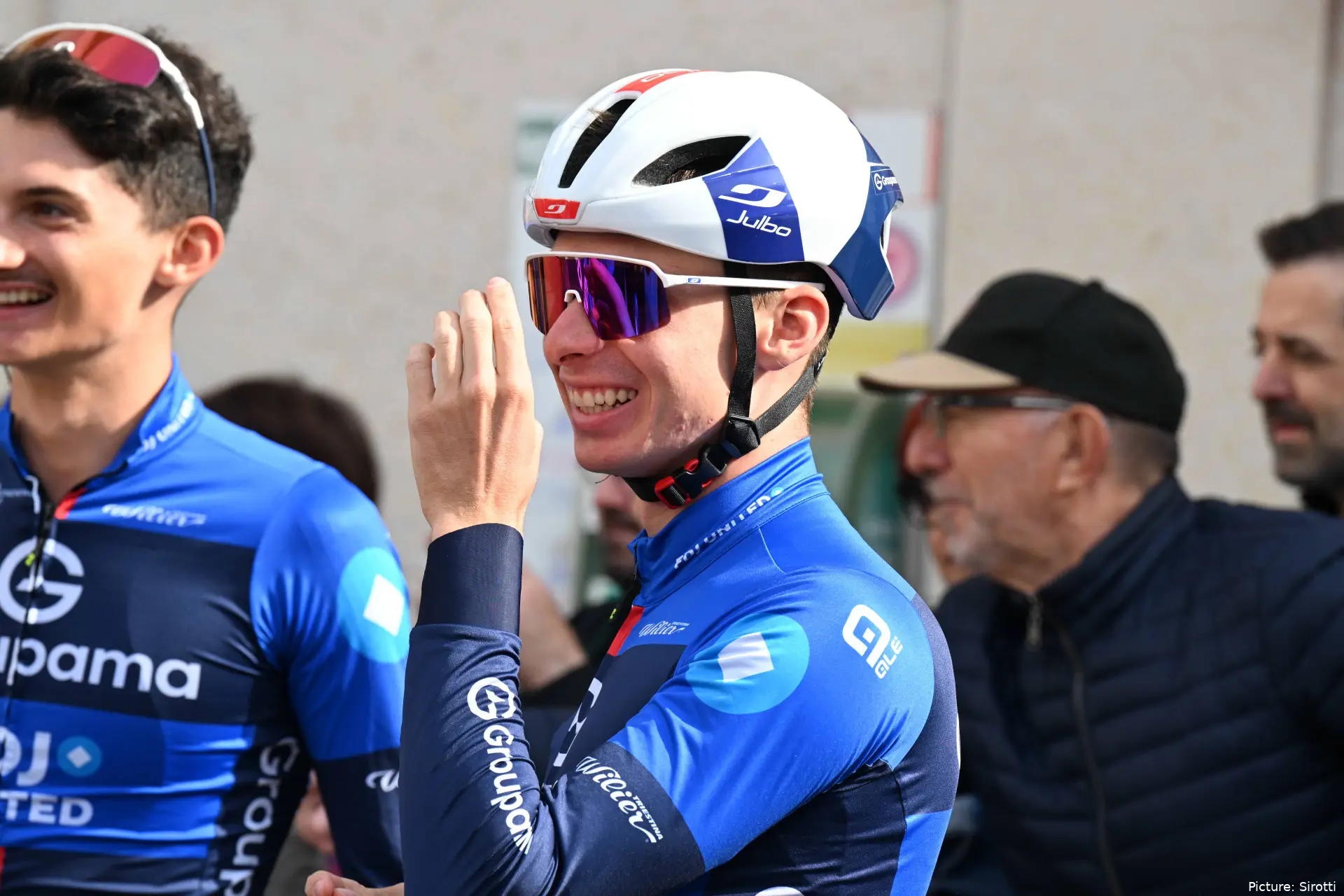
Romain Gregoire did not arrive at the start of the Faun Drome Classic certain of anything. His legs were sore from Ardèche. His sensations had been mixed. He had even warned his team not to commit fully to him.
By late afternoon in Étoile-sur-Rhône, he was raising his arms. “It’s quite a crazy feeling, especially after a start to the season that wasn’t bad but where the sensations were mixed,” Gregoire told DirectVelo after outkicking Matteo Jorgenson to win the 2026 Faun Drome Classic.
“I didn’t really know what to expect this morning, particularly as I had really sore legs after Ardèche. To be honest, I even told my teammates not to put everything on me today because I wasn’t sure about my legs,” he admitted honestly.
The honesty was striking. Twenty-four hours earlier, Paul Seixas had torn the race apart in Ardèche with a long-range solo. Gregoire, by contrast, had been left frustrated. “I was really disappointed with myself yesterday. When the team trusts you, and you don’t bring back a result, it’s always disappointing.”

Reading Visma, choosing the moment
The race in Drome turned inside the final 20 kilometres. A front group of twelve had formed, including three riders from Team Visma | Lease a Bike. That numerical advantage dictated the next phase.
“We had already gone clear as a group of twelve just before that, including three Visma riders. We had to focus on them because they had the numbers. You had to be ready to follow when they made their move.”
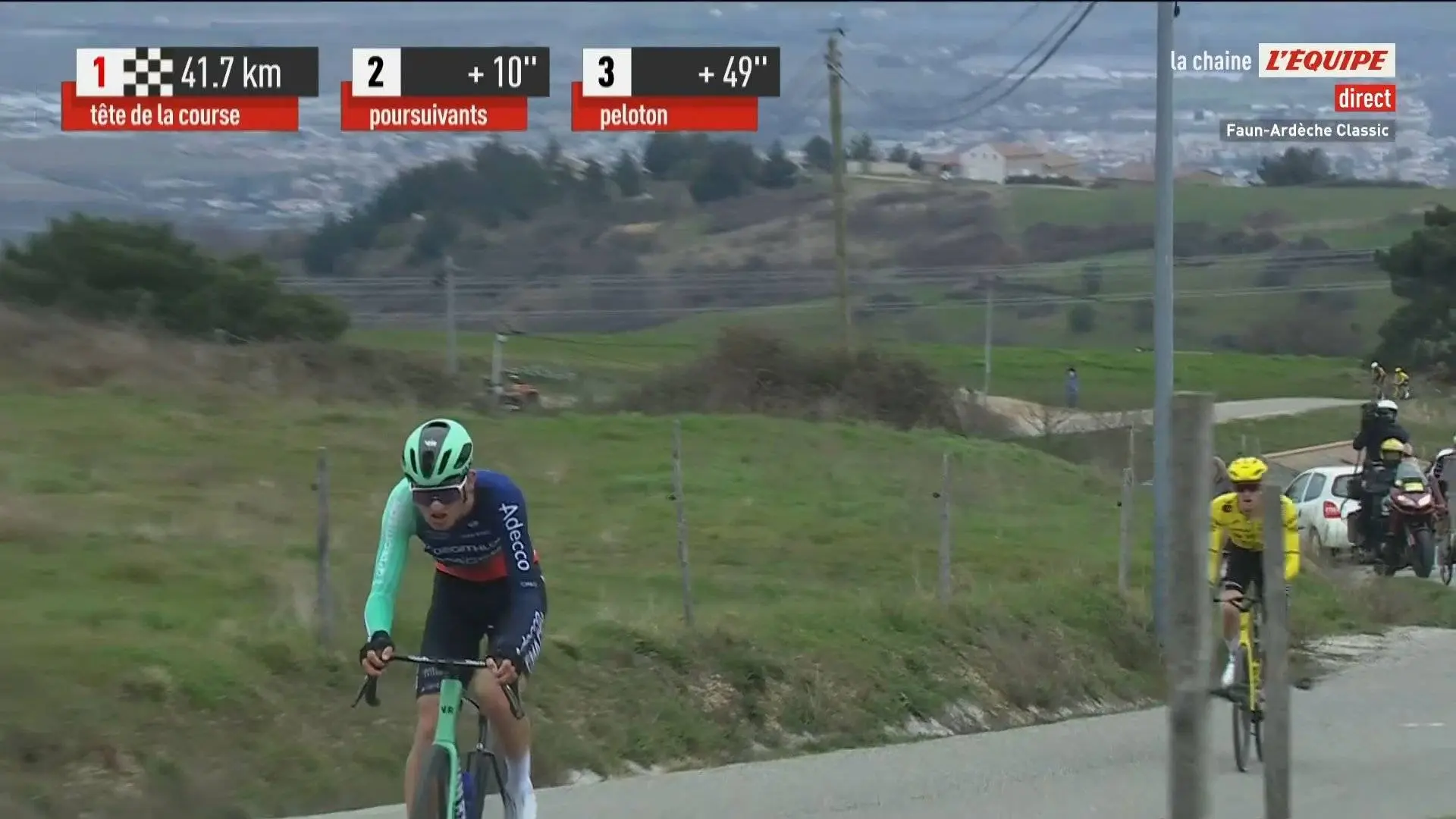
When Davide Piganzoli attacked, Gregoire held back. When Jorgenson countered, he reacted instantly. “When Piganzoli attacked the first time, I didn’t go. But I was in the right place at the right time when Matteo countered. I had a strong rouleur with me, so I quickly thought there was an opportunity.”
From that moment, the race simplified into a two-man confrontation. The gap hovered around twenty seconds as they approached the final climb of Étoile-sur-Rhône. “With the adrenaline of fighting for the win, it felt much better. It’s just crazy to win here.”
The sprint that followed was tight, the chasers looming just seconds behind. “I didn’t really know what was happening behind. The last information I got was through the earpiece when they told me it was 20 seconds under the red kite. I thought it would be enough. But when I looked back at 150 metres and saw Lenny on Matteo’s wheel, I admit I had a bit of a scare. But in the end, it worked out.”

Gregoire won the Tour of Britain in 2025
A different kind of statement
The comparison to Saturday’s spectacle was inevitable. “After winning Ardèche last year, I had Drôme in my sights this year. It’s less spectacular than Paul Seixas’s victory yesterday, but it’s nice to be able to raise your arms,” he said with a laugh.
There was no 40-kilometre solo this time. No overwhelming power display. Instead, the Drome Classic was decided by timing, positioning and nerve on the Mur d’Allex and in the final kilometre.
For Gregoire, that nuance mattered less than the result. “It’s important to win — that’s why we race. It’s rare, and you have to know how to enjoy it when it happens. And obviously, it unlocks a lot of things for the rest of the season.”
The Boucles Drôme-Ardèche weekend had begun with frustration and doubt. It ended with confirmation.
Now attention turns to Italy and the spring Classics. “That’s the idea, but there’s still a bit of work to do before San Remo. There are two or three weeks left to fine-tune the form, with Laigueglia and Strade in between. I’m on the right track.”
Less spectacular, perhaps. But no less significant.

Kieran WoodDeputy Editor-in-Chief
Kieran Wood is a sports journalist based in Wales and has been active in journalism since 2022. He regularly contributes to DartsNews.com and CyclingUpToDate.com, where he covers professional cycling and darts. In cycling, his work includes liveblogs from major races, including the Tour de France, the Giro d’Italia, and La Vuelta a España, alongside race reports and analysis. He has also conducted interviews with professional riders.
His reporting spans the full racing calendar, from one-day classics to stage races, with a focus on accurate, real-time coverage and clear contextual analysis. For statistics, results, and historical context, he regularly uses resources such as ProCyclingStats. To support reporting on rider activity and training context where relevant, he also references Strava.
In his work, Kieran places strong emphasis on careful sourcing, editorial accuracy, and updating articles as new, verified information becomes available.
claps 3visitors 3
Just in


Popular news

Latest comments
- writing about yourself in third person ... please, at least have someone else from your staff author these self-coverage articles!Ketterechts25-11-2026
- Don’t forget Yates’s podium at 2023 TdF!Lozza25-11-2026
- It was stage 14 to Morzine that Carlos Rodriguez won in 2023, not Puy de Dome. And Kwiato actually won the previous stage himself to Grand Colombier!Lozza25-11-2026
- Go Pogi!! 🐐❤️Lozza25-11-2026
- They didn’t have or need “extraordinary information”. All they needed was for a French judge to sign off on the night-time testing for it to go ahead.Lozza25-11-2026
- If the sponsors voted for Primoz then you get him, otherwise not.flyer25-11-2026
- It sure can feel or seem that way but I wonder if the same amount of prodigious performances (compared to the others) would occur if no one was ever doping at all.flyer25-11-2026
- Given the similarity of two articles (published on I think the same date), I'm reusing (copy-n-pasting) my post from the twin: I've always thought the last day of each of the grand tours was problematic mostly in that the GC is considered completed before the race starts when that is not really true. There is some tension, but not desirable tension. What saves the awkward practice is the race finish is legit for those who participate - so it's not wholly different from the other stages. That neutralizations usually make good sense demonstrates their necessity so if that has to be the way to go I agree that the design plan for the neutralization should be completed before the race starts. This years end stage in the Vuelta had one of the best first half's I've seen in that many of the riders looked to be thoroughly enjoying themselves making it a joy to watch. But I think it was slightly closer to the exception rather than the rule.flyer25-11-2026
- Even I often win without being there at all, not even breaking a sweat. Beat that!flyer25-11-2026
- It is not about rest and peaking again - 5 weeks is not enough for that. It is about recovery while maintaining form. 4 weeks is easier for that. With a Giro-Vuelta, the 12 week break is enough to rest and then peak again. Not for the Tour
 Rafionain-Glas25-11-2026
Loading
Write a comment