Results Faun Drome Classic 2026 | Romain Grégoire outkicks Matteo Jorgenson to win in dramatic finale
Cycling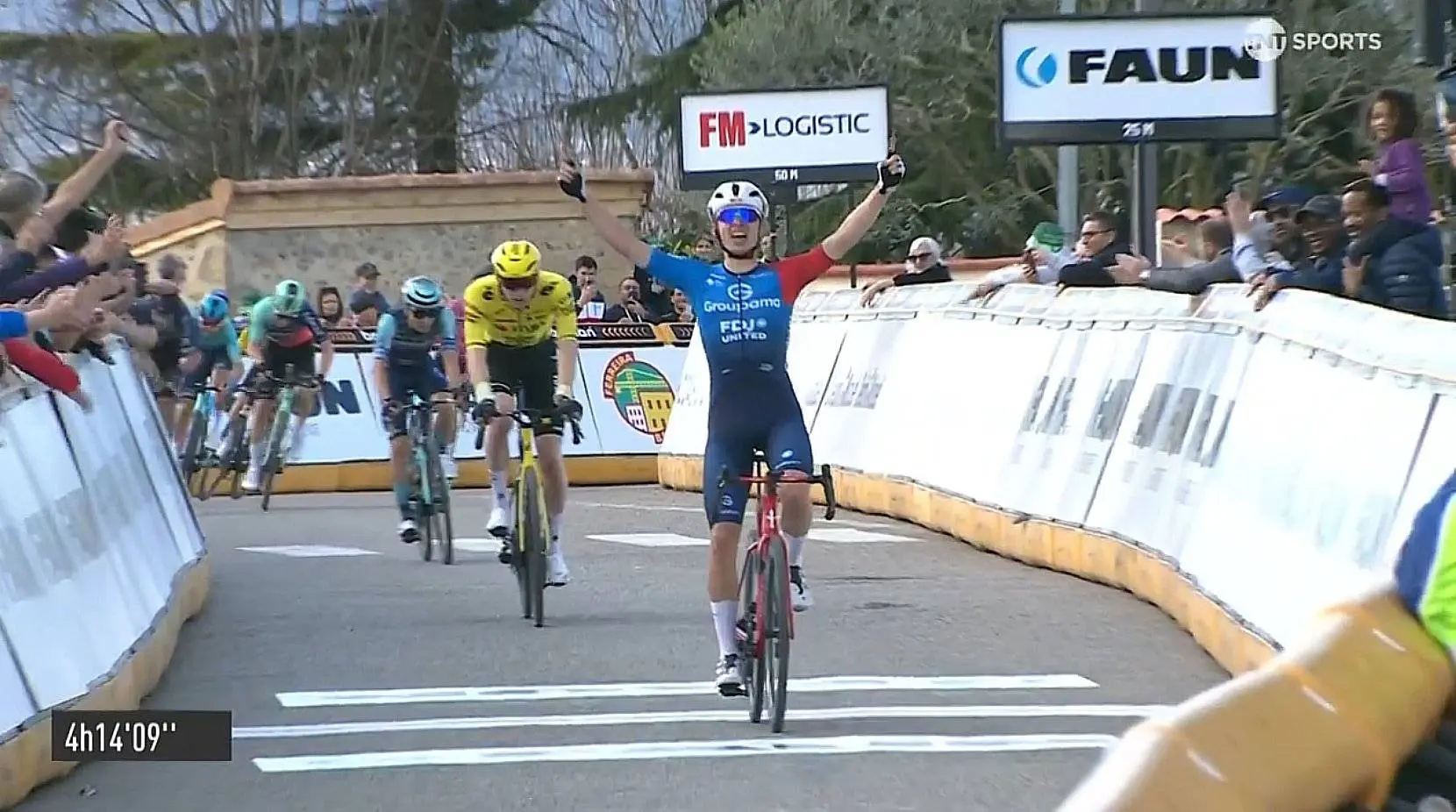
Romain Grégoire has won the 2026 Faun Drome Classic in Étoile-sur-Rhône after emerging victorious from a two-man sprint against Matteo Jorgenson, capping a selective afternoon defined by repeated accelerations and a decisive move on the Mur d’Allex.
The Groupama-FDJ United rider crossed the line in 4:14:11, with Jorgenson finishing on the same time. Lenny Martinez led a small chasing group home two seconds later, ahead of Quinten Hermans and Paul Lapeira.
Mur d’Allex decides the race
The race fractured for good inside the final 15 kilometres.
After the early breakaway had been steadily dismantled through the middle phase of the race, the elite selection formed on the longer climbs before the decisive acceleration came on the steep 0.6 kilometre Mur d’Allex at 8.6 percent.
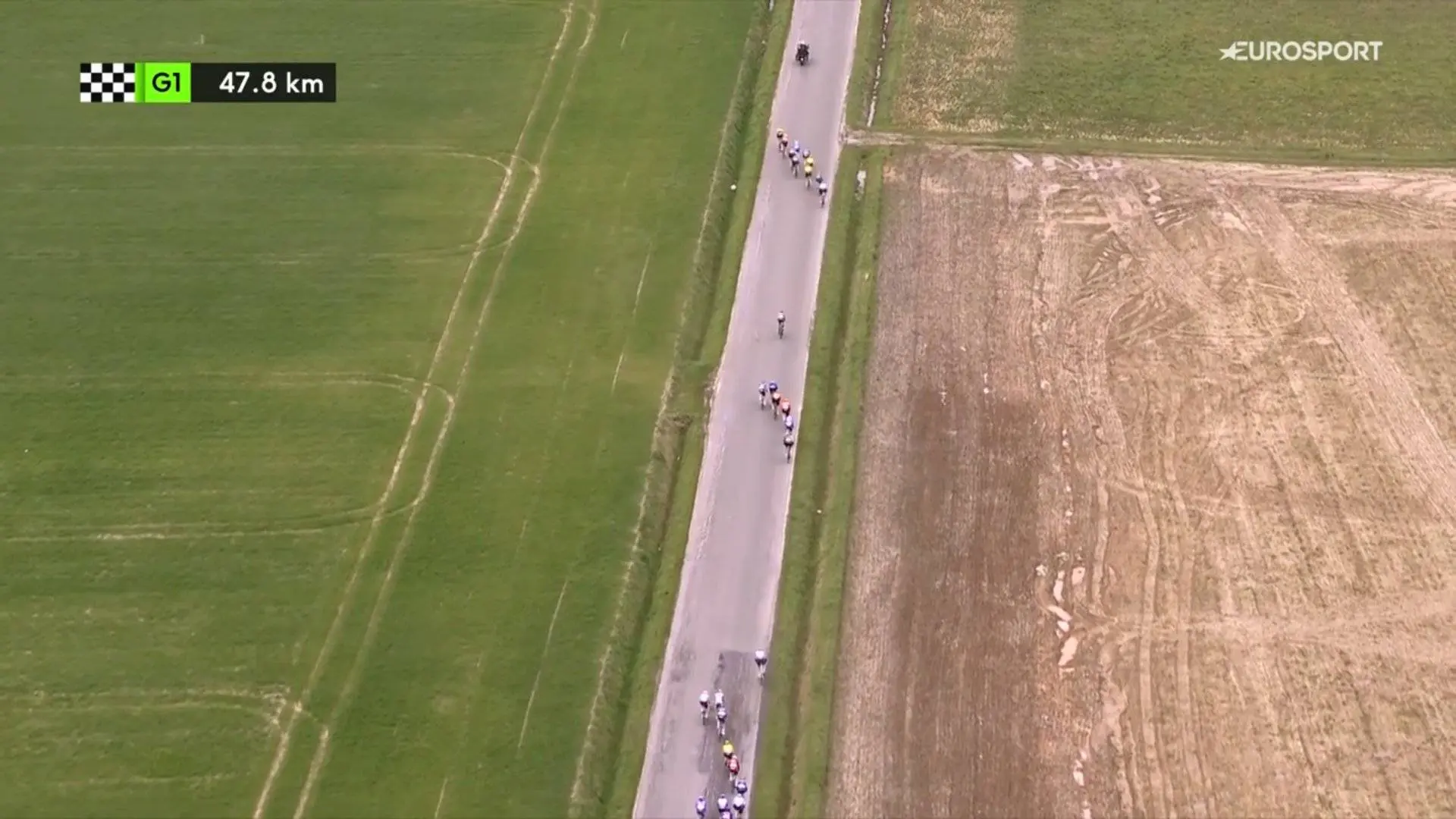
Jorgenson and Grégoire attacked together, immediately carving out a gap of around 25 seconds. Attempts to bridge from behind lacked cohesion, and although the gap briefly fluctuated, the duo maintained their advantage into the final 10 kilometres.
Behind them, the peloton had already been reduced to around 40 riders, reflecting the cumulative effect of 17 climbs and more than 2,200 metres of elevation gain.
A controlled two-man finale
The final climb of Étoile-sur-Rhône, 1 kilometre at 5.6 percent, served as the last opportunity to break the deadlock. Neither rider could dislodge the other on the ascent, and cooperation resumed over the crest.
The pair entered the final kilometre together, with Grégoire positioned on Jorgenson’s wheel. The gap to the chasers had narrowed slightly but remained sufficient to ensure the winner would come from the front duo.
In the sprint, Grégoire proved the sharper finisher. The Frenchman came off Jorgenson’s wheel and edged ahead in the final metres to secure victory.
Jorgenson was forced to settle for second, while Martinez led home the next group two seconds later.
A different finale to Ardèche
Unlike the previous day’s long-range solo in Ardèche, the Drome Classic was decided by collective aggression and a late, well-timed move rather than a sustained raid.
The repeated short walls and sustained climbs steadily reduced the field before the Mur d’Allex provided the decisive launchpad.
For Grégoire, it is a victory built on patience and positioning rather than early spectacle, and a reminder that, in Drome, timing often outweighs brute force.

Results powered by FirstCycling.com

Kieran WoodDeputy Editor-in-Chief
Kieran Wood is a sports journalist based in Wales and has been active in journalism since 2022. He regularly contributes to DartsNews.com and CyclingUpToDate.com, where he covers professional cycling and darts. In cycling, his work includes liveblogs from major races, including the Tour de France, the Giro d’Italia, and La Vuelta a España, alongside race reports and analysis. He has also conducted interviews with professional riders.
His reporting spans the full racing calendar, from one-day classics to stage races, with a focus on accurate, real-time coverage and clear contextual analysis. For statistics, results, and historical context, he regularly uses resources such as ProCyclingStats. To support reporting on rider activity and training context where relevant, he also references Strava.
In his work, Kieran places strong emphasis on careful sourcing, editorial accuracy, and updating articles as new, verified information becomes available.
claps 0visitors 0
Just in

Popular news
Latest comments
- Quinn Simmons: “Maybe I’ll never reach the top level.” I also hope he doesn't. I don't care what he looks like, his religion or sexual preference... but when he's a rascist against black people, a Maga Trump voter, that's where I pull the line. The whole world hates Trump, we all know why, but he keeps voting for him. A person that thinks like Trump is ...????. Make your own decision.PogiSloFans16-10-2026
- Denmarks coach reveals 2027 Rainbow Jersey has been targeted by Jonas for years !?!?!? PS: What??? No one believes this meaningless babbling. It's like saying: "The 2027 Monument - Il Lombardia has been targeted by Jonas for years."PogiSloFans16-10-2026
- I made a mistake and already fixed it. Hey twat, thanks.PogiSloFans16-10-2026
- Davide Piganzoli said: "Pogacar looked less brilliant at TDF than usual." We all see how stupid this comment is. What is happening to his brain cells? ... Hey Piganzoli, Tadej Pogačar’s record breaking ascent of Alpe d’Huez was one of the standout performances in the history of the Tour de France. Pantani's 1995 ascent stood for 31 years. Pogi went more than a minute faster. He accelerated near the foot of the climb, despite the leading breakaway being around three and a half minutes ahead. But in your delusional brain Pogi looked less brilliant???? .... Why don't you go find a corner and bang your head against a wall for about 10 minutes. Everyone is making fun of you.PogiSloFans16-10-2026
- MTB WC ? If he doesnt compete maybe allows MvDP to have a crack
 Davide16-10-2026
 - Jonas is declining now. A podium next year would be a good result for him.Renz16-10-2026
- unpredictability is not an issue. Most riders not named Pogi have that. The excuses are and the blaming teammates and other riders for insufficient support and blocking are. if weight is an issue get a nutritionist. If aircon is not working switch rooms. Position yourself or get your teammates and DS to keep reminding you of basic stuff if it is difficult to remember in a long race. Dont whine about other riders not working with you, use tactics yourself or get your DS to develop the tactics. Dont talk about noballs when you yourself have no ballsabstractengineer16-10-2026
- It’s worth remembering that cycling journalism has entered it’s “Shit-Stirring Hot Takes Winter” now in order to keep the clicks and views trickling in.wrsty16-10-2026
- Well that would be a major disappointment. The last two years are the first times I have bothered watching the last day. Maybe at worst it could be the 2nd last day but two classic finishes and then wompWaranga16-10-2026
- Vingegaard was the one showing signs of weakness. He was looking more likely to lose a podium spot or two than to make inroads on Tadej.Papijan16-10-2026
Loading
Write a comment