"It's already difficult to attract spectators": Italian organizer worried "pay-to-watch" could be cycling's swan song
Cycling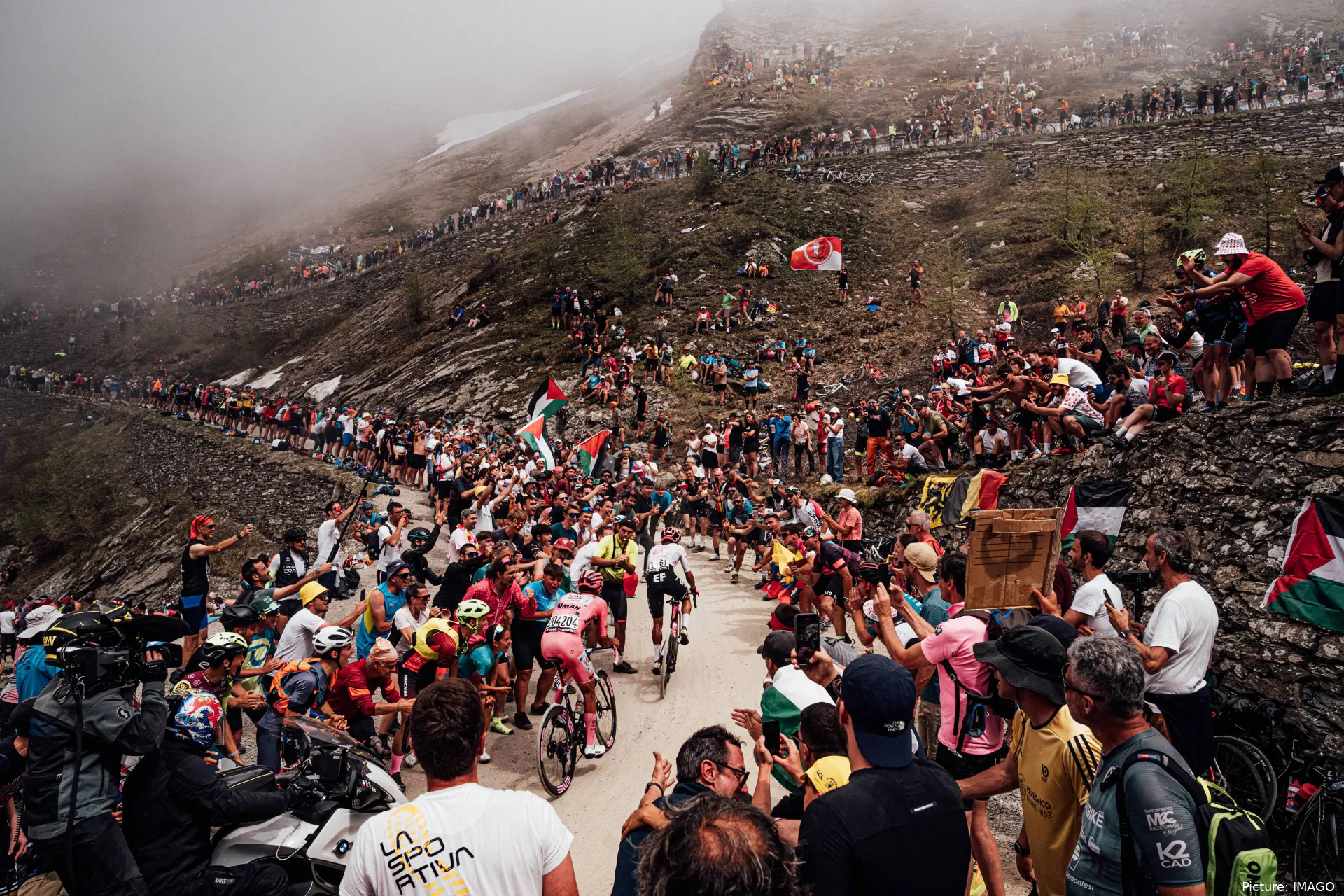
Cycling is a sport with limited circulation of resources, mainly financial. At the moment, a future of any team is exclusive in the hands of its sponsors who generate absolute majority of its budget. One way to change this fragile balance is by finding a new source of income. In particular, what is being brought up is making the biggest races pay-to-watch, with money going back to teams whose future can therefore be secured even without a super-sponsor which can be hard to come by.
"I'm against it," tells ExtraGiro promoter director Marco Selleri in an interview for SpazioCiclismo. "It's already difficult to attract spectators outside of the Giro d'Italia, Milano-Sanremo, and the Lombardy region. Emilia is somewhat saved by this beautiful finale in San Luca, which helps attract spectators."
At the Veneto Classic, a VIP zone was set up on the Tisa climb with a big screen, a DJ set, and a food stand costing €10, Filippo Pozzato explained to SpazioCiclismo how putting a prizetag on tickets could work. And it's not rare for races such as Tour of Flanders, or Tour de France to set up similar fanzones. However attracting paying crowds to a race might prove difficult for many of the smaller races.
"For the others, it becomes difficult," Selleri notes, contrary to his compatriot Paolo Bettini. "I don't think it's the cure for the problem. If you read the history of our sport, you understand that initially all the races, except for the most important stage races, were born out of passion and not work. It's obvious that times have changed, there are many more costs than several years ago, and consequently the organizer has to struggle a little more."
Counter-suggestion
"If I have to rethink cycling ergonomics," continues the experienced organizer, "I'd put teams and riders first, along with organizers. All of them have to find funding. It's an intrinsic issue: like rain, under the organizers' umbrella, we have to raise money for the UCI, FCI, and taxes. And then the teams have to pay their salaries."
"Except for RCS, which has global visibility with the Giro, Sanremo, and Lombardia, we don't have a large crowd. For me, the crowd should come for passion, just as the organizer should organize for passion, without losing money. Any extra money that comes in should be used to save for when visibility and sponsorships decline."
According to Marco Selleri, the money for fans' tickets could be used to help develop Italian cycling: "This year we were fortunate to have a Professional Cycling League led by Roberto Pella with important initiatives. The resources should be spent for the good of cycling."
"But if we have to charge for tickets, then we might as well have the public get a Cycling Federation membership card. Our youth cycling is in crisis, for many reasons. We are an industrialized country, the road system has changed, parents prefer to have their kids play tennis or soccer. Our fans are passionate: it's not right to take money from the pockets of people who could pay for instructors."
The 'Tour of Flanders' model is therefore not viable: "I'm strongly opposed to making fans pay for tickets. I've seen the last five Tours of Flanders: if you want to pay, you go to the hospitality areas for 400 euros, otherwise you can sit along the walls for free."
Temporary solution
"In my opinion, charging can only be a temporary cure. You can try and see what happens, but it won't solve the current problem, where raising funds is critical for everyone. I'm not against the other organizers; the nice thing is being able to compare ideas and try to explore them as thoroughly as possible. We have a league ready to support the professionals."
Ondrej ZhasilCycling Journalist
Ondřej Zhasil is a cycling journalist at CyclingUpToDate and has been part of the team since 2023. He is based in Ostrava, the third-largest city in the Czech Republic, and covers professional cycling across the main UCI competitions, including the Tour de France, the Giro d’Italia, and La Vuelta a España. A key focus of his work is startlist analysis and pre-race coverage, where he examines team selections, rider line-ups, and tactical scenarios ahead of major events.
Alongside WorldTour coverage, Ondřej has developed specific expertise in junior cycling and in racing across East Asia, including competitions in China and Japan. He also maintains a broad working knowledge of other disciplines and levels, including cyclocross, while continuing to expand his understanding of mountain bike racing.
Ondřej holds a bachelor’s degree in Mathematics and Physics, which supports his analytical, data-driven approach to performance and race analysis. In his reporting, he regularly uses ProCyclingStats for results, statistics, and historical context. He places strong emphasis on careful sourcing, editorial accuracy, and updating articles promptly when new, verified information becomes available.
claps 1visitors 1
Just in

Popular news
Latest comments
- How broke is visma now? wtf they cant even fight moviestar and decathlon for riders and lose both their mid targets based on their budget and they cant even get those? Crazy...:/miguel13-10-2026
- TT But he won by a minute so he could have cut down on some of it
 Rafionain-Glas13-10-2026
 - weight is measurable. power is measurable. So why didn't he prepare that way from the TDF if he wanted to beat Pogi and after Pogi wasn't going to be there, to win.abstractengineer13-10-2026
- I hope Thibau and Tibor don't do the sameRafionain-Glas13-10-2026
- Seixas is exactly what I would like Pogi to be mentally and in his statements. Both come across as shy and who don't talk much but with Seixas, you can see that he enjoys success, that it boosts his ego, unlike Pogačar who seems to feel increasingly uncomfortable the more he wins. He's won so many times, people are saying he's boring. The french media hate him for winning so much, the french cycling fans are booing him... etc. etc. But remember one thing, Seixas will never physically reach Pogi's level. He's excellent, but he isn't at that level nor will ever be. His talking to the media, his relationship with people is already at a high level.PogiSloFans13-10-2026
- Paul Seixas is now the second-best rider in the world.megasmacky13-10-2026
- When will they start dropping Pogi? Oh yeah, when Pogi reaches 40+ years, that's when young cyclists will start dropping him. But until then... eat your hearts out and cry. Pogi will remain the G.O.A.T. for years to come. Capish?PogiSloFans13-10-2026
- I figure he would have found out how to outsprint Paul and take the win, maybe. He's 28 now but I would say he's right at the peak of his powers. It was great race though, Paul showed me something different about himself.awp13-10-2026
- Slowly, very slowly... 5-7 yrs. ;)MajorPayne13-10-2026
- Up to this point: "It is just not yet at the level of Vingegaard and Pogacar." First Jonas, and then level of Tadej. Period!MajorPayne13-10-2026
Loading
Write a comment