"Is Paul Seixas the best 18-year-old we’ve ever seen?" - Bruyneel and Martin ponder on cycling's new generation
CyclingTuesday, 03 February 2026 at 11:45
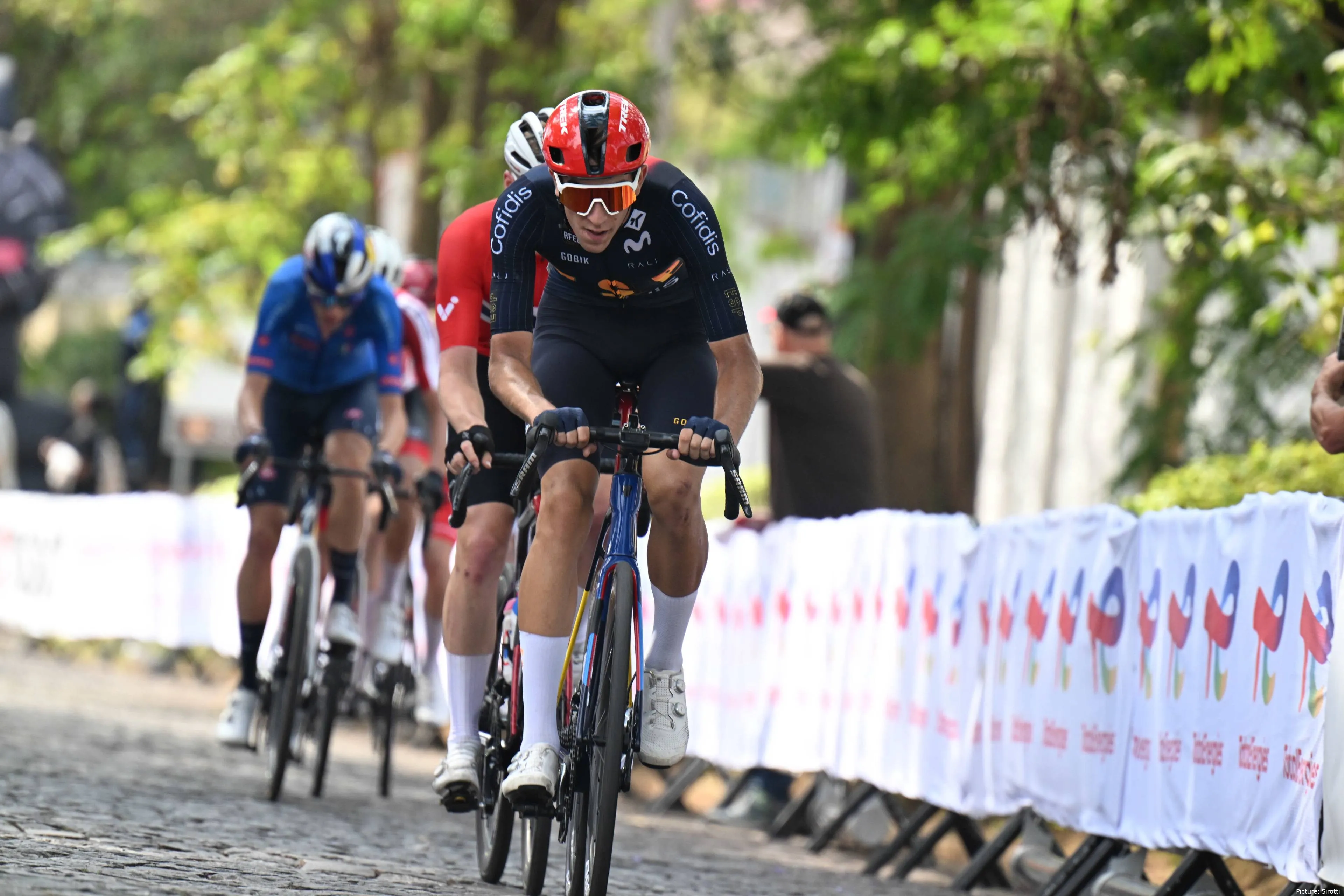
Professional cycling is experiencing an ever-faster influx of young talent. A decade ago, seeing 18- or 19-year-olds at the top level was rare. In 2026, that exception is close to the norm, with riders like Adrià Pericas or Héctor Álvarez in Spain; and Paul Seixas, Lorenzo Finn, or Matthew Brennan internationally.
On Lance Armstrong’s The Move podcast, Johan Bruyneel and Spencer Martin offered an in-depth analysis of the riders who, by age and performance, are poised to shape the peloton’s immediate future. These aren’t long-term prospects, but riders already racing, winning, or influencing professional events.
Spencer Martin set out the premise clearly: “Each year it’s harder to make this list because the riders shining in the biggest races are getting younger. To find the next ones, we have to go even lower in age.” That reality forces attention on the under-23 ranks and even riders still mixing development programmes with occasional WorldTour appearances.
One name that dominated much of the conversation was Paul Seixas. Johan Bruyneel didn’t hesitate to frame the debate in historical terms: “Is Paul Seixas the best 18-year-old we’ve ever seen? I’d say probably yes.” It’s no small claim given modern cycling’s evolution, where riders that age could barely race professionals until recently. For Bruyneel, Seixas embodies the paradigm shift sparked by riders like Remco Evenepoel: “Remco was a bit of a pioneer who changed that, turning pro at 18 or 19.”
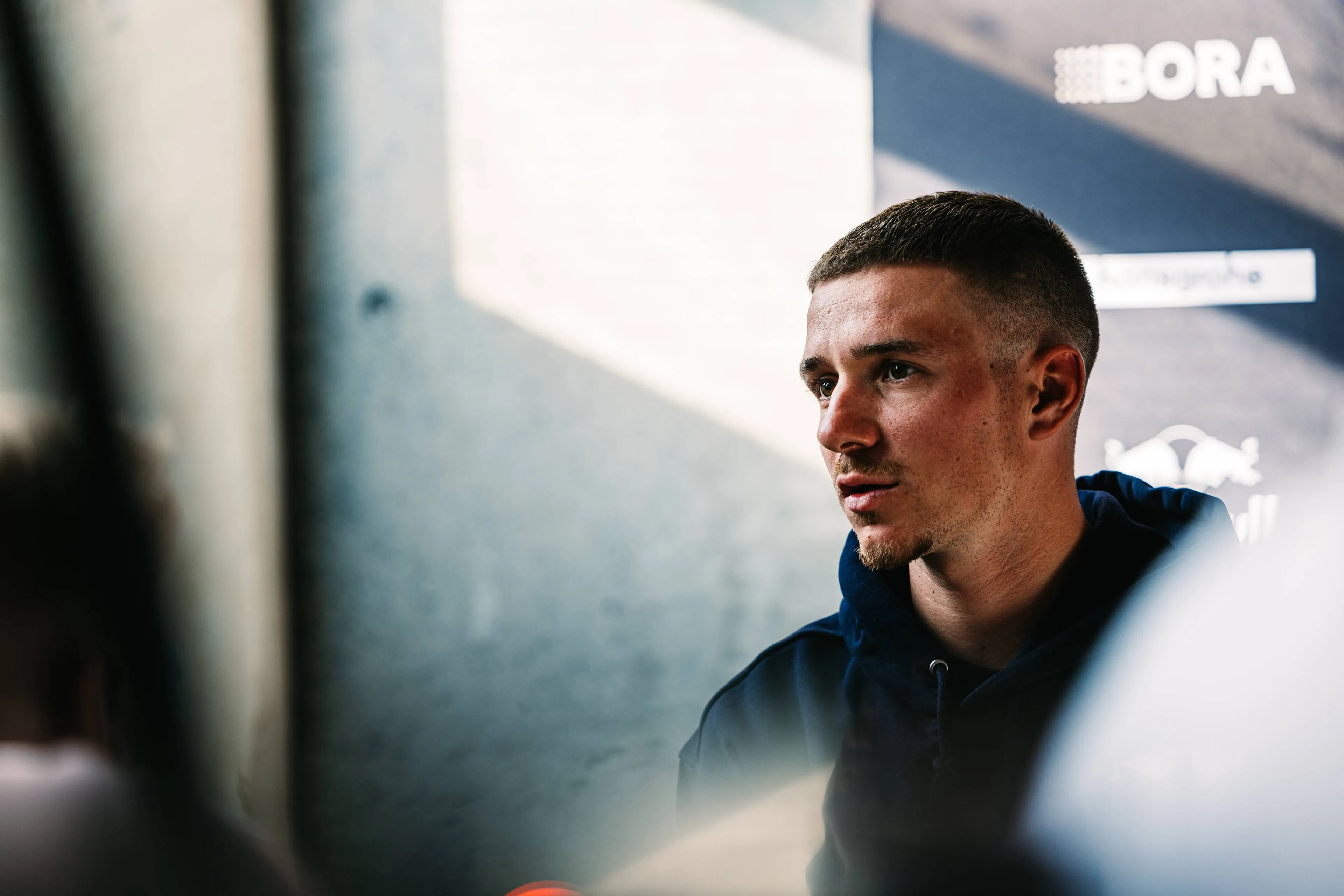
Beyond the numbers, Bruyneel highlighted how naturally Seixas operates at the highest level: “He’s the real deal, the true talent.” He recalled rides like his Dauphiné, flirting with the top ten, and his composure in stage races, where he even yielded a win to a teammate with the long game in mind (the 2025 Tour of the Alps where he helped Nicolas Prodhomme to his first pro win instead of taking it himself). For the Belgian, that gesture also defines the rider: “He said he’d have many more opportunities. That mentality says a lot.”
Another fixture in the discussion was Matthew Brennan. Spencer Martin was struck by his rise: “I think he was the rider who surprised me most last year. He won 12 professional races, which is crazy.” Bruyneel agreed and added the trajectory hasn’t stalled: “This year, in the little we’ve seen, he looks even better than last year. He’s clearly improving.” For both, Brennan typifies the modern rider: young, versatile, and ready to win immediately.
The roster of confirmed talents extends to profiles like Tibor Del Grosso, who balances cyclocross and road. Bruyneel underlined his World Tour adaptation: “I remember his rides at the Volta a Catalunya, a World Tour race, and you could already see it.” His runner-up at the elite Cyclocross Worlds, while still eligible for under-23, reinforces the ceiling of a very high-upside rider.
Looking toward more speculative bets on the future, Johan Bruyneel’s first pick was Jakob Omrzel, a 19-year-old Slovenian. His reasoning was blunt and clear: “He’s tall, very lean, but with a huge engine. He was fourth at the Tour of Slovenia with the pros as a kid.” The national context matters too, with Slovenia a hotbed of precocious talent over the past decade.
Spencer Martin, for his part, singled out Lorenzo Finn as his big bet. He stressed one decisive data point: “He won the junior Worlds and the next year the under-23 Worlds. Doing that at 18 against riders nearly 23 is a massive physical gap.” For Martin, that competitive leap is the unmistakable mark of a future champion.
Adrià Pericas and Héctor Álvarez
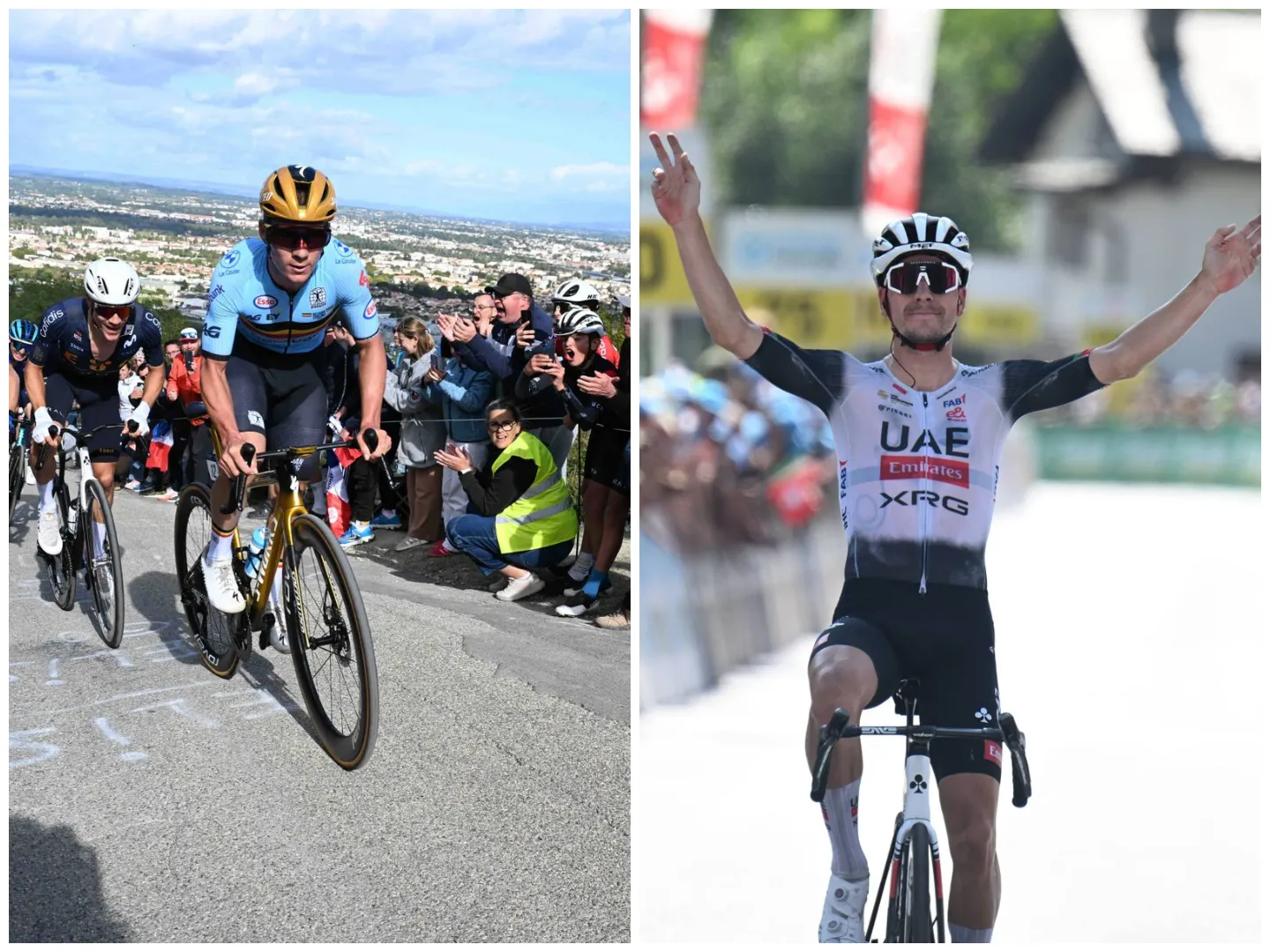
The analysis also paused on young climbers like Adrià Pericas. Bruyneel praised his tactical boldness and willingness to test himself against the best. At the recent Trofeo Serra de Tramuntana, the under-23 UAE rider was in the breakaway and then looked to be the best rider following Evenepoel when the Belgian attacked from the peloton to victory.
“He dared to follow Remco all the way up the climb. Getting dropped on the descent is another story, but it shows how good the big names are.” Those experiences, they argued, are essential to the accelerated learning curve these riders face.
Another standout was Héctor Álvarez, with an unusual body type for a pure climber. Bruyneel was blunt: “If at that size you’re fourth at a Worlds and third at a Europeans on courses that hard, you’ve got a huge engine.” His second place at the Trofeo Calvia, matching António Morgado on the day's climbs, reinforced his strong status not only as a developing rider but as an established top performer already.

Adrià Pericas, Spanish rider for UAE Team Emirates
Beyond the names, the deeper question was this: is it good to be that good that young? Bruyneel offered a reflection that summed up the podcast’s view: “You don’t want to be just the best 18-year-old in history. You want to keep improving and maybe be the best rider in history.” The Pogacar reference is inevitable, an example of someone who kept progressing despite reaching the elite very early.
Spencer Martin closed on the need for patience and constant evolution: “The key is improvement. All these guys are fantastic, but if they want to win big races they have to keep growing.” In a sport where precocity is no longer the exception, the real challenge for these future stars will be sustaining development and turning early talent into a long, successful career.
Read also
claps 2visitors 2
Just in
Popular news
Latest comments
- Oh I know all about it. Visma is also a team that leaves no surprises to its riders. They probably did at the very least 1 full day of recon on each flat stage and maybe more on climbing stages as well as decent. Seeing he also claims he did his own recon...he should have known if a pebble was out of place on the side of the road. This is PRO cycling not once a year 5mil rides. What he really should have said is: I am not the top rider anymore Pogi has surpassed the ability I have. My crash was caused by me trying to relive my glory years. Lastly, my wife made some remarks to the media, and to be honest I said them. She just was who the press talked to. I caused a big problem on the team bus with the remarks. I also owe one of the hardest working and vest riders in the world Van Art a huge apology for calling him out in said remarks. I honestly use to like Jonas, but now I am starting to think that he thought he was better than the sport. Going as far as to blame the race organization for a fall and then "his wife" calls out his teammate during the TDF. If I was Van Art I would have sat up and not helped him at all after that. Or, maybe help another rider instead. I don't think Visma would have said much. After all, they are trying to sign Del Torro or Sexlis...for what? GCmd197503-04-2026
- Are you by chance Tadeg's daddy which is why you are so over the top here on this site with his promotion? No CAPISH !frieders303-04-2026
- It was the original plan to have Jasper Philipsen sprint for the win, it won't be that way in Flanders, MvdP will work to reel POGAČAR in.alsene03-04-2026
- The Godfather of Saunier DuvalMistermaumau02-04-2026
- We hardly have cat. 5 races anymore, too complicated for organisers, more and more they mix up plenty of categories which makes things far more dangerous, we were 180 at the start for an 8 circuitMistermaumau02-04-2026
- I gathered that but for some I was the equivalent so just a bit of fun. I gather he’s still around, maybe he just took my advice?Mistermaumau02-04-2026
- He doesn't have to quit cycling for that? And maybe they don't want kids, not everyone doesvampa02-04-2026
- Primož Roglič will be the best domestíque. In order to facilitate Pogačar's long range solo win, he will attack early to get rid of all of Team Slovenia's domestíques. Due to being such a valiantly hard working domestíque, he will pay for his selfless efforts and crack, so Pogačar can't use him anymore. This will mean that Pogačar will have to launch very early. In the chasing group behind, Roglič will have recovered. He'll disrupt the cooperation in the chase by attacking, in the form of long, powerful turns on the front. And of course Pogačar wants a challenge, he does not want it ti be easy, so Roglič will pull fir the chasers to do so. Meanwhile, 20 year old Jakob Omrzel will be tge perfect domestíque
 Rafionain-Glas02-04-2026
 - Pogačar won two years, lost two years and won two years — will he lose this year?Rafionain-Glas02-04-2026
- Pogačar to crash in a very rainy Roubaix, taking him out of the following races. Disclaimer: nit limited to this yearRafionain-Glas02-04-2026
Loading
5 Comments