“I’m not worried about Evenepoel. It’s Almeida if he hits his top level” – Danish expert points to UAE leader as Jonas Vingegaard’s biggest threat in Catalunya
Cycling
Jonas Vingegaard may have conceded six bonus seconds to Remco Evenepoel on Stage 1 of the Volta a Catalunya, but the early general classification picture is already being framed in different ways.
Speaking to Eurosport.dk, Danish cycling expert Jesper Worre, not only played down the significance of Evenepoel’s advantage, but also pointed to Joao Almeida as a potentially more decisive rival as the race unfolds. “Jonas Vingegaard makes the difference in the mountains,” Worre explained, playing down the significance of the time lost in Sant Feliu de Guixols. In his view, bonus seconds are rarely decisive when the Dane is at his best.
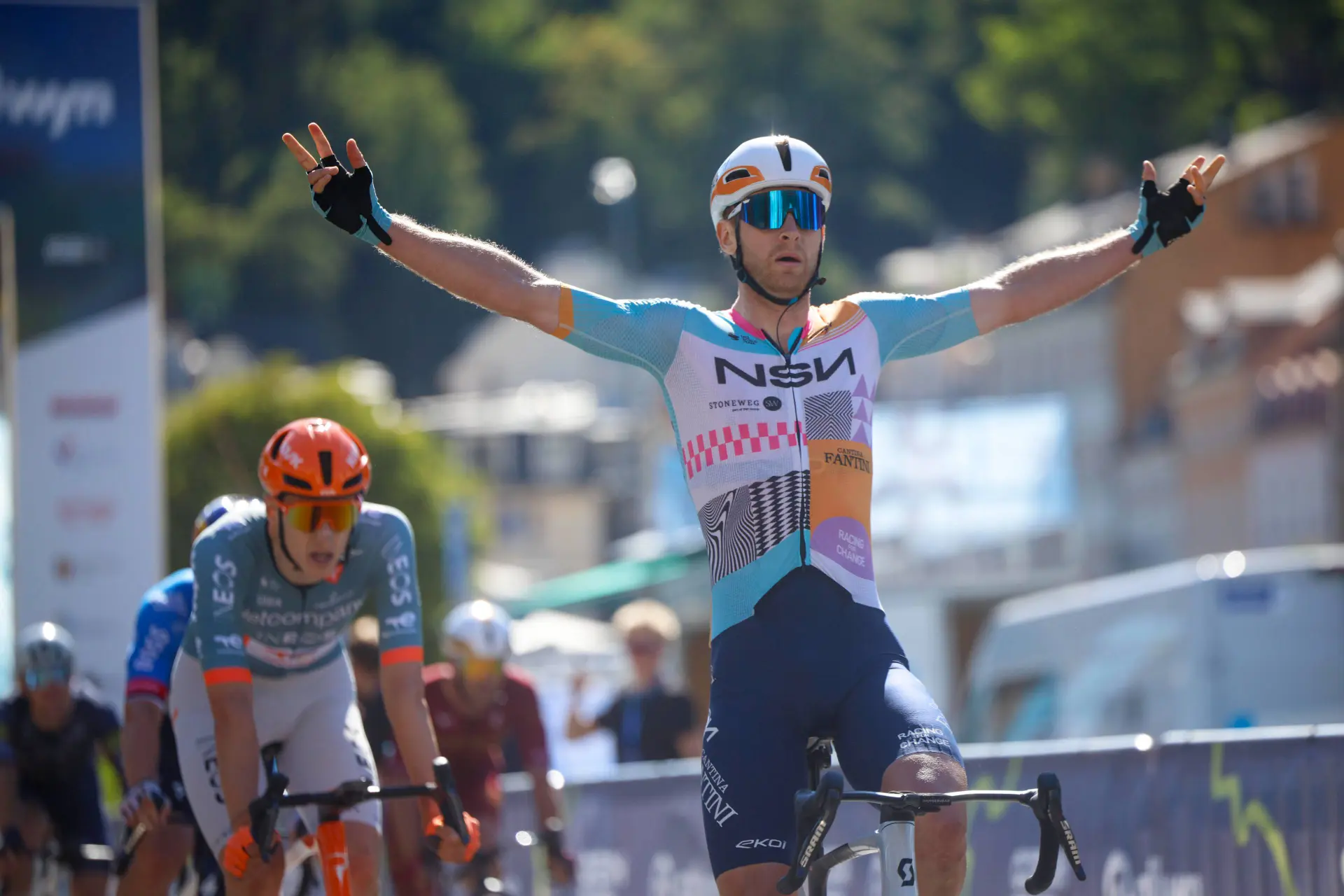
That perspective runs counter to the immediate optics of the opening stage, where Evenepoel surged to second place behind Dorian Godon and took an early lead over one of his main general classification rivals.
But for Worre, the lesson from races like Paris-Nice is clear. “When Vingegaard is at his best, he usually doesn’t have problems with bonus seconds, because he makes the difference in the mountain stages.”
Controlled aggression in the finale
Vingegaard’s ride itself offered a revealing insight into his approach. Rather than getting caught deep in the chaos of a technical and fast finale, the Visma leader moved to the front on the descent and took control of his own positioning. “He did exactly what he said beforehand. He wanted to stay safe all the way to the finish,” Worre noted.
That decision saw Vingegaard spend around one and a half to two kilometres at the head of the peloton, a move that combined positioning with risk management rather than outright pursuit of the stage result. “The safest place to be on a descent is actually at the front, and he did that without taking unnecessary risks.”
While riders like Evenepoel and Tom Pidcock committed fully to the uphill sprint for victory, Vingegaard’s approach was more measured. He ultimately finished 11th, close enough to avoid any splits while staying out of the most volatile part of the finale. “He actually also rode a good sprint, even though he had been pulling. You can always fear gaps opening, but he came through safely.”

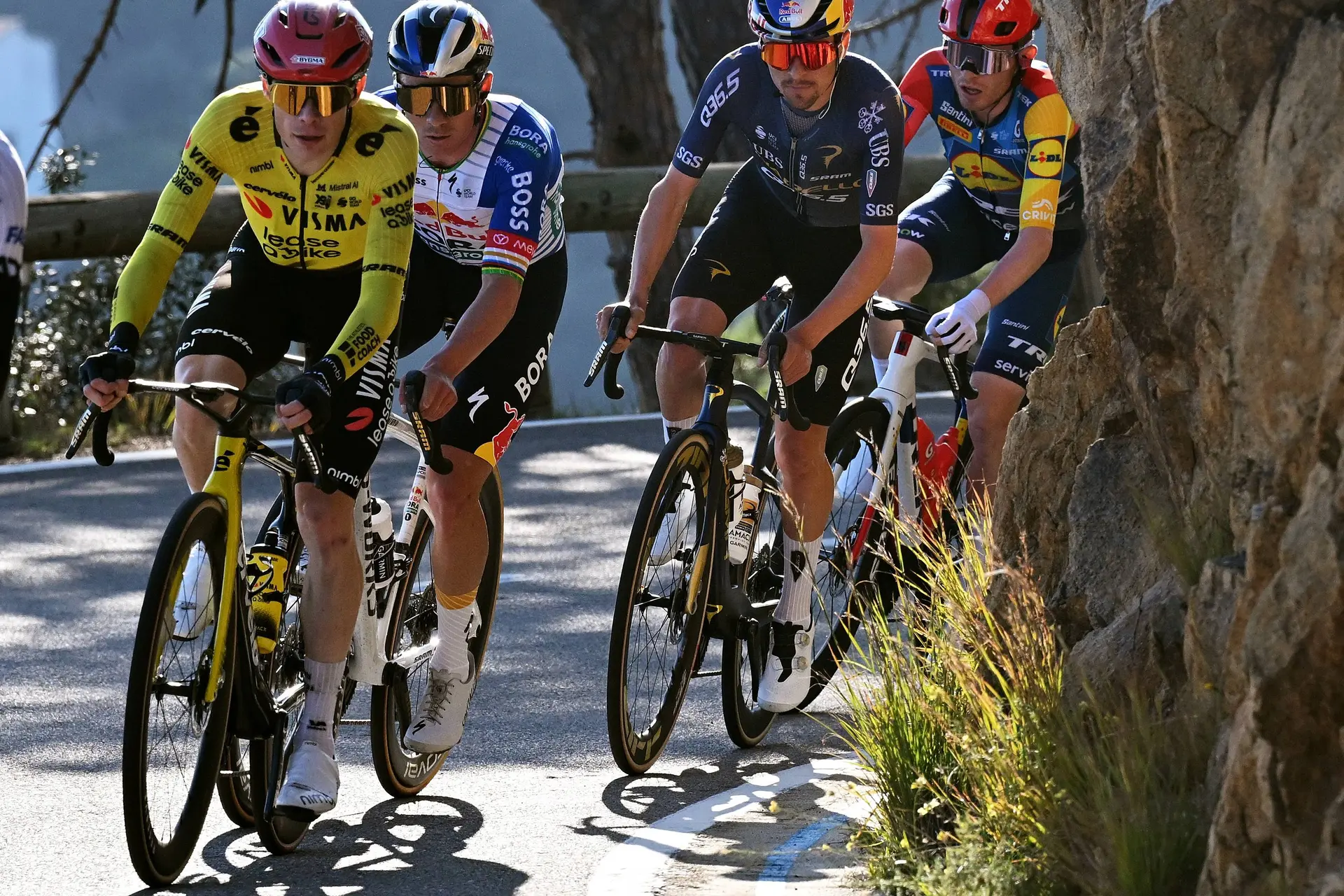
Jonas Vingegaard, Remco Evenepoel, Tom Pidcock and Mattias Skjelmose climb together at the 2026 Volta a Catalunya
Almeida emerges as the real threat
If Evenepoel’s early advantage is not a concern, Worre instead highlighted another name as the more significant danger in the general classification battle. “I’m not so worried about Evenepoel. It’s more Almeida, if he hits his top level.”
That assessment adds another layer to the race dynamic. While Evenepoel has already put time into Vingegaard through bonus seconds, Joao Almeida remains firmly positioned as a consistent and potentially decisive rival over the course of the week.
With another demanding finale expected on Stage 2, the early pattern of the race may yet repeat itself. But if Worre’s analysis proves accurate, the margins created in sprints along the Costa Brava could ultimately count for less than what unfolds in the mountains later in the race.

Kieran WoodDeputy Editor-in-Chief
Kieran Wood is a sports journalist based in Wales and has been active in journalism since 2022. He regularly contributes to DartsNews.com and CyclingUpToDate.com, where he covers professional cycling and darts. In cycling, his work includes liveblogs from major races, including the Tour de France, the Giro d’Italia, and La Vuelta a España, alongside race reports and analysis. He has also conducted interviews with professional riders.
His reporting spans the full racing calendar, from one-day classics to stage races, with a focus on accurate, real-time coverage and clear contextual analysis. For statistics, results, and historical context, he regularly uses resources such as ProCyclingStats. To support reporting on rider activity and training context where relevant, he also references Strava.
In his work, Kieran places strong emphasis on careful sourcing, editorial accuracy, and updating articles as new, verified information becomes available.
claps 0visitors 0
Just in
Popular news
Latest comments
- "The Tour remains at the centre of Simmons' plans". as long as this is the plan, it is unlikely he will succeed. First his team is stacked with leaders for all terrains so opportunity is less. 2nd the TDF is stacked with other top leaders who have more freedom. 3rd the battle between UAE, Visma, Red Bull is so intense that their leaders will win most of the stages with heir team pulling back most breaks.abstractengineer16-10-2026
- Quinn Simmons: “Maybe I’ll never reach the top level.” I also hope he doesn't. I don't care what he looks like, his religion or sexual preference... but when he's a rascist against black people, a Maga Trump voter, that's where I pull the line. The whole world hates Trump, we all know why, but he keeps voting for him. A person that thinks like Trump is ...????. Make your own decision. PS: Trek-Segafredo (today Lidl Trek) suspended him following the controversy over his pro-Trump comments and his use of a dark-skinned waving-hand emoji. The team said the suspension concerned his racist conduct online, not his political views themselves.PogiSloFans16-10-2026
- Denmarks coach reveals 2027 Rainbow Jersey has been targeted by Jonas for years !?!?!? PS: What??? No one believes this meaningless babbling. It's like saying: "The 2027 Monument - Il Lombardia has been targeted by Jonas for years."PogiSloFans16-10-2026
- I made a mistake and already fixed it. Hey twat, thanks.PogiSloFans16-10-2026
- Davide Piganzoli said: "Pogacar looked less brilliant at TDF than usual." We all see how stupid this comment is. What is happening to his brain cells? ... Hey Piganzoli, Tadej Pogačar’s record breaking ascent of Alpe d’Huez was one of the standout performances in the history of the Tour de France. Pantani's 1995 ascent stood for 31 years. Pogi went more than a minute faster. He accelerated near the foot of the climb, despite the leading breakaway being around three and a half minutes ahead. But in your delusional brain Pogi looked less brilliant???? .... Why don't you go find a corner and bang your head against a wall for about 10 minutes. Everyone is making fun of you.PogiSloFans16-10-2026
- MTB WC ? If he doesnt compete maybe allows MvDP to have a crack
 Davide16-10-2026
 - Jonas is declining now. A podium next year would be a good result for him.Renz16-10-2026
- unpredictability is not an issue. Most riders not named Pogi have that. The excuses are and the blaming teammates and other riders for insufficient support and blocking are. if weight is an issue get a nutritionist. If aircon is not working switch rooms. Position yourself or get your teammates and DS to keep reminding you of basic stuff if it is difficult to remember in a long race. Dont whine about other riders not working with you, use tactics yourself or get your DS to develop the tactics. Dont talk about noballs when you yourself have no ballsabstractengineer16-10-2026
- It’s worth remembering that cycling journalism has entered it’s “Shit-Stirring Hot Takes Winter” now in order to keep the clicks and views trickling in.wrsty16-10-2026
- Well that would be a major disappointment. The last two years are the first times I have bothered watching the last day. Maybe at worst it could be the 2nd last day but two classic finishes and then wompWaranga16-10-2026
Loading
Write a comment