“Anyone who's lost a nail knows how painful that can be” – Greg van Avermaet raises cobbled concern for Mathieu van der Poel after Milano-Sanremo crash
Cycling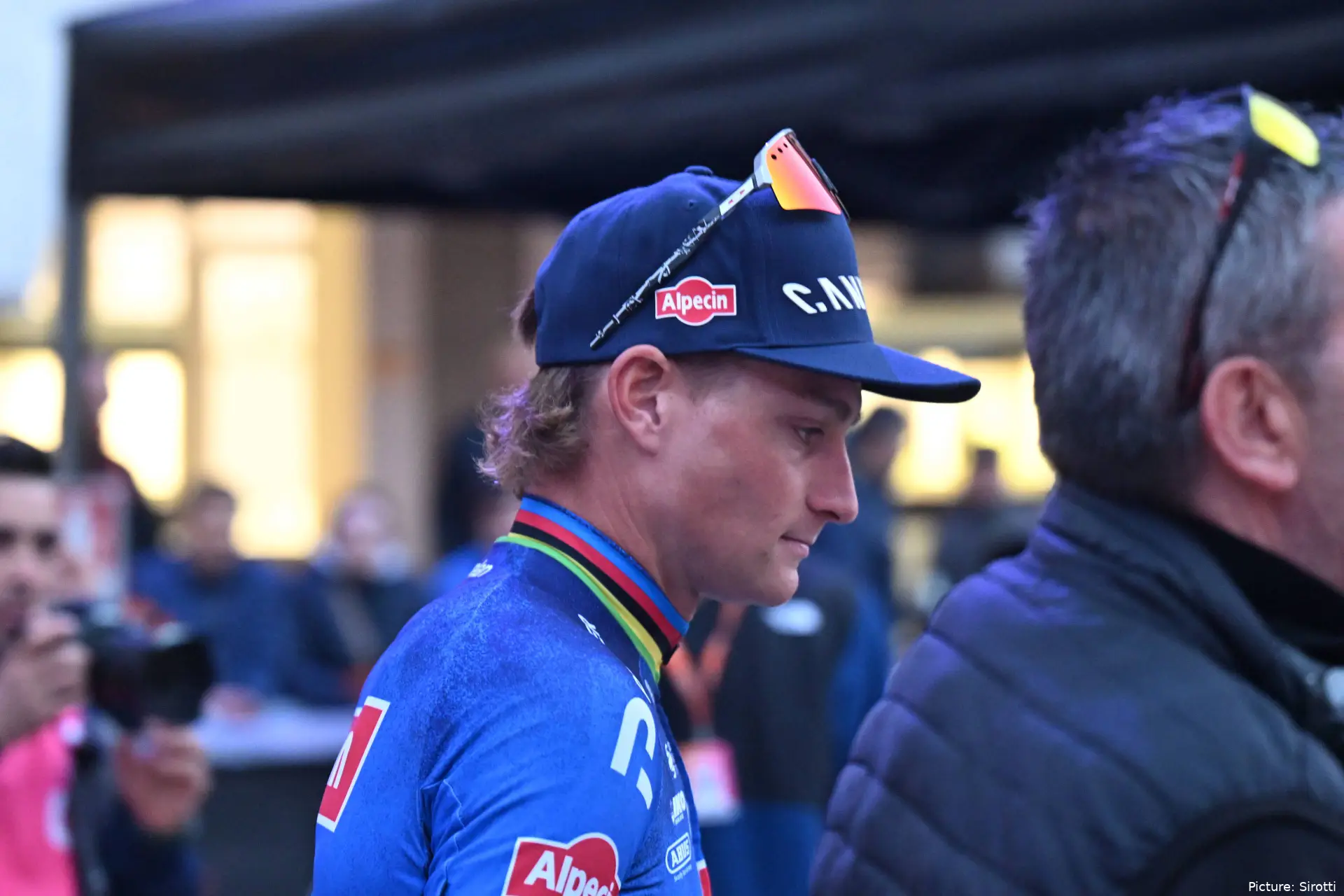
Mathieu van der Poel’s Milano-Sanremo ended not with a collapse, but with a margin finally slipping away. After surviving the decisive acceleration on the Cipressa, the Dutchman could not hold the wheel when Tadej Pogacar went again on the Poggio, leaving Pogacar and Tom Pidcock to fight out victory between themselves on Via Roma.
That alone would have been enough to fuel discussion around Van der Poel’s condition, given how often he has shaped this race in recent years. But the focus since Saturday has increasingly shifted to what happened before the Poggio, and what it might mean for the cobbled Classics now approaching fast.
Van der Poel revealed after the race that he had been struggling with pain in his hand and nail following his crash on the run in to the Cipressa. On smooth roads, that may be a nuisance more than a crisis. On cobbles, it becomes a very different conversation, and Greg van Avermaet did not need many words to explain why.
“As long as it’s not a bone, it’s manageable on the cobbles. But that nail was split, and anyone who's lost a nail knows how painful that can be," Van Avermaet told the HLN podcast. "That’s something I really admire about those riders.”
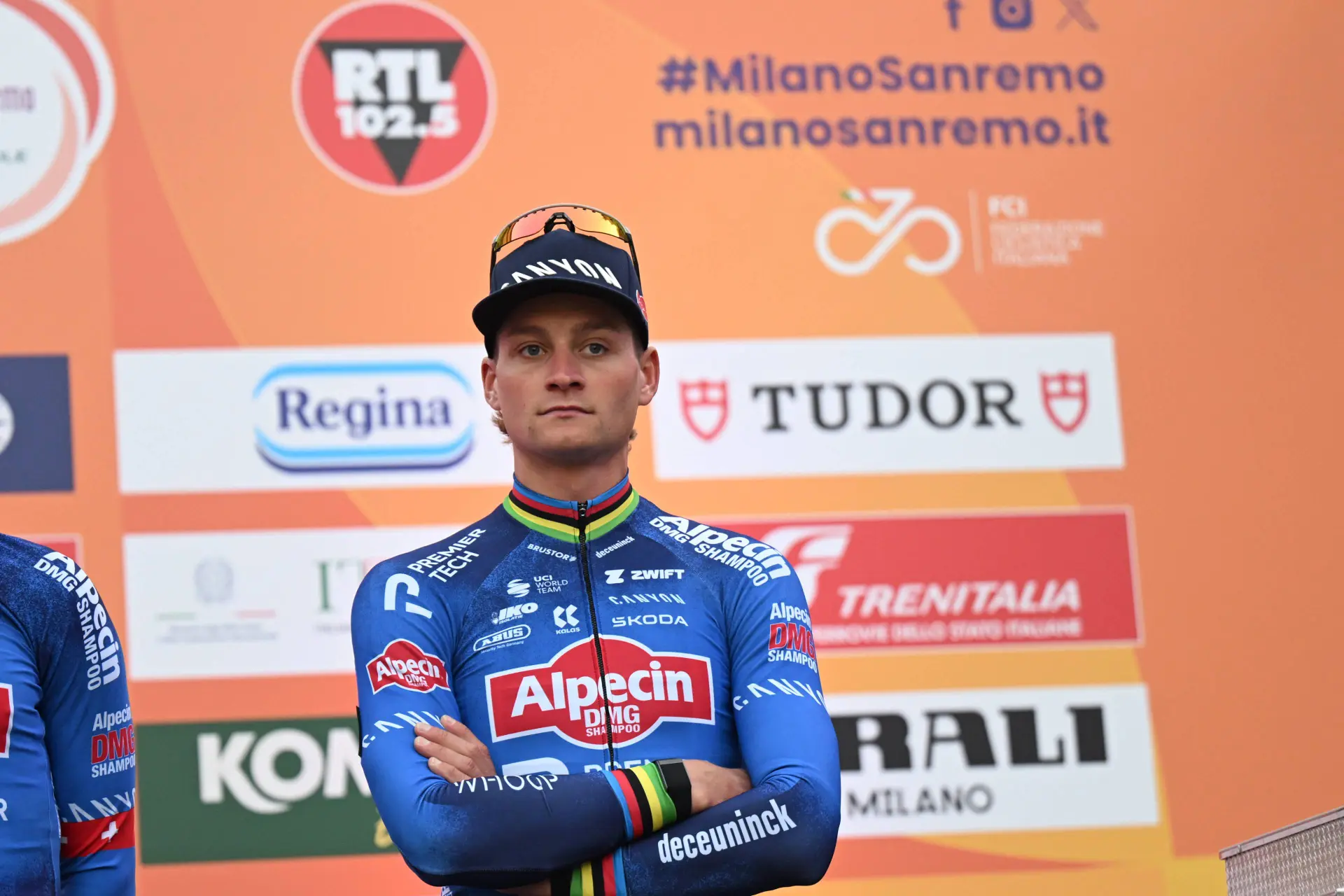
A Sanremo defeat shaped before the Poggio
Van der Poel’s race was not lost simply because his hand hurt. The way Milano-Sanremo was ridden in 2026 mattered just as much.
His brother David van der Poel offered the clearest explanation of that. “His effort was a lot longer because of the run-in to the Cipressa. Instead of an effort of eight minutes, it became maybe 14 minutes. That’s probably why he came up just short on the Poggio.”
That line matters because it moves the discussion away from the lazy idea that Van der Poel was simply below his best. By David’s account, the numbers did not tell that story at all. “He had to go a bit too deep there, but he said his times and power numbers were similar to last year. That mainly shows that Pogacar was simply faster than last year.”

Van der Poel followed Pogacar's initial attack
Why the hand issue still matters now
There has at least been some reassurance that the injury itself may not be severe. Oliver Naesen, speaking after seeing Van der Poel the next day, suggested there was little sign of anything more serious. “I don’t think it was too bad. The next day at the airport, I saw him, and he just had a normal plaster on it. There was no cast around it. I think it was just a cut.”
That should ease fears of a major setback. But it does not remove the central question. A rider can line up perfectly well and still be compromised once the racing starts, especially in the cobbled Classics, where grip, impact and repeated pressure through the hands matter so much.
That is why Van Avermaet’s point lands. This is not necessarily about absence. It is about discomfort, control and whether a seemingly small problem becomes harder to ignore once the terrain changes.

Kieran WoodDeputy Editor-in-Chief
Kieran Wood is a sports journalist based in Wales and has been active in journalism since 2022. He regularly contributes to DartsNews.com and CyclingUpToDate.com, where he covers professional cycling and darts. In cycling, his work includes liveblogs from major races, including the Tour de France, the Giro d’Italia, and La Vuelta a España, alongside race reports and analysis. He has also conducted interviews with professional riders.
His reporting spans the full racing calendar, from one-day classics to stage races, with a focus on accurate, real-time coverage and clear contextual analysis. For statistics, results, and historical context, he regularly uses resources such as ProCyclingStats. To support reporting on rider activity and training context where relevant, he also references Strava.
In his work, Kieran places strong emphasis on careful sourcing, editorial accuracy, and updating articles as new, verified information becomes available.
claps 0visitors 0
Just in


Popular news

Latest comments
- Go Pogi!! 🐐❤️Lozza25-11-2026
- They didn’t have or need “extraordinary information”. All they needed was for a French judge to sign off on the night-time testing for it to go ahead.Lozza25-11-2026
- If the sponsors voted for Primoz then you get him, otherwise not.flyer25-11-2026
- It sure can feel or seem that way but I wonder if the same amount of prodigious performances (compared to the others) would occur if no one was ever doping at all.flyer25-11-2026
- Given the similarity of two articles (published on I think the same date), I'm reusing (copy-n-pasting) my post from the twin: I've always thought the last day of each of the grand tours was problematic mostly in that the GC is considered completed before the race starts when that is not really true. There is some tension, but not desirable tension. What saves the awkward practice is the race finish is legit for those who participate - so it's not wholly different from the other stages. That neutralizations usually make good sense demonstrates their necessity so if that has to be the way to go I agree that the design plan for the neutralization should be completed before the race starts. This years end stage in the Vuelta had one of the best first half's I've seen in that many of the riders looked to be thoroughly enjoying themselves making it a joy to watch. But I think it was slightly closer to the exception rather than the rule.flyer25-11-2026
- Even I often win without being there at all, not even breaking a sweat. Beat that!flyer25-11-2026
- It is not about rest and peaking again - 5 weeks is not enough for that. It is about recovery while maintaining form. 4 weeks is easier for that. With a Giro-Vuelta, the 12 week break is enough to rest and then peak again. Not for the Tour
 Rafionain-Glas25-11-2026
- I fully agree that "2027 could completely reshape the pecking order" because this competition is a mix of skill, team support, luck opposition, and health. (What BS - as I start writing this post a popup hides what I've written so my only sane options are to hit POST prematurely or leave or reload the page. What a pathetic operation. I forgot where I was so I'm getting out of this crap trap.)flyer25-11-2026
- I've always thought the last day of each of the grand tours was problematic mostly in that the GC is considered completed before the race starts when that is not really true. There is some tension, but not desirable tension. What saves the awkward practice is the race finish is legit for those who participate - so it's not wholly different from the other stages. That neutralizations usually make good sense demonstrates their necessity so if that has to be the way to go I agree that the design plan for the neutralization should be completed before the race starts. This years end stage in the Vuelta had one of the best first half's I've seen in that many of the riders looked to be thoroughly enjoying themselves making it a joy to watch. But I think it was slightly closer to the exception rather than the rule.flyer25-11-2026
- Apparently that week is a MAJOR training disadvantage as "three major benefits" were claimed. When I read a proposal such as this, I want to also read the reasons why changing might not be so good - the CONS.flyer25-11-2026
Loading
Write a comment