“If you don’t want major cycling races in Norway, this is the way to go” — Public funding shortfall threatens Tour of Norway cancellation
Cycling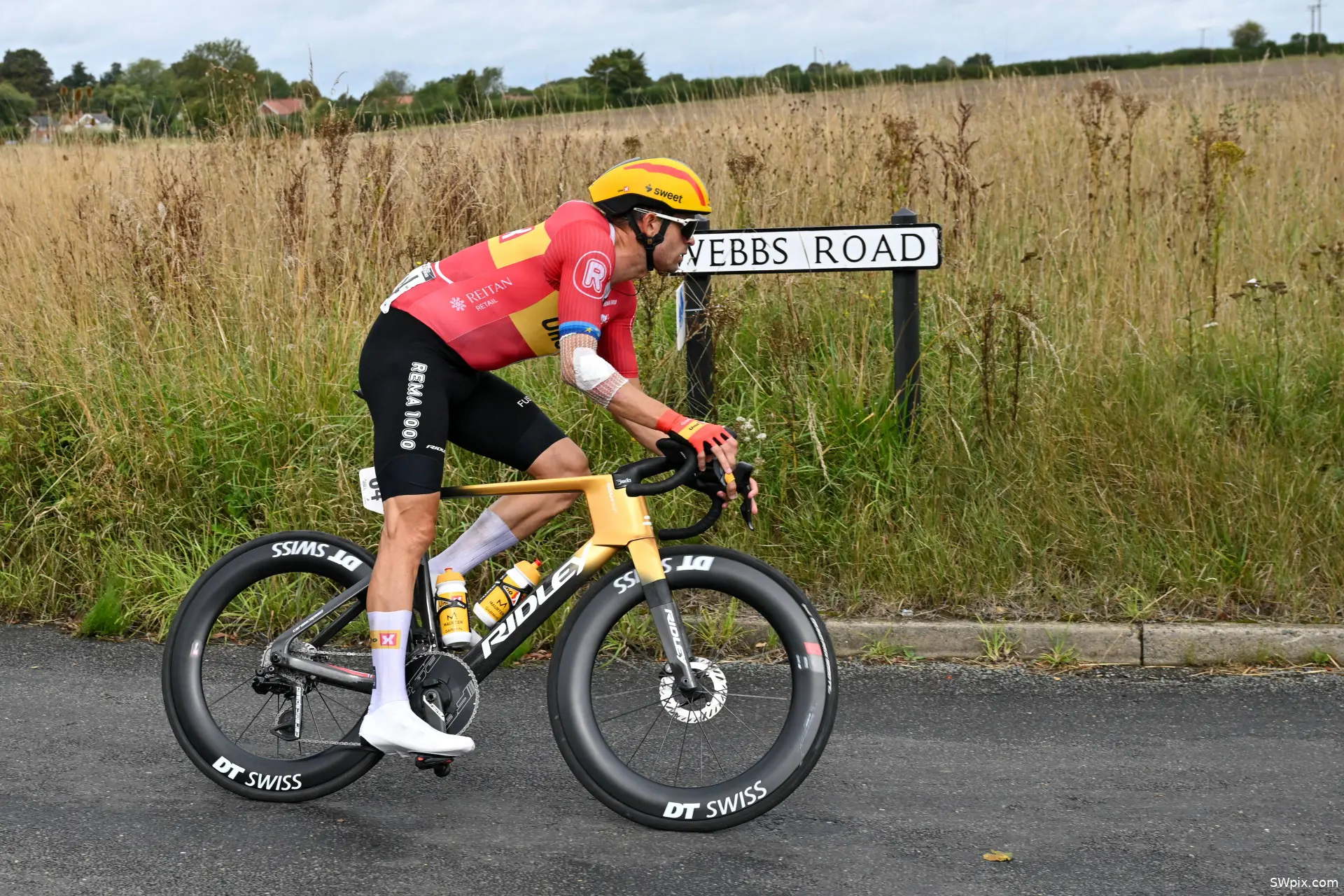
After 21 editions, the Tour of Norway is in serious risk of disappearing from the cycling calendar, at least in 2026. Tour of Norway director Roy Hegreberg has sounded the alarm after the Norwegian government proposed abolishing the special subsidy scheme for international cycling races in its 2026 state budget. The support program, in place for nearly a decade, has accounted for around half of the race’s funding in recent years.
Overreliance on public funding
Hegreberg warned that without the ten million kroner (approximately USD 988,000) contribution, the 2026 edition will likely be cancelled. “If they don’t reverse this decision, it probably means we’ll have to call it off. We’d need new income sources at a level we haven’t seen in the past ten years,” he said to TV 2.
With a total budget just over 20 million kroner (USD 2 million), the Tour of Norway has relied heavily on public funding. Hegreberg stressed the broader implications for Norwegian cycling. “It’s completely unrealistic to organize the race in 2026 without those millions. International cycling races are financed through sponsorships and public support. There’s no way to make it viable without government assistance.”
Recently retired Norwegian legend Alexander Kristoff, who holds a record 11 stage wins in the event’s history and now serves as its ambassador, echoed Hegreberg’s concerns.
“This isn’t an event that makes a profit, it just breaks even, so it becomes impossible if we don’t get those millions,” Kristoff explained. “With both men’s and women’s races, it’s perhaps the most important cycling event in Norway each year. It would be a huge setback for Norwegian cycling not to be able to hold it. I hope politicians reconsider.”

Alexander Kristoff won the GC of the Tour of Norway in 2019
Government defends the decision
The Norwegian Ministry of Culture and Equality, led by Minister Lubna Jaffery, argued that maintaining a dedicated support program for cycling is “unfortunate” and that sports events should be treated equally. The ministry stated:
“It is the assessment of the Ministry that it is undesirable to maintain a special scheme only for cycling races over such a long time. Sports events in Norway should, as far as possible, be treated equally. Therefore, it is proposed to discontinue the special grant scheme for international cycling races in Norway.”
Hegreberg strongly disagreed with this reasoning, pointing out that cycling lacks the infrastructure funding enjoyed by other major sports. “She doesn’t take into account that other events of this scale usually have large facilities that the state, either directly or through gaming funds, has helped finance. We get no gaming funds, and we also have no income from spectators,” he said.
He added that costs, including hotel accommodations and police presence, have risen sharply, putting further pressure on organizers. “I think they have a poor understanding of what cycling needs,” Hegreberg argued.
Responding to those criticisms, State Secretary Anette Stegejerdet Norberg defended the government’s position. “The Norwegian Cycling Federation and its member clubs receive support through gaming funds for sports purposes, just like other federations that are part of the Norwegian Sports Federation,” she said.
Norberg also noted that significant funding had already been provided for cycling facilities: “Through our facility grant scheme, we have supported the construction of cycling venues, including the velodromes in Asker and Sola. Unlike other sports that depend on costly facilities, road cycling doesn’t have the same need for fixed sports infrastructure.”
The Tour of Norway has consolidated its position as a major fixture in the international cycling calendar in the past years, taking place in late May, and offering riders demanding terrain that often includes punchy climbs and fast, technical finishes. British wonder kid Matthew Brennan won in 2025, while Remco Evenepoel did in 2022.
Read also
Félix SernaCycling Journalist
Félix Serna is a writer at CyclingUpToDate and has been part of the team since 2025. He covers professional cycling across both the men’s and women’s calendars, with a focus on UCI rankings, race developments, and rider performance. His work includes interview-based reports, liveblogs, and tournament coverage designed to provide clear, accurate context throughout the season.
In his reporting, Félix regularly uses ProCyclingStats for results, statistics, and historical reference. He places strong emphasis on careful sourcing, editorial accuracy, and updating articles promptly when new, verified information becomes available. He holds a bachelor’s degree in International Studies.
claps 1visitors 1
Just in

Popular news
Latest comments
- He didn't even try to sprint all outvappaxbipmv18-10-2026
- Campenaerts looked like a rolling pumpkin with that all orange leaders skinsuit !frieders318-10-2026
- He can take his dumb a$$ politics somehwere else !frieders318-10-2026
- good to have her back. fingers crossed she‘ll be able to stay!Ketterechts17-10-2026
- A tenner and he wins the Tour next year, too 😂anonymouscyclist17-10-2026
- the answer is either stick to classics or GTs but not bothabstractengineer17-10-2026
- the exodus already stared with Ciccone. Already they were struggling with two sprinters, now there are three. Also Ganna will demand leadership. Gall is the most proven GC, Ayuso has the most potential. GC leadership for everybody will be impossible. Literally a UAE style mess without pogi.abstractengineer17-10-2026
- I raced as an amateur for 12 years, including six years on my country’s national road cycling team. I secured two national titles and competed in three World Championships plus more than 15 international stage races. At 23, we travelled to Italy for a training camp—or so I assumed. On a rest day, we watched a presentation about adopting a more “professional” training approach. It was crystal clear what “professional” meant. That moment first exposed me to this dilemma. After returning from Italy, I left cycling—at least at the competitive level I had known. Over the following two years, the whole team was caught doping. I hold that everyone is innocent until proven guilty. In my view, current stakeholders operate on a different scale, and the sums involved are vast. I am unsure whether any doping would ever be revealed. I try to stay positive and enjoy the show. My 2c.
 vannpelt17-10-2026
 - Fiver he wins 🤣
 leedorney17-10-2026
 - “…measures to reduce speeds.” Might as well shorten the race course to just 50km as well? ASO generates at minimum €300m a year and 30- 40% profit. Maybe stop being greedy and spend more of the profit to protect the riders instead.b3tlla17-10-2026
Loading
Write a comment