Milano-Sanremo thrown into chaos as Tadej Pogacar, Wout van Aert, Matteo Jorgenson and Biniam Girmay all crash before Cipressa
Cycling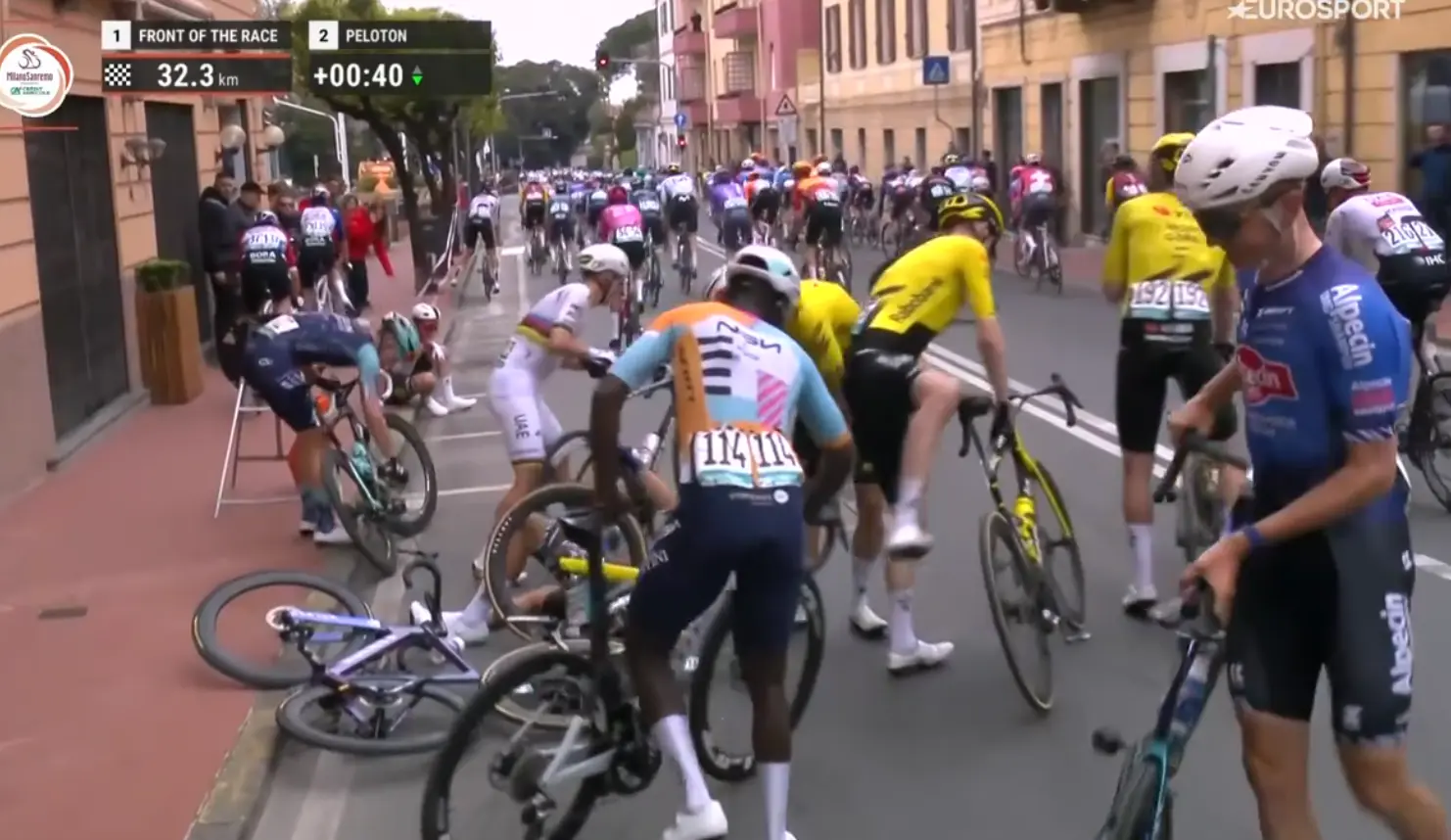
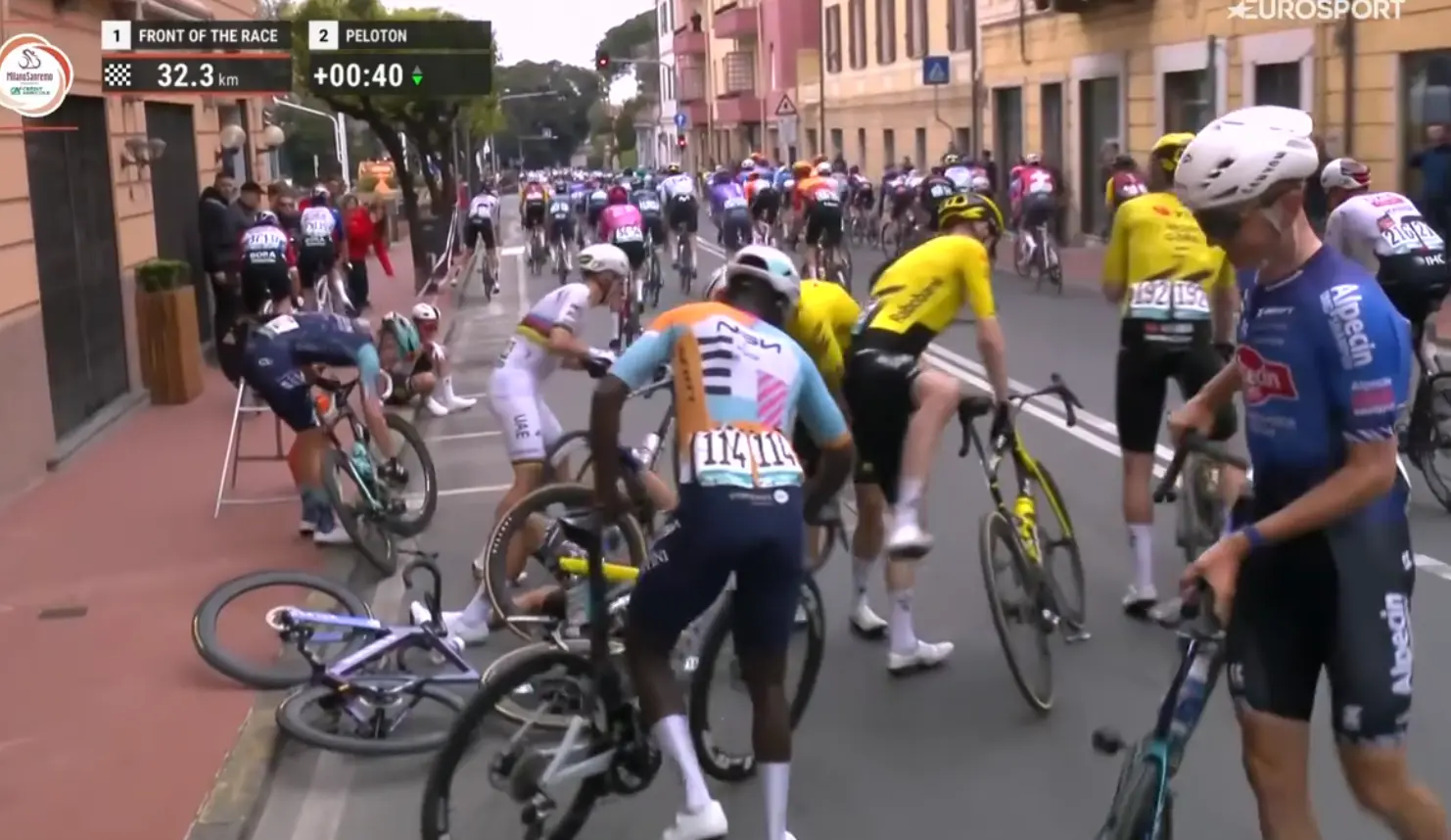
Milano-Sanremo 2026 has been thrown into chaos just before the Cipressa, with several of the race’s biggest contenders caught up in a crash at the worst possible moment of the day.
Tadej Pogacar was the first to go down in the high-speed run-in to the climb, bringing a group of riders with him as the peloton surged towards the point where the race is often decided.
Among those caught out were Wout van Aert, Biniam Girmay and Matteo Jorgenson, with the incident briefly splitting the peloton and immediately altering the shape of the race.
All of the riders were able to get back on their bikes, but the timing could hardly have been worse. The Cipressa was only a few kilometres away, and positioning is critical at that point in the race. Even a short delay can leave riders too far back when the decisive accelerations begin.
Cipressa plans suddenly under threat
The crash is particularly significant given what had been expected from the race. Much of the pre-race focus had centred on Pogacar as the rider most likely to force the race open on the Cipressa. His most realistic path to victory was seen as an early move on the climb, using pressure to distance the sprinters before the Poggio. That scenario is now uncertain.
Van Aert and Girmay were also among the riders expected to play a major role in the finale, which increases the impact of the incident on the overall outcome of the race.
A race reset at the worst possible moment
Despite the crash, the pace at the front of the peloton has not dropped. Teams continue to drive towards the Cipressa as the breakaway’s advantage disappears.
That leaves the riders involved in the crash needing to recover quickly and fight their way back into position before the climb begins.
In a race where timing and positioning are everything, this was the worst possible moment for something to go wrong. Milano-Sanremo 2026 has not followed the expected script and the race has been reshaped just as it reaches its most important phase.
Kieran WoodDeputy Editor-in-Chief
Kieran Wood is a sports journalist based in Wales and has been active in journalism since 2022. He regularly contributes to DartsNews.com and CyclingUpToDate.com, where he covers professional cycling and darts. In cycling, his work includes liveblogs from major races, including the Tour de France, the Giro d’Italia, and La Vuelta a España, alongside race reports and analysis. He has also conducted interviews with professional riders.
His reporting spans the full racing calendar, from one-day classics to stage races, with a focus on accurate, real-time coverage and clear contextual analysis. For statistics, results, and historical context, he regularly uses resources such as ProCyclingStats. To support reporting on rider activity and training context where relevant, he also references Strava.
In his work, Kieran places strong emphasis on careful sourcing, editorial accuracy, and updating articles as new, verified information becomes available.
claps 8visitors 3
Just in
Popular news
Latest comments
- Maybe Net Company INEOS should be signing Roglic. Feels like they have been mostly irrelevant since G hung up the shoes. At least they would have someone who is there or there abouts on GC.MASnell09-10-2026
- Maybe Net Company INEOS should be signing Roglic. Feels like they have been mostly irrelevant since G hung up the shoes. At least they would have someone who is there or there abouts on GC.MASnell09-10-2026
- i guess there's journalism and then there's journalism. this website simply collects cycling stories and aggregates them in one portal for us fans to access. they aren't really investigative reporters, and their team likely isn't big enough to go into real depth... which is fine by me since i don't expect much more from them. that said, i agree with your view. it would be nice to see a bit more follow-up that pushes the people in charge to actually take a stance.Ketterechts08-10-2026
- UAE was really badly positioned at the last climb, and Ineos did a great job of making that happen at the bottom. That must have affected del Toro and the rest. His attack wasn't spectacular, and they hadn't ripped apart the bunch enough, letting a large group remain in back to reel him in. UAW lost the race on the road to the climb and the bottom third of it, I think.RidesHills08-10-2026
- He won in exactly the same way as others. By being the fastest to complete the stages.mobk08-10-2026
- Very surprised del toro couldn't beat everyone here against lesser competition. He's well on his way to being top 5 in the worldbruins3008-10-2026
- Being the best rider left in the race is pretty much the only way to win in any edition, surely? Seems reductive to say "they only won because the entire peloton wasn't as absolutely stacked as it could've been" - you can only beat who is in front of you.wrsty08-10-2026
- I’m sorry but generally the coverage on your site is first class but this incident highlights something I just don’t get with cycling journalism. This accident should never have been allowed to happen, it comes uncomfortably close to the Finlay Tarling tragedy and two other incidents took place within days of this. I checked all of the cycling websites and you all put out basically the same story. Pidcock gave journalists the perfect opening to blow this sky high, what has the UCI got to say? What is Adam Hansen doing? What do the organisers say? Nothing, you all trot out the same easy quotes taken from Pidcocks interview after the race but do nothing to follow it up. I see it time and time again, journalists taking the easy way out but being outraged when it happens again as it surely will. Riders can’t do this but journalists should be independent and should be able to raise these uncomfortable questions but cyclinguptodate and every other on line publication prefer to take the easy way out. That’s the real tragedy here.Paul53108-10-2026
- Happy to help :-)Mistermaumau08-10-2026
- Well, ok but, it’s also a structural, team, budgeting, direction and all sorts of other issueMistermaumau08-10-2026
Loading
Write a comment