“I'd see Geraint Thomas and Chris Froome doing more and more” - Pavel Sivakov explains how UAE & Tadej Pogacar unlocked his true potential after leaving INEOS
Cycling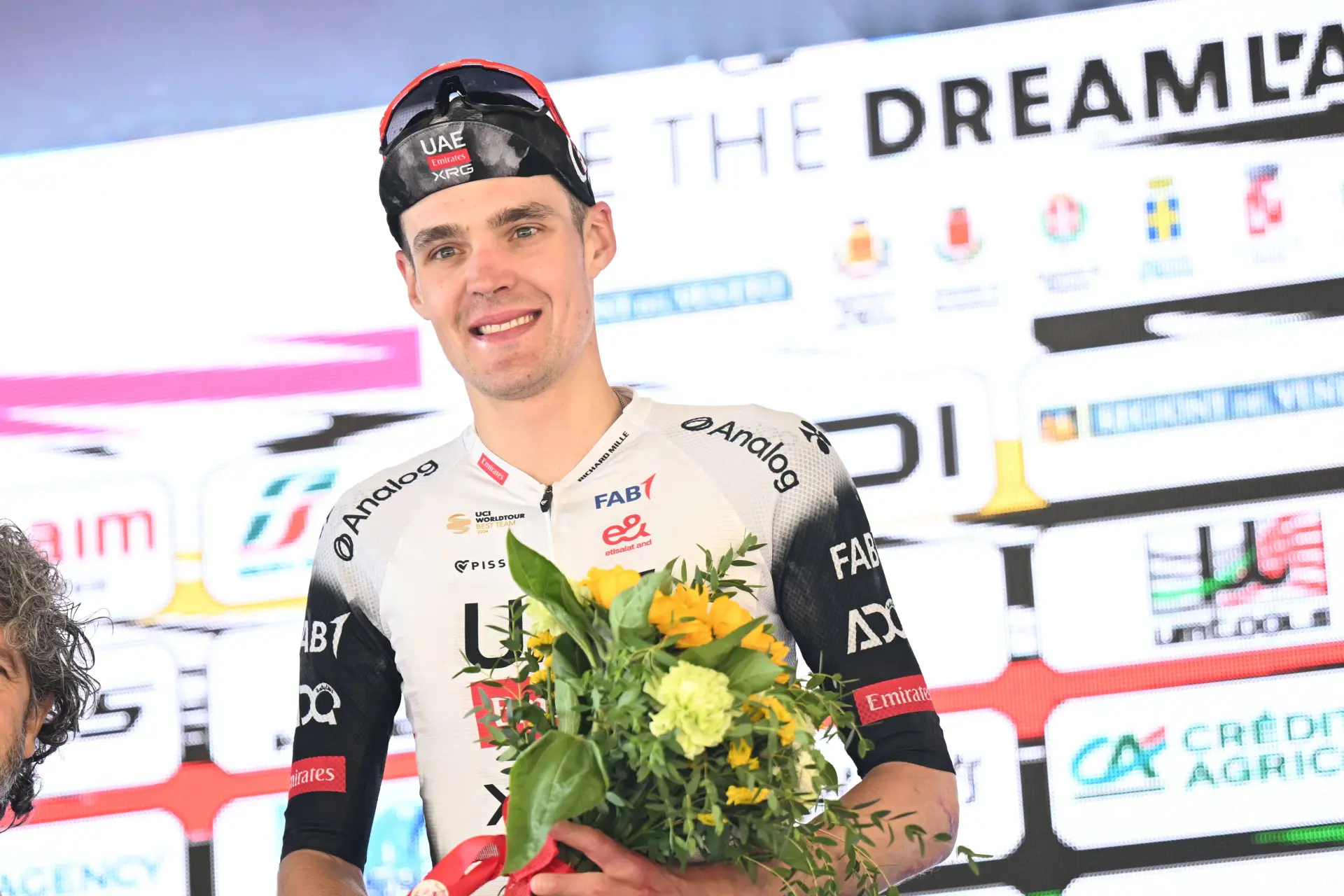
Pavel Sivakov has never been afraid to dig into the difficult questions about his own career. Once tipped as a Grand Tour winner in waiting, the Frenchman’s path has instead evolved into something more complex — and, in his eyes, far more meaningful.
In a revealing end-of-season interview with Cycling News, Sivakov reflected on the highs and lows that have shaped his journey from INEOS Grenadiers prospect to trusted lieutenant for Tadej Pogacar at UAE Team Emirates - XRG — and how the move has finally helped him rediscover both balance and belief.
A lesson in pressure and overtraining
Sivakov’s self-analysis cuts unusually deep. The 2019 season — when he claimed the Tour of the Alps, Tour de Pologne, and finished ninth at the Giro d’Italia aged just 22 — once looked like the launchpad to stardom. But what followed was a sobering education in pressure, perfectionism and burnout.
“2019 was my breakout season, then I had two or three years where I didn’t develop as I would have liked,” he said. “I struggled a little bit, maybe mentally first of all. For sure I put too much pressure on myself, trying to do too much. Perhaps I wasn’t confident enough to listen to myself and I just followed my coach’s training plans.”
Like many riders in the Sky and INEOS systems of that era, Sivakov was swept up by the team’s famously obsessive training culture. “I’d see Geraint Thomas and Chris Froome doing more and more,” he recalled. “I was this young guy and I wanted to do the same. Then you start to be too stressed, you train too much, you diet too much, and you maybe even crash a bit too much. It becomes a vicious circle.”
That mindset, he admitted, was partly inherited. “It comes a little bit from my roots — maybe with my parents, the Soviet style — where even if you’re dead, you train, you do the hours, you do more.”

Sivakov rode for Sky/INEOS for six seasons between 2018 and 2023
Finding a new rhythm at UAE
When Sivakov left INEOS for UAE Team Emirates - XRG in 2024, it was more than a transfer — it was a change of philosophy. Pogacar’s looser, instinct-driven approach offered a different model of excellence, one that Sivakov found both refreshing and liberating.
“Tadej has the capacity to stay calm and not really get stressed about stuff. I’m not like that — I used to get stressed about the little details and eventually that would slow me down,” he said.
Within Pogacar’s environment, Sivakov has learned to channel his work ethic more constructively. His 2025 campaign was far from smooth — an early win at the Vuelta a Andalucia was followed by illness at Paris-Nice, Catalunya and even the Tour de France — but it still showcased flashes of the class that once made him a headline name.
“The Tour was a big disappointment for me,” he admitted. “I wanted to be there with the boys and on form but I was getting dropped on the first climb. That was mentally hard because I know I’m better than that. But we created a really good bond in the Tour and that helped me make it to Paris. I suffered personally but I was again part of the Tour-winning team — that’s always special.”
Still hungry for more
Far from settling into a purely support role, Sivakov insists his ambition remains intact. The 28-year-old believes he is still on an upward curve and heading into the strongest phase of his career.
“I’m still progressing every year, my numbers are getting better and better,” he said. “I honestly think I will come into my best years, because I’ve learnt how to manage myself so much more. I still have ambitions. I want to win. I’m happy to work for Tadej and the team when I can make a difference but I still want to try to win races, to go on the attack and fight for the victory. That’s what I train for every day.”
Sivakov’s reflections speak to a rider who has made peace with the unpredictable nature of professional cycling — and who has finally found a space where personal growth and team sacrifice can coexist. In the shadows of giants like Pogacar, he has rediscovered his own light.


Kieran WoodDeputy Editor-in-Chief
Kieran Wood is a sports journalist based in Wales and has been active in journalism since 2022. He regularly contributes to DartsNews.com and CyclingUpToDate.com, where he covers professional cycling and darts. In cycling, his work includes liveblogs from major races, including the Tour de France, the Giro d’Italia, and La Vuelta a España, alongside race reports and analysis. He has also conducted interviews with professional riders.
His reporting spans the full racing calendar, from one-day classics to stage races, with a focus on accurate, real-time coverage and clear contextual analysis. For statistics, results, and historical context, he regularly uses resources such as ProCyclingStats. To support reporting on rider activity and training context where relevant, he also references Strava.
In his work, Kieran places strong emphasis on careful sourcing, editorial accuracy, and updating articles as new, verified information becomes available.
claps 3visitors 3
Just in

Popular news
Latest comments
- Seixas is exactly what I would like Pogi to be mentally and in his statements. Both come across as shy and who don't talk much but with Seixas, you can see that he enjoys success, that it boosts his ego, unlike Pogačar who seems to feel increasingly uncomfortable the more he wins. He's won so many times, people are saying he's boring. The french media hate him for winning so much, the french cycling fans are booing him... etc. etc. But remember one thing, Seixas will never physically reach Pogi's level. He's excellent, but he isn't at that level nor will ever be. His talking to the media, his relationship with people is already at a high level.PogiSloFans13-10-2026
- Paul Seixas is now the second-best rider in the world.megasmacky13-10-2026
- When will they start dropping Pogi? Oh yeah, when Pogi reaches 40+ years, that's when young cyclists will start dropping him. But until then... eat your hearts out and cry. Pogi will remain the G.O.A.T. for years to come. Capish?PogiSloFans13-10-2026
- I figure he would have found out how to outsprint Paul and take the win, maybe. He's 28 now but I would say he's right at the peak of his powers. It was great race though, Paul showed me something different about himself.awp13-10-2026
- Slowly, very slowly... 5-7 yrs. ;)MajorPayne13-10-2026
- Up to this point: "It is just not yet at the level of Vingegaard and Pogacar." First Jonas, and then level of Tadej. Period!MajorPayne13-10-2026
- The sport has long had a divide between the more diesel-like riders and the more explosive riders. Where does Pogačar fit? His explosive attacks are followed by a high speed diesel climb and he's rarely been caught in the past 5 years (people can name the moments, it's so rare). Seixas is young and we have no idea where his body will end up on this spectrum (just like we didn't with Pogačar when he was 20 and being a diesel up the Vuelta mountains of 2019). Speculation is fun, being a fan while it unfolds is going to be more fun.RidesHills13-10-2026
- yeah it'll be an epoch shift when Pog can't drop people, and/or when they start dropping him.wrsty13-10-2026
- Yes, he won't ride away yet, but he will and that day will be notable
 leedorney13-10-2026
 - Expect the young French rider to slowly asphyxiate the Slovenian into retirement.
 Front24213-10-2026
Loading
2 Comments