“I would be tearing my hair out” – Rival team DS warns Visma weather-hit altitude camp could affect Wout van Aert and co
Cycling
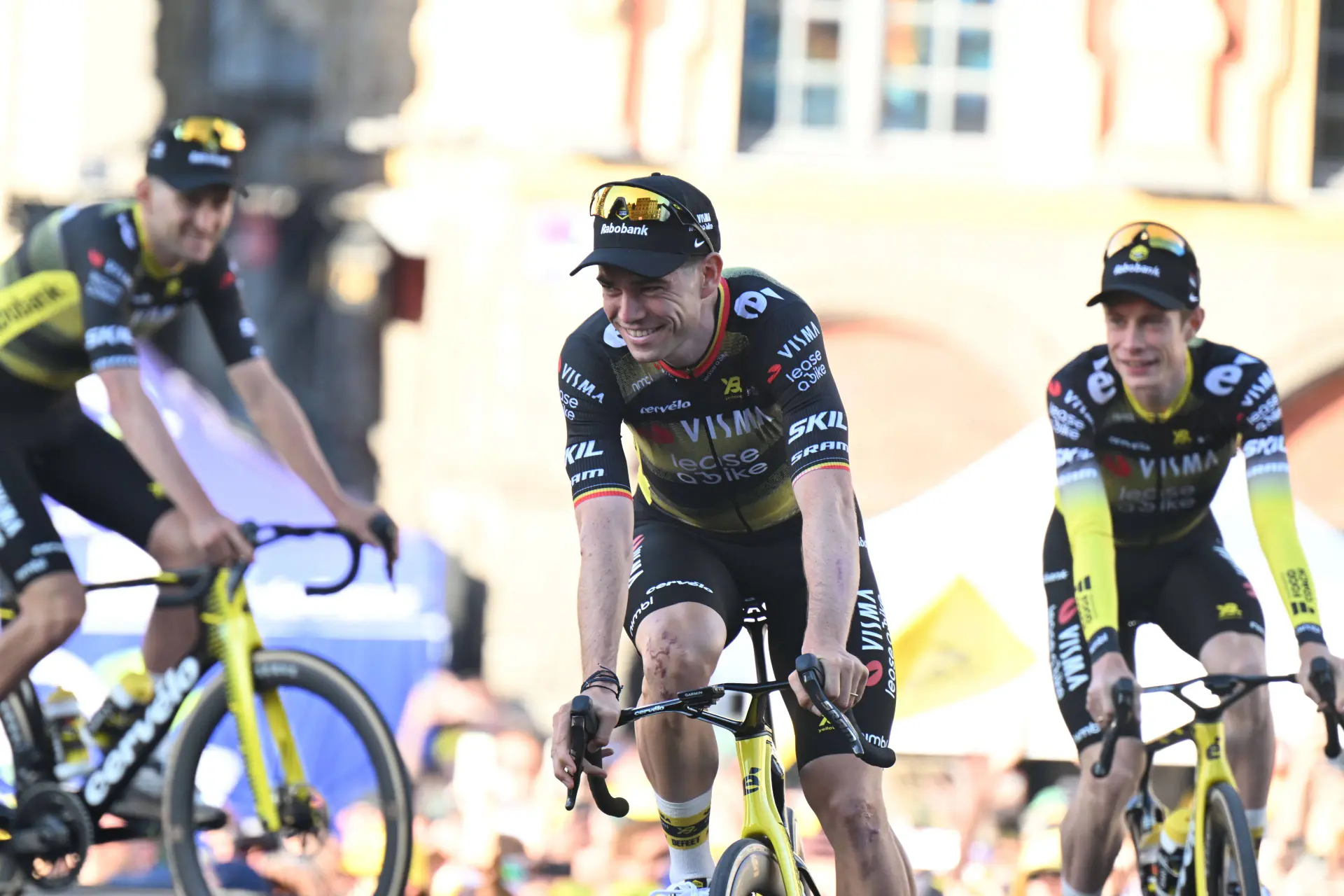
Altitude camps are designed to bring control and structure to a rider’s build-up. Instead, Wout van Aert and his teammates have been forced into constant adaptation as winter weather repeatedly disrupted Team Visma | Lease a Bike’s Sierra Nevada training camp.
Heavy snowfall, freezing temperatures and unstable conditions at altitude have pushed Visma indoors for significant stretches, with rollers and indoor sessions replacing much of the long outdoor volume usually prioritised ahead of the spring classics.
That scenario prompted a blunt assessment from Loïc Segaert, performance coach at Bahrain – Victorious, who questioned how far indoor-heavy preparation can realistically go for riders targeting races that demand six hours or more of sustained load.
“I would be tearing my hair out if I were in the situation of Team Visma | Lease a Bike,” Segaert said, speaking to Het Nieuwsblad, pointing not only to physical limitations but also to the mental strain created by repeated indoor training blocks.
Why the weather matters more than usual
Altitude camps in the Sierra Nevada are nothing new for Visma, but this winter’s conditions have been particularly restrictive. Snow-covered roads and poor visibility have repeatedly ruled out long outdoor rides, forcing riders onto the rollers even on days originally planned for endurance volume.
Publicly available training data shows Van Aert completing multiple roller sessions on several days, sometimes splitting training into two or even three indoor rides across a single day. The approach is deliberate, but also reactive.
Segaert underlined that while teams can reshuffle sessions, there is a clear limit to how much compromise is sensible. “What I certainly would not do is complete your entire training week on the rollers as if you were riding outside for a week,” he said.
The concern is not that rollers are ineffective, but that they fundamentally change the type of stress placed on the body. Indoor sessions are shorter, more static, and less varied in muscular demand. Dehydration becomes harder to manage, saddle discomfort appears sooner, and the repetitive nature of the position increases the risk of overuse.
Altitude and the interval problem
Weather disruption becomes even more significant when combined with altitude. In normal circumstances, riders descend to lower elevations to complete high-intensity interval work. When storms keep riders indoors at 2,000 metres or more, that option disappears.
“At altitude, you cannot do the same intervals because it is simply too hard,” Segaert explained. “You will inevitably have to reduce the intensity of your rides and keep the efforts shorter.”
That limitation matters in a classics build-up, where specificity is crucial. The ability to combine long endurance days with race-intensity blocks is difficult to replicate indoors, particularly when altitude already restricts intensity.
To compensate, teams look for alternative stimuli. Segaert pointed to repeated sprint training as one effective method at altitude, alongside heat adaptation work, both of which can add quality without relying on long outdoor sessions.
Why Visma’s approach is still deliberate
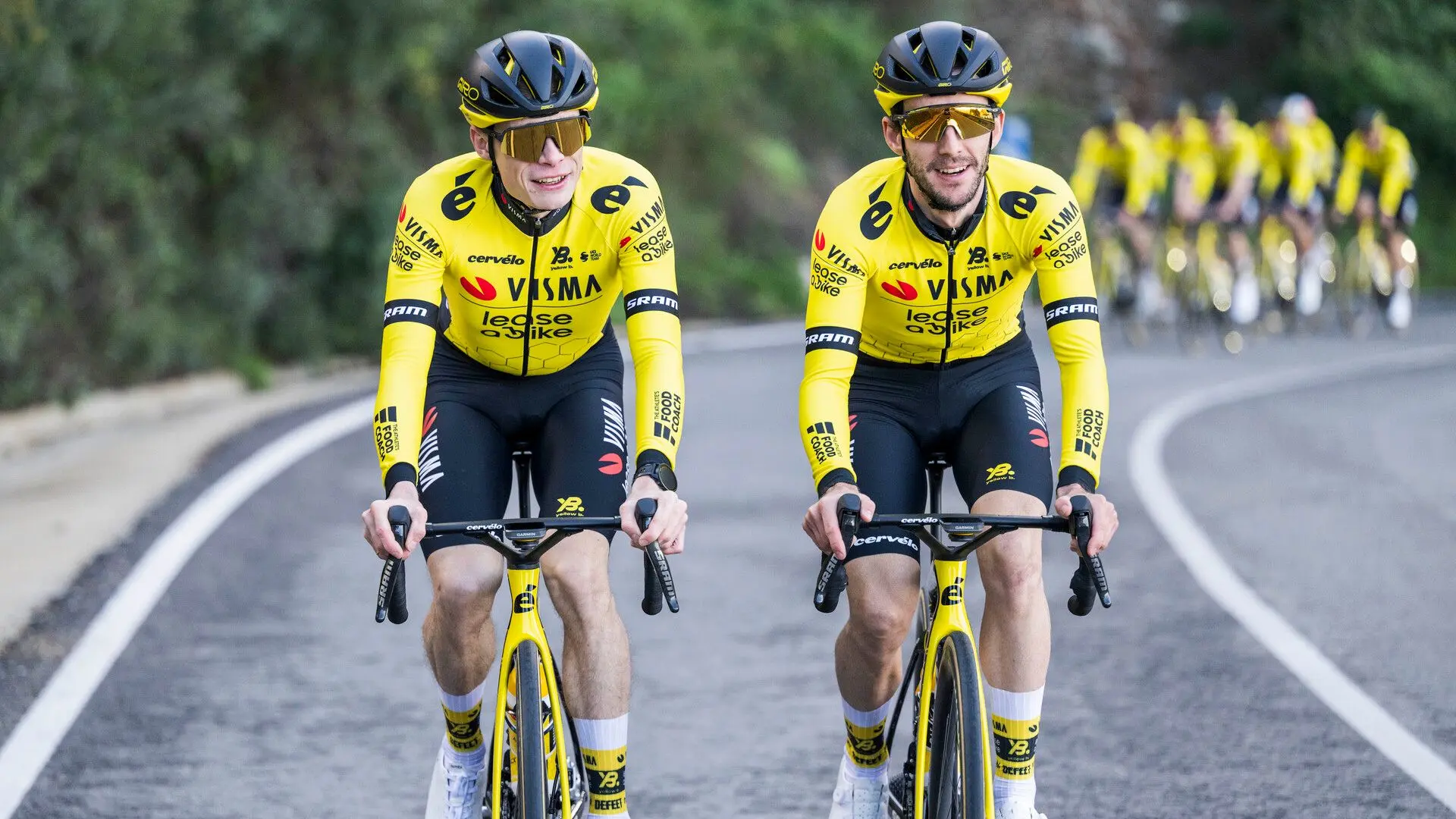
Visma’s response has not been to abandon the camp, but to adapt it. Multiple shorter sessions per day allow the team to manipulate carbohydrate availability and fatigue, provoking similar physiological responses with lower total volume.
Segaert noted that Visma have used this approach consistently in previous altitude camps, particularly during training blocks on Teide. By riding several times per day, riders can deliberately train with reduced energy stores, triggering specific metabolic adaptations even when conditions limit outdoor riding.
The question is not whether the approach works at all, but whether it can fully replace the demands of classics preparation.
“If you are preparing for races that last more than six hours, it is also simply useful to spend six hours on the bike in training,” Segaert said. “That neuromuscular fatigue is part of the preparation.”
A balancing act ahead of the classics
Crucially for Van Aert and his team-mates, the camp has not been exclusively indoors. Weather windows have allowed outdoor rides in recent weeks, including longer sessions that begin to restore some of the missing endurance load.
Whether the disruption ultimately proves meaningful will only become clear once the classics begin. Segaert’s comments, however, underline a broader reality of modern preparation: altitude camps offer major benefits, but when weather intervenes, even the most carefully planned programme can quickly become a compromise.
For Visma, the task now is ensuring that compromise does not carry over into the races that matter most.

Kieran WoodDeputy Editor-in-Chief
Kieran Wood is a sports journalist based in Wales and has been active in journalism since 2022. He regularly contributes to DartsNews.com and CyclingUpToDate.com, where he covers professional cycling and darts. In cycling, his work includes liveblogs from major races, including the Tour de France, the Giro d’Italia, and La Vuelta a España, alongside race reports and analysis. He has also conducted interviews with professional riders.
His reporting spans the full racing calendar, from one-day classics to stage races, with a focus on accurate, real-time coverage and clear contextual analysis. For statistics, results, and historical context, he regularly uses resources such as ProCyclingStats. To support reporting on rider activity and training context where relevant, he also references Strava.
In his work, Kieran places strong emphasis on careful sourcing, editorial accuracy, and updating articles as new, verified information becomes available.
claps 0visitors 0
Just in

Popular news
Latest comments
- I would prefer him to do the Giro and Vuelta, and leave Seixas, Remco and Jonas to fight it out in France. Btw 'redemption' implies he has disappointed us and has something to prove. I don't think he has anything to prove, but of course ticking off the Vuelta would be good. Pity he can't get a 'prior learning credit' for the first week in the Vuelta, and join in for the last two weeks!Hills3320-10-2026
- Bet you 90% of Slovenians will stop watching cycling once your boy stops. But. More pertinently, have you prepared for his retirement? I think you have extreme difficulties in understanding the difference between being a fan of cycling and being fan of a cyclist.Jumpyjohn20-10-2026
- I would keep a VERY open mind.Jumpyjohn20-10-2026
- Listen, maybe he did, maybe it’s more complicated but unless there are images* or witnesses, I wouldn’t go on stats alone. There are so many factors, terrain, wind, pacing, psychological/hormonal effects, etc. and that’s without consideration of Remco maybe changing his effort. As a rider I know all too well the effect of being overtaken can have, just like it’s always easier to push yourself when you are racing instead of training where you have no target to catch or pressure from behind. * obviously there is going to be a lack of commissaires in TTs to keep a constant eye on things but hey it’s 2026, these problems can be solved cheaply with on-board cameras or drones, they could even increase revenue and attractiveness through broadcasting right.Jumpyjohn20-10-2026
- Do you watch dog racing too? Do you remember what Einstein said about madness? What are you watching specifically, the way his ass moves over the saddle more efficiently? You should really ask yourself some psychological questions if what you enjoy is watching someone do exactly the same as all the others only slightly faster some of the time but not in any way noticeably without the immediate proximity of competitors. Would you watch time trials if no results or times were taken? You should really think about the real reasons why you enjoy watching someone much more than others (or why you can’t enjoy watching others doing the same). If you would argue it was for other reasons than simply wanting to watch the best (and I’m pretty sure you don’t watch e.g. cyclocross or kayaking because you want to dictate a hierarchy in sport) I would have more understanding (nothing else) for your choices (nationalism, ego, prediction talents, etc.)Jumpyjohn20-10-2026
- In theory you’re right but sometimes news is sparse or not funny or the discussion rather limited or predictable so a little lighthearted mocking can be a welcome distraction. Also, it doesn’t hurt to attract to agendareers and schemers.Jumpyjohn20-10-2026
- A suggestion to commentators, prepare to include interesting unrelated material when there’s little to report on. This is why the TdF grew an audience, it attracted more than hardcore cycling fans or fans of particular riders who’d find it interesting to hear or even discuss their choice of toilet paper at home. If you can’t keep viewers’ attention with surroundings, history, tourist information, etc. there’s always, highlights, best of past races, betting odds, international newsflashes, weather forecasts, etc. or the suggestion to go make a cup of tea. In fact, maybe the whole idea of one long live broadcast is the problem, a general sports update during the race would probably interest many, like the format in football where they flip across matches where goals or interesting events happen. Can’t see the point of comparing watching a guy turning his pedals in a constant fashion on an empty road with one hitting a tennis ball in a different strategic place each time or moving around a football field in an infinite number of unpredictable combinations wrt teammates and opponents every minute.Jumpyjohn20-10-2026
- Says Mr Non-stop repeating himselfJumpyjohn20-10-2026
- Phew I hope we do not get Jiffygate 2🤣🤣🤣🤣🤣 oh and by the way Bradley still has not answred the question re jiffygate even in his latwst book🙄🙄🙄🙄paultryan200220-10-2026
- What a stupid comment. If they are as good and if not better why should they sit on seasoned pros wheels. Sexias is a prime example . Move with the times they are fitter and more hungry and more ambition. If you cannot abide being 2nd string find a new profession.paultryan200220-10-2026
Loading
Write a comment