"Tadej Pogacar reminds me of myself" – French cycling icon Jeannie Longo sees no downside to dominance of Slovenian superstar
Cycling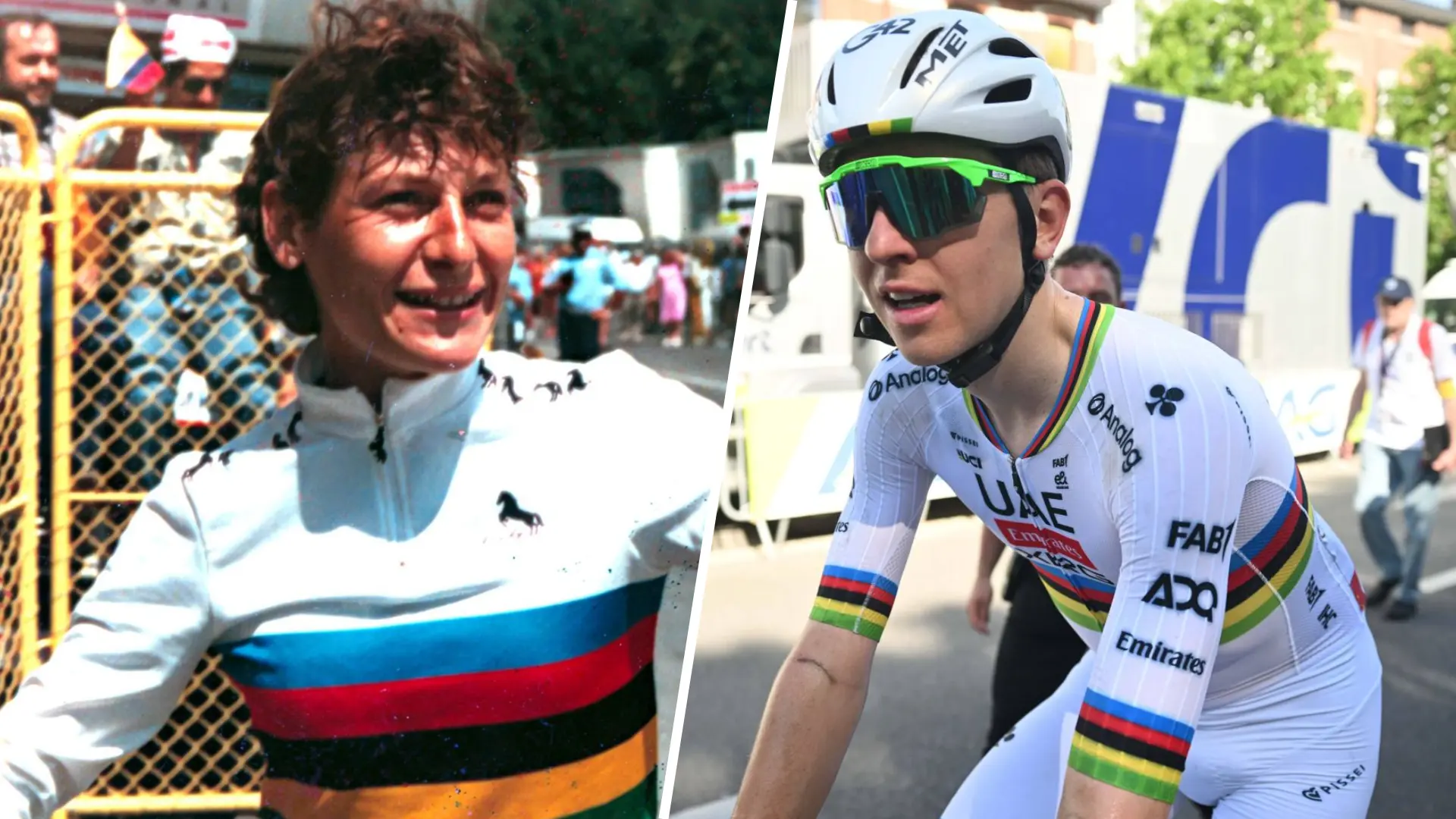
Jeannie Longo has never been shy about calling things as she sees them — and in conversation with Cyclism’Actu, the French cycling great offered a striking comparison: watching Tadej Pogacar tear races apart reminds her of her own peak years.
The multiple Tour de France winner said she has always loved riders who attack from the front, and sees that exact spirit reflected in the Slovenian. “I like it… And I’m going to be a bit pretentious here, but it reminds me of myself!” Longo said, adding simply: “I like attackers.”
Longo praises Pogacar’s unpredictability and bold tactics
Longo went further, arguing that Pogacar wins because he refuses to follow a predictable script. “I think that tactically, he does things that I used to do — original things,” she explained. While the sport often expects leaders to wait for a specific climb or a final lap, Longo believes Pogacar succeeds precisely because he does the opposite.
“You shouldn’t attack where everyone expects you to. And that’s what Tadej does,” she said. “He has a tactical side that I really like: brave, unpredictable. And he does 80-kilometre time trials!”
That blend of aggression and unpredictability is, in her mind, cycling as it should be ridden.
French cycling’s “real nation” status and the rise of new stars
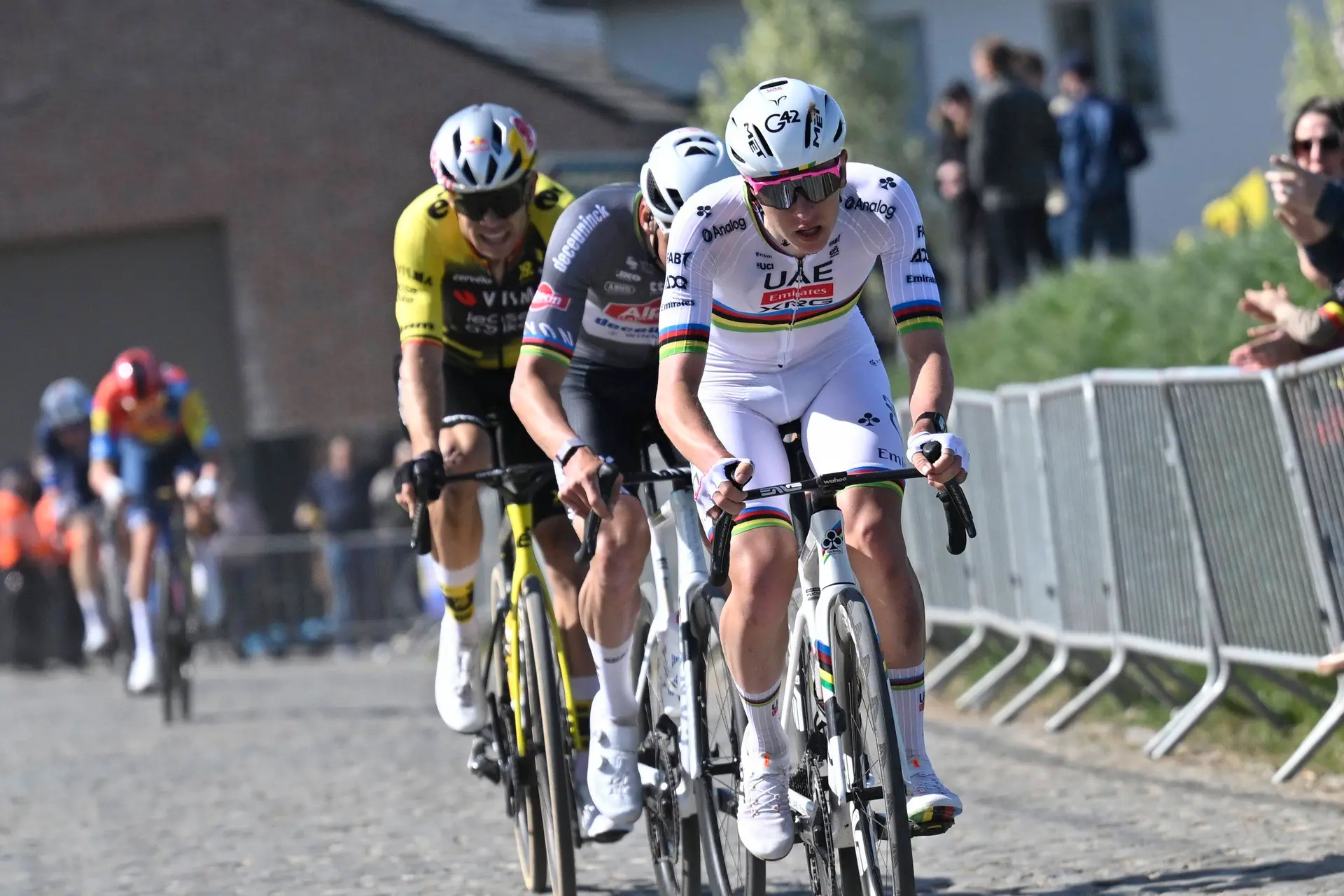
Longo also spoke proudly about the current wave of French talent in both the men’s and women’s peloton. From Pauline Ferrand-Prevot’s Tour de France triumph to the rapid rise of Maeva Squiban, Paul Magnier and Paul Seixas, she sees a country more invested in cycling than at any point in her long career.
“I think there are a lot of cyclists,” she said. Living on a mountain road, she sees the boom daily — and crucially, sees far more women on bikes than in the past. “France is equipping itself with good bikes; there’s a whole population of riders now.”
But she also cautioned that talent is only the start. “Reaching high-level competition is always difficult: you have to set priorities, you have to decide to be a top-level athlete. It’s not easy.”

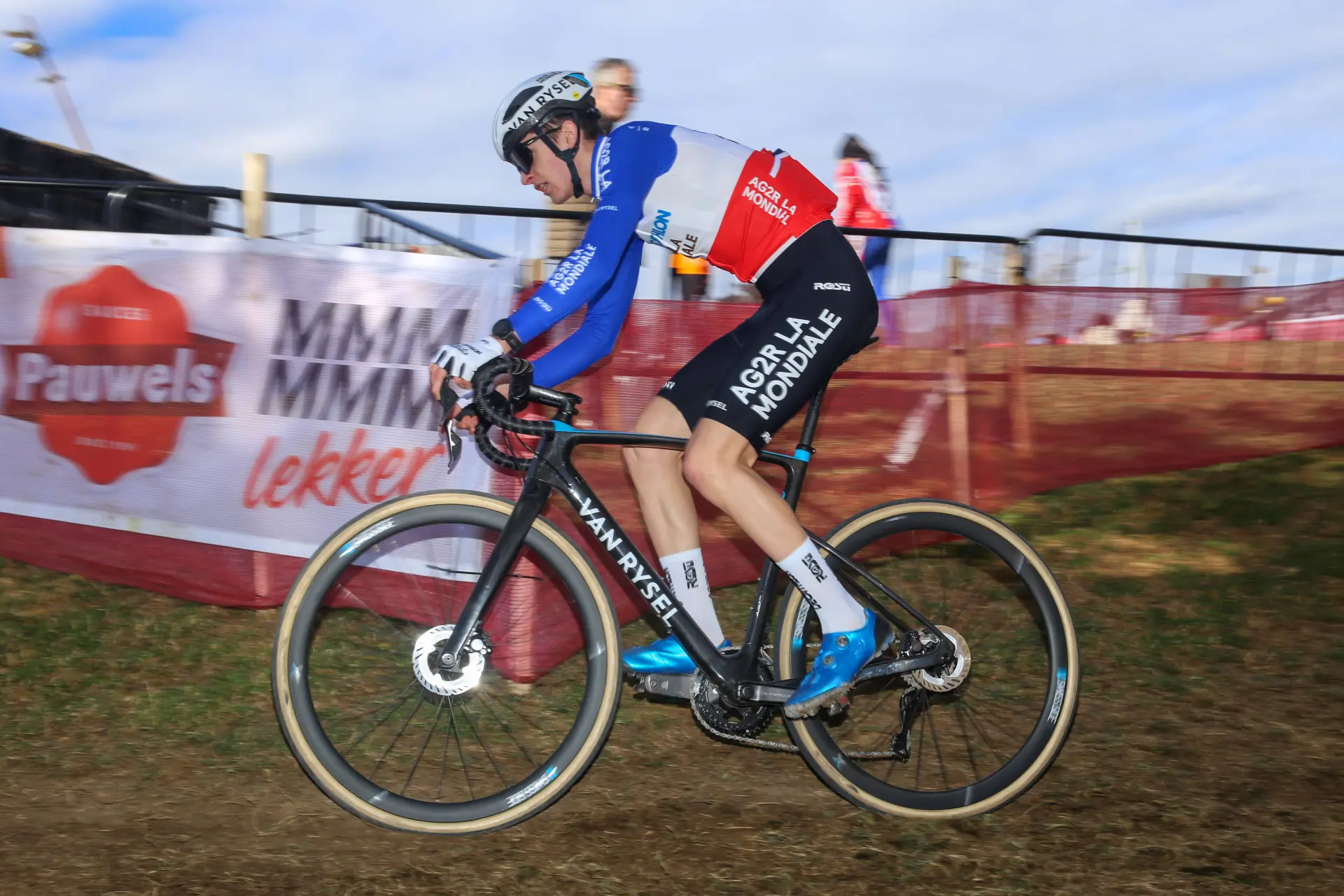
French prospect Paul Seixas podiumed alongside Tadej Pogacar and Remco Evenepoel at the European Championships
On Seixas, French expectations and public support
Longo believes Paul Seixas can one day ride the Tour de France, but warns against rushing him. “He’s young, you shouldn’t burn him out,” she said. “He needs to take things step by step. But why not the Tour? Yes, he can do it, but you have to spare him.”
She also reflected on what French fans respond to most. “The French public likes French riders who win,” she said. “Whether it’s a woman or a man, it’s the same.” In her own era, the yellow jersey brought big crowds to her side — and she sees the same now with Ferrand-Prevot, who was “extremely well supported” last summer.
For Longo, the long wait for a French male Tour winner is real but normal. “Not everyone wins the Tour de France — there’s only one winner a year. It’s not easy.”
In the end, Longo’s reflections paint a picture of a legend who still follows the sport closely, still recognises the traits that define true champions, and still takes pride in seeing French cycling flourish around her. And while her own competitive days are long behind her, her voice — sharp, experienced and unmistakably her own — remains very much part of the conversation.

Kieran WoodDeputy Editor-in-Chief
Kieran Wood is a sports journalist based in Wales and has been active in journalism since 2022. He regularly contributes to DartsNews.com and CyclingUpToDate.com, where he covers professional cycling and darts. In cycling, his work includes liveblogs from major races, including the Tour de France, the Giro d’Italia, and La Vuelta a España, alongside race reports and analysis. He has also conducted interviews with professional riders.
His reporting spans the full racing calendar, from one-day classics to stage races, with a focus on accurate, real-time coverage and clear contextual analysis. For statistics, results, and historical context, he regularly uses resources such as ProCyclingStats. To support reporting on rider activity and training context where relevant, he also references Strava.
In his work, Kieran places strong emphasis on careful sourcing, editorial accuracy, and updating articles as new, verified information becomes available.
claps 0visitors 0
Just in

Popular news
Latest comments
- Those are your prerogatives but just like you’ve disqualified me (and yet continue to engage), I disqualified her as interesting to me for having done what for me is unacceptable in her position (different e.g. to someone put in a position to feel they have no choice, so unless I discover something in the media about her having been blackmailed by her agent or employer I will stick to my position). I am also not interested in researching good things Hitler might have done or any talents he had as these claims rarely come from a source I could have respect for. Sorry to use an extreme to make a point but maybe you get it better put like that. Extremism/radicalism in any form can be acceptable or ok on an individual level (when it has no effect on outsiders) but NOT societally.Mistermaumau05-10-2026
- Pretty unclear what you are saying here, especially bringing skin colour into it for no apparent reason, but you do bring up an interesting issue although only from one point of view (father, not mother). So I ask you to think through this. I expect you’d be proud of your daughter/wife/sister if she’d tell you shéd made it « big » (obviously not if comparing to those with 1000s of x higher worth) financially (not a risky assumption based on the importance you’ve shown money has for you). Would you still be as proud to discover it was through showing herself naked publicly, for a betting company to attract male users easier? I expect many fathers (not averse to looking at naked females) will have a slightly different view on this than mothers but that this difference might drop when it concerns one of their own. Now, maybe in today’s morally confused and paradoxical society this might still be considered acceptable by some (let’s also not forget sole form of incest happens in 15-20% of families to remember how many weird men (and to a lesser degree women) there are, so in order for you to think this through properly and not through the societal pressure to conform to contemporary « normality « you might feel under lets skip the next message by directly considering the same question in the context of historical momentum. Would you have given the same answer in your grandparents’ time? Do you see how things have evolved since (regardless of whether we call that progress or not) even if it’s never linear (70’s being far less prudish than a few subsequent , depending on which generation you asked obviously). Now, fast forward another decade or generation or more of the same momentum and consider yourself a father when every young girl will see a financial opportunity to make it big through platforms like Onlyfans, Discord, Coco (and probably hundreds more unknown to mainstream media, worse even), you’d still be happy to defend your child for her choices, behaviour and the example she sets for others? Girls like this are just germinating and facilitating new Epsteins by lowering the barrier for (female, surprise, surprise) nudity.Mistermaumau05-10-2026
- Hey Jumpin Johnny, it would also be nice for you to keep your foolish mouth shut every once in a while. You're almost as bad as that Trump redneck, frieder3.PogiSloFans05-10-2026
- WTF? Retirement? We still have plenty of enjoyment ahead of us with his victories.MajorPayne05-10-2026
- WTF are you talking about? What retirement? Next year Pogi will be better then ever... his goal is to prove that, to show te whole world who is the "boss"!!! Capish?PogiSloFans05-10-2026
- Fair play, doing every level in RR and ITT is quite a feat.wrsty05-10-2026
- You must have missed yesterdays and todays Italian races where UAE 'subs' didn't win!frieders305-10-2026
- Well i have no idea why he cooperated at 2.5 k from finish, that was possibly the worst decision ever. That decision could have given him an inch to win.abstractengineer05-10-2026
- For someone as good as you say, his top results as per pcs pale into comparison with Evenepoel’s, as for jerseys, he might run out of anything to wear soon. Perhaps tell your boy’s boy to get some flesh on his resumé before ridiculing yourself. PS (not the rider) this is criticism of YOU, not him.Jumpyjohn04-10-2026
- Yes Mouguel, thank you, we understand it’s important to you.Jumpyjohn04-10-2026
Loading

Beautiful video for Tadej Pogačar by L’Equipe in a honour for him winning the Velo d’Or. 🫶🏻
Write a comment