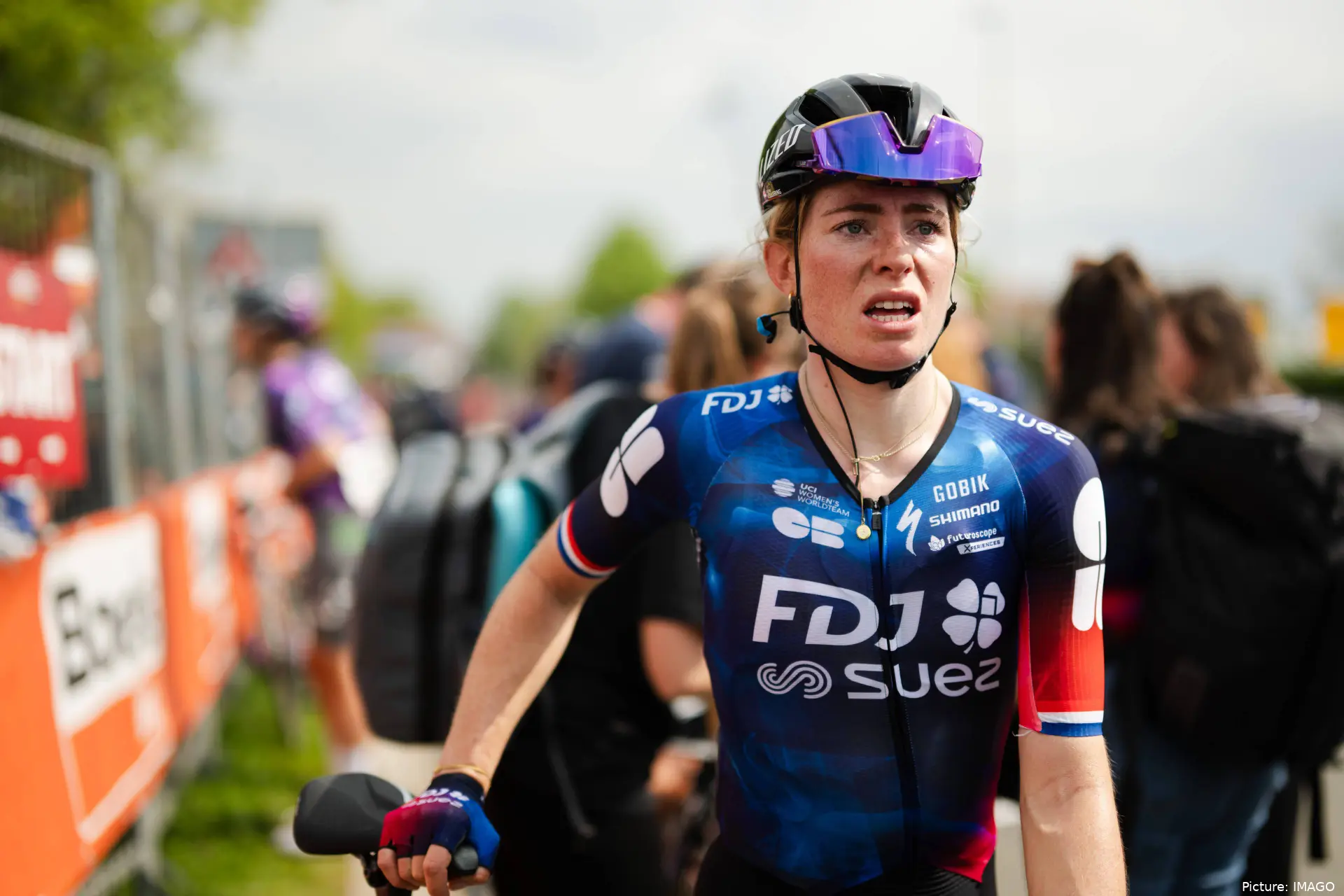
Pauline Ferrand-Prévot walked away
from the 2025 Tour de France Femmes Avec Zwift as the undisputed winner, and a
national hero. Her solo victory on the final stage in Châtel Les Portes du
Soleil locked in the yellow jersey with a commanding gap of 3 minutes and 42
seconds over Demi Vollering. It was a win years in the making for France, a
crowning moment for Ferrand-Prévot, and a complete performance that showed her
strength across every terrain. But while her celebration lit up French roads,
things inside the FDJ – Suez camp looked very different.
For the team that had gone all-in
on Vollering, widely considered the most important transfer in the women's
peloton for 2025, the Tour did not unfold as planned. Vollering finished second
overall but never looked in control of the race. She lost crucial time on stage
8, and despite flashes of strength earlier in the week, was unable to turn her
form or her team’s depth into meaningful results. According to Dutch analyst
Thijs Zonneveld, the problems weren’t just in Vollering’s legs, they were on
the team car’s radio.
"It would have been
interesting if Vollering and Niewiadoma had taken turns attacking, or if they
had let Juliette Labous ride ahead and then let Vollering jump on her. None of
that happened," Zonneveld said in his analysis for In de Waaier. His
critique centres on how FDJ – Suez, which frequently had numerical superiority
in key moments, failed to convert those advantages into any sort of coordinated
plan.
"There wasn't a single move
to put Ferrand-Prévot behind. They were actually just trying to put Gigante
behind," he continued. "Even when Gigante was already two, three, or
four minutes behind. It was completely unnecessary for Vollering, but they kept
doing it."
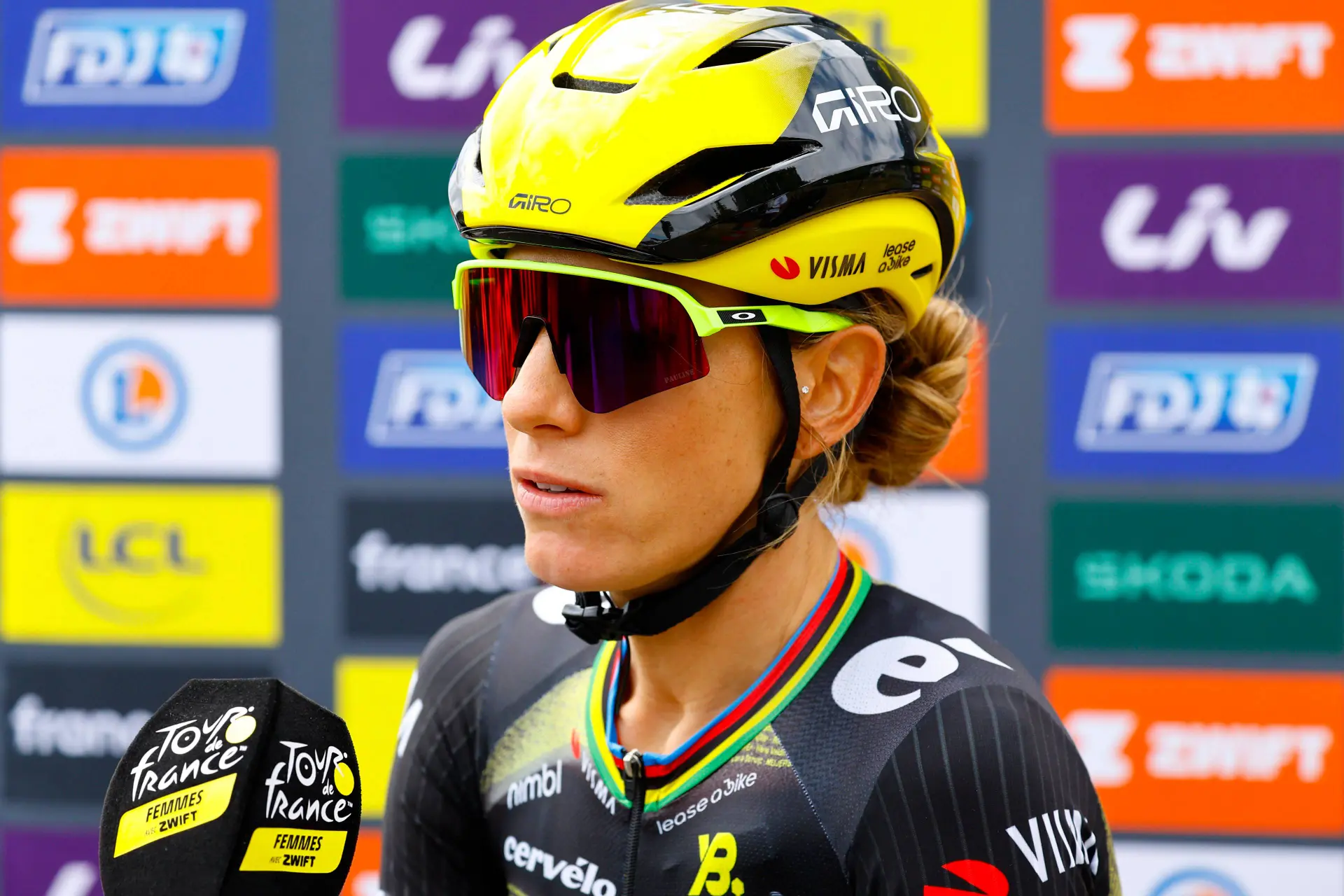
That focus on Gigante, a threat
earlier in the race but one that had clearly faded by the final stage, left
Ferrand-Prévot largely unchallenged. As Zonneveld pointed out, the final climb
offered a rare opportunity. Vollering, known for her sprinting power, might
have been able to win the stage and take back time in a final kick. But
instead, she went solo.
"The way for Vollering to win
the stage was in a sprint. She's done some good sprints this week,"
Zonneveld said. "What Vollering does then... not wait for a sprint, but
goes for it herself on the last climb. I just don't get it. I think Ferrand-Prévot
thought: okay, I can do this too. I can still push it a bit harder. Truly
incredible."
Zonneveld believes Ferrand-Prévot
showed signs of fatigue in the closing kilometers, opening the door for a
possible upset had FDJ – Suez played it differently. "I don't think
Ferrand-Prévot was as good as yesterday; she was really exhausted in the final
kilometers," he noted. "There was a good opportunity to beat her in
the sprint, but I just don't understand how you can think like that. And I
don't understand why, as team management, you play it any other way."
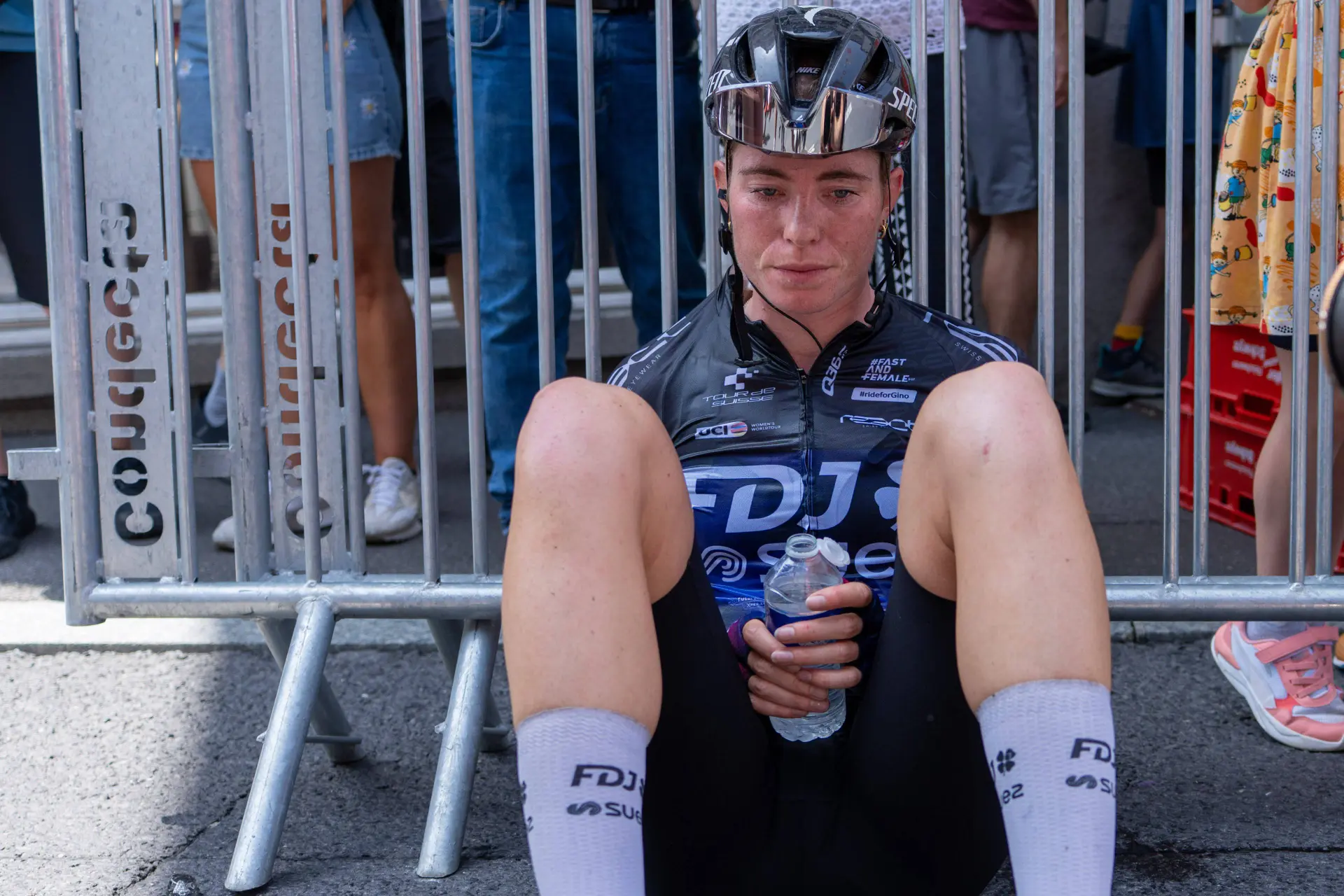
FDJ – Suez came into the Tour with
one of the most well-rounded teams in the race, yet walked away without a
single stage win. While they did win the mountain and team classifications,
Zonneveld was clear that the results don’t reflect their potential. "I
find it unbelievable how FDJ - Suez rode this week and how little they did with
the numerical advantage they had in many stages," he said. "They
didn't win a stage. Ultimately, they finished second in the Tour and in several
stages, and won the mountain classification and team classification, but for
the by far best team in the Tour, I think that's not enough."
The problems, he says, are not
new. “If I were them, I'd go back to the drawing board,” he concluded. “I think
these are truly huge mistakes, and it's not the first time.”
What should have been a coronation
for FDJ – Suez, a Tour built around their biggest signing, ended with a string
of tactical errors and a team that looked reactive rather than ambitious. While
Ferrand-Prévot delivered a defining win for Team Visma | Lease a Bike, FDJ - Suez
and Vollering left with only unanswered questions.
Read also

Fin MajorCycling Journalist
Fin Major is a UK-based writer at CyclingUpToDate and has been part of the team since 2024. He is the site’s main writer for FAQs and evergreen explainers and has written around 2,000 pieces for the platform. Alongside this work, he focuses on in-depth analysis and covers the biggest races on the calendar, including the Tour de France, the Giro d’Italia, and La Vuelta a España, providing clear context around performance trends, tactics, and key storylines.
In his reporting, Fin uses reputable data sources such as ProCyclingStats for results, statistics, and historical context. He places strong emphasis on careful sourcing, editorial accuracy, and updating articles promptly when new, verified information becomes available. Outside of writing, Fin is an active cyclist, which supports his practical understanding of the sport and its demands.
claps 1visitors 1
Just in
Popular news
Latest comments
- Also, it's supposed to be hard to gain an advantage from drafting off Remco because he is so aero.Hills3319-10-2026
- How would stats back it up? You realise tactics involved could mean Vine saved his legs for a faster finish? Some riders can choose to go all out and fade later in the ride, others can hold steady state the whole way, and others can have a reserved start and power up later in the ride. You can't judge just by the stats unless you have power data to be able to prove Vine is riding faster even though he is putting out the same or less power (suggesting drafting). I'm sure the stats prove that Vine didn't cheat because UCI would monitor the stats to make sure this exact scenario doesn't happen (and disqualify them for drafting if the stats proved it).Pogboom19-10-2026
- Only one person would say such a thing here. Sorry to burst your bubble but I’m afraid that window of opportunity has now closed. You can beat some of the people all of the time and all of the people some of the time but you can’t beat all of the people all of the time.Jumpyjohn19-10-2026
- Both prizes are actually pathetic, almost amateur like, not even covering the cost of participatingJumpyjohn19-10-2026
- It depends on how you define doping and you would do well to give your definition so we can see how against it you are. If you consider the use (as a hypothetical example) of a new beneficial artificial product unknown to anti-doping agencies ok without considering asking them if it would constitute doping if you told them about it then we’re never going to agree on who could be or couldn’t be doping and according to what threshold, moral, statistical, legal, comparative. In football even financial doping is now consideredJumpyjohn19-10-2026
- I can’t wait to follow Pogi's races in 2027. Cycling will be exciting again!!!PogiSloFans19-10-2026
- I saw it for quite a while and the stats back it up
 Rafionain-Glas19-10-2026
 - Hope he can make a redemption by winning all grand tour or all monuments in single seasonZamorano19-10-2026
- great for Brandon to get this monkey off his back - first win in Rainbow has got to feel good.mij19-10-2026
- they are super good.mij19-10-2026
Loading
3 Comments