“I feel manipulated" - Perico Delgado hits out at coverage of his comments on Israel and Palestine at the Vuelta a Espana
Cycling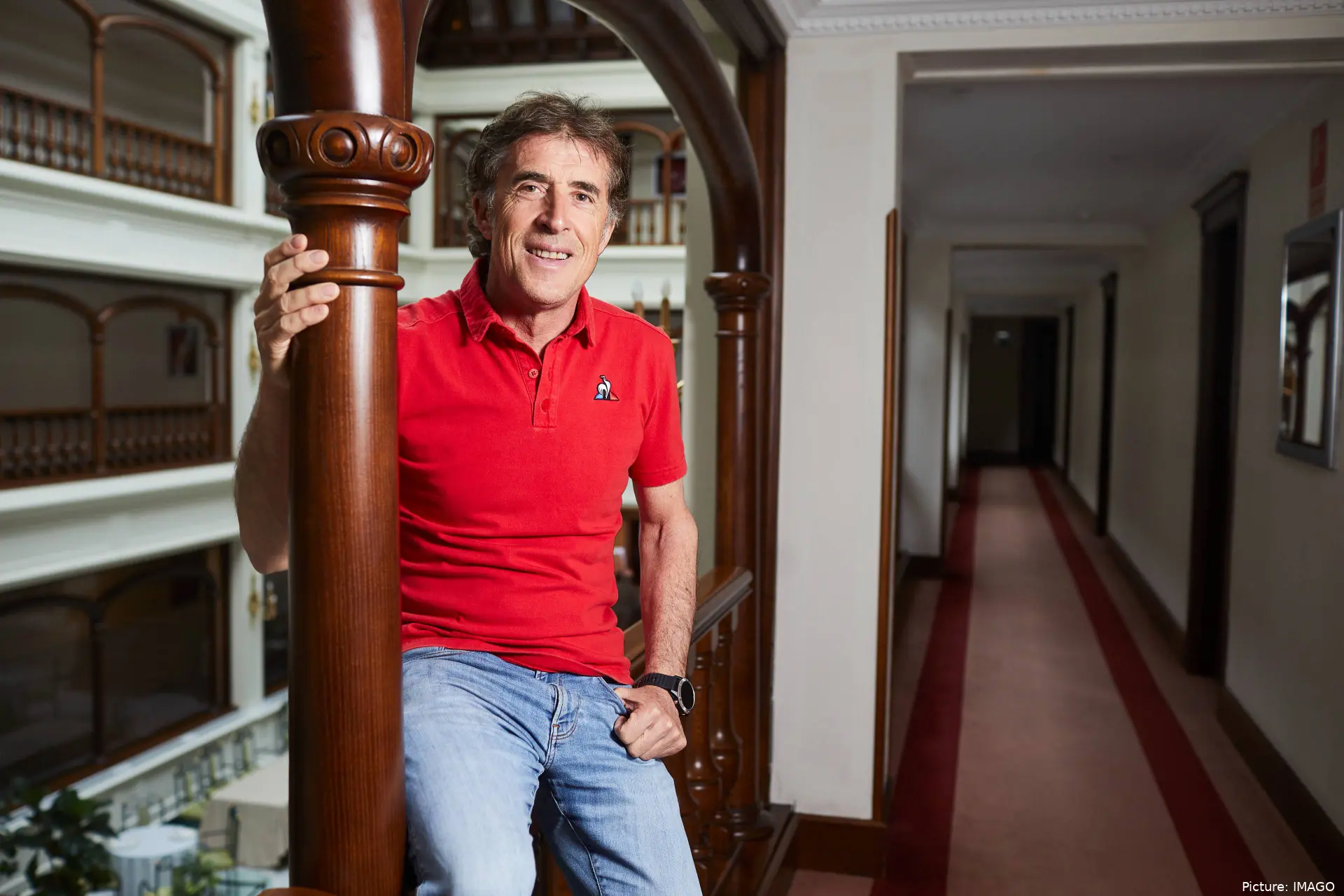
Pedro Delgado, winner of the 1988 Tour de France and one of the most recognisable voices in cycling, has called for calm and perspective following the controversy sparked by his comments on TVE about the pro-Palestinian protests that affected the most recent edition of the 2025 Vuelta a Espana, which opposed the presence of an Israeli team.
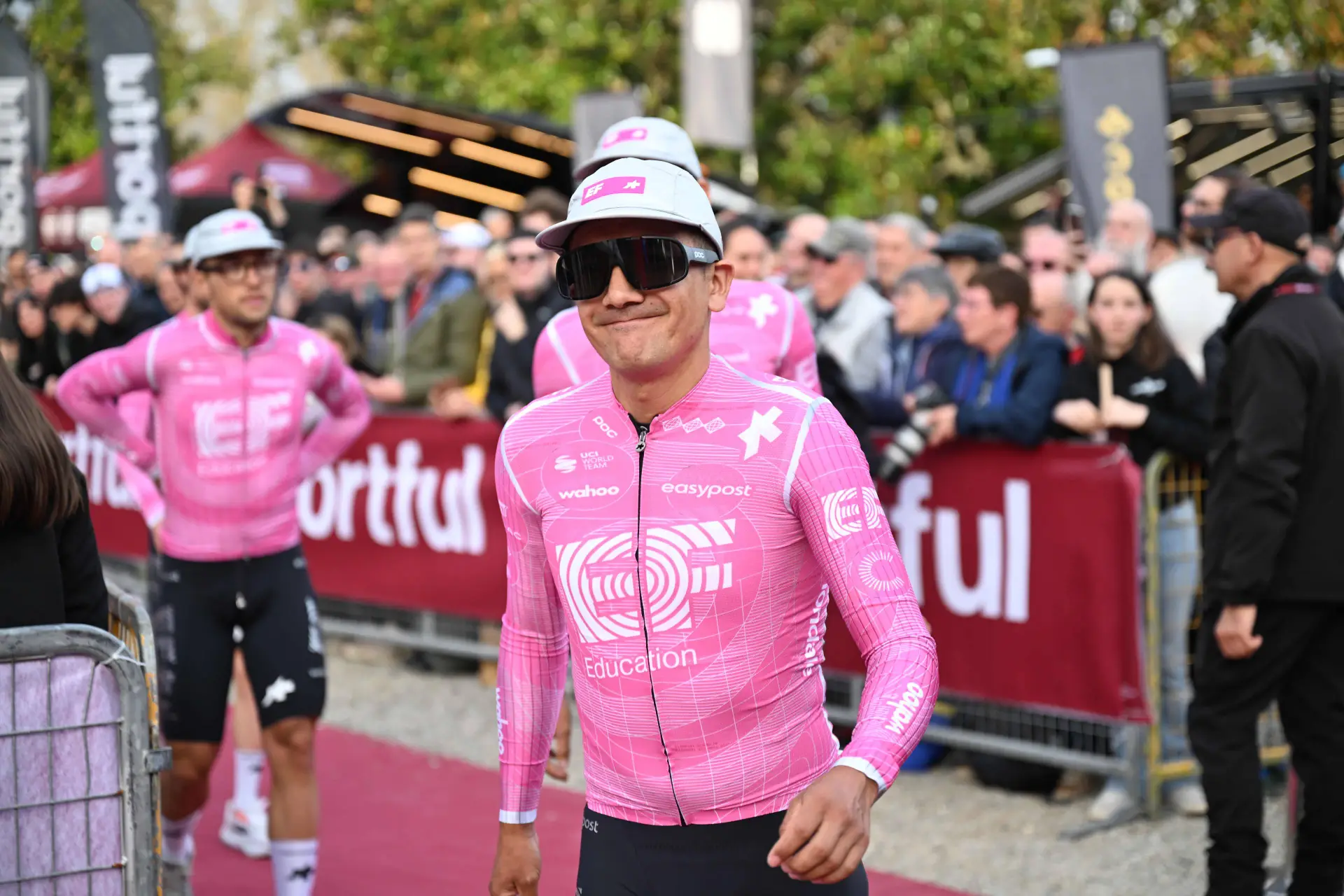
Delgado addressed the issue on Thursday during a public appearance at a traditional chainless bicycle race.
Delgado said he remains composed about the situation and argued for a reduction in social tension. “I’m calm. What happens is that we live in a society where we look for confrontations where there aren’t any,” he said, before adding that he feels his words have been used within the wider debate. “I feel manipulated, and I think people should also feel manipulated.”
In that context, he pointed to time as a calming influence. “We need a little bit of peace and calm, and I think time fortunately gives us that.”
Pogacar and Vingegaard, far above the rest
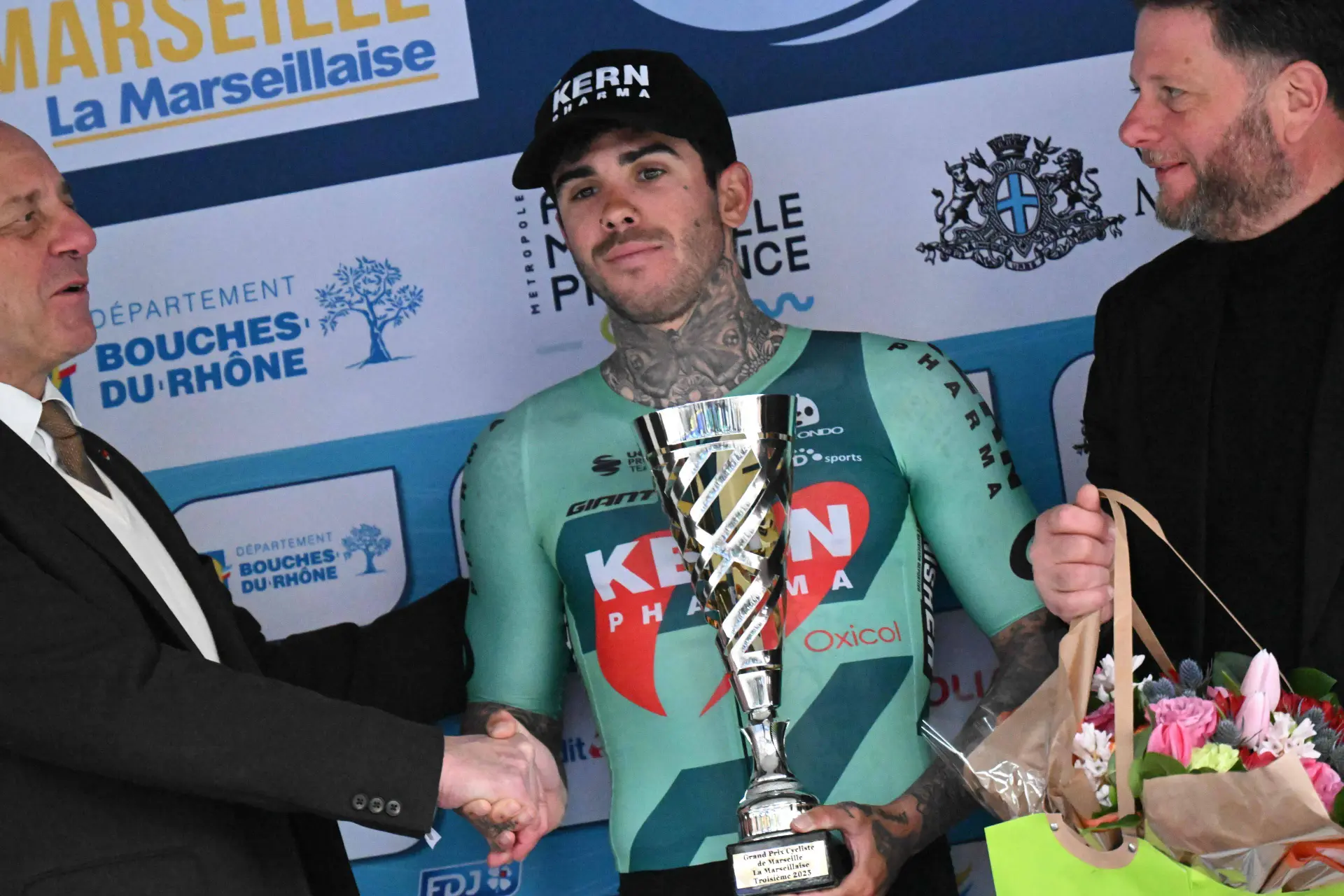
Beyond the controversy, Delgado also assessed the current state of professional cycling, which he believes is defined by a very clear hierarchy. He pointed to the clear superiority of Tadej Pogacar and Jonas Vingegaard over the rest of the peloton and predicted that both will once again dominate attention at the Grand Tours.
“In this competitive cycling landscape, there is a monster, which is Pogacar, and then another, Vingegaard, who is one step below. But after that, the rest are two or three steps behind,” Delgado said.
Along the same lines, he said that both riders will once again be the main focus at the Grand Tours, while noting that the picture changes in other types of races. In the Classics, he said, there are more alternatives, contributing to a more dynamic spectacle.
Delgado also highlighted the attacking approach of both riders and their teams. “Modern cycling is spectacular because Pogacar and Vingegaard are riders whose teams attack from a long way out. It keeps the race alive not in the final kilometre, but over the last two hours.”
The Vuelta stays true to its identity
Delgado also commented on the recently presented route for the next Vuelta a España, offering a clearly positive assessment. He said the course maintains the traditional identity of the race and reinforces its demanding nature.
“It’s a route that I like. I think it reflects the identity of the Vuelta a Espana, with nervous stages and lots of summit finishes,” he said. Among the examples he mentioned was the finish at Aitana, and he placed particular emphasis on the end of the race, describing the final stage in Granada as “spectacular”.
Delgado also focused on the figures and the accumulated difficulty of the route, comparing it with the other Grand Tours. “For those who like the numbers, in terms of metres of elevation gain, which defines the mountains, it has more than the Giro and the Tour de France next year,” he said, before concluding: “So we can say that it is the toughest of the three Grand Tours that will be raced in 2026.”


Kieran WoodDeputy Editor-in-Chief
Kieran Wood is a sports journalist based in Wales and has been active in journalism since 2022. He regularly contributes to DartsNews.com and CyclingUpToDate.com, where he covers professional cycling and darts. In cycling, his work includes liveblogs from major races, including the Tour de France, the Giro d’Italia, and La Vuelta a España, alongside race reports and analysis. He has also conducted interviews with professional riders.
His reporting spans the full racing calendar, from one-day classics to stage races, with a focus on accurate, real-time coverage and clear contextual analysis. For statistics, results, and historical context, he regularly uses resources such as ProCyclingStats. To support reporting on rider activity and training context where relevant, he also references Strava.
In his work, Kieran places strong emphasis on careful sourcing, editorial accuracy, and updating articles as new, verified information becomes available.
claps 1visitors 1
Just in
Popular news
Latest comments
- how it is "We’ve taken another big step forward for next year" he just lost in lombardia to a 20 year old, and two 30+ year olds. and not even top 10 for WCRR.abstractengineer19-10-2026
- This is similar to Lebron. first he said i need to consult my family , my daughter, need respectable money blah blah blah and then dont care about family , dont care about money, only onion rings, am off to Philly, very very far from family. Off season should be with family more, no?abstractengineer19-10-2026
- I hope he comes back strong for a proper battle with Tadejmij19-10-2026
- congrats to a great career and good retirement.mij19-10-2026
- Any artificial product should be reported.Any team that doesn't should be stripped of wins and fined.I know that this level of transparency does not and will never exist.All anyone can do is continue to test riders on a regular and surprise basis.If the test comes back clean then all any of us can assume is the rider is clean.
 Brucegel19-10-2026
 - Also, it's supposed to be hard to gain an advantage from drafting off Remco because he is so aero.Hills3319-10-2026
- How would stats back it up? You realise tactics involved could mean Vine saved his legs for a faster finish? Some riders can choose to go all out and fade later in the ride, others can hold steady state the whole way, and others can have a reserved start and power up later in the ride. You can't judge just by the stats unless you have power data to be able to prove Vine is riding faster even though he is putting out the same or less power (suggesting drafting). I'm sure the stats prove that Vine didn't cheat because UCI would monitor the stats to make sure this exact scenario doesn't happen (and disqualify them for drafting if the stats proved it).Pogboom19-10-2026
- Only one person would say such a thing here. Sorry to burst your bubble but I’m afraid that window of opportunity has now closed. You can beat some of the people all of the time and all of the people some of the time but you can’t beat all of the people all of the time.Jumpyjohn19-10-2026
- Both prizes are actually pathetic, almost amateur like, not even covering the cost of participatingJumpyjohn19-10-2026
- It depends on how you define doping and you would do well to give your definition so we can see how against it you are. If you consider the use (as a hypothetical example) of a new beneficial artificial product unknown to anti-doping agencies ok without considering asking them if it would constitute doping if you told them about it then we’re never going to agree on who could be or couldn’t be doping and according to what threshold, moral, statistical, legal, comparative. In football even financial doping is now consideredJumpyjohn19-10-2026
Loading
Write a comment