“I didn’t recognise myself... but little by little, I’m starting to see the person I was before” – UAE’s unsung hero refuses to let life-threatening 2025 crash end his top-level career
Cycling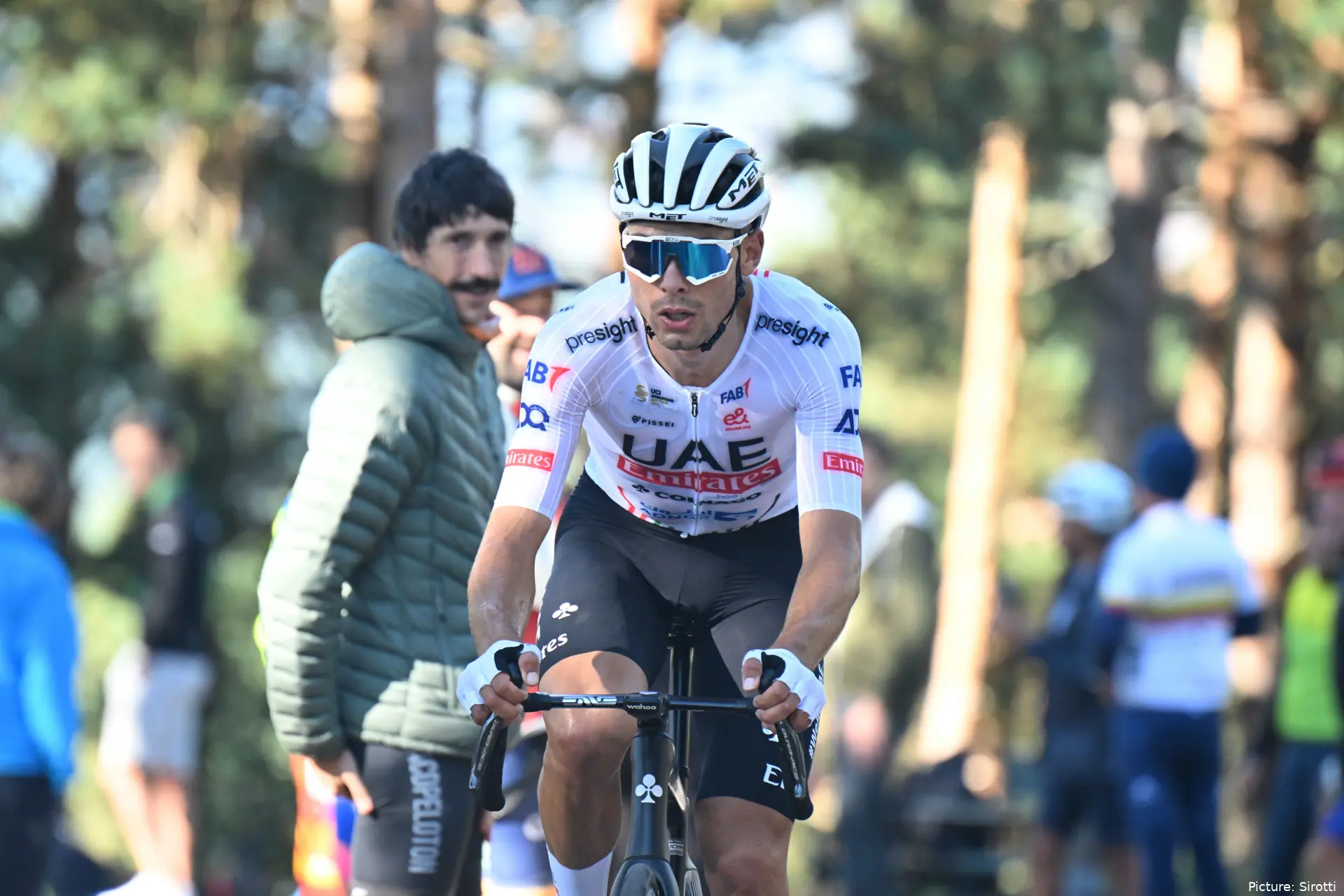
For a rider who had already become a trusted part of the most dominant team in the modern peloton, August 2025 threatened to take away far more than a season. It came close to taking away everything.
When Filippo Baroncini hit a wall at high speed during the Tour de Pologne, the consequences were immediate and severe. Vertebrae, collarbone and facial bones were broken. He was placed in a medically induced coma. His recovery would stretch across months, not weeks. For a rider embedded inside the all-conquering, record-breaking structure of UAE Team Emirates - XRG, the crash did not simply interrupt momentum. It placed a question mark over his future at the very top of the sport.
And yet, months later, Baroncini speaks not with bitterness or fear, but with a striking sense of clarity.
“I didn’t recognise myself… but little by little, I’m starting to see the person I was before,” he said in an interview with Tutto Bici Web.
Perspective forged the hard way
The severity of what happened is never far from the surface when Baroncini reflects on the crash. “The worst thing is thinking that I could have left a void in my family,” he said. “The idea of making the people you love suffer breaks you inside.”
That awareness has fundamentally reshaped his outlook. “After what happened to me on 6 August, I realised that in the end the small things matter: the love of family, of my girlfriend and of my friends,” he explained, describing a shift in priorities that only comes when the margin between recovery and tragedy becomes uncomfortably thin.
The physical consequences were stark. “I had lost 14 kilos. When I left hospital I looked like I’d come out of a concentration camp,” Baroncini said, recalling the moment he was finally discharged from Niguarda Hospital in Milan after weeks of surgery and rehabilitation.
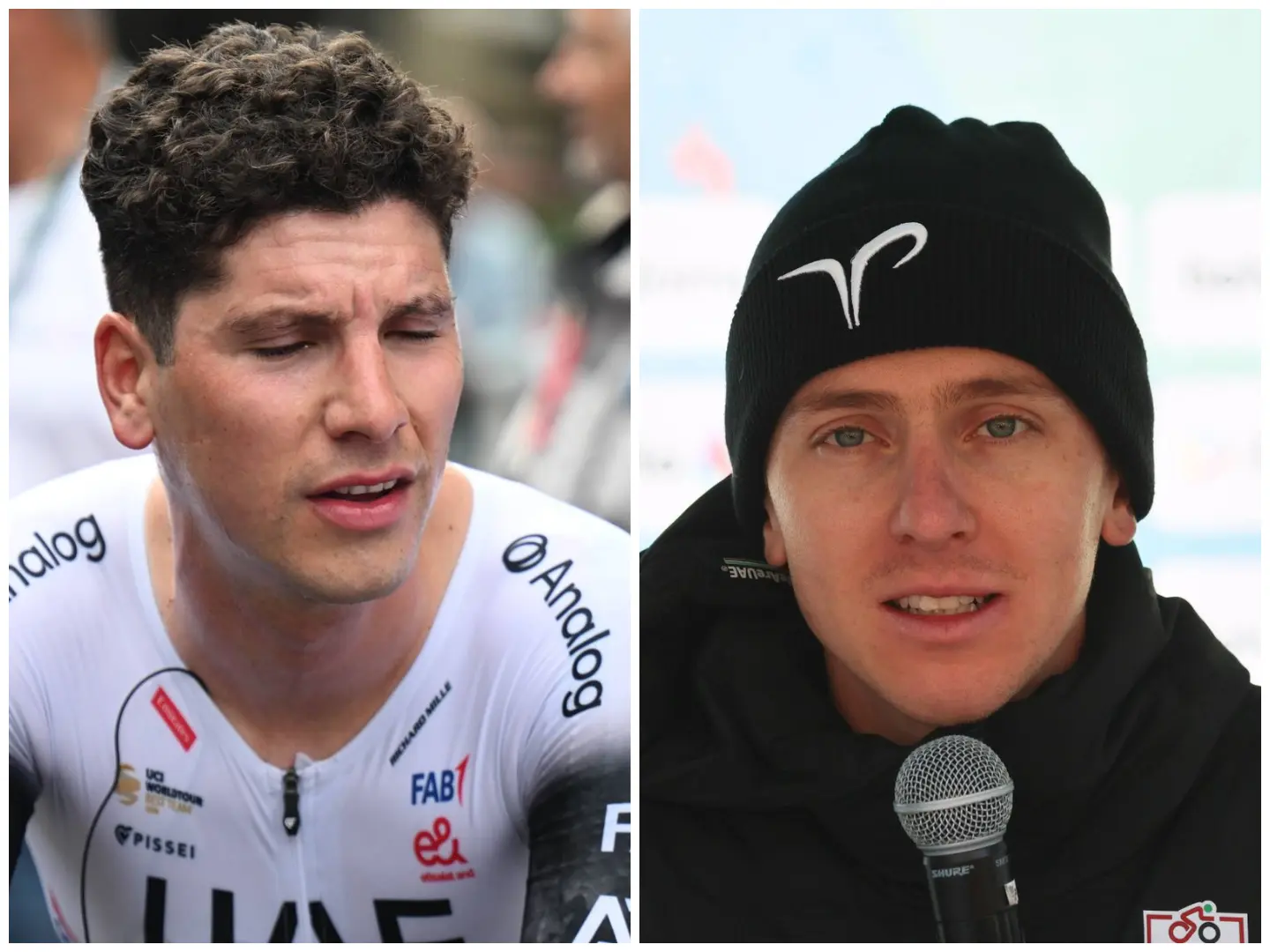
Even confronting his own reflection became a challenge. “It took me some time to accept looking at myself in the mirror,” he admitted. “Between scars and deformities, I was extremely swollen, I didn’t recognise myself.”
Back inside the UAE machine
Returning to training with the peloton’s benchmark team was never going to be straightforward. But simply being back among his teammates mattered more than any performance marker. “This was obviously a slightly different training camp, there was more suffering involved, but just being there riding with my teammates was a real joy,” Baroncini said.
That sense of belonging was matched by tangible progress. “Since getting back on the bike I’ve felt things improving day after day and now I’ve reached a decent level,” he explained, careful not to overstate how far along he really is.
Before the crash, Baroncini had already carved out a clear role inside UAE’s system. A former under-23 world champion, a winner of the Tour of Belgium, and a rider trusted across stage races and demanding one-day events, he had become a reliable cog in a machine that has redefined dominance at WorldTour level. The challenge now is not reinvention, but restoration.
Patience over promises
There is no bravado in how Baroncini talks about his recovery. “It will still take some time,” he said. “My aerobic system hasn’t yet returned to where it was, and consequently neither has my endurance.”
If there is one lesson this crash has reinforced, it is patience. “With the years I’ve learned to be patient, now I’ll need even more of it,” he said.
Some hurdles, at least, are already behind him. “The phases that could have worried me more, like mobility and strength, are already behind me,” Baroncini explained. “My back and posture are improving.”
That perspective extends to how he views misfortune itself. “This recovery is different from the other injuries, because before I would say ‘what bad luck, another crash’,” he said. “This time I’m aware that it could have gone much worse, so even in bad luck I was also fortunate.”

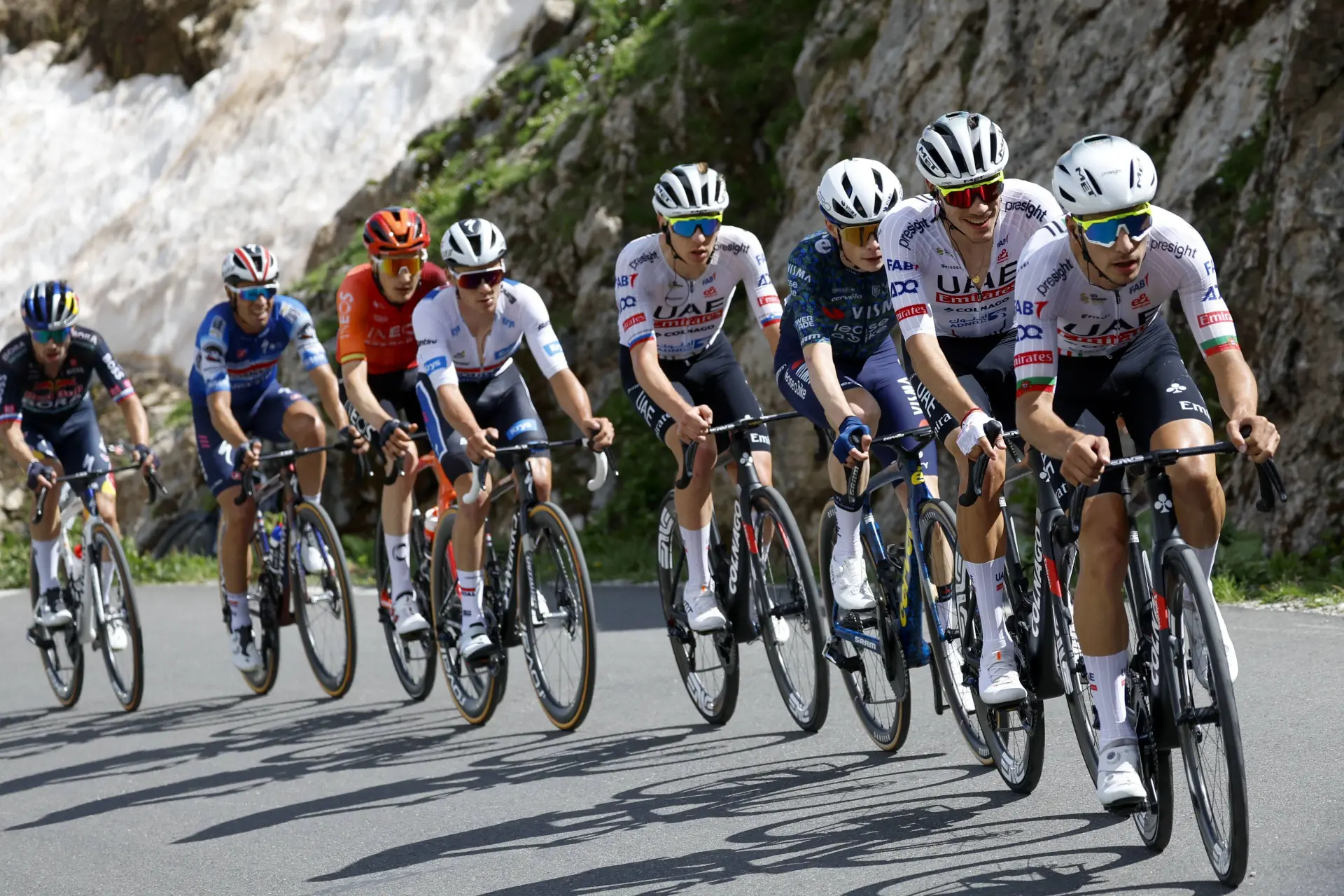
Baroncini had previously established himself as a key cog in UAE's all-conquering machine
Refusing to be defined by crashes
Since turning professional, injuries have followed Baroncini with unsettling regularity. Asked whether he ever questions why it keeps happening, his answer is blunt. “Yes, all the time,” he said.
But the conclusion he draws is equally clear. “The circle sooner or later has to close,” Baroncini said, expressing a belief that this pattern cannot define his career.
“I don’t want to be remembered as the guy who was always crashing or breaking bones,” he continued. “I want people to talk about what I managed to do in sport.”
That desire goes to the heart of why returning to the top level matters. “I feel I have the potential to do something good, and I already showed that when I was healthy,” Baroncini said. “I can’t imagine ending my career with the idea that cycling took something away from me, instead of giving me something.”
The internal debate, he admits, is ongoing. “I ask myself whether it’s worth it, but the answer is always yes, it’s worth it,” he said. “The motivation and the desire to leave a mark are too strong for me to give up.”
No fear on the bike
Given the nature of the crash, fear would be an understandable companion on the road. Baroncini insists it has not followed him back into the peloton. “Actually no,” he said when asked whether he worries about returning to racing.
Even in training, that confidence has returned quickly. “Even during the training camp, on descents, I stayed calmly on the wheel of my teammates,” he explained. “After accidents like this, you have to be able to reset, and I think I’ve managed to do that.”
That ability to reset is central to the next phase of his recovery.
No shortcuts, no dates
Baroncini is deliberately resisting the temptation to attach himself to a fixed comeback date. “It wouldn’t be right to plan a specific return,” he said. “The first objective is to become myself again.”
Only then will racing enter the conversation. “Once I’ve recovered my performance, then we can start talking about a return to racing,” he explained. Progress so far has been faster than expected. “Nobody expected me to be training with my teammates already in December,” he noted.
Quiet optimism remains. “Deep down I hope to be back in the peloton in March,” Baroncini said, before reiterating the uncertainty that still defines his situation.
Supported, not rushed
Throughout the process, UAE Team Emirates - XRG have removed one potential source of pressure entirely. Just days after the crash, the team confirmed a contract extension through to 2027. “They give me great peace of mind,” Baroncini said. “They’re not putting me under pressure, they’re only thinking about my full recovery and giving me maximum support. That was by no means guaranteed.”
The backing has been personal as well as professional. “The team was extraordinary,” he said, recalling visits and support from teammates, staff and management during his hospital stay.
A simple goal
Asked whether there is a particular race he dreams of returning at, Baroncini’s answer strips everything back to its essence. “No, I have no preferences,” he said. “Whether it’s the Tour of Flanders or the worst race on the calendar, the only thing I’m looking for is the rider I was before the crash.”
“At that point,” he added, “I know for sure that I’ll be happy.”
For UAE Team Emirates - XRG, that rider was already a proven, trusted component of a historic winning machine. Baroncini’s fight now is not just to race again, but to reclaim his place inside it — on his own terms, at the very top of the sport.
Kieran WoodDeputy Editor-in-Chief
Kieran Wood is a sports journalist based in Wales and has been active in journalism since 2022. He regularly contributes to DartsNews.com and CyclingUpToDate.com, where he covers professional cycling and darts. In cycling, his work includes liveblogs from major races, including the Tour de France, the Giro d’Italia, and La Vuelta a España, alongside race reports and analysis. He has also conducted interviews with professional riders.
His reporting spans the full racing calendar, from one-day classics to stage races, with a focus on accurate, real-time coverage and clear contextual analysis. For statistics, results, and historical context, he regularly uses resources such as ProCyclingStats. To support reporting on rider activity and training context where relevant, he also references Strava.
In his work, Kieran places strong emphasis on careful sourcing, editorial accuracy, and updating articles as new, verified information becomes available.
claps 8visitors 8
Just in
Popular news
Latest comments
- The Domedancy is the one designed for Seixas - anaerobic short climbs. Seixas isn't as good with the long climbs
 Rafionain-Glas24-10-2026
 - no i just type inivitable facts, nothing else. I wish UAE wasnt so damn good but hey the reality is they are. Visma on opposite direction crashing with no money and riders, coaches leaving mid contract ffs..i wish that wasnt the case but im not pretednig its not real when it is reality... RbH and Lidl i UAE cloesst opponents now thats clear. But if were real how can you stop that team with del toor and pogacar (greatest ever rider they made him) and you have mcnulty as a dom with (who would be captain in other teams and wins world and 10 more behind him..) history also says their the best team by far so what you want me to say? fake and be delusional and tell myself things? Its not a matter for praising anyone its a matter of beeing real nothing else, i wish visma for instance was better and like before but they cant buy any proper climbing guys cause their broke...heck they cant even keep their riders and coaches who flee mid contract what you want me to do lol.miguel24-10-2026
- Far as I recall, Nibali used the 2012 tdf UK stages to win it, most wanting to get them over with, cept he built his lead in them.. Armstrong's wrong, IF and it's an IF, the summers good in '27 like 26 then it'll be attritional.. if it's 'normal, then it'll be 50/50 on the weather, also the roads are VERY VERY narrow, very windng + on the 2nd steep short little climbs I know cause it goes thru my arse 👍
 leedorney24-10-2026
 - ❤️Lozza24-10-2026
- No, it's not about him crashing... he just won't win. Ad acta.PogiSloFans24-10-2026
- I'm always gutted to see the road season come to an end, but the excitement for cyclocross to kick off totally makes up for it.anonymouscyclist24-10-2026
- Nah, Pogi will Baby Hulk - "smash" - Remco. Ad acta !!!PogiSloFans24-10-2026
- I expect to read at least one enthusiastic post, regardless of who it concerns from you a year, time is running out. Do you actually like anyone in cycling?Jumpyjohn24-10-2026
- In cycling, any comment before final results is noise as anything can always happen, and even when it doesn’t, something can still happen post race like cancellation of results. I sincerely hope after what’s been happening in athletics recently this isn’t premonitory but there really is no reason to expect cycling to be different.Jumpyjohn24-10-2026
- so Remco takes 2 minutes. that means Tadej wins the GC by 8 minutes instead of 10.mij24-10-2026
Loading
1 Comments