The race had already broken apart long before the finale, but when Liège-Bastogne-Liège reached its decisive sequence of climbs, the expected pattern began to form. Tadej Pogacar moved to the front on La Redoute and the selection followed. What stood out was who remained with him. Paul Seixas was still there.
From that point, the race reduced to its essentials. Pogacar and Seixas moved clear and built their advantage, with the 19-year-old holding the wheel through the key phase of the Monument.
Only on the final ascent of Roche-aux-Faucons did the difference come, Pogacar attacking to go clear and ride to victory, with Seixas finishing second at around 45 seconds.
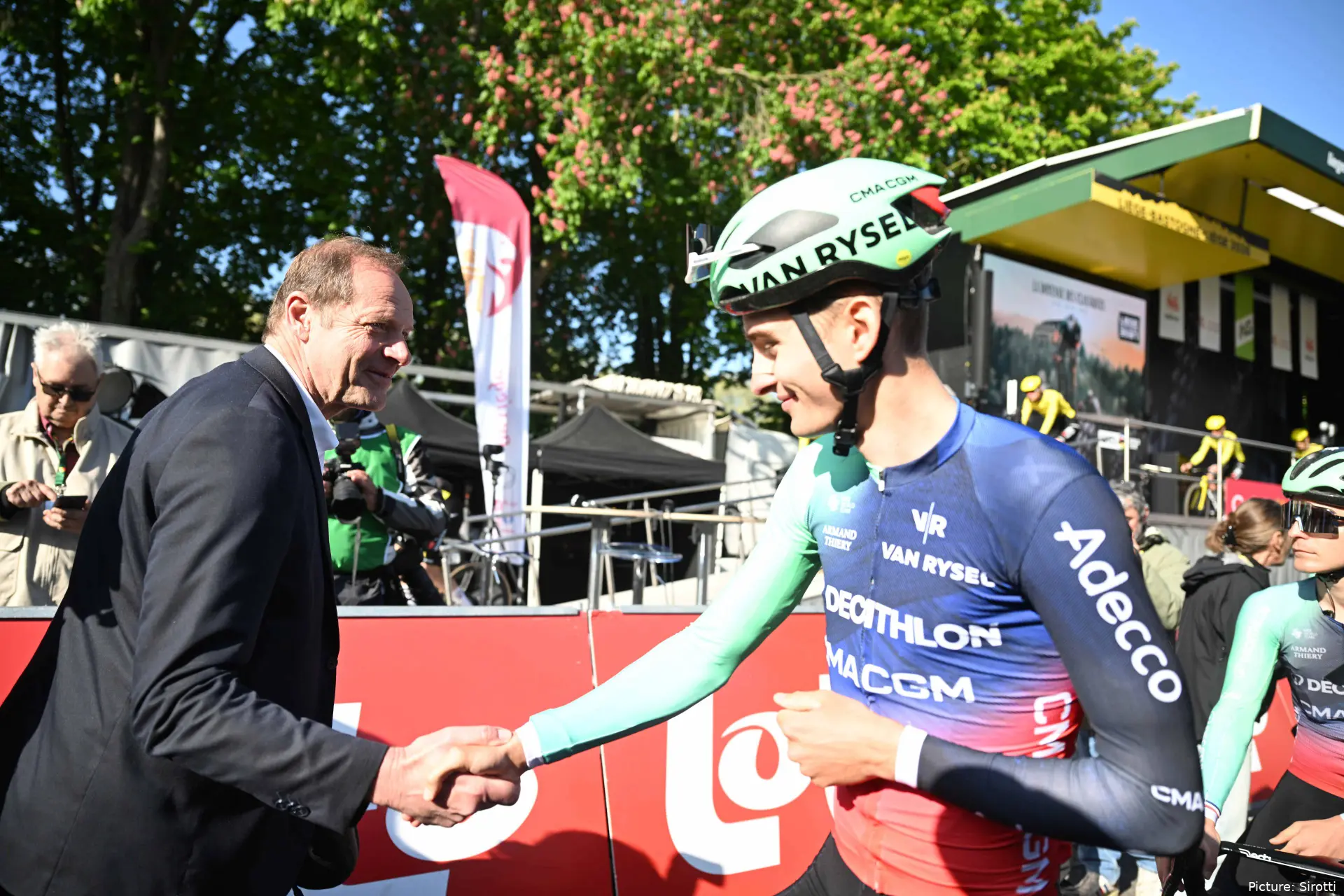
It was a performance that drew immediate attention, not just for the result but for how it was achieved. Speaking after the finish to RMC Sport, race director Christian Prudhomme pointed to the level reached by the Decathlon CMA CGM Team rider, just days after his win at Flèche Wallonne. “It’s exceptional to see a rider like that, at 19, capable of holding on in one of cycling’s Monuments, after his triumph at Flèche Wallonne four days ago.”
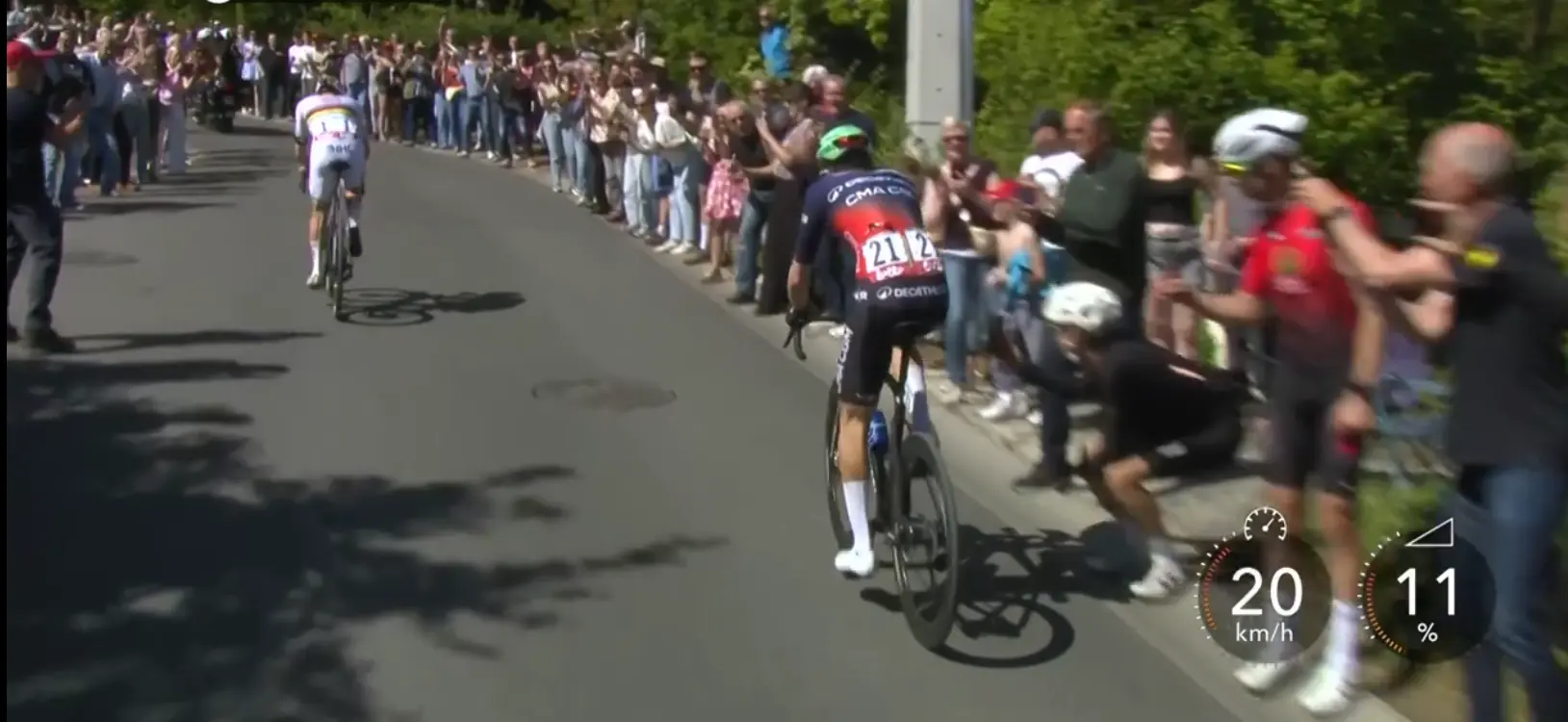
Seixas follows Pogacar into the decisive move
The structure of the race made the effort more notable. An unusually large early break had forced teams into a long chase, disrupting the expected control, but once the key climbs arrived the strongest riders still emerged.
Seixas was not dropped in that transition. He remained present as the race moved from selection to attack, and when Pogacar accelerated on La Redoute, he was among the very few able to follow.
That sequence shaped the outcome. The gap only opened on the final climb, rather than earlier in the race, underlining how long Seixas was able to match the pace in terrain that typically decides Liège. Prudhomme framed that as something more than a single ride. “He is opening a new chapter, in a way.”

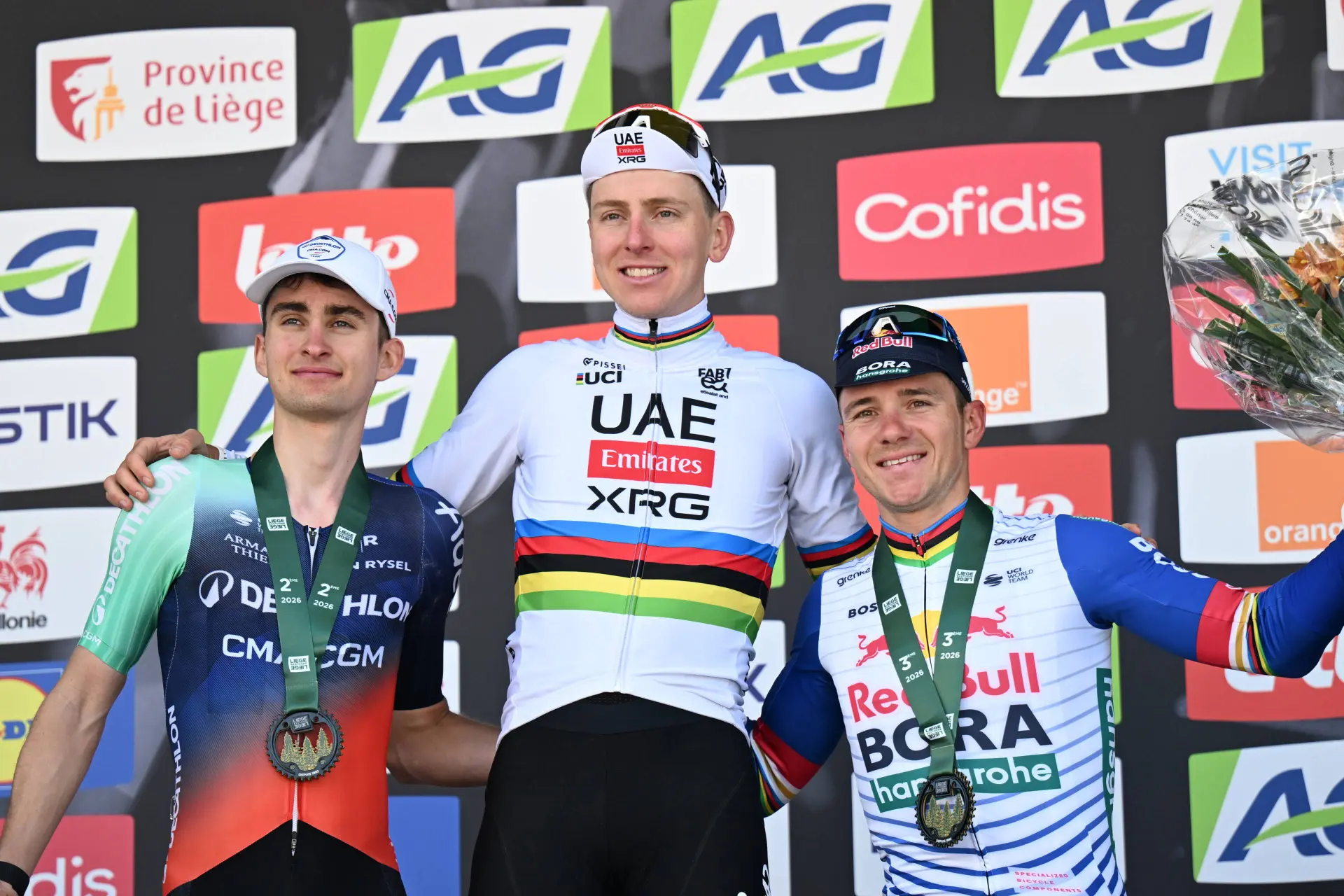
Tadej Pogacar and Paul Seixas at Liêge-Bastogne-Liège 2026
A comparison that reflects the impact
The reaction extended beyond cycling when Prudhomme assessed what Seixas’ emergence represents. “His arrival is dizzying for French sport… it’s like Leon Marchand at the Paris 2024 Olympic Games: that is to say a pure talent, very young, who arrives.”
The comparison to Leon Marchand speaks to the immediacy of the impact. At 19, Seixas was not riding conservatively for a placing. He was part of the move that decided the Monument, holding position alongside the strongest rider in the race until the final separation.
From breakthrough ride to expectation
The effect of that performance is immediate. Seixas moves from an emerging name to a rider expected to feature when races reach this point. Prudhomme’s closing words reflected that longer-term view. “I hope he is here to stay.”
Pogacar delivered the result that was expected, making the decisive move on the final climb and adding another Monument to his record.
But Liège-Bastogne-Liège 2026 also established something alongside that. When the race was reduced to its defining moment, Seixas was not reacting from behind. He was already there.

Kieran WoodDeputy Editor-in-Chief
Kieran Wood is a sports journalist based in Wales and has been active in journalism since 2022. He regularly contributes to DartsNews.com and CyclingUpToDate.com, where he covers professional cycling and darts. In cycling, his work includes liveblogs from major races, including the Tour de France, the Giro d’Italia, and La Vuelta a España, alongside race reports and analysis. He has also conducted interviews with professional riders.
His reporting spans the full racing calendar, from one-day classics to stage races, with a focus on accurate, real-time coverage and clear contextual analysis. For statistics, results, and historical context, he regularly uses resources such as ProCyclingStats. To support reporting on rider activity and training context where relevant, he also references Strava.
In his work, Kieran places strong emphasis on careful sourcing, editorial accuracy, and updating articles as new, verified information becomes available.
claps 0visitors 0
Just in

Popular news
Latest comments
- "And we’ll avoid rushing from race to race"...LOL he took all that time off between the end of the Tour and the Canadian one day races ! That got him one win and a failed worlds RR title ! Only thing he got a was TT titles and a Euro championship against a weak field !frieders321-10-2026
- Rasmussen hasn't been relevant for years and that's only because he was booted out of the tour wearing the yellow due to failed doping !frieders321-10-2026
- Yep Pogi can't win the Vuelta if he doesn't cross the finish line in stage 21! PogiFanStalker can't seem to understand that.frieders321-10-2026
- This PogiFanStalker can't seem to help himself with his constant nonsensical comments here.frieders321-10-2026
- Only thing boring here is reading your constant drooling comments about him!frieders321-10-2026
- So much clickbait hereDAS21-10-2026
- Yes, this site has truly become a joke... and about 3/4 of the commentators. For most of them UAE are dopers and Pogi is boring??? They're brainwashed and want Pogi out of cycling.... because he's boring. Yes, in their f***ed up brains, Pogi is the G.O.A.T. ... but he's boring???????PogiSloFans20-10-2026
- As long as the anti doping agencies are on the up and up and doing all they can I can live with the world we now live in without suspicion lurking in the back of my mind all the time.
 Brucegel20-10-2026
 - The message to honour the leaving Felix Gall's performances was more enthusiastic
 Rafionain-Glas20-10-2026
 - "We all know he would have won by a big margin if he didn't crash out." But he did crash out, so why does it matter?Rafionain-Glas20-10-2026
Loading
Write a comment