"He was afraid of me": Erik Dekker looks back on his iconic Amstel Gold Race victory against Lance Armstrong
Cycling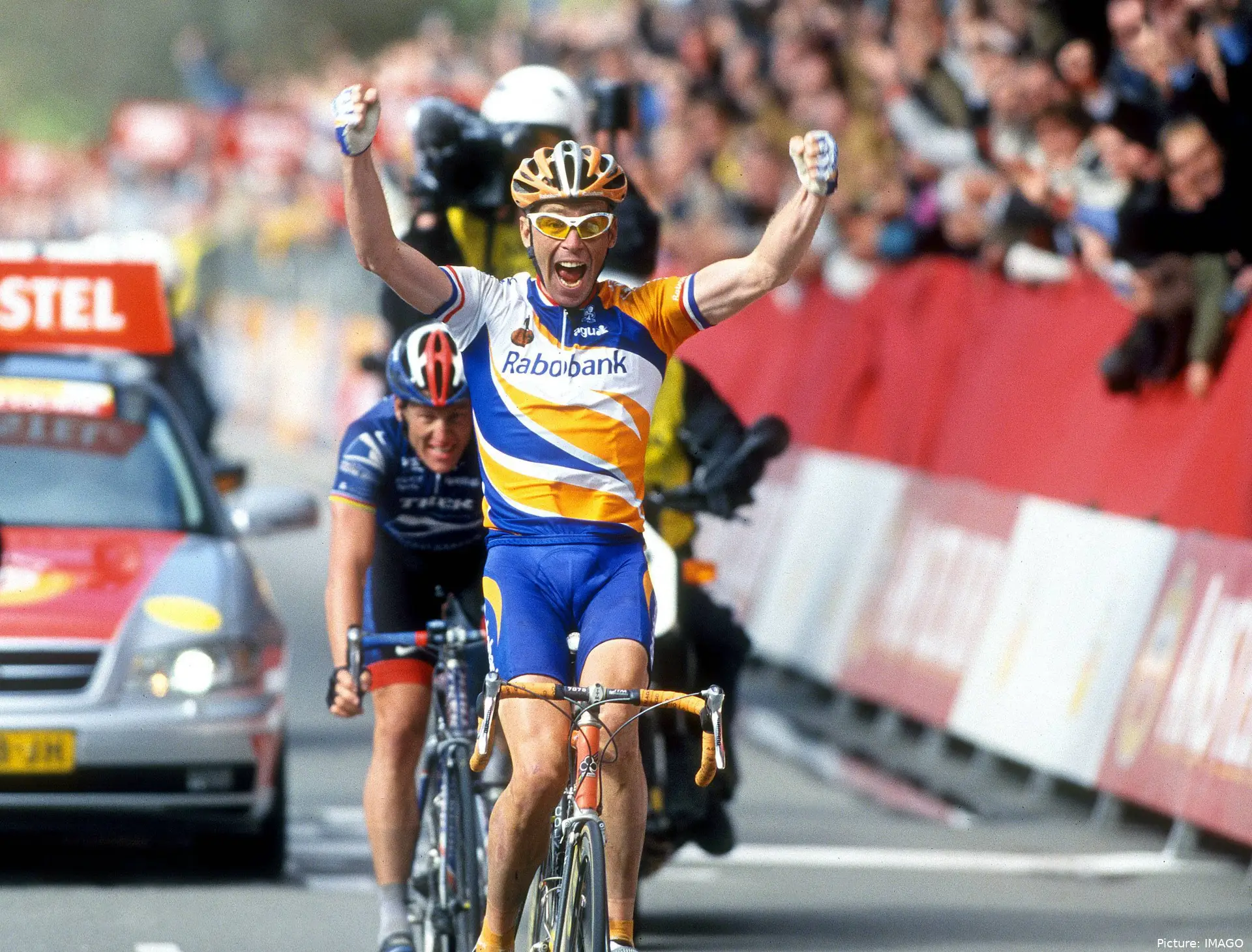
The Amstel Gold Race is widely considered the crown jewel of Dutch cycling, but the 2001 edition stands alone as a masterpiece of grit and psychological warfare. Now, a quarter of a century later, the winner of that legendary day, Erik Dekker, looks back on his victory over the era's most dominant rider, Lance Armstrong, with the same sharp clarity as if the race had finished only yesterday.
A punishing day in the hills of Limburg
Looking back on that historic Sunday, the conditions during the 2001 race were nothing short of apocalyptic. From the very moment the riders left the start line, they were battered by a combination of freezing rain and gale-force winds that made staying upright a challenge in itself.
"Only 37 of the 190 riders who started reached the finish line," Dekker recalled to Sportnieuws.nl. "In the beginning, it rained and winded so hard. It was truly a war of attrition, partly due to our team. If you look at the number of dropouts, it was perhaps the toughest race of this century."
Despite the aggressive pace set by the Rabobank squad, the race nearly slipped away from them when the most feared man in the sport made his move. Lance Armstrong launched a dangerous attack alongside Eddy Mazzoleni. The pair quickly built a lead of fifty seconds, a gap that many observers assumed was the winning move. Knowing the race was riding away from him, Dekker did not hesitate.
"I decided to close the gap all by myself. Right before the Keutenberg, I was able to connect. Armstrong dropped Mazzoleni, but I stayed with him."
Once he caught the American star, the race turned into a pure two-man battle heading toward the finish line in Maastricht. Surprisingly, Dekker felt very little pressure in this high-stakes situation. He even joked over the team radio to his sports directors, shouting that a second-place finish would also be a great result. That relaxed mindset became his greatest weapon against the intimidating Tour de France champion.
"I was prepared to lose. Finishing second behind Armstrong is also nice," Dekker explained. "But while riding, I noticed that he was afraid of me and didn't want to go to the line with me."

Skjelmose won Amstel Gold Race in 2025
Knowing he had the faster sprint on a flat finish, Dekker simply had to survive Armstrong's final attacks. On the famous Cauberg climb, the American tried to drop the Dutchman using his climbing power, but it was completely unsuccessful.
"After that, we fought it out between the two of us. I went into the sprint as the favorite, although after 250 kilometers you never know how the proportions are. I turned out to be the strongest and won."
A hilarious title defense strategy
Winning the race meant he entered the 2003 edition as one of the most watched men in the peloton. His team director, Frans Maassen, had given him strict orders to stay protected within the group and wait for the finale. Instead, Dekker completely shocked his own team by jumping into an early breakaway on the very first climb of the day.
Maassen was absolutely furious with this tactical blunder and immediately ordered his star rider over the radio to drop back to the main peloton. To fix his mistake, Dekker came up with a highly unorthodox and hilarious solution to hide from his boss.
"I then stood on the side of the road and hid behind a parked car," Dekker laughed. "When the peloton rushed by, I reconnected at the back, so they didn't realize I had returned."


Félix SernaCycling Journalist
Félix Serna is a writer at CyclingUpToDate and has been part of the team since 2025. He covers professional cycling across both the men’s and women’s calendars, with a focus on UCI rankings, race developments, and rider performance. His work includes interview-based reports, liveblogs, and tournament coverage designed to provide clear, accurate context throughout the season.
In his reporting, Félix regularly uses ProCyclingStats for results, statistics, and historical reference. He places strong emphasis on careful sourcing, editorial accuracy, and updating articles promptly when new, verified information becomes available. He holds a bachelor’s degree in International Studies.
claps 4visitors 3
Just in


Popular news
Latest comments
- He is boring
 leedorney08-11-2026
- To Twoje przemyślenia te bla, bla :)
 Dariusz08-11-2026
- Uwielbiam patrzeć, jak wyjeżdża na czoło peletonu i zaczyna się rzeź...Dariusz08-11-2026
- Yeah, unreal.
 parisbound0008-11-2026
- there needs to be space in life for pointless comments!Ketterechts08-11-2026
- That is a very lazy way of putting it but so far on this website it seems like everyone is happy to look at everything lazily, even things that annoy them intensely. All they want to do is state their feeling and position but ask most to analyse a problem or come up with solutions or improvements and you’re stunned by silence. Nobody even really knows how this all happens. It’s very simple and quick to just say the UCI did it but I bet you they didn’t, I bet you not more than 2 people were involved, more likely just 1. The UCI may be ultimately responsible but it is not their decision, this is about hierarchy, power and delegation. The fact that protest is possible also means it isn’t over and that MORE people could get involved for a thorough review which could throw up anything. It is highly likely it was a sole commissar who decided and has that power in a first round. Therein might lie the problem the UCI has to consider, is it acceptable to give so much authority to one single person when it is quite possible for them to have a natural bias or be too easily susceptible to imposed bias. Who is to say an individual in this position isn’t susceptible to collaboration with outside players with interests in the results, nations, families, teams, betting companies, etc. On the one hand we have sports where these problems have been worked on way more to reduce such problems, on the other hand we have sports with far stricter and more draconian rules not even concerning safety or obstruction that nobody really questions like false starts or stepping out of lane or zones in athletics. If cycling hastowork on itself, it would be good if protagonists (all kinds) would start doing a little more than just moaning over outcomes.Jumpyjohn08-11-2026
- Yes, so why not make comments less pointless?Jumpyjohn08-11-2026
- What a race! I didn't expect Vanthourenhout to collapse like that, and Wyseure did take the fight to Nys, but there was no doubt at the end. I also wonder what Aubin Sparfel would be capable of were he to race in the elites now. In the U23 ranks he is making good work of Giel Lejeune, who himself is among the better riders in the elites, and a top 10 contender in the big races (3rd at Kleebergcross, 8th at Berencross and 5th at Heerderstrand). In the French Cup, Sparfel is significantly better than Romain Debord (8th at Koppenbergcross and 10th at the Euros) and Rémi Lelandais (12th at Koppenbergcross and 19th at the Euros).
 Rafionain-Glas08-11-2026
- There really was nothing in it. Schreiber was so much faster, and Brand was fighting to stay in the wheel in the sprint. Schreiber did move a bit, but to say she closed the door doesn't make sense because Brand couldn't enter it anyway, abd she wasn't impeded.Rafionain-Glas08-11-2026
- He should have been allowed to go to Movistar. Right now both arent a good fit for each other and are just wasting each other's time and effortabstractengineer08-11-2026
Loading
Write a comment