Dylan van Baarle speaks openly about seeking professional mental health support: “Thanks to him, I managed to get back on top of things”
Cycling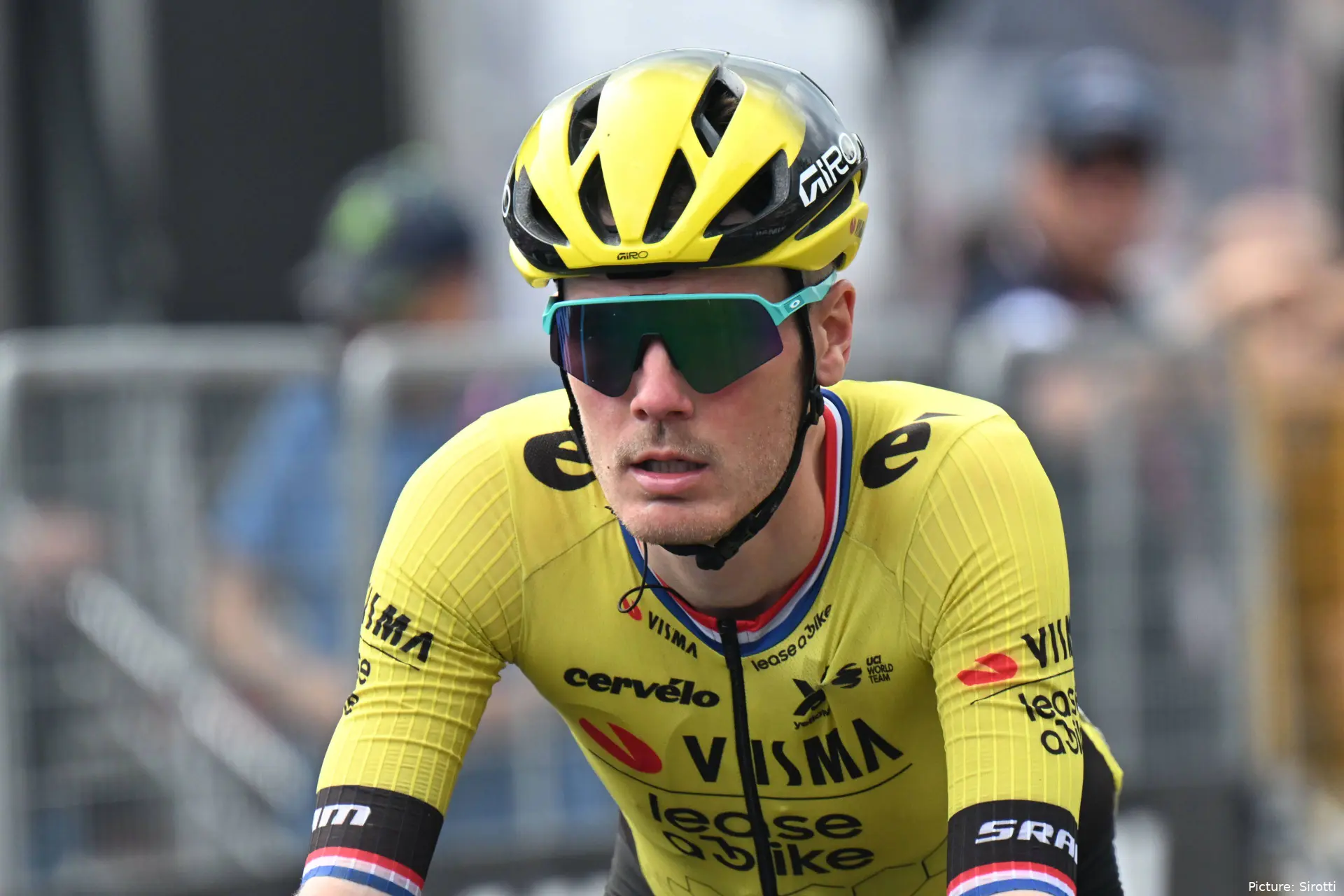
Elite men’s cycling has never struggled to talk about pain, fatigue or physical injury. Mental health is different. It is usually implied, softened or avoided altogether. That is why Dylan van Baarle speaking openly about seeking professional mental health support carries weight well beyond his own career.
Van Baarle is not a marginal figure telling a cautionary tale. He is a Paris-Roubaix winner, a Monument champion, and a rider whose reputation was built on resilience and durability. When someone with that profile talks calmly and directly about asking for help, it cuts through long-standing silence in the sport.
Two seasons spent trying to get back
Speaking in an open and honest interview with Wieler Revue, Van Baarle reflected on how the past two seasons became defined less by progression than by recovery. A succession of crashes and interrupted preparations meant he was repeatedly trying to return to form rather than build on it.
The breaking point came early in 2025, when he broke his collarbone at the Tour Down Under. “That crash was the final straw for me,” Van Baarle said. “I wanted to turn the page on 2024, but then you start again with a setback. That was a huge mental blow for me.”
What followed was not just physical rehabilitation, but growing uncertainty. “I started asking myself questions: at what level will I come back? Is it down to me? Do I even still belong in the peloton? I started to doubt myself.”
When recovery becomes a cycle
Van Baarle explained that those doubts shaped his spring campaign. He was rarely completely absent, but seldom fully himself. “The last two seasons I was constantly focused on coming back,” he said. “You try to get into shape, while other riders are adding an extra layer on top. I was constantly chasing the facts.”
For a rider whose strengths depend on endurance, rhythm and confidence over long distances, that pattern proved especially damaging. He acknowledged that hesitation crept into his racing, alongside the physical limitations.
It was not until later in the year, during the Vuelta a Espana, that he felt the cycle begin to break. “Only then did I get the feeling that I was once again the rider who won Paris-Roubaix in 2022,” he said.

Van Baarle famously won Paris-Roubaix in 2022
Choosing professional help
Rather than treating those struggles as something to be managed internally, Van Baarle made a conscious decision to seek help outside his immediate circle. He was clear about the limits of personal support alone. “Helping each other get rid of those feelings and really pulling someone out of a negative spiral is simply very difficult,” he said.
Instead, he turned to professional mental support. “I found someone who supported me mentally during that period,” Van Baarle explained. “He didn’t only help me with racing-related matters, but also gave me tools for everyday life.”
The outcome was gradual, but decisive. “Thanks to him, I managed to get back on top of things,” Van Baarle said.
Why this matters in men’s cycling
At home, Van Baarle found understanding from his future wife, Pauline Ferrand-Prevot, who has experienced similar pressures at the highest level of sport. That recognition helped, but it did not replace professional guidance.
What makes Van Baarle’s comments notable is not their drama, but their clarity. He does not frame mental health support as a crisis response or an exceptional measure. It is presented as a practical, professional decision taken by an experienced athlete navigating a difficult period.
In a sport where elite men still rarely speak so plainly about seeking help, that openness stands as a statement in itself.
Kieran WoodDeputy Editor-in-Chief
Kieran Wood is a sports journalist based in Wales and has been active in journalism since 2022. He regularly contributes to DartsNews.com and CyclingUpToDate.com, where he covers professional cycling and darts. In cycling, his work includes liveblogs from major races, including the Tour de France, the Giro d’Italia, and La Vuelta a España, alongside race reports and analysis. He has also conducted interviews with professional riders.
His reporting spans the full racing calendar, from one-day classics to stage races, with a focus on accurate, real-time coverage and clear contextual analysis. For statistics, results, and historical context, he regularly uses resources such as ProCyclingStats. To support reporting on rider activity and training context where relevant, he also references Strava.
In his work, Kieran places strong emphasis on careful sourcing, editorial accuracy, and updating articles as new, verified information becomes available.
claps 20visitors 1
Just in
Popular news
Latest comments
- Nothing. Against Pogi nothingabstractengineer18-10-2026
- He didn't even try to sprint all outvappaxbipmv18-10-2026
- Campenaerts looked like a rolling pumpkin with that all orange leaders skinsuit !frieders318-10-2026
- He can take his dumb a$$ politics somehwere else !frieders318-10-2026
- good to have her back. fingers crossed she‘ll be able to stay!Ketterechts17-10-2026
- A tenner and he wins the Tour next year, too 😂anonymouscyclist17-10-2026
- the answer is either stick to classics or GTs but not bothabstractengineer17-10-2026
- the exodus already stared with Ciccone. Already they were struggling with two sprinters, now there are three. Also Ganna will demand leadership. Gall is the most proven GC, Ayuso has the most potential. GC leadership for everybody will be impossible. Literally a UAE style mess without pogi.abstractengineer17-10-2026
- I raced as an amateur for 12 years, including six years on my country’s national road cycling team. I secured two national titles and competed in three World Championships plus more than 15 international stage races. At 23, we travelled to Italy for a training camp—or so I assumed. On a rest day, we watched a presentation about adopting a more “professional” training approach. It was crystal clear what “professional” meant. That moment first exposed me to this dilemma. After returning from Italy, I left cycling—at least at the competitive level I had known. Over the following two years, the whole team was caught doping. I hold that everyone is innocent until proven guilty. In my view, current stakeholders operate on a different scale, and the sums involved are vast. I am unsure whether any doping would ever be revealed. I try to stay positive and enjoy the show. My 2c.
 vannpelt17-10-2026
 - Fiver he wins 🤣
 leedorney17-10-2026
Loading
Write a comment