DISCUSSION Tour de France | Assessing the Big Six at the Tour de France - Did they live up to the hype?
Cycling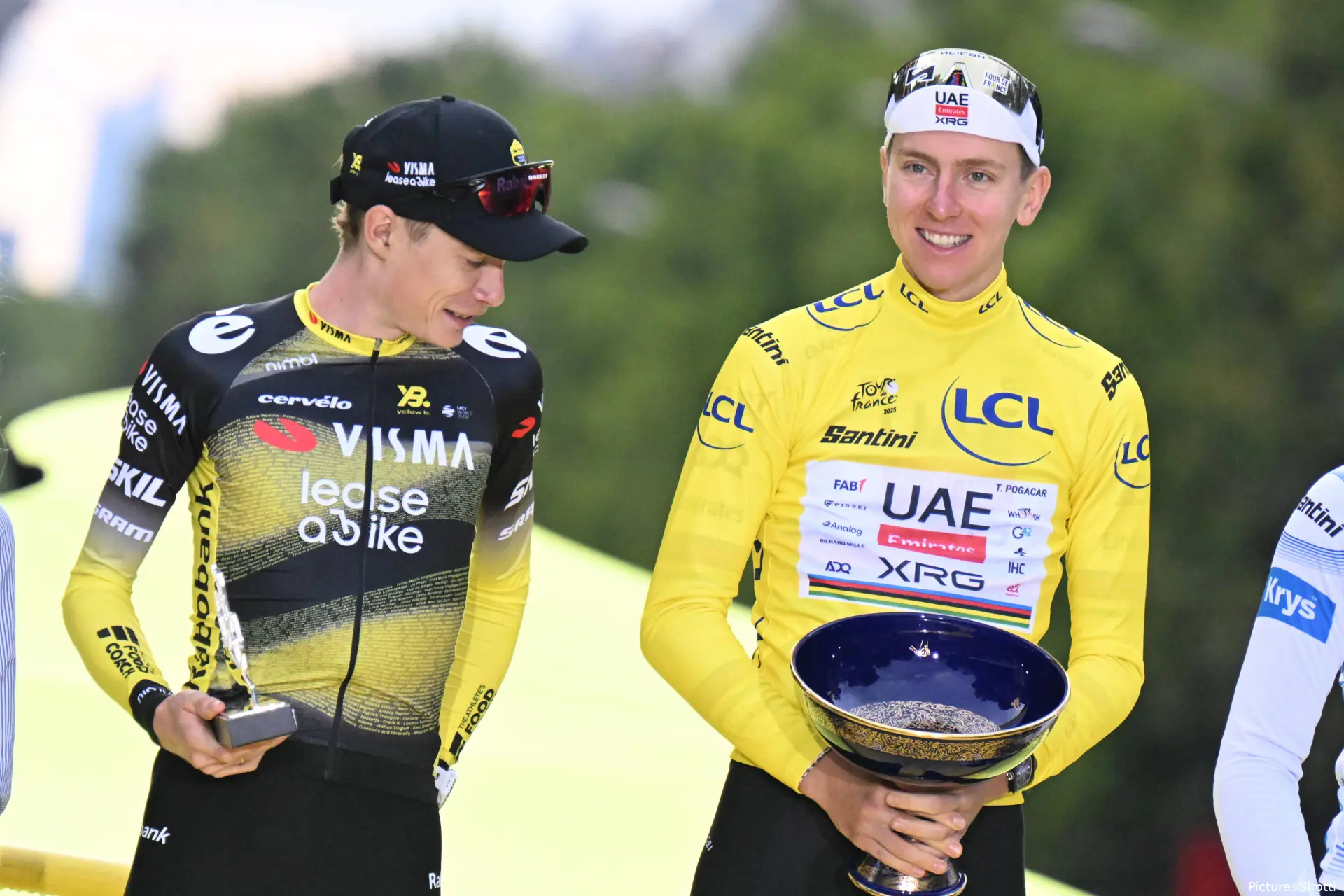
Now that the emotions of this unforgettable
Tour de France have settled, and after a spectacular, unconventional final
stage in Paris, today’s discussion article takes a step back to reflect on the
race as a whole. Beyond the winner and the key moments, our focus is on the
performances of the riders who make up the so-called “Big Six” of modern
cycling: Tadej Pogacar, Jonas Vingegaard, Remco Evenepoel, Primoz Roglic,
Mathieu van der Poel, and Wout van Aert.
These riders faced high expectations before the
race began. The biggest stars are always the ones under the most scrutiny and
pressure, and their performances never leave anyone indifferent. So the
question now is: Did they meet those expectations? How did their performances
compare overall? In today’s discussion article, we are collecting our writers’
opinions on this topic.
Rúben Silva (CyclingUpToDate)
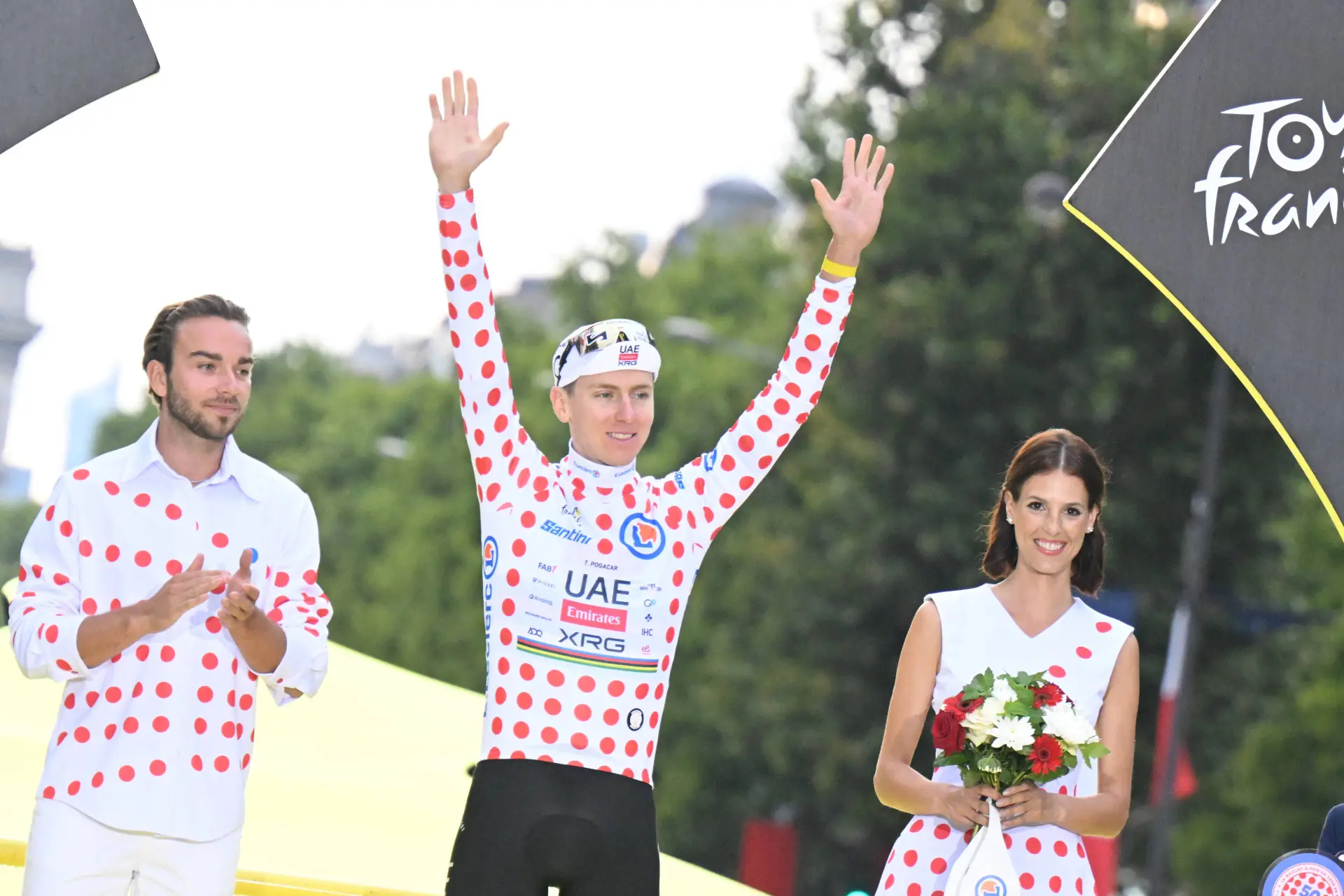
Tadej Pogacar was the dominator of the race as expected. A very exciting rider but one whose dominance does at times kill the excitement from a race. He raced more conservatively and calmly in this Tour and effectively it did work. He was the strongest climber and he did not have a single bad day on the bike, which means that the Slovenian in regular conditions continues to be completely unbeatable.
Jonas Vingegaard was at the strong level that he hoped for, but a few bad days (time-trial and Hautacam) saw him lose almost four minutes. With such a fatiguing race, the "intrigue" on whether Pogacar would crack or not meant that until stage 18 the Dane provided us with the small chance of the race being overturned.
His Mont Ventoux and Col de la Madeleine performances were stellar, some of his very best, but against such a rival there simply wasn't anything that could be done. He and Visma attacked for three weeks straight trying tactics to take time on Pogacar which did ultimately make the race more interesting than it would've if Vingegaard was settling for a (quality) second place.
The GC battle in the places behind was a good one and enjoyable. Florian Lipowitz cementing himself as one of the Top5 Grand Tour riders of the moment; Oscar Onley a brilliant revelation and becoming one of the riders to eye in the future for other Grand Tour podiums; Felix Gall getting a much much deserved Top5 as a pure climber who gave it his all and created entertainment; Tobias Johannessen, Kévin Vauquelin and Jordan Jegat providing consistent races and proving themselves as Grand Tour riders; Primoz Roglic's calm mood and last-week raid attempts that provided us with some entertainment in an otherwise UAE-brutalized race and of course Ben Healy who in several days gave us a healthy dose of GC action.
Remco Evenepoel's demise from the race was understandable due to everything that has happened this year but I do understand the bad consequences that came from it and how it may impact Quick-Step quite a bit. Ultimately, even if he had stayed in the race and potentiall won a stage later on, it wouldn't have changed much as he had already achieved this.
In the KOM classification I must say I HATE how the organizers refuse to change the points system and we've had Pogacar winning the competition with Vingegaard second whilst none of them were even trying to win or compete it it. In the points standings Jonathan Milan was the expected and worthy winner, it was fresh to see Lidl-Trek so commited to holding off breakaways in the final week to net every single point they could. Although again, if Tadej Pogacar wanted to win this classification he could've easily done it, but there was 0 effort to try and get it in the end.
Mathieu van der Poel was incredibly good and made perfect use of the first start to the Tour in 4 years that suited him. Winning a stage, spending days in yellow, getting the yellow jersey back with a destructive breakaway on stage 6; going on a "pointless" breakaway on stage 9 that made for a top-notch story for his teammate Jonas Rickaert and gave a lot of excitement to an otherwise boring stage; his battle with Wout van Aert on stage 11...
He gave it his all for our entertainment. And Wout van Aert's victory on the Champs-Élysées was brilliant, ending the race on a very bright note with an incredible attack on Montmartre - a climb that was very quickly become one of my absolute favourites in the world of cycling, and hope to see much more often.
Read also

Félix Serna (CyclingUpToDate)
The so-called Big 6 is a very select group of
riders. And it is so select, because if you want to form part of that group,
you need to be good, very good. The six members of that group have earned the
right to be there. Whether you like it or not, each of them is unique and irreplaceable.
But it's difficult to directly compare these
riders. While four of our selected group of six are GC specialists, they each
bring different characteristics to the table. Some thrive in time trials,
others in high mountains. And beyond their physical profiles, we also need to
consider their form during the Tour and, just as importantly, the expectations
that surrounded each of them before the race began. Thus, I will try to analyze
their respective performances independently. Let’s start.
The first name in the list had to be none other
than Pogacar. The Slovenian superstar was simply at his level. Some may argue
that he had an underwhelming performance because he should have won a couple
more stages, but Pogacar just did what he had to do: winning the Tour. That was
his main goal, and he met it, so there is little to criticize about Pogacar’s race
this year.
His peak moment was at Hautacam, where he
delivered one of the most memorable performances I have ever witnessed. From
then on, I believe his form dipped, but it was high enough to remain as the
best rider in the Tour. Despite what critics may say, Pogacar never showed a
moment of weakness throughout this Tour, a remarkable feat in a three-week
race. In fact, even in his previous Tour victories, he had brief lapses or off
days.
Vingegaard was, for me, one of the surprises of
the race, and not necessarily because of his performance, which was in line
with expectations, but for other reasons. He showed a different side off the
bike, especially in his dealings with the press. He was more vocal and
ambitious than usual, making statements where he was showing confidence in his
ability to turn the situation around when he was more than 4 minutes behind
Pogacar. This is not something we’re used to hearing from the typically
reserved Dane.
The other surprise was the way his team raced.
Visma knew Jonas was not on Pogacar’s level this year, but they still tried
everything, not just on the big mountain stages, but even on flat terrain. Pogacar
and Vingegaard have coincided in 5 Tours, and I had never seen such an aggressive
and ambitious Visma team before this year.
Another aspect that really caught my attention
was Vingegaard’s improved explosiveness, something that was already hinted at
in the races leading up to the Tour, but became more evident during the race
itself. Even more intriguing, though, is the psychological battle that seems to
be developing between him and Pogacar.
My impression is that Jonas is quite
affected by the mental side of this rivalry (perhaps more than Pogacar is), and
he knows he can’t afford to be intimidated by Pogacar’s dominance. We saw a
glimpse of this during the stage to La Plagne, where it felt like he was trying
to play mind games and even sabotage Pogacar’s stage win. That kind of move is
something we hadn't really seen from him before.
As for Evenepoel and Roglic, the other two GC
contenders in this list, they had less presence in the race than in previous
editions. Remco Evenepoel’s Tour was defined by his disastrous Pyrenean
triptych, with Hautacam marking the beginning of the end. It’s still unclear
whether his collapse was due to illness, mental fatigue, or poor preparation,
but one thing is certain: Remco is not yet on the level of Pogacar or
Vingegaard. Whenever he shares the road with those two, a podium should be seen
as the realistic goal. This year, he failed to achieve even that, although he
did manage to win a stage.
Evenepoel may need to rethink his approach to
racing. At Soudal-Quick Step, he has never been surrounded by a team truly
built around him, though his move to Red Bull could change that. The Giro or
Vuelta seem like more plausible targets in the medium term, but I get the
feeling the Tour de France will continue to be a difficult challenge for him in
the coming years.
The problem is this: Remco is too talented to
be reduced to just a stage hunter, but he’s also clearly a level below the
sport’s two biggest stars. He finds himself in the middle, and in cycling,
that’s rarely a good place to be. However, I have the feeling that Remco is
sometimes underrated by the media and the fans. The man is just 25 years old,
and he has already won one Grand Tour (La Vuelta a España), together with the
Olympics TT and road race. He ended in the podium of the Tour de France, and has
won tons of stages in his career. If Evenepoel were also able to beat Pogacar
and Vingegaard, he would be the undisputed goat at this point.
As for Roglic, I have the feeling that he was a
victim of his team’s weird strategies. Primoz finished in 8th
position, but he had the legs to have finished higher in the general classification.
However, Roglic was never really seen helping Lipowitz in the mountains. He
tried to be in several breakaways, but he never had an impact on the race that
favored the German.
All in all, it was a weird Tour for the
Slovenian. Out of every Grand Tour race that he has completed so far in his
career, this was the only edition where he didn’t obtain a single stage win.
This statistic illustrates the magnitude of everything Roglic has achieved.
To wrap up the analysis, we have the two great
classics specialists: Van der Poel and Van Aert. One made headlines during the
early part of the race, and the other, during the last day in Paris.
Van der Poel seized the opportunity the Tour
gave him, with opening stages that suited his characteristics perfectly. This
was, by far, his best Tour de France to date. It’s true that the race had
become somewhat of a curse for him in recent years — and, in a way, it still
is, as this edition saw him battling a poorly timed bout of bronchitis. But up
until his withdrawal, he was one of the most aggressive and visible riders in
the peloton, proving he’s far more than just a one-day racer. Brilliant
from Van der Poel.
As for Van Aert, I have mixed feelings. It is
becoming increasingly clear that he is already past his best form, but his
performance in Paris silenced many critics. For a moment, I thought I was watching
prime Van Aert, dropping Pogacar in an explosive climb, and winning a stage in
the most prestigious scenario in the world. But looking at the big picture, Van
Aert’s version in the overall Tour was not that good.
His performance in the mountains was
disappointing. He was always the second Visma to get dropped (usually after
Affini), and he could never become a pivotal piece in Visma’s strategies. I don’t
think a prime version of Van Aert could have changed the outcome of the race,
but surely it would have helped Jonas in many ways.
That concludes my analysis of the so-called
“Big Six.” I could have assigned individual ratings to each of them, but that
would probably not be fair. Beyond the big names, I’d also like to give special
mention to riders like Florian Lipowitz, Oscar Onley, Felix Gall, Quinn
Simmons, Ben Healy, and Jordan Jegat. They were among the most entertaining and
aggressive riders in the race, bringing energy and unpredictability to many
stages. And who knows… maybe someday we’ll be adding Lipowitz to the ranks of
the Big Six. He’s certainly a rider with immense potential, and, at the moment,
no clear ceiling.
And you? What are your thoughts about what
happened today? Leave a comment and join the discussion!
Félix SernaCycling Journalist
Félix Serna is a writer at CyclingUpToDate and has been part of the team since 2025. He covers professional cycling across both the men’s and women’s calendars, with a focus on UCI rankings, race developments, and rider performance. His work includes interview-based reports, liveblogs, and tournament coverage designed to provide clear, accurate context throughout the season.
In his reporting, Félix regularly uses ProCyclingStats for results, statistics, and historical reference. He places strong emphasis on careful sourcing, editorial accuracy, and updating articles promptly when new, verified information becomes available. He holds a bachelor’s degree in International Studies.
claps 14visitors 4
Just in
Popular news
Latest comments
- The article makes it sound like a great thing and something to be applauded. The reality is is gives the Americans another 6 years to fleece European cycling fans or force them to hunt around Europe with VPN’s for free feeds. Not something to be celebrated in my book. Before someone points out that coverage of this depth costs money, yes, I agree but not £30+ per month a fee I will wager will gradually increase now this deal has been cemented.Paul53119-10-2026
- Great. Thrilled. (Satire) Oh, how I miss the days of GCN. Still wear my GCN hoodie with pride.anonymouscyclist19-10-2026
- You could also look at it another way. How many riders have had better or more consistent results since the Tour?Jumpyjohn19-10-2026
- Whilst I love Tadej (and Remco, who deserves to be mentioned here, too), @JumpyJohn makes a valid point, and he isn’t wrong @MajorPayne. It is a fact that today’s official broadcasters of cycling struggle to keep our attention once the likes of Tadej (or Remco) attacks at ~80km or so. In the 142nd issue of Rouleur, Ned Boulting reflects on the often stressful paradox of commentating on a race that is effectively over before the broadcast window even hits its stride. In this edition, he centres on Remco’s 1hr solo at the Challenge Mallorca this year, and captures the panic and dread shared by the commentators when a dominant rider kills off the racing tension early. I recommend you read it, it’s a fascinating insight into the world of commentary, and the true viewing figures of today’s cycling. I must add here, I love Tadej and Remco, but I would be lying if my heart rate wasn’t higher when watching the World Championships this year. And I’m sure Rob Hatch would say something akin regarding his commentary!anonymouscyclist19-10-2026
- The shattered women’s marathon record was clean and highly surprising and then a few months later the athlete was very positive in another test for something not taken by mistake when recording far less impressive results. Sounds to me like the problem is still the age old one, detection is often way behind. Just like with crime, it’s not because you can’t catch the criminals that you aren’t aware of the crime.Jumpyjohn19-10-2026
- Listen, you have a point but on the other hand in cycling, once some of the riders go solo and build a minute’s gap, there’s hardly any action left to watch. Cycling is definitely not for today’s generations of accelerated viewing. Other people find skydiving or chess exciting but you can’t force everyone to feel the same.Jumpyjohn19-10-2026
- That’s a funny one. Yeah obviously he’s more aero than some but most of the aero effect at elite level is the bike. Now you have me starting to feel sorry for the guy behind him when he pulls a groupetto.Jumpyjohn19-10-2026
- Knew a World Tour promotion was coming for Ben this season. Thrilled for him, and can't wait to see what he can do at this level. Another one to watch at the TTs.anonymouscyclist19-10-2026
- It honestly breaks my heart to see this. I had a feeling this might happen over the last few years, but I kept praying it wouldn't, and that Joey would find his niche, especially back racing alongside his brother. After growing up racing alongside PH-MAS, the Pidcock brothers have always felt like one of our own, as we’ve watched them grow from Club level all the way up to PC and WT. I wish Joey nothing but the best of luck in whatever he does next, but selfishly… I do wish for him to move into the role of Q36.5 team staff.anonymouscyclist19-10-2026
- Predictable, sure! But boring??? OMG! Was Mike Tyson predictable and boring in his prime? Air Jordan? Schumacher or Senna? OMG!!!MajorPayne19-10-2026
Loading
Write a comment