DISCUSSION - Tour Auvergne-Rhône-Alpes stage 1 - Is UAE hiding something about João Almeida? Have INEOS’ tactical move backfired?
Cycling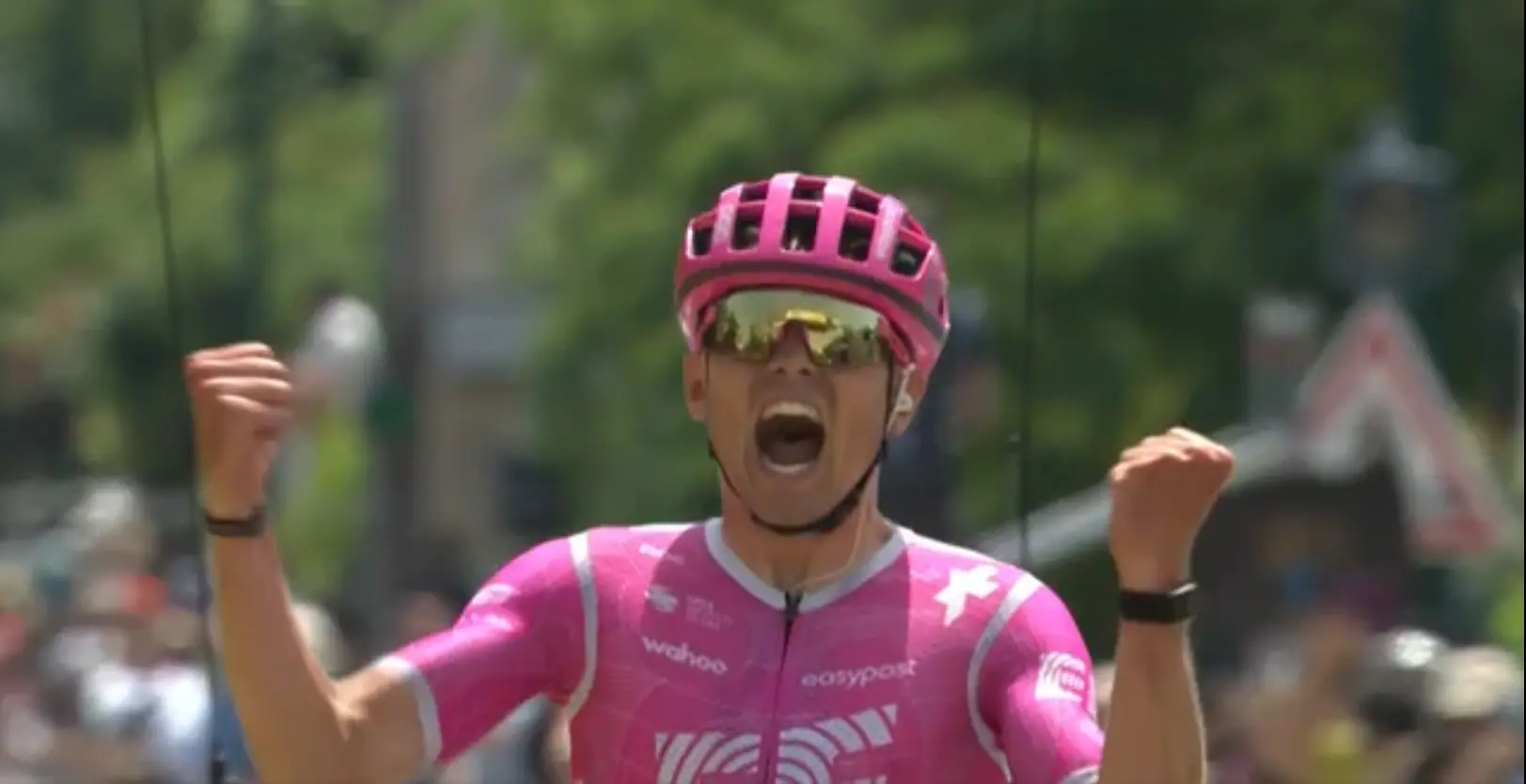
The 78th edition of the Tour Auvergne-Rhône-Alpes began in Vizille with a demanding 146,2 km route towards Saint-Ismier. Unlike many week-long stage races that ease into the action with a sprint stage or prologue, the organisers opted for a relentless climbing test from the very first kilometre.
Five classified climbs were packed into the parcours, with the decisive Côte de Rousset looming late in the stage. The 8,2 km ascent averaged 7.5% and crested just over twenty kilometres from the finish. Before reaching that climb, the peloton had already tackled the Col de l’Arzelier, Côte de Seyssins, Côte de Quaix en Chartreuse and the Col de Vence.
The difficult terrain immediately encouraged aggressive racing, with numerous riders trying to force themselves into the day’s breakaway.
Large breakaway finally escapes
After several failed attempts, a ten man move finally established itself at the front of the race. Among the initial attackers were Pepijn Reinderink and Nadav Raisberg, although both riders later dropped away on the Col de l’Arzelier.
George Bennett bridged across from the peloton during that climb and joined a group featuring Baudin, Alastair Mackellar, Raúl García Pierna, Georg Zimmermann, Mattéo Vercher, Alex Díaz, Sergio Samitier and Clément Braz Afonso.
Despite the strength of the move, the peloton never allowed the advantage to grow significantly. The pace behind remained high throughout the afternoon, creating problems for several big names surprisingly early in the race.
Almeida and Van Aert struggle as race explodes
The relentless tempo on the climbs exposed weaknesses among some of the favourites. Both João Almeida and Wout van Aert were dropped on the Col de l’Arzelier, although they initially managed to fight their way back into the peloton.
Matthew Riccitello also lost contact after struggling with illness. The American briefly returned before eventually abandoning the race later in the stage.
As the riders approached the Côte de Quaix en Chartreuse, the intensity increased even further. João Almeida and Wout Van Aert were distanced once again, but this time there would be no return. Up front, the breakaway began to split apart under the pressure of the steep gradients and the growing speed behind.
Daan Hoole took responsibility at the head of the peloton for Decathlon CMA CGM, helping reduce the advantage before the decisive final climb.
Baudin launches perfectly timed attack
By the foot of the Côte de Rousset, only three riders remained at the front: Bennett, Baudin and Braz Afonso. Their advantage had fallen to less than a minute and the peloton appeared to be closing rapidly. Baudin sensed the danger and chose the perfect moment to attack.
The Frenchman accelerated sharply on the steepest slopes of the climb, instantly distancing his fellow escapees. Bennett and Braz Afonso were unable to respond as Baudin powered away with remarkable fluidity and confidence.
Rather than fading after his effort, Baudin continued to extend his advantage over the summit. Behind him, the peloton struggled to organise an effective chase as several contenders focused more on marking rivals than committing to a full pursuit.

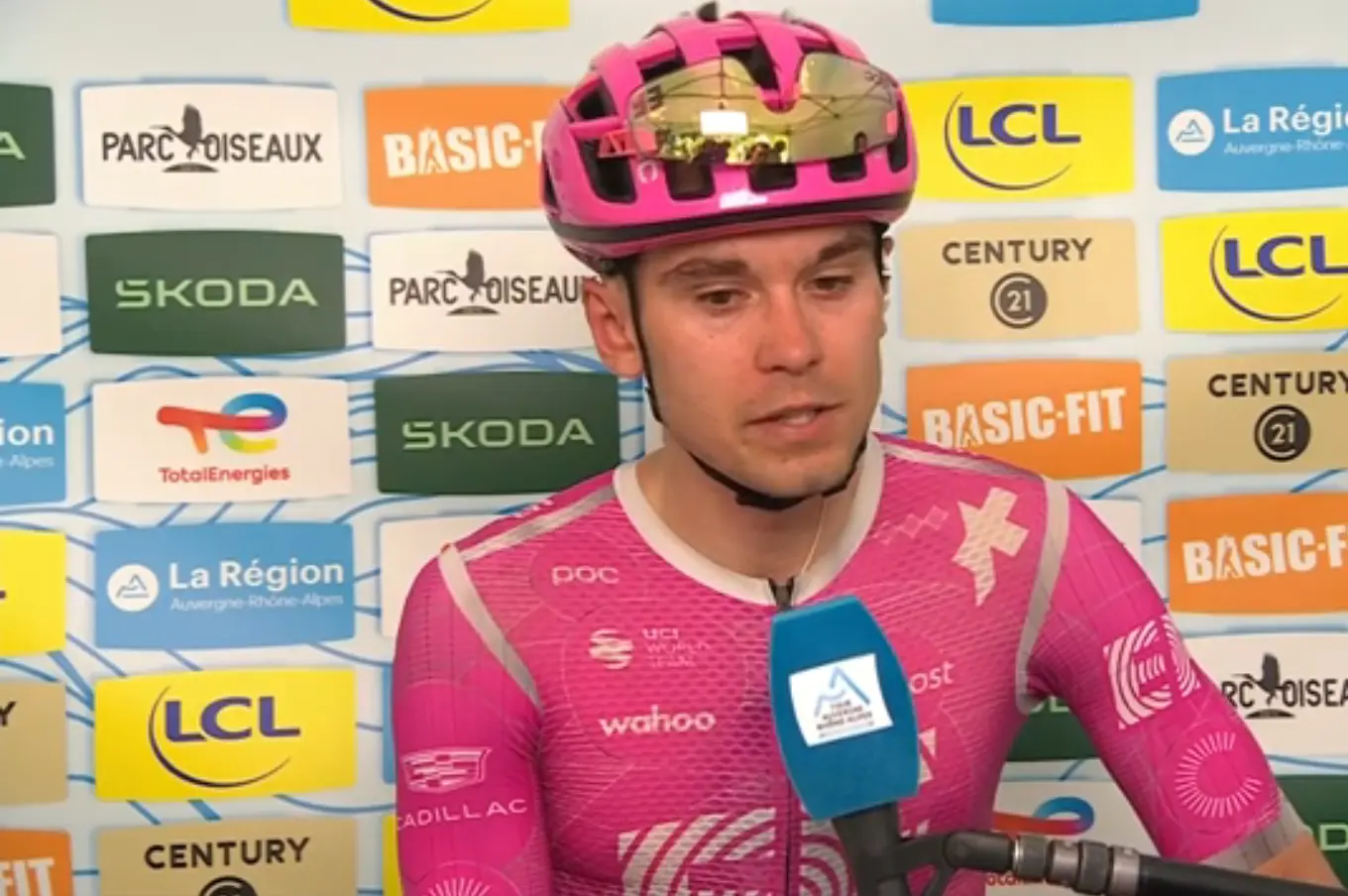
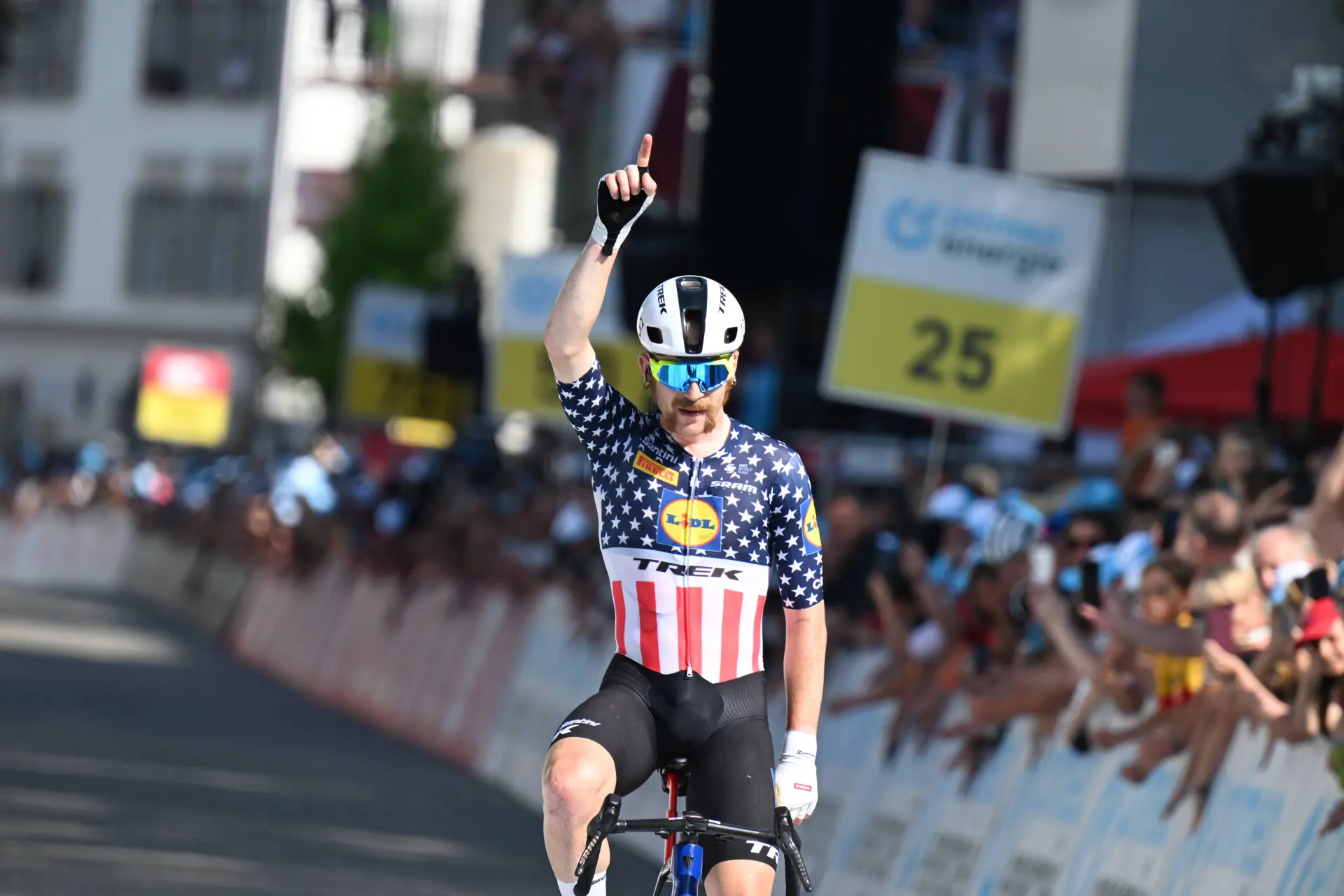
Alex Baudin attacked his breakaway companions on the final climb of the day and rode to victory in the opening stage of the Tour Auvergne-Rhône-Alpes.
A statement victory before the mountains truly begin
Baudin held his rhythm superbly on the run towards Saint-Ismier and crossed the line alone to claim a stunning victory. It was not only the first major stage race success of his career, but also a significant statement ahead of the tougher mountain stages still to come.
While the pre-race favourites remain firmly in contention overall, the opening stage already revealed cracks in several teams and underlined how demanding this year’s Tour Auvergne-Rhône-Alpes could become.
For one day at least, however, the headlines belonged entirely to Alex Baudin, the French outsider who transformed an early breakaway into the finest moment of his career.
A finale that made little tactical sense for UAE and INEOS
After the finish of the stage, our journalists shared their opinions on what unfolded on the road. Rúben Silva of CyclingUpToDate began by saying: It was a stage in which all logic pointed towards Paul Seixas attacking, but perhaps we lost sight of what 'real' cycling is in most days - a race to preserve energy, not one where the GC men go all-out everyday, as we've gotten used to in this modern era.
I did expect Decathlon to launch the Frenchman in a climb that looked to suit him to perfection today, but I do think there's logic in not trying to spent the entire eight days in a position of high tension and perhaps with media and podium duties on the daily.
However what I did not understand was Decathlon and UAE's tactics towards the end. Alex Baudin, from the breakaway, took a strong win, the biggest of his career and a much deserved triumph. The EF rider benefited from a 'hot potato' scenario behind in which no-one actually looked to attack the race seriously.
What boggles me is that both Decathlon and UAE looked to save energy but did not. Because in the final kilometers an attack sparked by Luke Plapp and in which INEOS duo Oscar Onley and Kévin Vauquelin were present, an despite the group having 10 riders, Seixas and Del Toro both stayed in the wheels and did not react. The idea was to save energy, that is more than clear.
But that backfired, they did, as both riders in the end were both attacking and sprinting to the line, limiting losses from an attack that they didn't have to chase if they just followed the wheels on flat roads. A bizarre situation to see the two men at a certain point 30 seconds back, both with teammates in front who are not given GC contenders.
I'm not sure what the thought process was, specially taking into consideration the stage win was long gone.The loss was limited to 12 seconds which in the end of the race will probably mean nothing, but the fact that both riders had to spend so much in that finale, a flat finale, was a rather reckless set of decisions.
A controlled stage, but clear signals for the GC battle
Meanwhile, Jorge Borreguero of CiclismoAlDía gave his opinion on the opening stage of the race: I think the stage delivered more conclusions between the lines than major headlines.
Alex Baudin’s victory was extraordinary because of the way it happened, surviving a very demanding breakaway and taking advantage of the hesitation among the favourites, but if I focus solely on the general classification contenders, the rider who impressed me the most was Isaac del Toro.
He didn’t gain time or launch attacks, but he conveyed a sense of control and maturity far beyond his age, always perfectly positioned and never forced into unnecessary efforts. Juan Ayuso and Paul Seixas also came out of the stage with their reputations strengthened.
The Spaniard overcame a puncture at a delicate moment and gave the impression that he is ready to compete on equal terms with the very best despite his recent inactivity, while the Frenchman handled well the pressure of racing as one of the major favourites, although perhaps his team spent too much energy for what ultimately turned out to be a rather limited result.
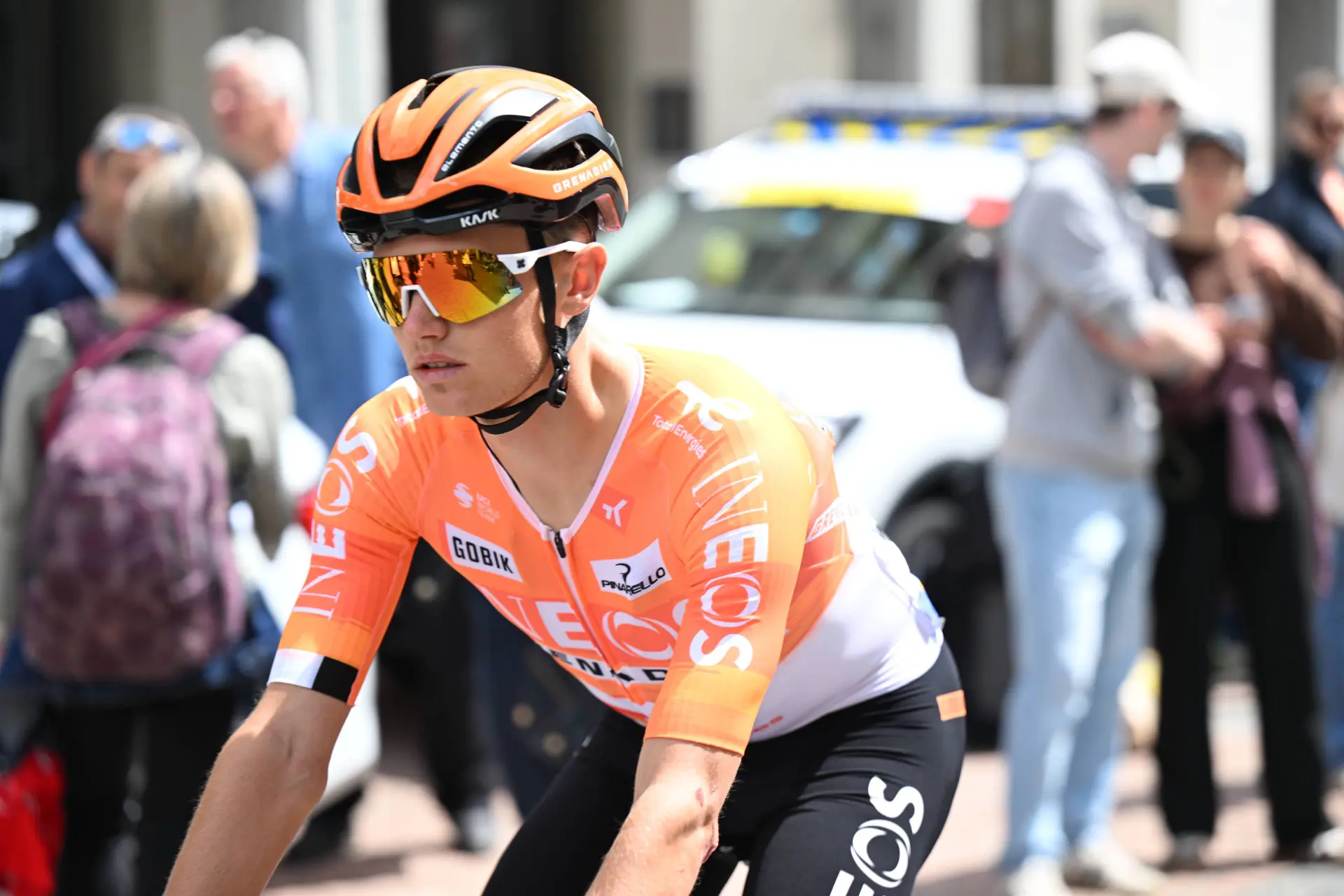
The team that truly took advantage of the finale was INEOS, with the moves from Kévin Vauquelin and Oscar Onley making them the only squad that tried to turn a relatively controlled day into an opportunity to gain a few seconds.
On the less positive side, the struggles of João Almeida and Daniel Felipe Martínez suggest that both are still far from their best level. So, if this opening stage is enough to establish early trends, my feeling is that Del Toro emerges as the moral winner of the day. The general classification barely changed, but the image he projected on the bike was that of a rider who seems to have everything happening around him completely under control.
Something still doesn’t look right with Almeida
Carlos Silva of CyclingUpToDate said he was hardly surprised by João Almeida’s lack of rhythm, with the Portuguese rider already showing signs of difficulty on the first climb of the day when the peloton slightly increased the pace.
The Portuguese cyclist returned to racing after a disastrous appearance at the Volta à Catalunha, which ultimately forced him to stop racing, as Almeida admitted that something was wrong and that he did not know exactly what was happening to him. But I leave the question open. Has whatever he was dealing with truly gone away?
After all, he claimed he was feeling better. He would not go to the Tour de France because he did not feel capable enough. Yet he arrives at the start line of the Tour Auvergne-Rhône-Alpes with exactly the same physical limitations he showed in Spain. What are he and UAE Team Emirates - XRG hiding that they do not want people to know?
It already looks clear that he is set to endure a week of suffering and will offer little help to Isaac del Toro in the mountains against riders such as Juan Ayuso, Oscar Onley, Matteo Jorgenson, Kévin Vauquelin and Paul Seixas, and if things continue like this, his participation in the Vuelta a España will remain nothing more than a distant dream.
As for the race itself, it was a victory for the breakaway, and I do not think it will be the last one of the week. The teams fighting for the general classification did not launch any serious attacks, although we did see Netcompany INEOS and UAE Team Emirates - XRG spending energy. Whether it was part of their strategy or not, they were moves that ultimately made no real difference on the road.
Results powered by FirstCycling.com
Mixed impressions on opening day
In the end, the opening day may not have delivered explosive attacks among the main favourites, but it still revealed important truths about the balance of power within the race. Isaac del Toro once again looked like the most composed rider among the contenders, riding with calmness and authority even when UAE Team Emirates - XRG found themselves tactically exposed in the finale. At the same time, INEOS emerged as the squad most willing to take risks, with Kévin Vauquelin and Oscar Onley proving that even a controlled stage can become an opportunity to apply pressure and force rivals into uncomfortable situations.
And you? What did you make of the stage 1 of the Tour Auvergne-Rhône-Alpes 2026? Tell us your thoughts, share your opinion on all the key moments and incidents from the race, and join the discussion.
Carlos Silva is a writer for CyclingUpToDate.com, where he contributes race reports, interviews, analysis pieces, and live coverage of the international cycling calendar. Holding a degree in Sports from the Jean Piaget Institute, he combines academic knowledge of performance, training, and competition with hands-on journalism experience in professional cycling.
Throughout his career, Carlos has conducted interviews with leading figures in the sport, including Alberto Contador, Joaquim Rodríguez, Óscar Pereiro, João Almeida, Isaac del Toro, Derek Gee, John Degenkolb and Geraint Thomas. These conversations reflect direct engagement with Grand Tour winners, Classics specialists, and emerging talents.
He has provided on-site coverage at major events ranging from the Vuelta a España to the Tour de France, alongside stage races such as Vuelta a Andalucía, Volta ao Algarve, Volta a Portugal and O Gran Camiño. Covering the mythical climbs of the Giro d'Italia remains one of his professional ambitions.
Carlos is responsible for liveblog coverage of all major WorldTour races and beyond, including the Tour de France, Giro d'Italia and Vuelta a España. His reporting integrates verified data from ProCyclingStats to ensure statistical accuracy, contextual depth, and analytical precision.
A lifelong cycling enthusiast, he approaches storytelling across written, photographic, and video formats with a focus on credibility, tactical insight, and informed race interpretation.
claps 11visitors 8
Just in
Popular news
Latest comments
- lol maybe a better questionmij09-10-2026
- Does Ineos?Mistermaumau09-10-2026
- ThanksMistermaumau09-10-2026
- It depends on your religion or opinion of science but if you feel he did the right thing I suggest you go complain to guys like Mohorič, Mas, etc. for reminding him not to try to copy Senna too much.Mistermaumau09-10-2026
- yeah that was poorly written, but Gulio was in the pink, and they didn’t work for him to protect the jersey. they let a group get up the road. the transfers are out of hand. what is a contract for?mij09-10-2026
- does he make it two years?mij09-10-2026
- A lot of things should not be happening but everything seems to be getting worse, not just in cycling or sport or professional surroundings. People are abandoning (common) standards in their belief they are only responsible towards themselves and have lost the ability to care, consider or understand consequences for others. If you ride , you should have noticed by now. I’m not one to stick to rules per se but when, I don’t go round aggressing or criticising others who don’t either. On the bike you constantly get hooted, harassed, insulted or nudged off by drivers who broke at least double the number of rules you did before they point yours out. That said, I haven’t seen many specifics on this case yet so I’m not going to comment specifically, for now. If anyone knows more…Mistermaumau09-10-2026
- it is crazy. is this UAE at the end of Tadej’s reign? it happens!mij09-10-2026
- Not *all* Remco's wins have been without Tadej around. Tadej has beaten Remco in 2 direct head-to-head TT encounters, but the rest, with both present, Remco has taken the crown. If we're going to state facts, let's be accurate and give Remco credit where it is due, that man is often unbeatable in a TT.anonymouscyclist09-10-2026
- For sure those two won’t be making a break as a duo :-)Mistermaumau09-10-2026
Loading
Write a comment