"The magic of the sport lay in that sprint": Visma's trainer explains the reconstruction of Wout van Aert for Paris-Roubaix
Cycling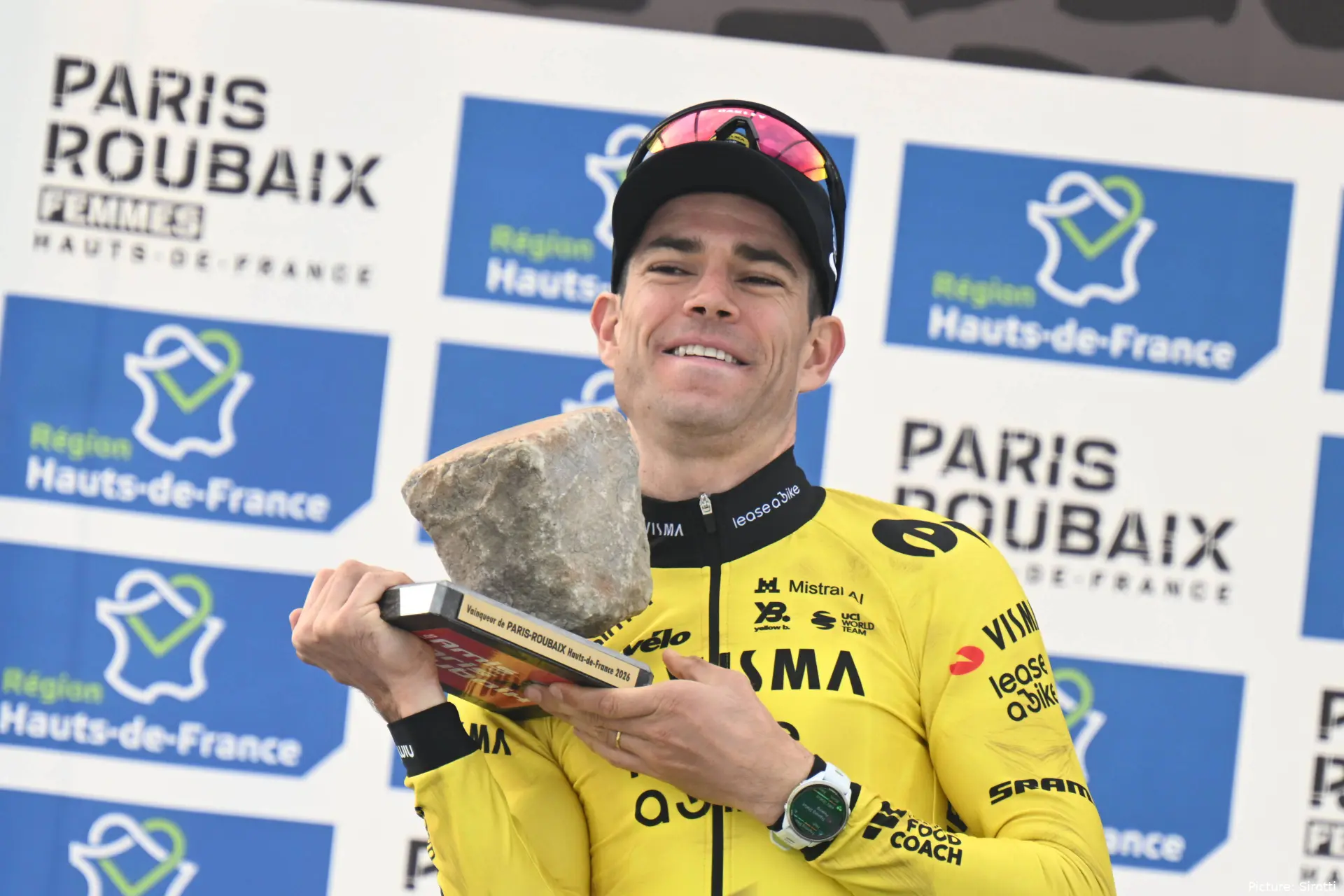
Wout van Aert's historic victory at Paris-Roubaix this spring stood out as one of the most impressive and emotional moments of the cycling season, finally filling a major gap in his classic palmarès. Behind this win was a complex mix of physical reconstruction and mental visualization, as revealed by his trainer Mathieu Heijboer.
After a difficult 2025 season plagued by injuries that ruined his fitness and cost him his explosive sprint, Van Aert managed to complete an uninterrupted winter training block. This consistent preparation allowed him to surpass his previous data thresholds and deliver a powerful sprint on the Roubaix velodrome that sports science alone could not fully predict.
The intangible elements of the winning sprint
On the evening of the race, trainer Mathieu Heijboer sat down to analyze the numbers behind the victory, but he quickly realized that data could only explain a fraction of the performance. Van Aert unleashed a final acceleration that defied recent trends in his performance profile. "Not everything can be captured in data, but the sprint he produced was something he hadn't done in years. In my view, that cannot be explained by training alone," Heijboer said in an interview.
The trainer emphasized that the finish was a powerful manifestation of the athlete's career history and the psychological pressure of repeatedly missing out on his biggest goal.
"The magic of the sport lay in that sprint. It was a consequence of everything that was compressed at that moment. The fact that Wout wanted to win so badly, that it had so often just not worked out, that he had pre-visualized when he would start the sprint if he got into that situation... There was so much history behind it," Heijboer explained.
Read also
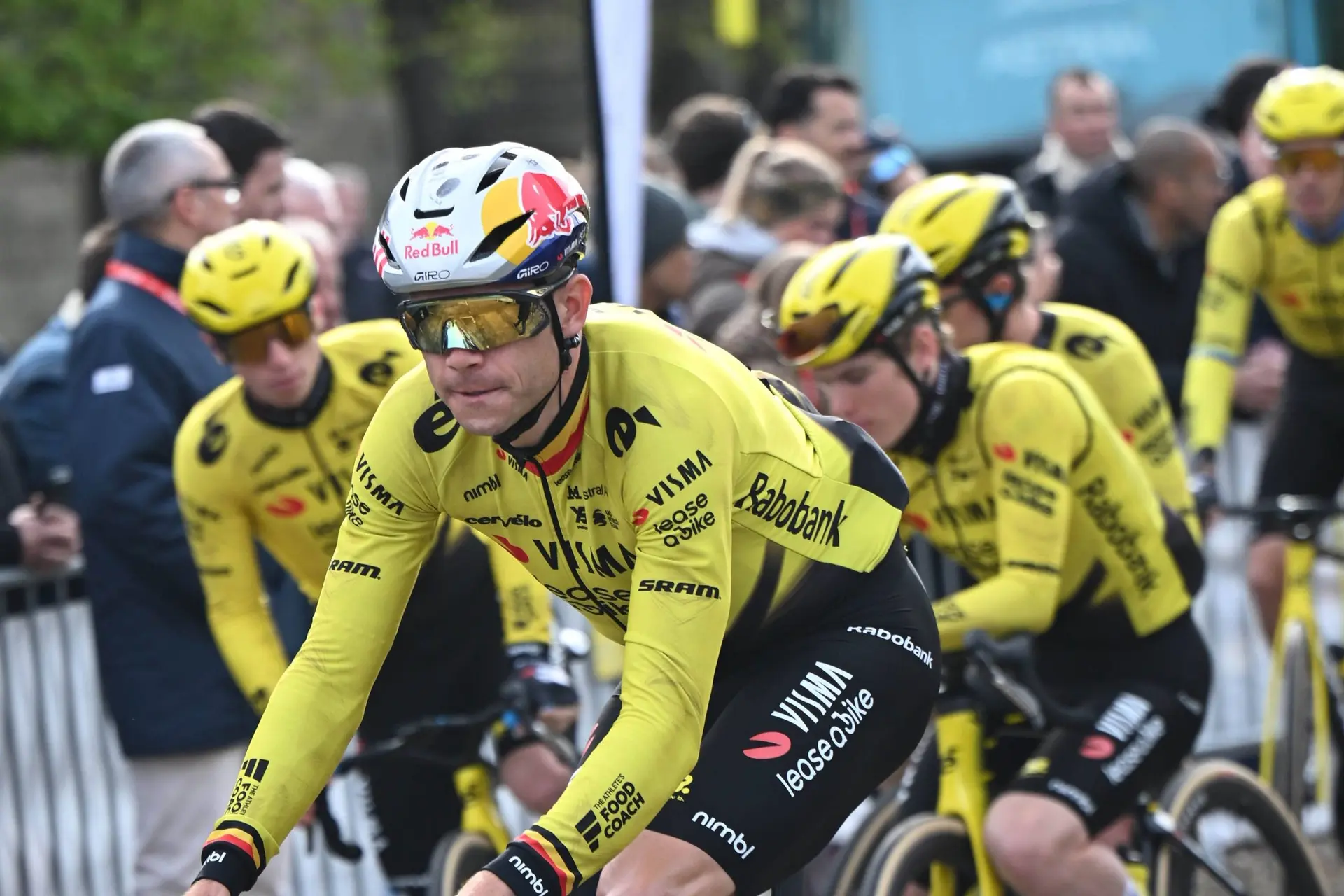
This triumph came after an incredibly challenging period of physical setbacks that took a massive toll on Van Aert, requiring an immense amount of work to overcome. "It is difficult to state how far Wout had to come due to those setbacks. Looking purely at the data, the 2025 Amstel Gold Race was one of his best performances ever. Comparable to the 2023 World Championships in Glasgow when he finished second behind Mathieu van der Poel," Heijboer noted.
Despite that specific peak performance, the underlying problem during the previous season was a complete inability to stack high-level training and racing blocks together without interruption. "What he missed last season was the accumulation of performances; improving again from training. That is incredibly difficult when the basis is missing. Therefore, his sprint at the end of a hard race was no longer as strong. He had lost explosiveness, and it takes time to win that back," the trainer added.
The absolute low point of this physical deficit occurred at Dwars door Vlaanderen in 2025, where Van Aert was unexpectedly beaten in a sprint by Neilson Powless. "It's not that you get that explosiveness back in a few weeks. The Wout we know would never have lost that sprint against Powless," Heijboer said.

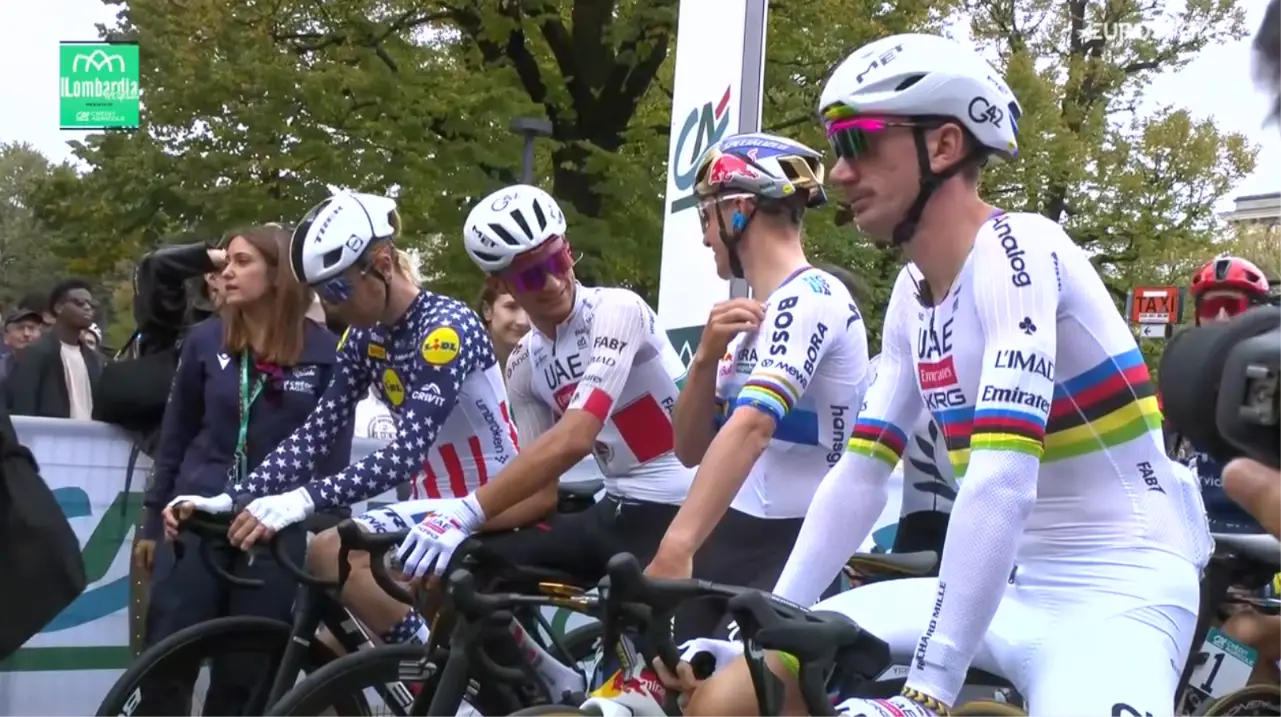
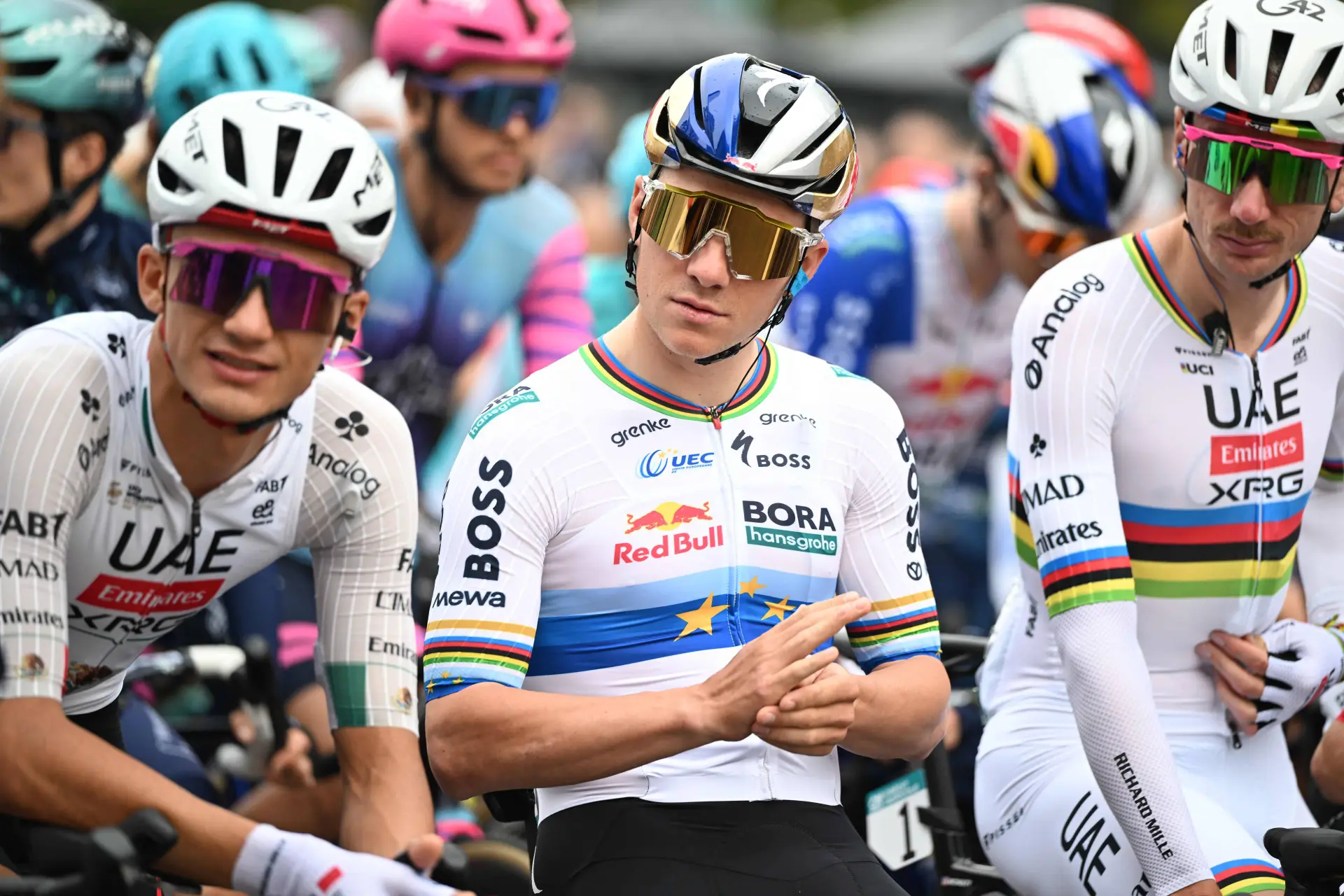
Tadej Pogacar and Wout Van Aert at the 2026 Paris-Roubaix
Rebuilding the foundation brick by brick
The path back to the top step of the podium required patience and an extended period of health. "It's really building again, laying a brick each time. And at a certain point, you've been able to train for three months without setbacks at a stretch, and then you see something happen," Heijboer explained.
With that three-month block of work secured, Van Aert's performance data began to outpace his historical numbers. "In terms of data, it's just a bit better with Wout this year, just like I see all riders making progress. It is not for nothing that it goes faster and harder overall. Even a rider like Wout, with an entire career already behind him, keeps improving."
Félix SernaCycling Journalist
Félix Serna is a writer at CyclingUpToDate and has been part of the team since 2025. He covers professional cycling across both the men’s and women’s calendars, with a focus on UCI rankings, race developments, and rider performance. His work includes interview-based reports, liveblogs, and tournament coverage designed to provide clear, accurate context throughout the season.
In his reporting, Félix regularly uses ProCyclingStats for results, statistics, and historical reference. He places strong emphasis on careful sourcing, editorial accuracy, and updating articles promptly when new, verified information becomes available. He holds a bachelor’s degree in International Studies.
claps 3visitors 3
Just in

Popular news

Latest comments
- Rather than me describing the technology at length on here, If you google. Line-scan cameras. They are also sometimes called Slit-Scan cameras. Either search will fill you in. You can read all about how they. work. Enjoy! Just to be clear the cyclist is saying he wants to see exactly where the digital finish line is in relation to the actual physical finish. At this point we only have the word of the authority that the digital line corresponds to the exact starting edge of the physical finish line. That seems like a reasonable request to me.Prorodsandstuff11-10-2026
- 100% @Jumpyjohn, good point well raised.anonymouscyclist11-10-2026
- The media keep stirring the soup.. or spitting in it
 leedorney11-10-2026
 - Yes, he has won many races... second class races. He isn't the real deal... Seixas is the real deal. Capish?PogiSloFans11-10-2026
- What are you talking about? I'm not the one you guys are spitting on. I'm a Slovenian Pogi fan, that's all... the guy you're talking about is a Croation Ustasha. Capish?PogiSloFans11-10-2026
- It would be epic if Seixas came to UAE. 3/4 of the commentators on this site would stop watching cycling... ha ha ha ha ha ha...PogiSloFans11-10-2026
- UAE's problem is Seixas wants to beat Tadej.Renz11-10-2026
- You are blinded by your infatuation with Pogi. IdT has done crazy good stuff. One of the strongest ever first three years in the peloton. poor showing in his last couple of races btu I don't think he is quite washed up yetmobk11-10-2026
- Absolutely not. The guy has finished so many races 2nd to Pogi so absolutely not a shocker that when Pogi isn't there he wins a fewmobk11-10-2026
- GOATmij11-10-2026
Loading
Write a comment