“De Vlaeminck’s remarks are unacceptable – Merckx beat him many times”: Tadej Pogacar supported in viral “overrated” debate by experienced Italian expert
Cycling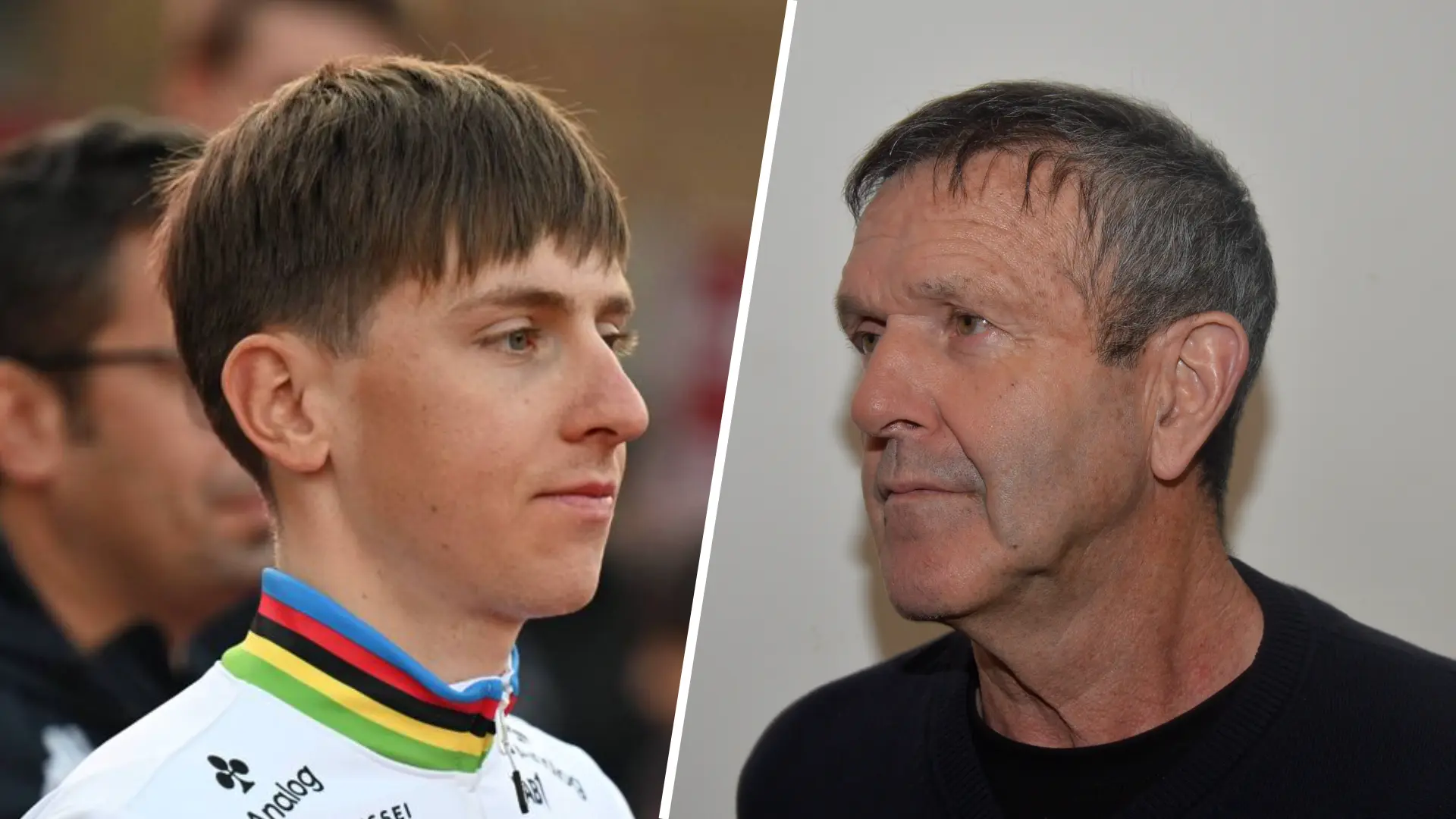
Roger De Vlaeminck’s attack on Tadej Pogacar continues to ripple through the cycling world — and now one of Italy’s most respected voices has weighed in.
Speaking to Bici.Pro, veteran journalist Claudio Gregori offered a firm rebuttal of the Belgian’s position, directly challenging the tone and substance of De Vlaeminck’s claims.
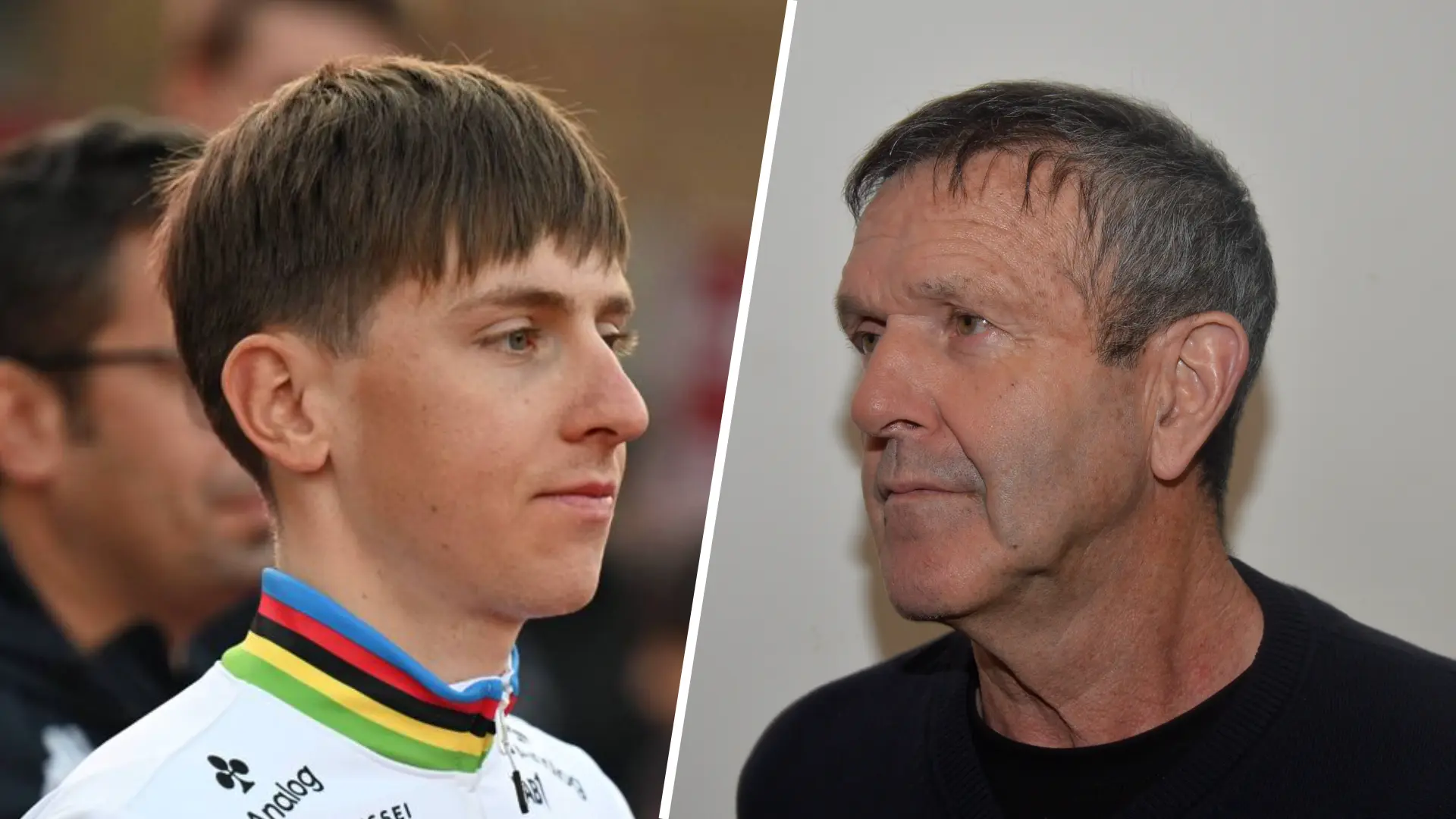
The controversy began when the 78-year-old, in a typically fiery interview with Het Laatste Nieuws, dismissed any comparison between Pogacar and Eddy Merckx. “Nonsense! Pogacar isn’t even fit to lace Merckx’s shoes,” he exclaimed. He doubled down with another sweeping assertion: “If I were 22 today and riding in the peloton with him, he wouldn’t be dropping me.”
The former Paris–Roubaix specialist also insisted that anyone questioning Merckx’s status “doesn’t know what they’re talking about.”
Gregori pushes back: “Unacceptable”
Gregori, who has covered twelve Olympic Games and decades of Grand Tours, did not hide his reaction. In conversation with Bici.Pro, he said: “De Vlaeminck’s remarks are unacceptable. Look at the riders he competed against, especially Merckx, who beat him many times.”
He argued that De Vlaeminck’s comments fail to consider the broader picture: “He is also a very different type of rider from Pogacar, but in the end he is not analysing the victories; the numbers also need to be weighed. Modern cycling is very different from theirs — everything is calculated down to the millimetre.”
Rather than choosing a side in the heat of the debate, Gregori stressed that context matters. He highlighted the difference between eras and pointed out how performance characteristics vary between riders who never competed under the same conditions.
Comparing eras without nostalgia
Gregori insisted that comparisons between Pogacar and Merckx require nuance, not provocation. “Pogacar and Merckx are two different riders who competed in different eras,” he says.
Using a simple physical comparison, he noted: “Pogacar is definitely stronger than Merckx on the climbs… Merckx, however, certainly had a more powerful engine.”
The Italian journalist emphasised Pogacar’s versatility, citing examples from his racing style rather than relying on rhetoric. He pointed to the Slovenian’s aggressive long-range attacks and exceptional consistency in the Monuments as evidence that he is forging his own place in cycling history.
“A champion of the highest order”
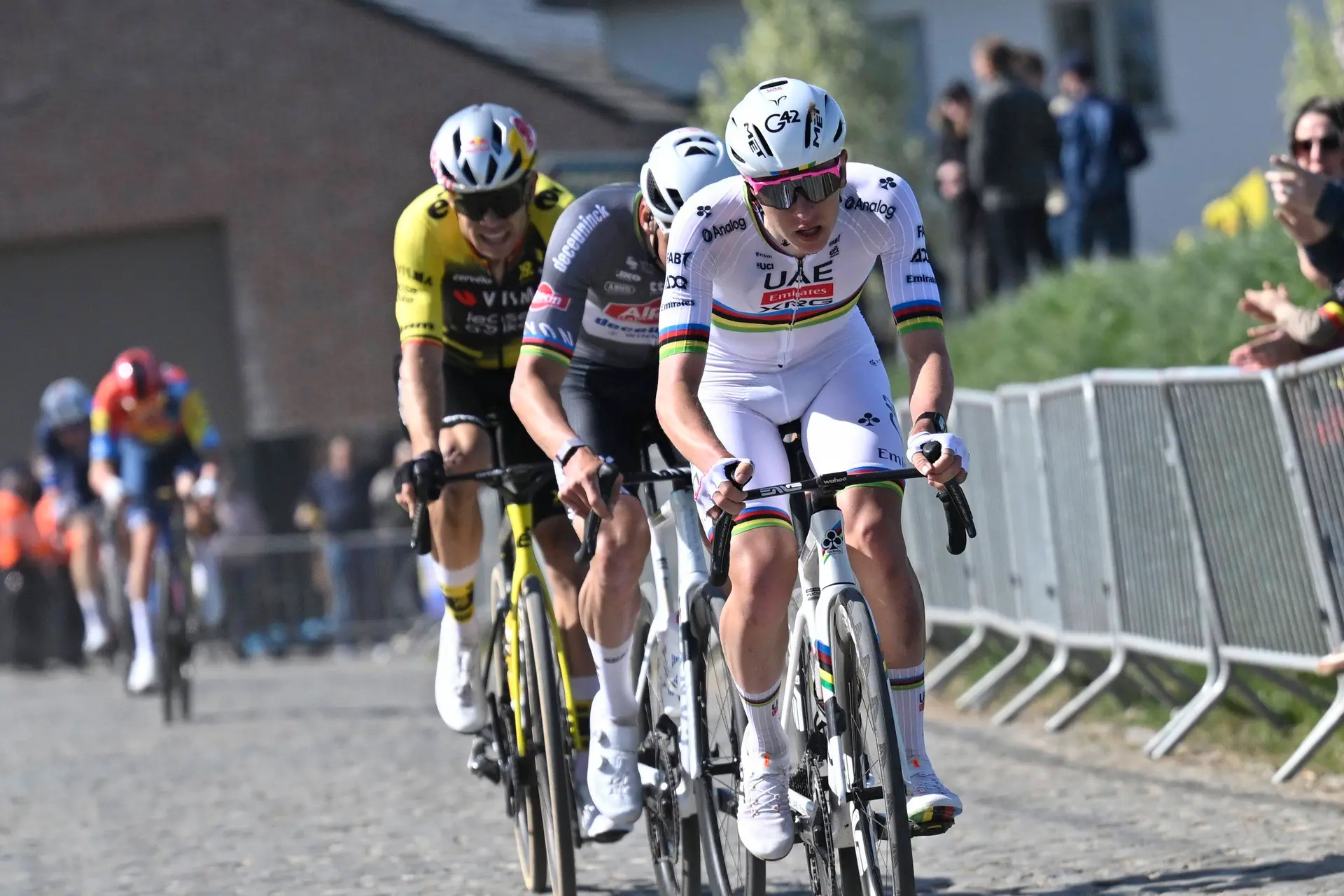
Gregori also addressed the numbers themselves — not to diminish Merckx, but to highlight what Pogacar has achieved in the modern era. “Pogacar is a champion of the highest order,” he said. “He has won 5 Il Lombardia out of 5 participations, an incredible statistic.”
He noted that even Merckx’s fabled record did not prevent the Slovenian from doing things few thought possible: “Pogacar finished second at his very first Roubaix — something unthinkable until just a few years ago.”
Gregori further argued that Pogacar’s style restores something cycling had lost: “In modern cycling it seemed impossible to excite with long-range solo attacks, yet he has rediscovered this way of racing… That’s what makes him so beloved.”
Evenepoel, Vingegaard and the rivals shaping Pogacar’s era
One common counter-argument in the De Vlaeminck debate is that Pogacar allegedly dominates without rivals. Gregori rejected that outright. “It’s not true that Pogacar has no rivals at his level,” he said, pointing to recent battles with Vingegaard and identifying Evenepoel as a major long-term threat: “He is two years younger… he has shown he can fight in Grand Tours.”
Gregori concluded by placing Pogacar’s place in history within a longer timeframe rather than in the heat of a single argument. “For now, the definition still holds: ‘Merckx the strongest, Coppi the greatest.’ But in three years, I believe that between those two we could no doubt include the Slovenian champion.”
By responding with analysis rather than provocation, Gregori’s comments provide one of the clearest counterpoints yet to De Vlaeminck’s blistering critique — and shift the conversation back toward performance, context and perspective, rather than nostalgia-driven declarations.

Kieran WoodDeputy Editor-in-Chief
Kieran Wood is a sports journalist based in Wales and has been active in journalism since 2022. He regularly contributes to DartsNews.com and CyclingUpToDate.com, where he covers professional cycling and darts. In cycling, his work includes liveblogs from major races, including the Tour de France, the Giro d’Italia, and La Vuelta a España, alongside race reports and analysis. He has also conducted interviews with professional riders.
His reporting spans the full racing calendar, from one-day classics to stage races, with a focus on accurate, real-time coverage and clear contextual analysis. For statistics, results, and historical context, he regularly uses resources such as ProCyclingStats. To support reporting on rider activity and training context where relevant, he also references Strava.
In his work, Kieran places strong emphasis on careful sourcing, editorial accuracy, and updating articles as new, verified information becomes available.
claps 3visitors 3
Just in

Popular news
Latest comments
- When will they start dropping Pogi? Oh yeah, when Pogi reaches 40+ years, that's when young cyclists will start dropping him. But until then... eat your hearts out and cry. Pogi will remain the G.O.A.T. for years to come. Capish?PogiSloFans13-10-2026
- I figure he would have found out how to outsprint Paul and take the win, maybe. He's 28 now but I would say he's right at the peak of his powers. It was great race though, Paul showed me something different about himself.awp13-10-2026
- Slowly, very slowly... 5-7 yrs. ;)MajorPayne13-10-2026
- Up to this point: "It is just not yet at the level of Vingegaard and Pogacar." First Jonas, and then level of Tadej. Period!MajorPayne13-10-2026
- The sport has long had a divide between the more diesel-like riders and the more explosive riders. Where does Pogačar fit? His explosive attacks are followed by a high speed diesel climb and he's rarely been caught in the past 5 years (people can name the moments, it's so rare). Seixas is young and we have no idea where his body will end up on this spectrum (just like we didn't with Pogačar when he was 20 and being a diesel up the Vuelta mountains of 2019). Speculation is fun, being a fan while it unfolds is going to be more fun.RidesHills13-10-2026
- yeah it'll be an epoch shift when Pog can't drop people, and/or when they start dropping him.wrsty13-10-2026
- Yes, he won't ride away yet, but he will and that day will be notable
 leedorney13-10-2026
 - Expect the young French rider to slowly asphyxiate the Slovenian into retirement.
 Front24213-10-2026
 - My thinking is that Pog's experience and strength would have outweighed any fatigue in Il Lombardia. But the sad thing is, we'll never see peak Pog (call it Pog 2) go head to head with Seixas. However well he recovers from his crash, he'll return as Pog 3, with the shadow of severe concussion always there.Hills3313-10-2026
- Some speculation and opinion. Had Tadej not crashed out of the Vuelta he would have been less fresh and I'm not sure he would have beaten Seixas in this race. Maybe he would have been able to contest the race in a sprint and maybe not. Believe me when I say I keep up with many of Tadej's climbing feats and records and I understand how great he is but the Paul we just saw at Il Lombardia was not that far behind Tadej.awp13-10-2026
Loading
Write a comment