Boonen, Cancellara, van der Poel and... Pogacar - World Champion becomes record holder at the Tour of Flanders, but can make history in 2027
Cycling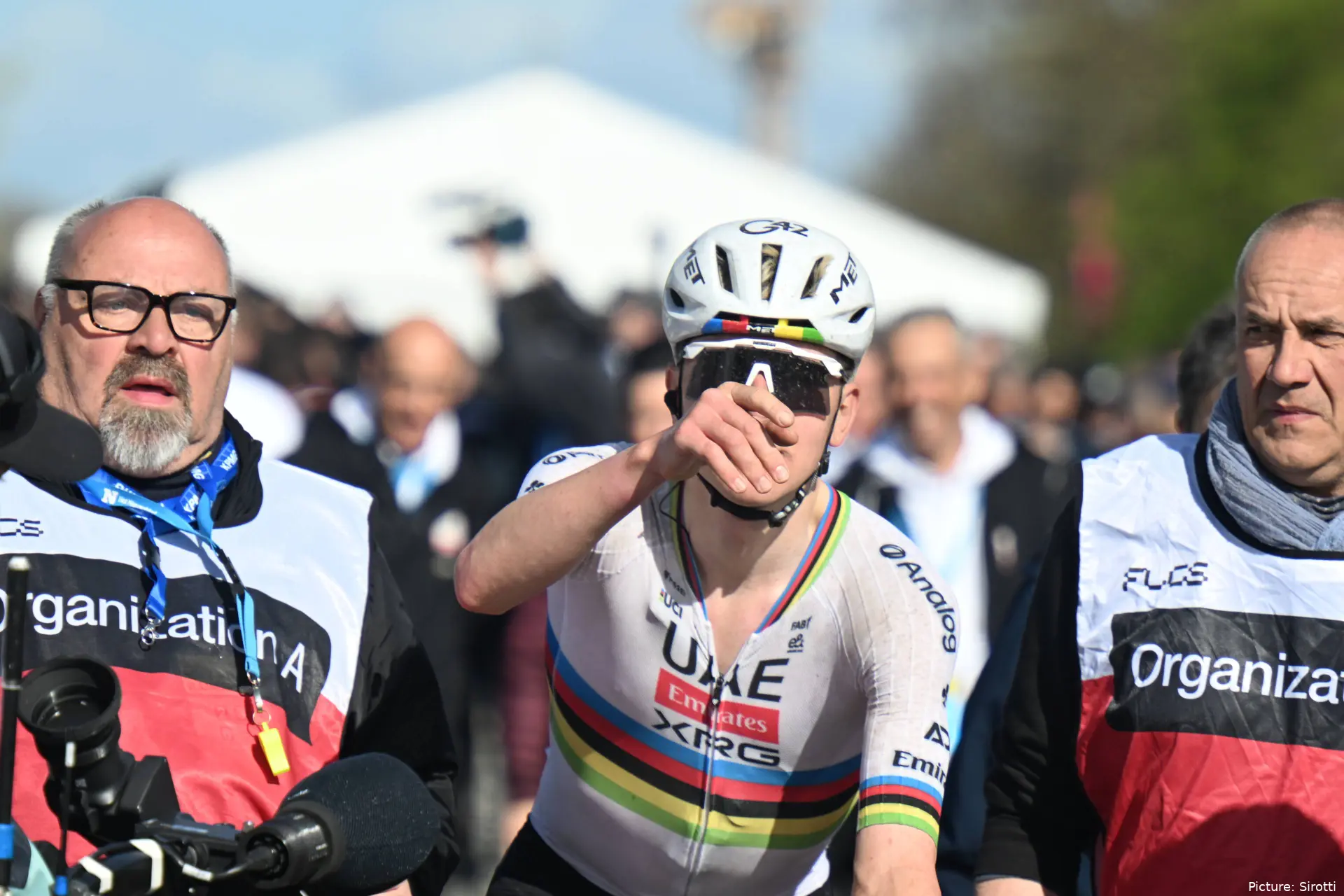
Tadej Pogacar’s triumph at the Tour of Flanders 2026 is no ordinary victory. It’s a statement in cycling history. With his third success in 'De Ronde', the Slovenian joins seven other current record holders in the race.
Matching these names is not just about reaching a number. It’s entering into a dialogue with history. In the darkest years of the 20th century, as Europe lived under the shadow of war, Achiel Buysse emerged. His victories in 1940, 1941 and 1943 speak not only of talent but of resilience in near-inhuman conditions. Buysse embodies a raw, uncompromising cycling, where simply surviving the race was already a feat.
Soon after, Italy’s Fiorenzo Magni took that epic to another level. He won three consecutive editions between 1949 and 1951, a streak nobody has matched. Nicknamed the “Lion of Flanders,” his figure is wrapped in legend: a rider able to race through injury, to suffer more than anyone to win more than anyone.
The sport evolved, and with it came more defined specialists. In the 1970s, Eric Leman embodied that transition. His three wins (1970, 1972 and 1973) showcased a rider capable of mastering the cobbles with intelligence and consistency, at a time when the Classics increasingly demanded specific skill sets.
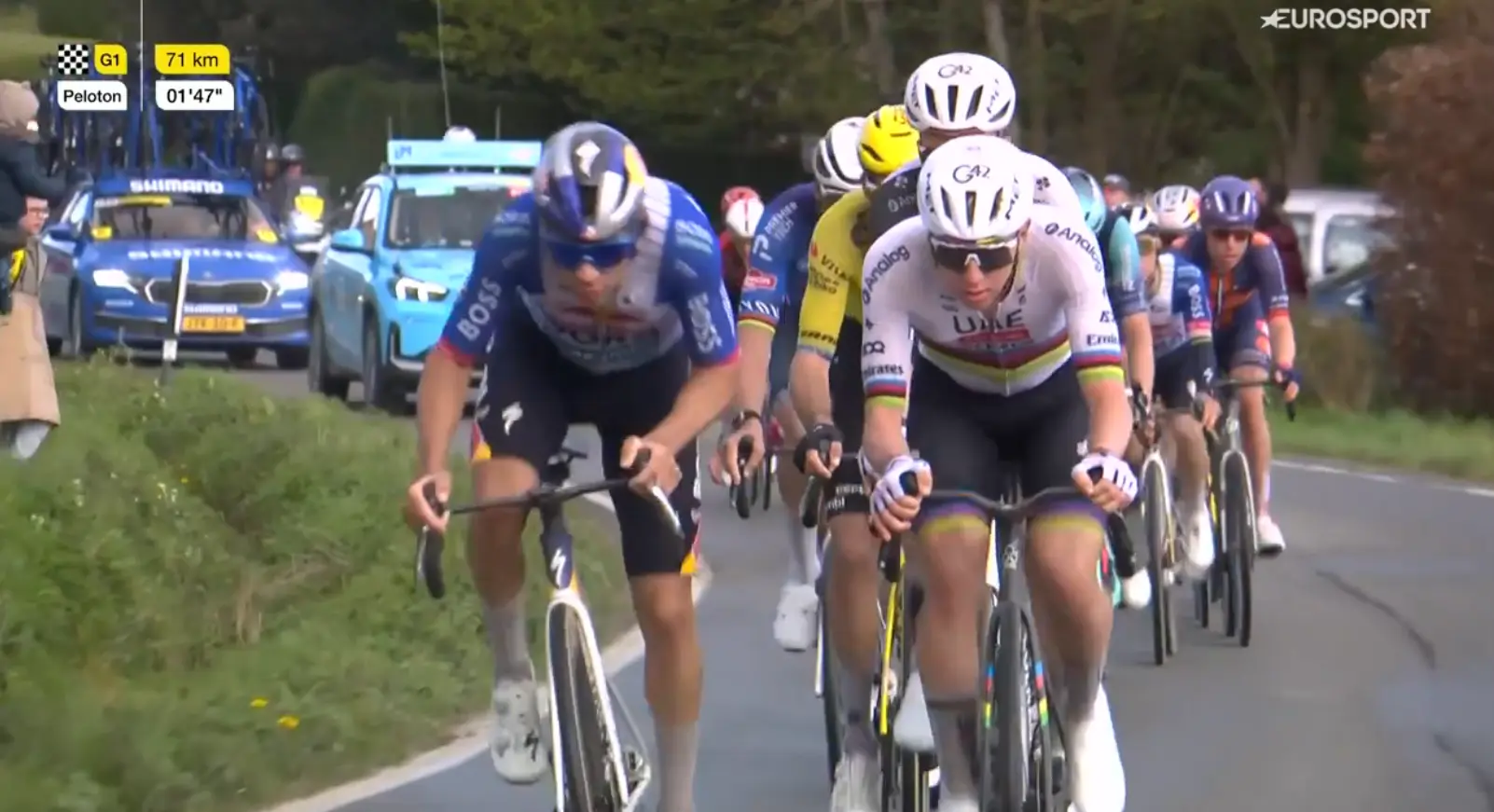
In the 90s, Flanders once again had a clear master: Johan Museeuw. An absolute idol in Belgium, he turned the bergs and pavé into his natural habitat. His victories in 1993, 1995 and 1998 are part of a broader hegemony in the Classics, where his name is directly associated with the word “domination.”
With the turn of the century, cycling entered an era of power and spectacle. Tom Boonen took that transformation to the limit. Charismatic, explosive and beloved by fans, he won in 2005, 2006 and 2012 by imposing his brute force and finishing speed. He was the natural heir to the Flemish tradition.
Alongside him, though with an opposing style, Fabian Cancellara was hitting the headlines. The Swiss didn’t wait for the sprint. He attacked from distance and blew races apart solo. His victories in 2010, 2013 and 2014 redefined how one could win in Flanders, blending power, strategy, and an extraordinary capacity to time trial alone.
The current generation has in Mathieu van der Poel one of its leading exponents. His victories in 2020, 2022 and 2024 reflect a modern, explosive, and technical cycling, where the ability to decide in seconds makes the difference. His recent duels are already part of the sport’s collective memory.
Tadej Pogacar, the new record holder
The extraordinary part of his feat is not just the number, but the route taken. Unlike almost all the names he now shares company with, the Slovenian is not a pure Classics specialist, but instead a rider who grew up on the Grand Tours and stage-races. By the time he won his first Flanders, he had already won two Tours. Currently, he has four in his palmarès as well as a Giro d'Italia title.
His third Tour of Flanders win is not a full stop but a signal. It marks a rider who is breaking traditional categories. Where once there were climbers, classics men, or time triallists, now stands a complete rider.
Pogacar is already on the list. The difference is that his story, unlike that of many he now equals - with the exception of Mathieu van der Poel - is still being written. In 2027, both can be the first rider to take a fourth victory on the queen of the Flandrien classics.
The greatest in the history of the Tour of Flanders
| Rider | Country | Winning years |
| Achiel Buysse | Belgium | 1940, 1941, 1943 |
| Fiorenzo Magni | Italy | 1949, 1950, 1951 |
| Eric Leman | Belgium | 1970, 1972, 1973 |
| Johan Museeuw | Belgium | 1993, 1995, 1998 |
| Tom Boonen | Belgium | 2005, 2006, 2012 |
| Fabian Cancellara | Switzerland | 2010, 2013, 2014 |
| Mathieu van der Poel | Netherlands | 2020, 2022, 2024 |
| Tadej Pogacar | Slovenia | 2023, 2025, 2026 |

Johan Museeus came close but couldn't reach the fourth Flanders win in the 90's - Can Pogacar do it in the 2020's?
Rúben SilvaEditor-in-Chief
A founding contributor to CyclingUpToDate since its launch in January 2022, Ruben Silva has played a central role in shaping the site’s editorial direction and long-term growth. Before joining the project, he built his experience through independent blogging at Echelons Hub and by producing race previews for Ciclismo Internacional, developing a strong analytical voice rooted in daily engagement with professional cycling.
Beyond editorial work, he has been closely involved in the expansion and coordination of CyclingUpToDate’s wider network, helping establish and support sister platforms across multiple languages. This includes ongoing collaboration with CiclismoAlDia (Spanish), CiclismoAtual (Portuguese), WielrennenUpToDate (Dutch), and RadsportAktuell (German), contributing to a shared editorial vision and consistent international coverage.
He also helps oversee editorial governance across the network, setting standards for accuracy and consistency and coordinating updates or corrections when needed.
Originally from the Porto metropolitan area in Portugal, he holds a bachelor’s degree in Geography. His path into cycling journalism was shaped not through formal media training, but through independent reporting, community engagement, and sustained on-the-ground involvement in the sport.
Over the course of his career, he has conducted approximately 100 interviews across road cycling and cyclocross, ranging from one-to-one conversations and online formats to press conferences and on-site pre- and post-race coverage. His interviews include leading riders, team managers, and prominent figures within cycling media: Tadej Pogacar, Jonas Vingegaard, Mathieu van der Poel, Primoz Roglic, Wout van Aert, Joao Almeida and Tom Pidcock; managers like Patrick Lefevere and Joxean Matxin; and YouTube personality Bryan Kennedy (BKXC)...
Within 18 months of launch, he helped grow CyclingUpToDate’s English-language platform into one of the most-read cycling news websites, built entirely from the ground up. As both a professional journalist and lifelong cycling enthusiast, his focus remains on delivering accurate, timely, and well-contextualized coverage.
claps 1visitors 1
Just in

Popular news
Latest comments
- glad you're still making it happen!mij27-10-2026
- With the exception of Axel Laurence, the rest are in their 30's. My opinion is I think, perhaps, we're beginning to see the effects of younger riders coming into the pro ranks. I believe we're going to see those effects in the coming years. All teams are looking for the next Pogi, Jonas & Seixas. Of course, Seixas hasn't proved himself yet. He's just a kid. I believe he will though. Remco is a strange case. I believe if he can overcome being erratic, he should wn a few Tours, What do you guys think?Paggss27-10-2026
- And, at 2% he'll still destroy the competition...Paggss27-10-2026
- I agree.Paggss27-10-2026
- I hear you, I'm 73 with C5 & C6 fused. Also, I'm two aortic valve replacements and three pacemakers down. Yea, Father time is catching up. I'm just glad I can ride at a good level. Uphills are not my favorite however, I love those downhills! I guess I give us 'old guys' some inspiration. :~ )Paggss27-10-2026
- Prove otherwise... I'm sure there's thousands of Glaswegians will be happy to tell you their version of it!slappers6627-10-2026
- they should allow teams to add to the roster limit if they are adding riders in other disciplines. for example, you can have 30 road riders, 3 gravel, 3 mountain bike, 3 cyclocross. that way a team isn't penalized by losing road riders by expanding into other disciplines. of course it needs to be policed as does a team classify Pidcock, MVDP or WVA as cross, mountain, or what? But that is workable.mij27-10-2026
- great guy and a winner if he can stay healthy.mij27-10-2026
- Utter rubbish
 Rafionain-Glas27-10-2026
 - Ha! For “spring” read “sprint”.Lozza27-10-2026
Loading
Write a comment