"There are no climbs too tough for women anymore": Tour de France Femmes director looks forward to Mont Ventoux debut
CyclingSaturday, 06 June 2026 at 06:00

Alpe d'Huez in 2024. Col de la Madeleine in 2025. Mont Ventoux in 2026. The women's cycling keeps pushing the boundaries of what has once been viewed as the limits of female cyclists. And after the ladies already conquered Alto de l'Angliru at this year's Vuelta, the Tour de France Femmes director Marion Rousse is convinced the only limit for race organizers is their imagination, when it comes to climbing.
"If I’m not mistaken, the toughest stage in La Vuelta’s history was the Angliru. I watched it on TV and it was impressive to see the speed at which they climbed," Rousse told Marca. "I don’t think there are any climbs too tough for women anymore."
"You can see that the standard is becoming increasingly consistent and higher. They’re going faster. You also have to compare the climb times with the men’s, and you realise just how incredibly fast they’re going," said Rousse.
Now, if this comment makes you feel as though ladies can compete with top male professionals, you'll need to postpone these thoughts for now - overall winner Paula Blasi was still some 12 minutes slower than Strava KOM holder Joao Almeida, who won a Vuelta stage atop this mythical climb in 2025. But it's still a ride which would put Blasi comfortably in the top-50, which is nevertheless impressive.
Wide range of favourites
The rise in overall level of female cyclists comes hand-in-hand with the increased professionalization of sport which is reflected in every aspect of women's cycling. Suddenly, there's a much wider top echelon of contenders, which makes the sport all the more appealing to the former professional Rousse:
"I’m pleased because I can see that women’s cycling is evolving. Since the start of the season, there’s been a different winner practically every weekend, and that creates a lot of suspense," said Rousse.
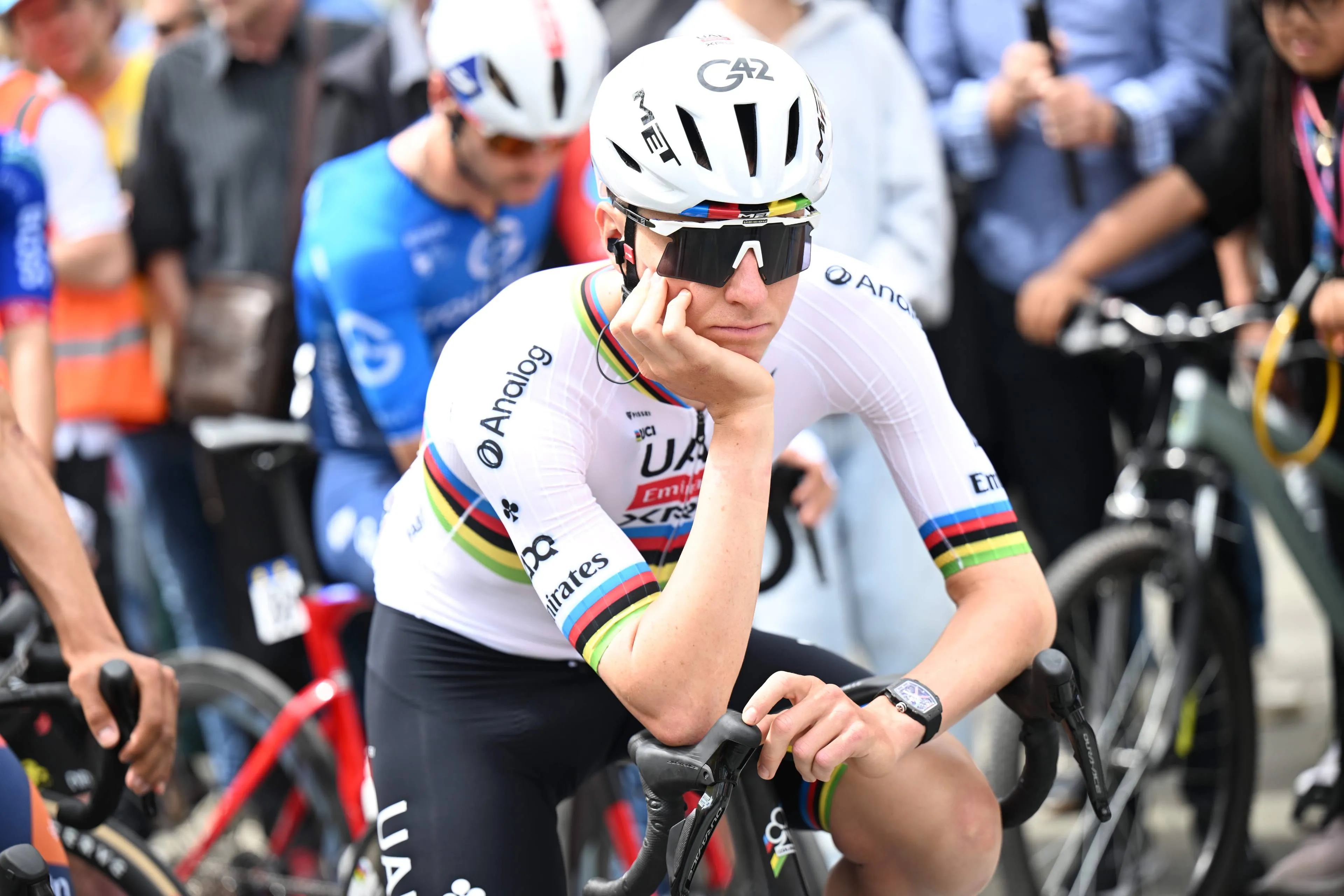
"Perhaps even more so than in men’s cycling, because when Pogačar attacks from the start, you very often already know the winner’s name."
Ventoux debut
The 2026 Tour de France Femmes edition's main attraction will be the innaugural ascent of Mont Ventoux, one of the most iconic, yet challenging ascents in the sport of cycling. With 15.8 kilometers at 8.7%, it's a brutal test for anyone looking to win the race. Rousse herself rode up this mountain giant last week to get a taste of what awaits the competitors later this summer.
"Mont Ventoux is tricky, because there isn’t a single moment where the climb eases off. It’s tough the whole time, from the first kilometre to the finish line," said Rousse. "I think it’s a climb where, strategically, it’s difficult to make a plan. It’s all down to your legs."

Valentin Paret-Peintre triumphed on Mont Ventoux last year during men's Tour de France
The 2026 edition will kick off on August 1st, six days after the men’s race concludes on July 26th, a shift from last year when the events overlapped on the opening weekend. Rousse explained that the separation is a sign of the race's growth.
"The men’s Tour finished on Sunday, but that Sunday also marked the start of the Tour de France Femmes avec Zwift. We needed that same weekend so that people would continue to follow us," said Rousse.
claps 0visitors 0
Just in

Popular news
Latest comments
- Except that there are climbs which are too hard for both men and women. I long for the day when Pozza San Glisente can be fixed up and used
 Rafionain-Glas06-06-2026
 - Yes, I also think that Alexcavalera could be Mou.Ante-Ustashe06-06-2026
- Some? Look at history. one of humanities greatest diseases.Jumpyjohn06-06-2026
- The Special Ones?Jumpyjohn06-06-2026
- If you look back, though, there was a feeling that Pog's team for the 2024 Giro would be too weak. Some media also analysed whether Pog could beat an in-form Ganna in the time trial (and calculated that he would just make it, due to the steepness of the hill). It's only in hindsight that everything seems cut and dried.Hills3306-06-2026
- @Loser Of course you hate her! She went against your tribe! Burn the witch! That's why you made a username in a vain attempt to make fun of her!acem8206-06-2026
- @RidesHills 1. Women are protected, compared to men. I didn't attempt to say they were protected perfectly. Unless those women disagree with the Left, then they're viciously attacked. Also, you didn't ask me if I was OK, so why should I ask you? You aren't holding yourself to the standard you hold me. 2. Identity politics IS the claim that "some animals are more equal than others". That's why it exists!acem8206-06-2026
- @Loser If she said a Leftist talking point you'd be all "she's so brave!", but not when she says something about someone the Left (apparently) assassinated!acem8206-06-2026
- @Loser No, I've never met her. Best way to show that the vax killed more than it saved? By their own studies, it showed that the vaccine (in their rosy best case scenario) did better protection against covid than the unvaccinated for a few months and then WORSE certainly by the 6 month mark, that's pretty damning. So is the fact that they couldn't get emergency authorization if there was an effective treatment already out there ...and there was, whether that be ivermectin or simply activated vitamin D! But for your answer, Google "dr robert malone new covid variant judicial watch" and see for yourself!acem8206-06-2026
- Your right! Iwas 10 years old and have vague memories of the TDF.There needs to be an investigation into that lying S.O.B.🤣
 Brucegel06-06-2026
Loading
1 Comments