“Do you have something for cramps?” - Alpecin boss lifts lid on Mathieu van der Poel’s mid-race struggle during Tour of Flanders 2026
Cycling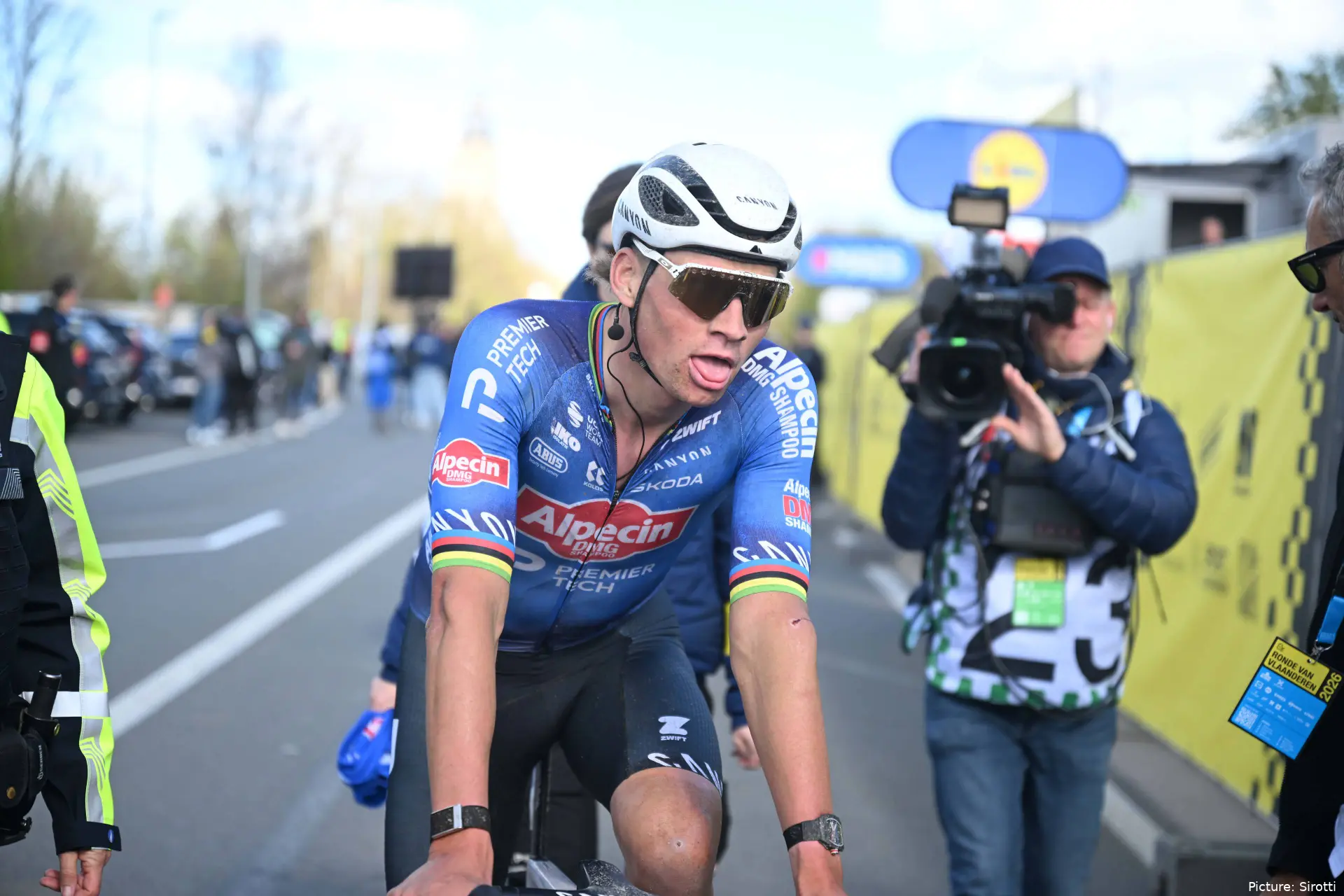
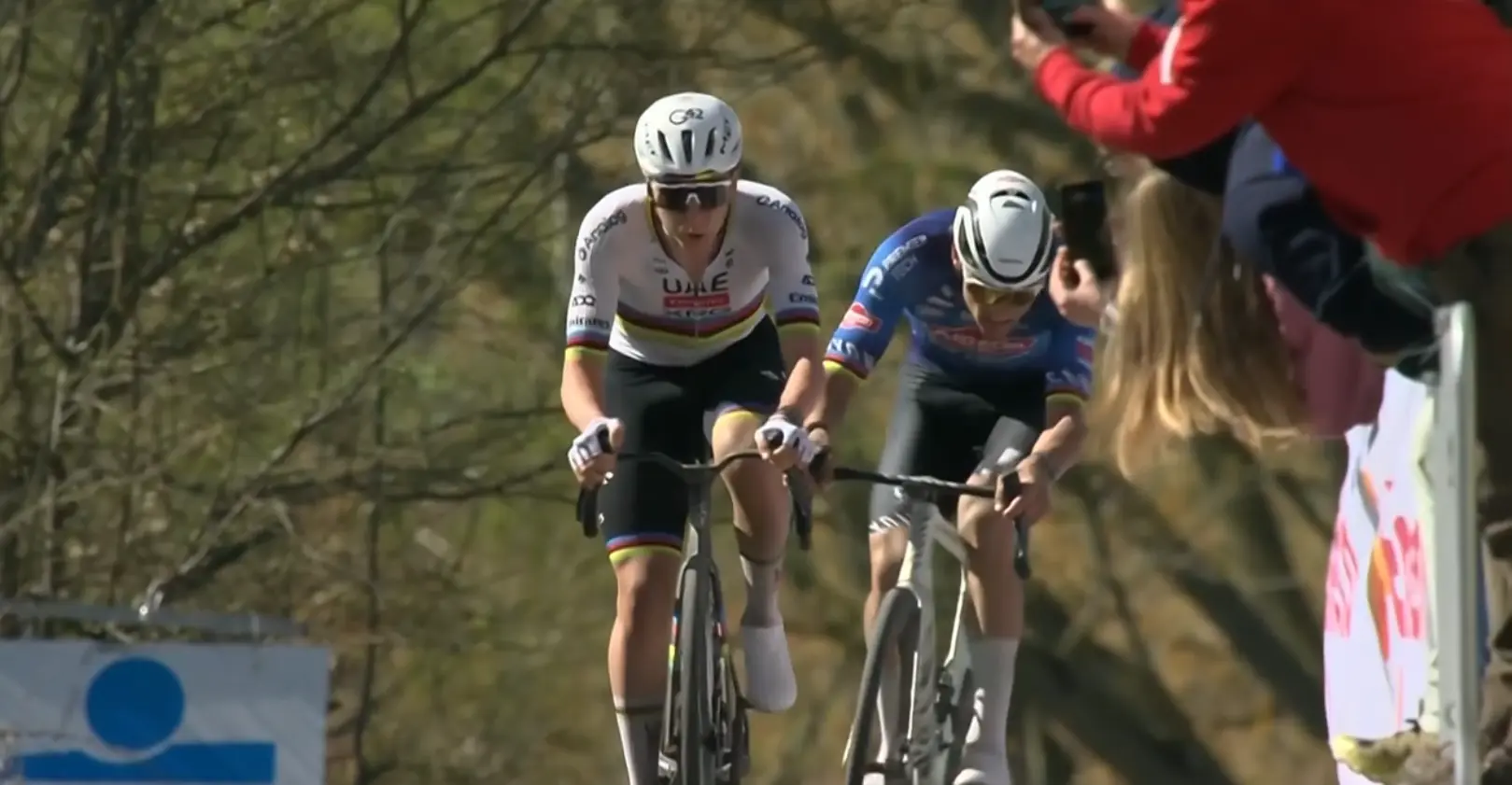
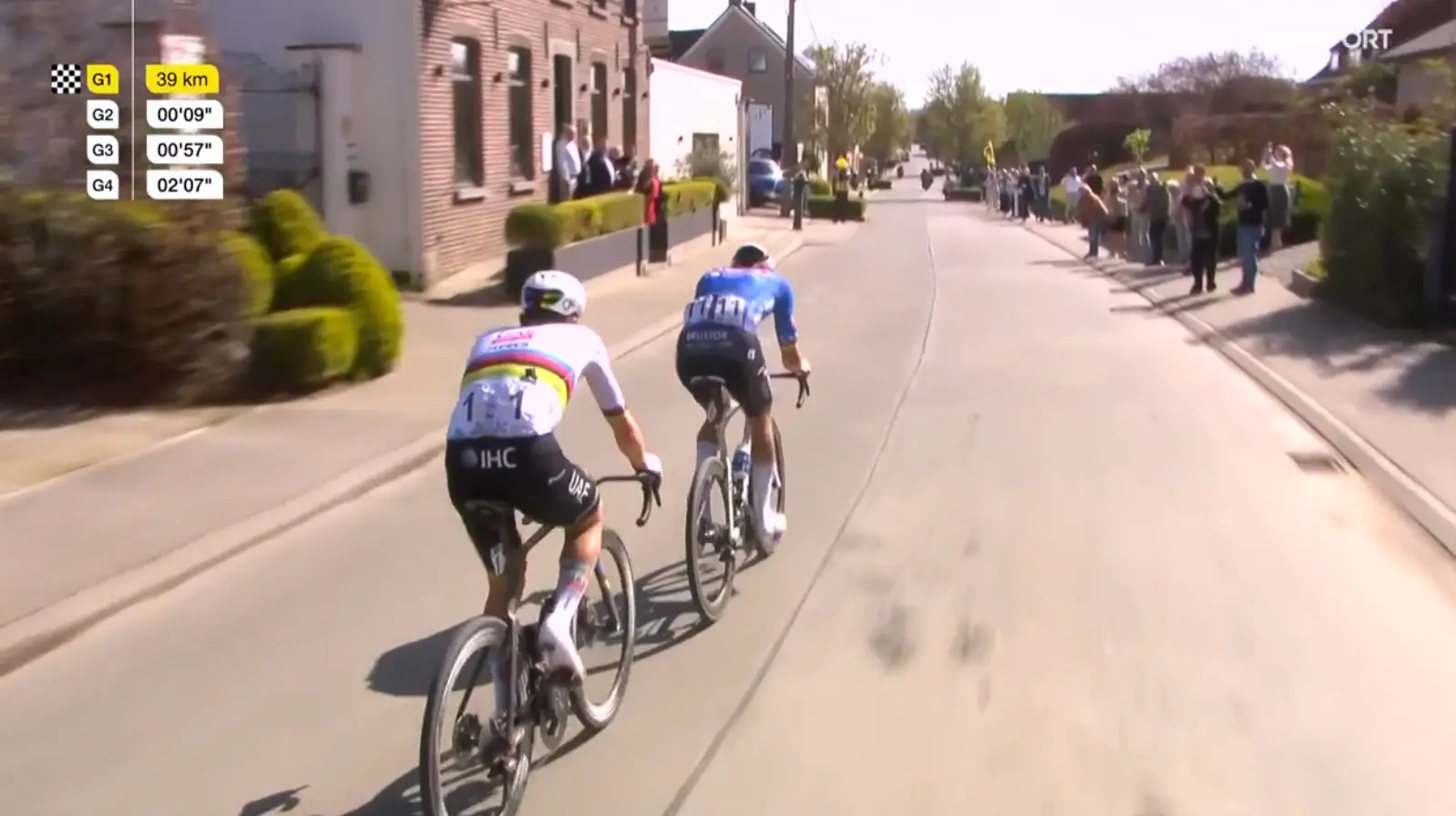
Mathieu van der Poel’s duel with Tadej Pogacar at the Tour of Flanders was defined by strength, positioning and repeated accelerations on the cobbles. But in the middle of that battle, there was a brief moment that hinted at how close to the limit even the very best were riding.
Shortly before the decisive phase of the race, TV footage appeared to show the Dutchman speaking to the Alpecin team car. “Do you have something for cramps?” he asked.
A fleeting moment in a brutal finale
The exchange came just before the race moved onto the final sequence of climbs, where Pogacar would ultimately make the winning difference on the Oude Kwaremont.
At that point, Van der Poel was still firmly in contention, riding alongside Pogacar, Remco Evenepoel and Wout van Aert as the group of favourites began to splinter under pressure.
The request raised immediate questions. Was this the first sign of a physical issue, or simply a rider managing the effort in a race where the intensity had been high from a long way out?'
“Mathieu thought he might get cramps”
Alpecin sports director Christoph Roodhooft offered a brief insight after the finish, though even he stopped short of confirming the extent of the issue, telling Sporza the exchange had been minimal.
“Not much, actually. It only lasted a very short time. Was it about cramps? Ah, so you already know that,” he said. “Mathieu thought he might get cramps, but I still haven’t spoken to him.”
That uncertainty only added to the ambiguity around the moment, with no clear indication of whether it developed into a real problem.

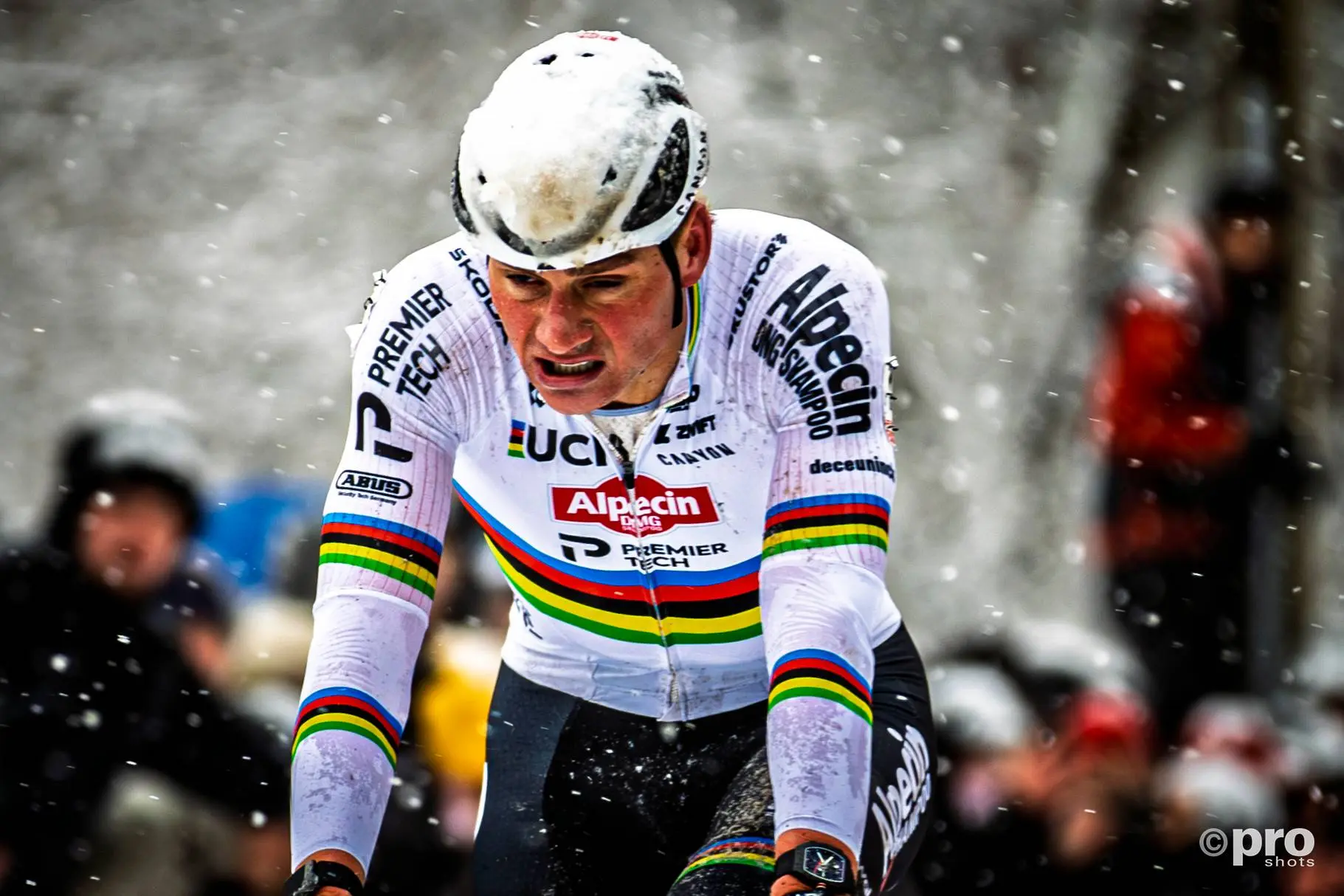
Mathieu van der Poel at the 2026 Tour of Flanders
“Everyone was on the limit”
Van der Poel himself was quick to downplay the suggestion that cramps had played a decisive role in the outcome. “Not really. Everyone was on the limit, and so was I — that was more the case,” he said after the finish. “I tried everything I could.”
Those words aligned with what played out on the road. When Pogacar launched his decisive move on the final ascent of the Oude Kwaremont, Van der Poel was the only rider able to follow initially, holding the wheel before eventually being distanced.
From there, he rode to second place behind the Slovenian, once again emerging as Pogacar’s closest challenger in a Monument.
Perspective after another podium
Within the Alpecin camp, the focus after the finish was not on what might have gone wrong, but on the level Van der Poel had shown across the race. “That Kwaremont is decisive because it is the longest climb in the race. On the other climbs, things were going particularly quickly,” Roodhooft said. “We can go to Roubaix with confidence, which is still a very good opportunity. Mathieu finished second today after a fantastic race, and we must not forget that.”
In the end, the brief radio exchange remained just that, a moment within a much larger story. Van der Poel was close enough to ask the question, but strong enough to still finish second in one of the hardest editions of the Tour of Flanders.
Kieran WoodDeputy Editor-in-Chief
Kieran Wood is a sports journalist based in Wales and has been active in journalism since 2022. He regularly contributes to DartsNews.com and CyclingUpToDate.com, where he covers professional cycling and darts. In cycling, his work includes liveblogs from major races, including the Tour de France, the Giro d’Italia, and La Vuelta a España, alongside race reports and analysis. He has also conducted interviews with professional riders.
His reporting spans the full racing calendar, from one-day classics to stage races, with a focus on accurate, real-time coverage and clear contextual analysis. For statistics, results, and historical context, he regularly uses resources such as ProCyclingStats. To support reporting on rider activity and training context where relevant, he also references Strava.
In his work, Kieran places strong emphasis on careful sourcing, editorial accuracy, and updating articles as new, verified information becomes available.
claps 4visitors 2
Just in

Popular news
Latest comments
- I like the fact that this non-news item has garnered so much response from the fans. It implies that Tadej's comeback is highly anticipated, even though many pundits say his dominance is bad for the sport.FredMan27-10-2026
- As a WvA, Pidders and MVDP fan, I friggin love this.anonymouscyclist27-10-2026
- Despite his crash, Jonas gave us some edge-of-seat stages in the first two weeks of the 2024 Tour, and even came back to beat Pog in one stage. In 2025 he said he felt like a new man and came out swinging. It's just this year that his challenge fizzled after Stage 1 and fans began to boo Tadej. It's more likely that ASO just can't face waiting two weeks for Jonas to launch his challenge next year.Hills3327-10-2026
- Bummed to see an Austrian guy not make it on what is nominally (ok ok not really) a German team. He didn't have a good 2026, and I hope that he finds his footing at Bardiani. They've got a long history of excellent coaching and development.RidesHills27-10-2026
- Subject to the top riders DNS DNF or sick/crash.abstractengineer27-10-2026
- Pogi has no challenger since 2024. Jonas is one level below, Remco has no balls, Sexias is too young. Whether ASO acknowledge or not is immaterialabstractengineer27-10-2026
- People keep referring to Pogačar and mountain-top finishes, and sure, he's succeeded on those often enough. Thing is, he succeeds on mountains, period. How often has he attacked on a climb, made time on the descent, and added time on the flat run in to the final? Often enough that they'd have to remove mountains for it not to be a Pogačar route. And then they'd have hills, and the guy who has won Flanders 3 times isn't going to suffer there, either. So if you remove those they have sprints and TTs, and last year he was mixing it up in a few sprints, as well. So, yeah, good luck folks. Let's see how he recovers before we make too many other claims. The seasons from 2024 to 2026 are three of the top 10 best cycling seasons ever (Merckx has something like 5 of the remaining), and I'm going to predict that 2027 is going to be up there with them.RidesHills27-10-2026
- The US has gone through a long convoluted process of defining how athletes can make money off their "Name, Image, and Likeness," and I see the point that Pederson and the other athletes are making here. Also, how very Mads Pederson to say, "Everyone has seen the somewhat tacky advertisements." You can almost see that sly smile on his face when he says it.RidesHills27-10-2026
- Vine coming from his background and then succeeding on a team full of superstars, so great. He's got solid wins (GC and TT), would be even more successful in the TT if he didn't live in the era of Ganna and Evenepoel, and seems to have a thing for the Vuelta. Aren't something like 1/3 of his wins there? (Checks procyclingstats - yes, 5 of the 14) Great guy, and I wish him all the success he can find!RidesHills27-10-2026
- Such a soft spot for Vine. To watch him come from the Zwift Academy to the levels he is at, now, is incredible. Always rooting for a Vine win.anonymouscyclist27-10-2026
Loading
Write a comment