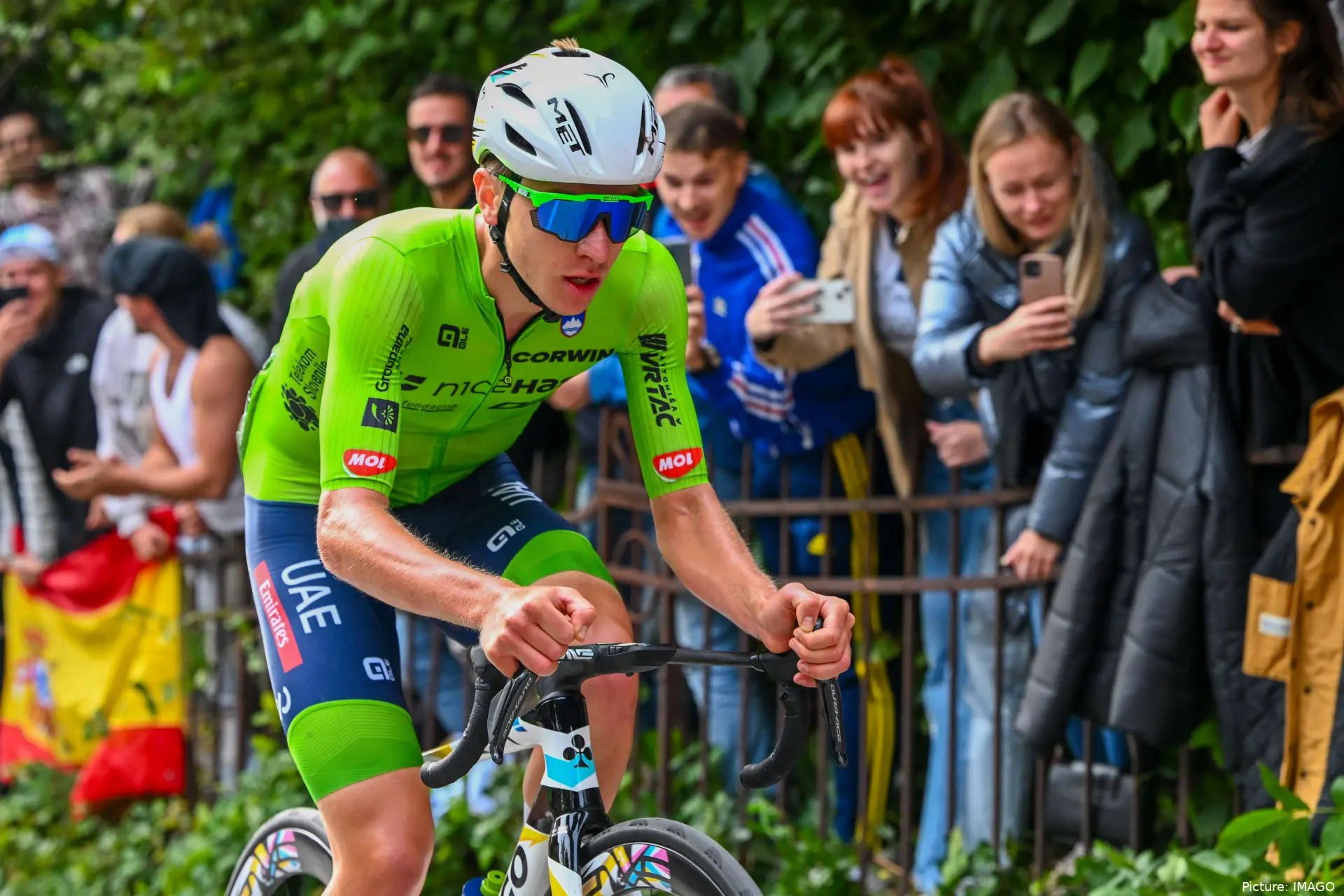
The UCI Road World Championships have been staged across
Europe, the Americas, the Middle East and Asia. Never before, however, has the
rainbow jersey been contested on African soil. That changes this weekend, when
Kigali hosts cycling’s most prestigious week of racing. So, that means that the
event carries importance well beyond the podiums: it is both a landmark for the
globalisation of the sport and a test case for how cycling manages politics,
culture, and infrastructure in a complex host nation.
Let’s find out a bit more about the place the world’s best
cyclists will call home for the next week.
A first
For decades, elite road cycling has been anchored in Europe,
with occasional forays into North America and Asia. Awarding the Worlds to
Rwanda reflects the UCI’s stated goal of global expansion. President David
Lappartient described the decision as a way to “bring cycling to new heights,”
a phrase echoed in the official slogan, “Riding New Heights.” The motto captures
both the literal geography of Rwanda, known as the “land of a thousand hills,” and
the figurative sense of elevating the sport into fresh territory.
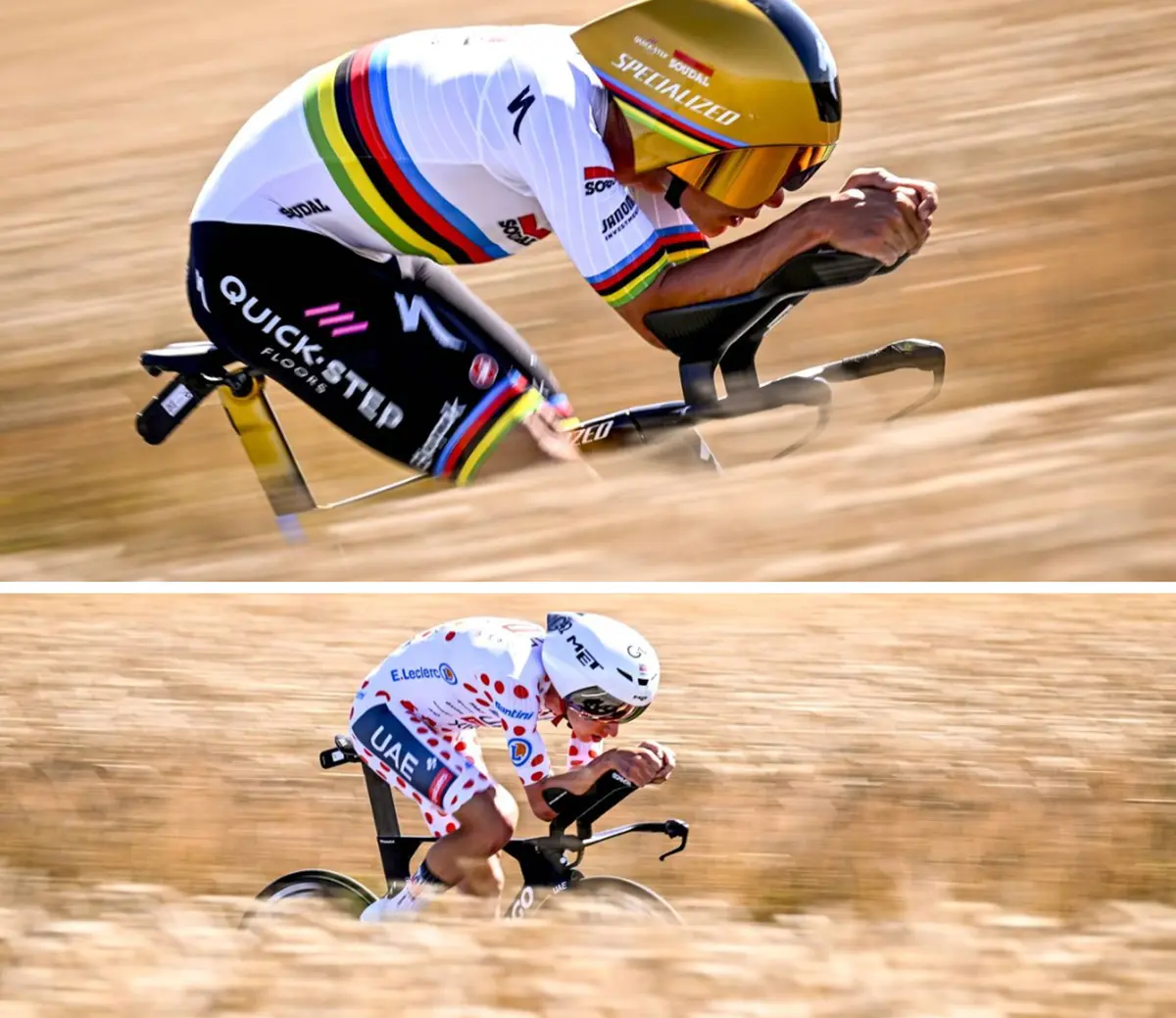
The choice of Rwanda is no accident. The Tour du Rwanda, now
a fixture on the UCI Africa Tour, has grown into one of the continent’s most
popular stage races, drawing large crowds and showcasing the country’s passion
for cycling. Kigali’s location at over 1500 metres above sea level ensures
distinctive racing conditions, as the race will get tougher as the air thins.
For the UCI, this is a chance to connect with a new generation of African
cyclists and audiences, embedding the sport more deeply in a region with clear
potential.
The course
Rwanda’s terrain ensures that the 2025 Worlds will be among
the most difficult editions in recent memory, and it is why a certain Slovenian
is the overwhelming favourite for glory. The men’s road race alone includes
over 5,000 metres of climbing, while the time trials feature repeated ascents
and technical descents at altitude. Riders will need to contend not just with
their rivals but also with thinner air, punishing gradients and cobbled ramps.
The elite time trial route is emblematic of Kigali’s
character. At 40.6 kilometres for the men and 31.2 for the women, the courses
contain between 500 and 680 metres of climbing. The Côte de Nyanza, a
2.5-kilometre climb at nearly six percent, arrives just ten kilometres into the
effort. Later, the Côte de Kimihurura offers a brutal finale: 1.3 kilometres at
over six percent, paved with rough cobblestones, before the drag to the finish
at the Kigali Convention Centre. Pacing, bike handling, and equipment choices
will be as decisive as raw power.
Culture and legacy
Beyond the sporting challenge, Rwanda 2025 has cultural
resonance. Cycling in Rwanda is already deeply embedded in everyday life, from
rural transport to the professional peloton. In fact, cycling is the second
biggest sport in the country, behind only football. The Tour du Rwanda attracts
vast crowds, often lining mountain roads in numbers reminiscent of Europe’s
grand tours. Hosting the World Championships builds on that foundation, and
could see more growth in the sport.
The government and organisers frame the event as part of
Rwanda’s broader transformation. Since the genocide of 1994, the country has
invested heavily in rebuilding its infrastructure, developing tourism, and
projecting an image of stability and progress. Sport, particularly cycling, has
become a showcase of that recovery.
For young Rwandans, the Worlds will provide inspiration. The
hope is that exposure to the world’s best riders will encourage greater youth
participation, leaving a legacy of local development and a pathway for African
talent to enter the global scene. For the tourism sector, the event represents
another chapter in the “Visit Rwanda” campaign, already visible on European
football shirts, designed to boost international awareness.
Controversies
Despite the optimism, Rwanda 2025 is not free of
controversy. Critics argue that awarding the event to Kigali risks
“sportswashing,” allowing the Rwandan government to polish its international
image while deflecting from internal and regional issues.
Human rights groups have pointed to Rwanda’s alleged
involvement with the M23 rebel group in the neighbouring Democratic Republic of
Congo, where conflict has displaced thousands. These concerns spilled into the
political sphere: the European Parliament even passed a resolution calling for
the Championships to be cancelled or relocated. While the UCI dismissed the
idea of a “plan B,” the episode revealed the unease surrounding the host
nation. Given what we have just over the last three weeks at the Vuelta a
Espana, the UCI will be desperate for a protest-less week.
Corruption scandals have also plagued the Rwandan Cycling
Federation. Several officials resigned in late 2023 amid allegations of
financial mismanagement, casting doubt on the capacity of the local body to
manage a global event of this scale. Though international oversight has since
stabilised preparations, questions linger about transparency and governance.
Security is another area of scrutiny. Rwanda borders an
active conflict zone in eastern Congo, and while Kigali itself is considered
safe, concerns remain about the broader regional picture. The UCI and local
organisers have stressed that robust security measures are in place.
Lappartient has been clear: “There is no plan B,” insisting that the
Championships will go ahead in Rwanda regardless.
Logistical challenges also loom. Transporting riders, staff,
and equipment to East Africa is more complex and expensive than staging Worlds
in Europe. Some smaller national federations have reportedly scaled back their
delegations because of cost.
Environmental and infrastructural concerns have surfaced as
well. The cancellation of a decisive stage at the 2024 Tour du Rwanda meant
parts of Mount Kigali’s climb went untested, fuelling doubts about whether
every aspect of the Worlds has been rehearsed adequately.
Despite the controversies, it is important to understand why
the 2025 Worlds remain significant, and the huge positives it could generation.
For cycling, this is about global credibility, as if the sport aspires to be
truly international, it cannot remain bound to traditional strongholds. Africa,
with its youth demographics and growing enthusiasm, represents a frontier that
must be engaged.
The Championships will provide African riders with a rare
chance to compete on home soil at the highest level, a powerful incentive for
development. It will also show whether cycling can learn anything from the past
month in Spain to balance sporting integrity with political complexity. No
World Championships can ever be entirely divorced from its host’s context, but
Rwanda 2025 forces the sport to reckon with that reality more openly than most.
For the athletes, the controversies fade once the racing
begins. The hills of Kigali will decide rainbow jerseys, and the cobbles of
Kimihurura will crown champions. But the significance endures beyond the
results. Rwanda 2025 will be remembered as either a successful expansion of
cycling’s footprint or as a cautionary tale of ambition running ahead of
practicality.
🥇 The Gold of #Kigali2025 🤩
— UCI (@UCI_cycling) September 19, 2025
13 UCI World Champion titles 🌈 will be on the line at the 2025 UCI Road World Championships.
Who will claim them? pic.twitter.com/XtAct90r3j

Fin MajorCycling Journalist
Fin Major is a UK-based writer at CyclingUpToDate and has been part of the team since 2024. He is the site’s main writer for FAQs and evergreen explainers and has written around 2,000 pieces for the platform. Alongside this work, he focuses on in-depth analysis and covers the biggest races on the calendar, including the Tour de France, the Giro d’Italia, and La Vuelta a España, providing clear context around performance trends, tactics, and key storylines.
In his reporting, Fin uses reputable data sources such as ProCyclingStats for results, statistics, and historical context. He places strong emphasis on careful sourcing, editorial accuracy, and updating articles promptly when new, verified information becomes available. Outside of writing, Fin is an active cyclist, which supports his practical understanding of the sport and its demands.
claps 0visitors 0
Just in

Popular news
Latest comments
- The article makes it sound like a great thing and something to be applauded. The reality is is gives the Americans another 6 years to fleece European cycling fans or force them to hunt around Europe with VPN’s for free feeds. Not something to be celebrated in my book. Before someone points out that coverage of this depth costs money, yes, I agree but not £30+ per month a fee I will wager will gradually increase now this deal has been cemented.Paul53119-10-2026
- Great. Thrilled. (Satire) Oh, how I miss the days of GCN. Still wear my GCN hoodie with pride.anonymouscyclist19-10-2026
- You could also look at it another way. How many riders have had better or more consistent results since the Tour?Jumpyjohn19-10-2026
- Whilst I love Tadej (and Remco, who deserves to be mentioned here, too), @JumpyJohn makes a valid point, and he isn’t wrong @MajorPayne. It is a fact that today’s official broadcasters of cycling struggle to keep our attention once the likes of Tadej (or Remco) attacks at ~80km or so. In the 142nd issue of Rouleur, Ned Boulting reflects on the often stressful paradox of commentating on a race that is effectively over before the broadcast window even hits its stride. In this edition, he centres on Remco’s 1hr solo at the Challenge Mallorca this year, and captures the panic and dread shared by the commentators when a dominant rider kills off the racing tension early. I recommend you read it, it’s a fascinating insight into the world of commentary, and the true viewing figures of today’s cycling. I must add here, I love Tadej and Remco, but I would be lying if my heart rate wasn’t higher when watching the World Championships this year. And I’m sure Rob Hatch would say something akin regarding his commentary!anonymouscyclist19-10-2026
- The shattered women’s marathon record was clean and highly surprising and then a few months later the athlete was very positive in another test for something not taken by mistake when recording far less impressive results. Sounds to me like the problem is still the age old one, detection is often way behind. Just like with crime, it’s not because you can’t catch the criminals that you aren’t aware of the crime.Jumpyjohn19-10-2026
- Listen, you have a point but on the other hand in cycling, once some of the riders go solo and build a minute’s gap, there’s hardly any action left to watch. Cycling is definitely not for today’s generations of accelerated viewing. Other people find skydiving or chess exciting but you can’t force everyone to feel the same.Jumpyjohn19-10-2026
- That’s a funny one. Yeah obviously he’s more aero than some but most of the aero effect at elite level is the bike. Now you have me starting to feel sorry for the guy behind him when he pulls a groupetto.Jumpyjohn19-10-2026
- Knew a World Tour promotion was coming for Ben this season. Thrilled for him, and can't wait to see what he can do at this level. Another one to watch at the TTs.anonymouscyclist19-10-2026
- It honestly breaks my heart to see this. I had a feeling this might happen over the last few years, but I kept praying it wouldn't, and that Joey would find his niche, especially back racing alongside his brother. After growing up racing alongside PH-MAS, the Pidcock brothers have always felt like one of our own, as we’ve watched them grow from Club level all the way up to PC and WT. I wish Joey nothing but the best of luck in whatever he does next, but selfishly… I do wish for him to move into the role of Q36.5 team staff.anonymouscyclist19-10-2026
- Predictable, sure! But boring??? OMG! Was Mike Tyson predictable and boring in his prime? Air Jordan? Schumacher or Senna? OMG!!!MajorPayne19-10-2026
Loading
Write a comment