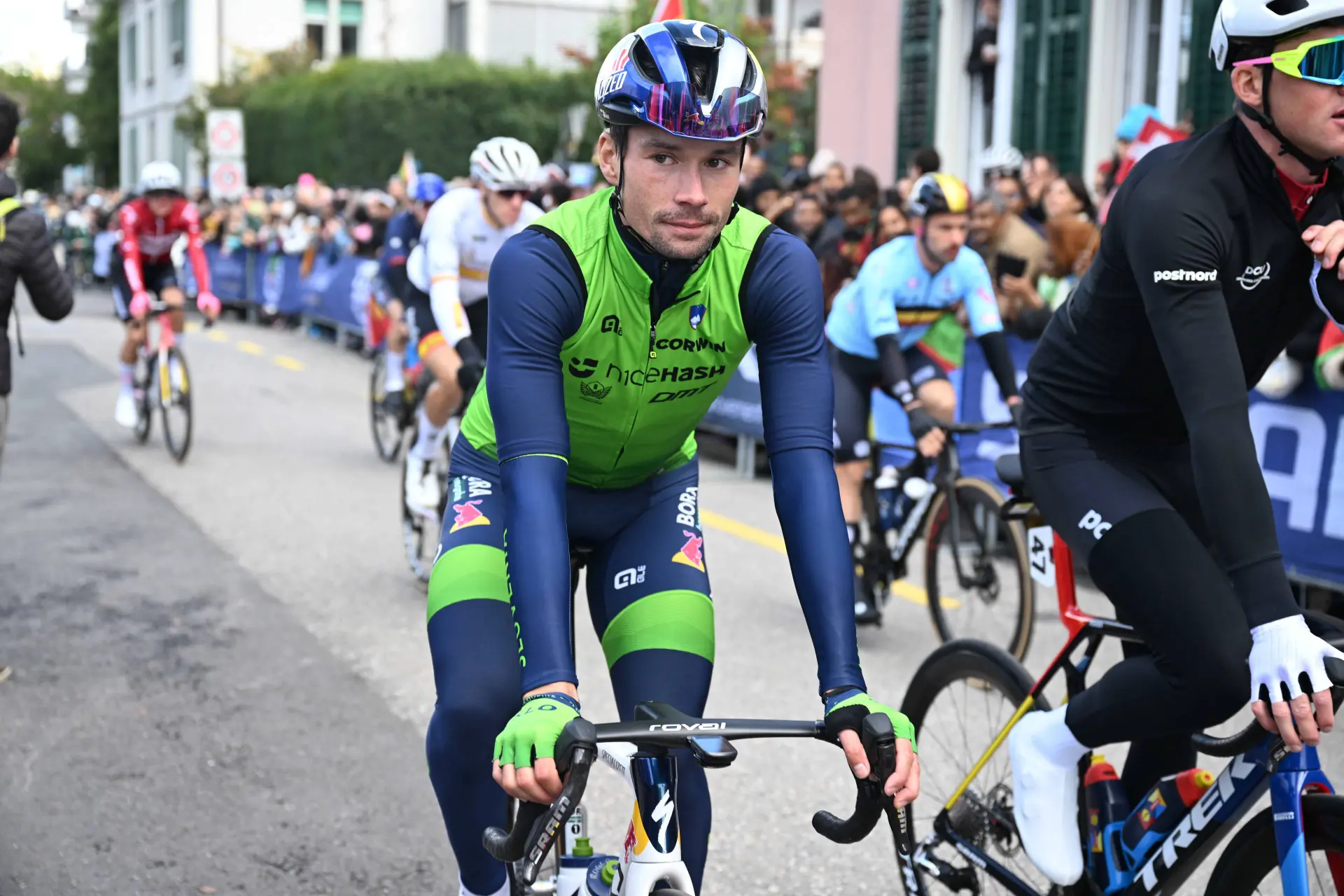
The men’s world championships road race in Kigali has
started, and Sunday’s rainbow jersey will be won by the riders who spend most
of the day in the wind for somebody else. The course’s repeated cobbled ramps
and cumulative altitude load mean positioning and control will matter as much
as one monster attack. That drags the key lieutenants into the spotlight.
Here’s how some of the favourites leaders are backed, and how those teammates
can tilt the race.
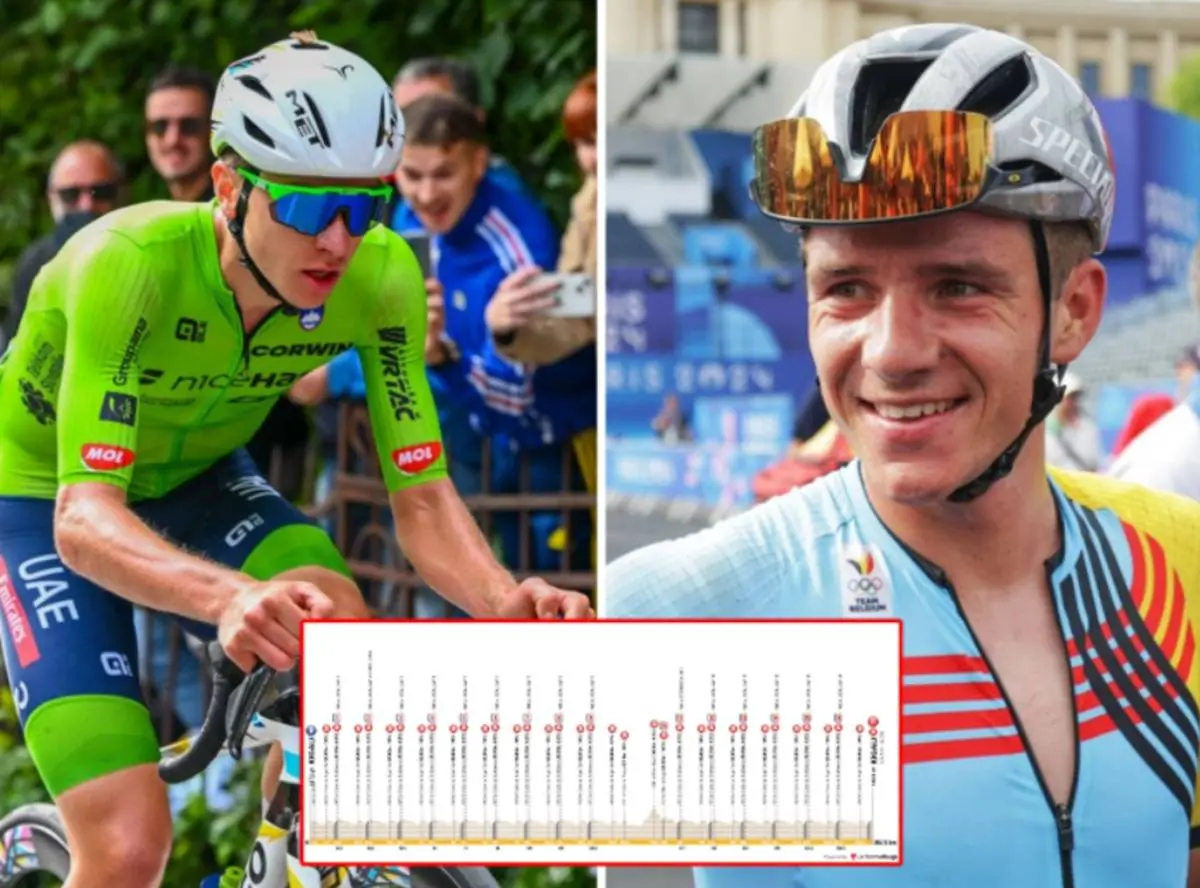
Slovenia for Pogacar
Slovenia arrive with absurd depth, and the start list confirms a lineup that
gives Tadej Pogacar multiple ways to defend his title: Primoz Roglic, Matej
Mohoric, Domen Novak, Luka Mezgec, Matevž Govekar, Gal Glivar, Jaka Primožič
and Matic Žumer join the defending champion.
Roglic’s presence could be huge: if teams soft-pedal a Pogacar
move, they risk giving a free pass to another Grand Tour winner. Mohoric is the
team’s road captain and stabiliser, elite on sketchy descents into Kigali’s
narrow corners, capable of closing split-second gaps or launching a bridge with
one acceleration. Novak is the pure climbing diesel for long, steady damage on
the circuit climbs, while Mezgec’s job is the dirty one early: shepherd Pogacar
through the first laps, bully for space before the cobbles, and keep him out of
trouble before the altitude does its work. Govekar and Glivar can sit in early
moves to relieve Slovenia of chase duties; Primožič and Žumer are flexible
bodies for bottle runs and elastic-snapping accelerations.

Belgium for Evenepoel
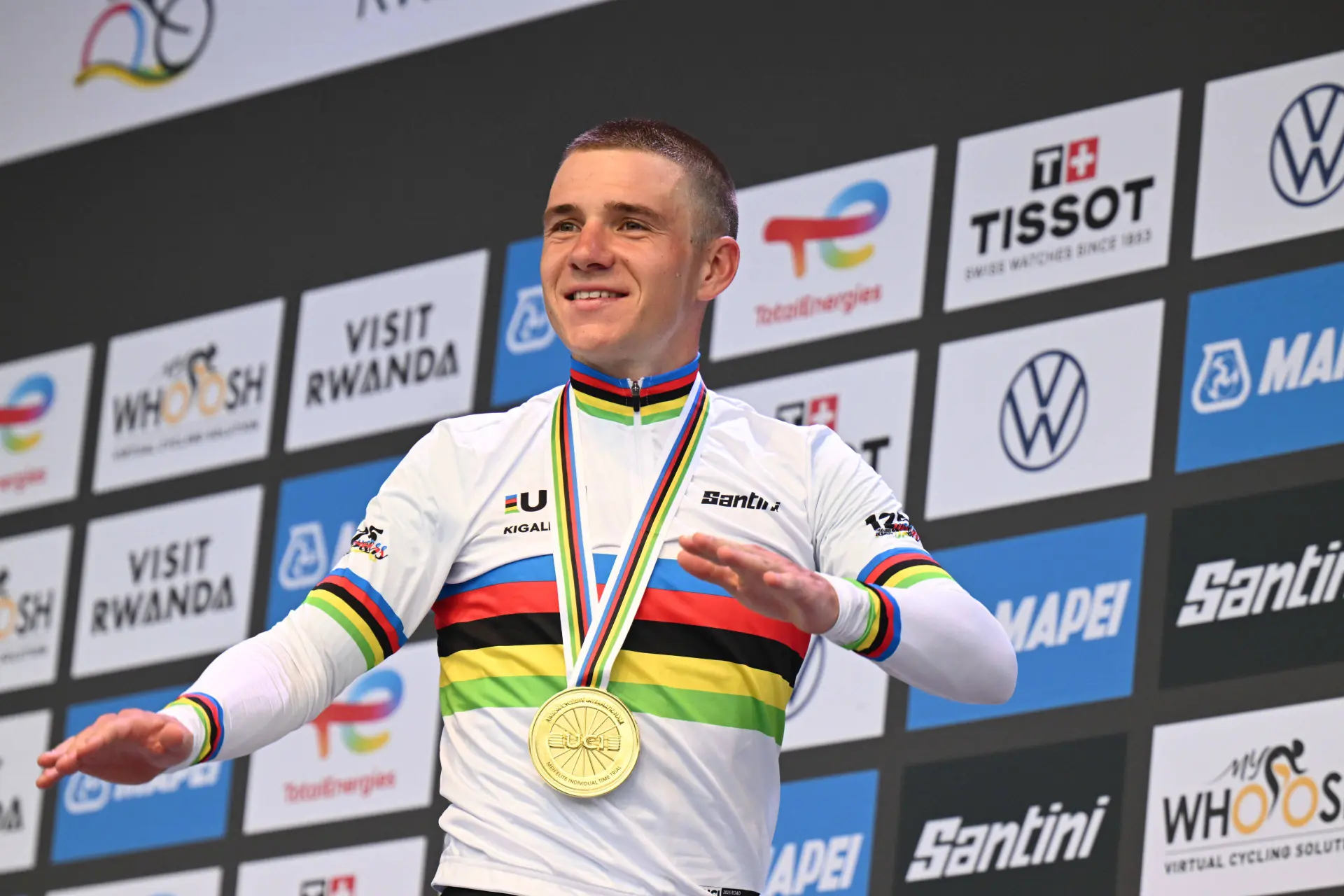
Remco Evenepoel rolls in with momentum from the time trial and, crucially, a
squad tailor-made for a high, punishing baseline of speed: Ilan Van Wilder,
Cian Uijtdebroeks, Victor Campenaerts, Florian Vermeersch, Quinten Hermans,
Xandro Meurisse and Louis Vervaeke. The late disruption, Tiesj Benoot’s
COVID-positive and replacement by Vervaeke, removes a savvy road boss, but
Vervaeke is a like-for-like climber who already knows Evenepoel’s rhythms from
trade-team duty.
Expect Campenaerts and Vermeersch to set a strangling tempo
on the flat connectors and before the cobbles, then peel off; Hermans and
Meurisse to mark and infiltrate the danger groups that inevitably spring on lap
five to ten; and Uijtdebroeks plus Van Wilder to take the race into the red on
the last three ascents. The plan’s clear: keep Remco out of the pinball, raise
the average speed, and make every team spend.
Great Britain for Pidcock
Britain’s eight is built around two live bullets and six very specific tools:
Tom Pidcock and Oscar Onley co-lead, with Joe Blackmore, James Knox, Fred
Wright, Mark Donovan, Oliver Knight and Bjorn Koerdt in support. The selection
signals a simple idea: protect two climbers who win from chaos, then sow that
chaos.
Wright’s craft on rough surfaces and in tight road furniture
should be visible all day, he’ll fight for position into Kimihurura and cover
any early lull by nudging a move clear. Knox and Donovan are the mountain
engines who can thin fields on repeat; Blackmore and Koerdt are the elastic, able
to jump with moves that Britain can’t afford to let go, and then sit on.
Knight’s rouleur chops plug gaps when the bunch is strung out down the valleys.
Onley’s presence buys Pidcock patience: if rivals over-mark the Vuelta podium
finisher, Onley can take the long shot himself.
Mexico for Isaac del Toro
Mexico have only three riders, Isaac Del Toro with Eder Frayre and David
Ruvalcaba, so their tactics are dictated by arithmetic. The first task is
energy conservation through positioning: Frayre must keep Del Toro out of the
slinky effect on the run-ins to the cobbles, while Ruvalcaba shadows the second
wave of moves so Mexico never has to chase alone.
Mid-race, the best scenario is to ride “inside” larger
teams’ agendas, jumping into a Belgian, Slovenian or British acceleration
rather than initiating one, then letting the big blocks do the rationing. Del
Toro’s finishing mode is either from a reduced elite group or a small counter
that goes once the last major Slovenian/Belgian pull has shed the domestiques.
With three bodies, every unnecessary surge costs twice. Their ceiling is high
if they can arrive at the finale having spent everyone else’s helpers first.
Ireland for Ben Healy
Ireland’s five, Ben Healy with Eddie Dunbar, Darren Rafferty, Ryan Mullen and
Rory Townsend, are perfectly profiled for Kigali’s rhythm: two climbers to
harden the course, a horsepower rouleur to keep a lid on chaos, and a classics
nuisance to sit on moves.
Expect Dunbar and Rafferty to do the late-race heavy
climbing and to escort Healy through the lap where favorites begin to isolate;
Mullen will be invaluable for threading Healy into the right wheel before each
ascent and closing short-lived gaps on the flats; Townsend’s value is twofold, covering
long-range groups so Ireland never chase solo, and offering a late slingshot if
the elite group hesitates. The internal brief is simple: don’t be drawn into
defending the race; always be represented. It plays to Healy’s hallmark of
winning from uncomfortable, long-range situations once the big teams are forced
to look at each other.


Fin MajorCycling Journalist
Fin Major is a UK-based writer at CyclingUpToDate and has been part of the team since 2024. He is the site’s main writer for FAQs and evergreen explainers and has written around 2,000 pieces for the platform. Alongside this work, he focuses on in-depth analysis and covers the biggest races on the calendar, including the Tour de France, the Giro d’Italia, and La Vuelta a España, providing clear context around performance trends, tactics, and key storylines.
In his reporting, Fin uses reputable data sources such as ProCyclingStats for results, statistics, and historical context. He places strong emphasis on careful sourcing, editorial accuracy, and updating articles promptly when new, verified information becomes available. Outside of writing, Fin is an active cyclist, which supports his practical understanding of the sport and its demands.
claps 0visitors 0
Just in
Popular news
Latest comments
- Strade? Never saw him as a gravel rider that can handle it.mij18-10-2026
- It surprises me that anyone still believes any professional (or amateur!) sport is clean--much less wants it to be. The best you can hope for is a reasonably level playing field that doesn't expose young, ambitious athletes to health risks they don't understand. In that regard, World Tour cycling appears to do a better job than almost any sport with independent, random testing. There are certainly fewer mysterious midnight "heart attacks" these days. If you want to see what an uneven playing field looks like, show up to masters nationals. It is also certainly the case that no major pharmaceutical corporation has developed a multi-billion dollar miracle drug just to give it only to one or two anointed ectomorphs in a minor non-revenue sport. If you don't like that all sports run on PEDs these days and you can't be bothered to contribute as a tester, a federation official, or pharmaceutical representative, then just turn off the TV and play outside.
 MarkFour18-10-2026
 - Good grief, who proofreads this stuff? Errors abound.wrsty18-10-2026
- You can add weight to a bike and limit gears or make it single speed if you like. I doubt that would reduce crashes. It would just add another dymanique. All good and well, but It wont stop cars getting on to the course.Cyclingsbestfan18-10-2026
- Seixas is probably second best in the World on short climbs. But that hasn't translated as well to long climbs
 Rafionain-Glas18-10-2026
 - Idiotic fellaRafionain-Glas18-10-2026
- Nothing. Against Pogi nothingabstractengineer18-10-2026
- He didn't even try to sprint all outvappaxbipmv18-10-2026
- Campenaerts looked like a rolling pumpkin with that all orange leaders skinsuit !frieders318-10-2026
- He can take his dumb a$$ politics somehwere else !frieders318-10-2026
Loading
Write a comment