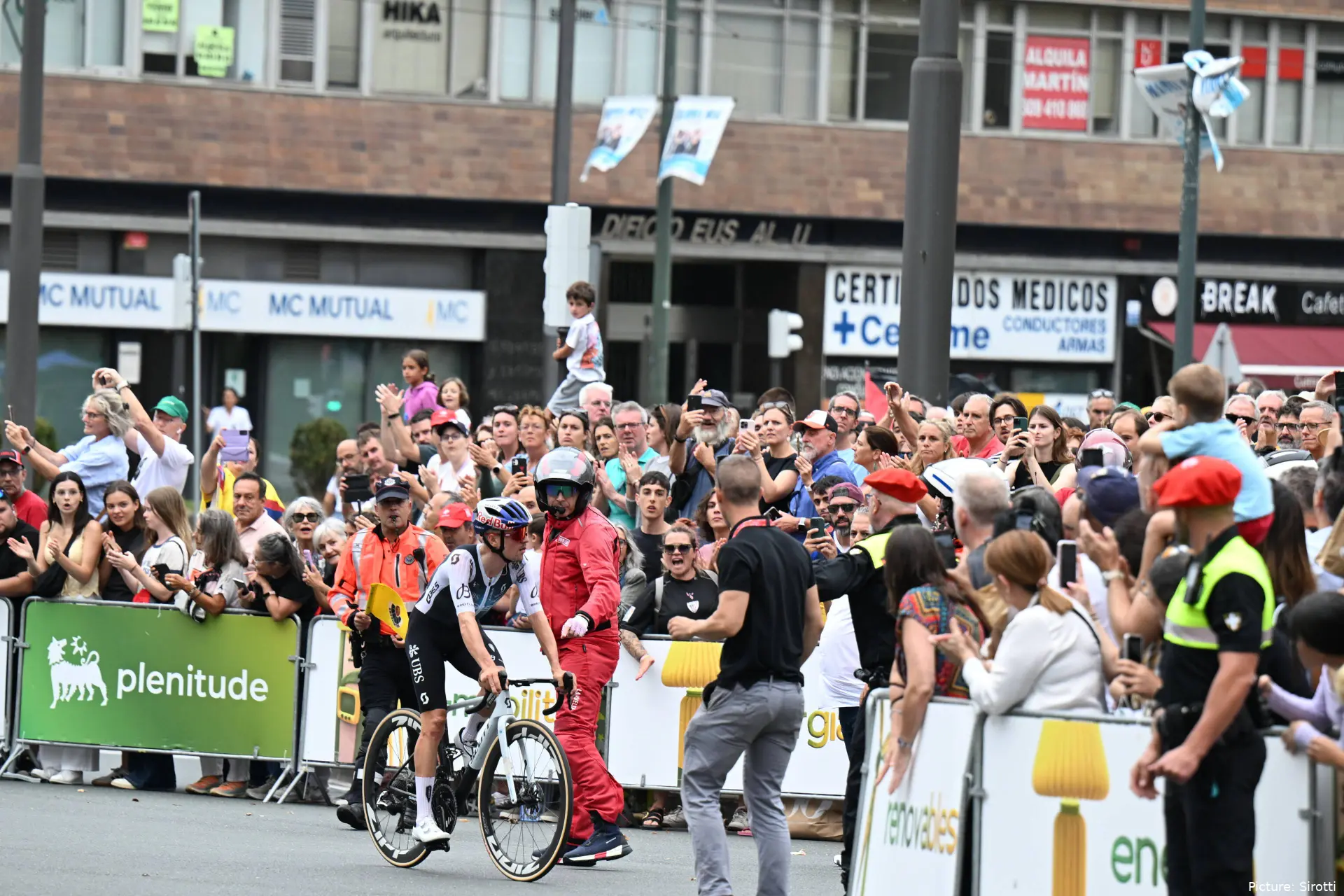
The Vuelta a España 2025 witnessed an unusual
interruption on Wednesday, when Stage 11 in Bilbao was neutralised following
large pro-Palestinian demonstrations near the finish line. “Unusual” is one
word to describe the incident, but perhaps a better one is “inevitable.” With
safety concerns at the forefront, race organisers halted proceedings three
kilometres from the line, nullifying the stage result, and while general
classification times were taken, no official stage winner was declared. This
moment sits at the intersection of two fundamental rights and responsibilities:
the right to protest and the duty to ensure athlete safety. Demonstrations have
long played a role in shaping public discourse, and high-profile sporting
events are natural stages for amplifying political messages due to the
visibility they offer. Yet, professional cycling, with its open-road format and
minimal barriers between riders and spectators, is uniquely vulnerable to
disruption. Its an incredibly sensitive situation, for reasons that go far beyond
sport.
The organisers’ decision underscores the primacy of
rider safety. Neutralisation is rare, but when faced with large-scale
demonstrations spilling into critical parts of the course, continuing the race
risked collisions, confusion, and potential injury. Kiko García, the race’s
technical director, acknowledged the severity of the situation, telling reporters:
“There is only one solution: for the Israeli team to recognize that their
presence here does not promote safety.” García stressed that the organisers
themselves lack authority to remove a UCI‑registered team (Israel – Premier Tech)
leaving the matter in the governing body’s hands. This comment reflects both
the logistical and ethical bind: a tension between political realities and the
integrity of the competition.
For riders, the protests raised both safety and
ethical considerations. Richard Plugge, CEO of Team Visma | Lease a Bike,
voiced what many in the peloton felt, “Everyone has the right to protest, but
it should never endanger others.” Plugge’s words point to a crucial distinction,
support for freedom of expression, but coupled with an insistence that
athletes’ physical safety cannot be compromised. His statement echoes through a
sport that relies on respect between competitors, fans, and organisers, due to
the open road nature of the events.
The riders’ union, Cyclistes Professionnels Associés
(CPA), echoed these sentiments, making clear that while protest is a democratic
right, it should not come at the expense of safety: “Any action that
jeopardizes rider safety or the integrity of the sport cannot be justified.”
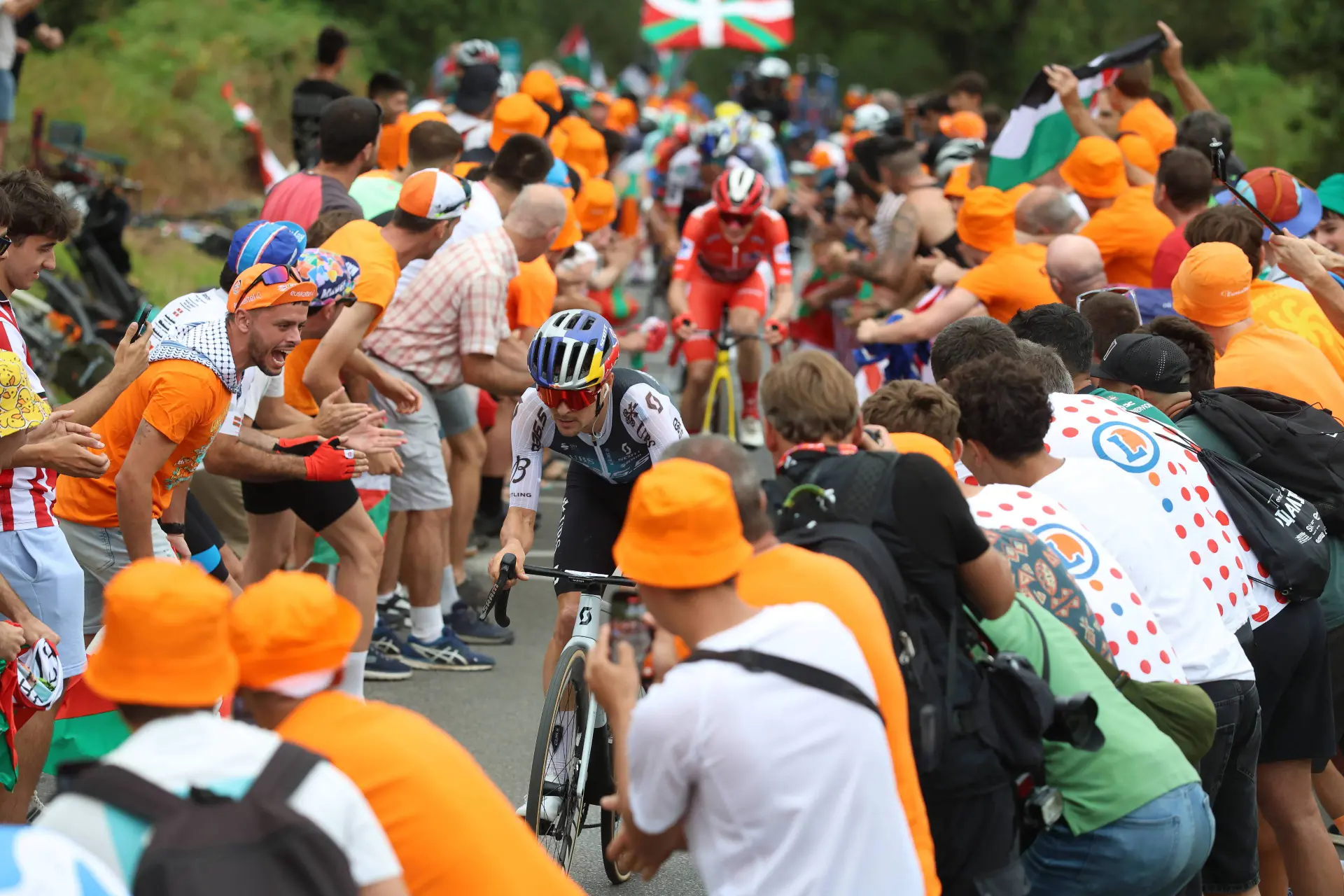
A sport defined by accessibility
Cycling, unlike many other sports, takes place almost
entirely in public spaces. Roads are not only racecourses but also everyday
arteries of civic life, and they often re-open for traffic just hours after the
race has passed through. This openness, long celebrated as part of the sport’s
charm, also exposes it to unpredictability. Unlike a football stadium or tennis
court, cycling cannot easily be sealed off from the public, and it is much more
difficult for ‘stewards’ to manage. The very thing that makes the sport unique,
its accessibility, also makes it vulnerable.
That paradox has never been clearer than it was on
Wednesday.

Israel - Premier Tech are at the centre of the debate
Neutralisation, though disappointing for the fans and
riders, was the safest choice in Bilbao. Yet the episode raises broader
questions for cycling’s governing bodies. How can organisers protect the
essence of the sport, its openness, while mitigating risks posed by large-scale
demonstrations? Are there ways to anticipate and manage political flashpoints,
particularly when teams linked to geopolitical conflicts are on the start line?
These are not straightforward questions. They cut to
the heart of cycling’s identity as a global, open-air competition, intertwined
with public roads, local communities, and political realities. Any attempt to
“close off” the sport risks eroding its accessibility; any attempt to ignore
the realities of protest risks endangering its participants.
Sport as a platform for free speech
Cycling is not the only sport affected by activism.
Tennis has seen matches interrupted by climate protesters chaining themselves
to nets or gluing themselves to stands. Football games across Europe have been
halted due to politically charged banners or pitch invasions. Formula One has
confronted track invasions, including high-profile incidents where
demonstrators entered the racing line during live events. Each instance sparks
a debate familiar across disciplines: how to safeguard participants and spectators
while respecting the principle of peaceful protest.
What unites these incidents is visibility. Sport is
among the most-watched human activities on the planet. For activists, a cycling
stage or football match is not just a contest, it is a broadcasted event, a
megaphone that carries a message to millions. In Bilbao, that visibility was
harnessed by pro-Palestinian demonstrators who succeeded in forcing
international attention on their cause, though at the cost of potentially
endangering others.
The ethical puzzle
The Vuelta’s Bilbao stage now stands as a moment of
reckoning. On one hand, demonstrators exercised their democratic right to
protest; on the other, their actions created conditions deemed unsafe for
athletes, officials, and potentially spectators. Plugge’s words, “it should
never endanger other,” embody the dilemma. Protest is not inherently
illegitimate, but the method matters profoundly. Especially in sports like
cycling and F1, when crashes could be life changing, the manner of the protest
is critical.
Israel - Premier Tech, the team indirectly at the
heart of the protests, now finds itself in a delicate position. García’s call
for the team to “recognize that their presence here does not promote safety”
frames the debate not as a matter of right or wrong, but of practical
responsibility. If one team’s involvement catalyses protests that threaten the
safety of the race, does that team have a duty to reconsider its presence? Or
would withdrawal amount to a capitulation that sets a precedent for political
pressure in sport? These are thorny questions without easy answers.
Lessons and further questions
As the Vuelta resumes, the reverberations of Bilbao
will linger. The episode underscores the fragility of live sport, particularly
in a discipline like cycling that is inseparable from public space. It also
highlights the urgency for sporting institutions to find frameworks that
balance competing priorities: the legitimacy of protest, the safety of
athletes, and the integrity of competition. Cycling seem ill-prepared for what
happened yesterday, despite plenty of warnings during the Vuelta so far that it
could happen.
Solutions will not be simple. Greater coordination
between organisers and local authorities may reduce risks but cannot erase them
entirely, whilst dialogue between teams, riders, and protest groups could help
identify flashpoints before they erupt, though this assumes good faith on all
sides. Ultimately, what Bilbao demonstrates is that sport does not exist in a
vacuum. It is embedded in political and social life, and thus inevitably
exposed to the currents of the world around it.
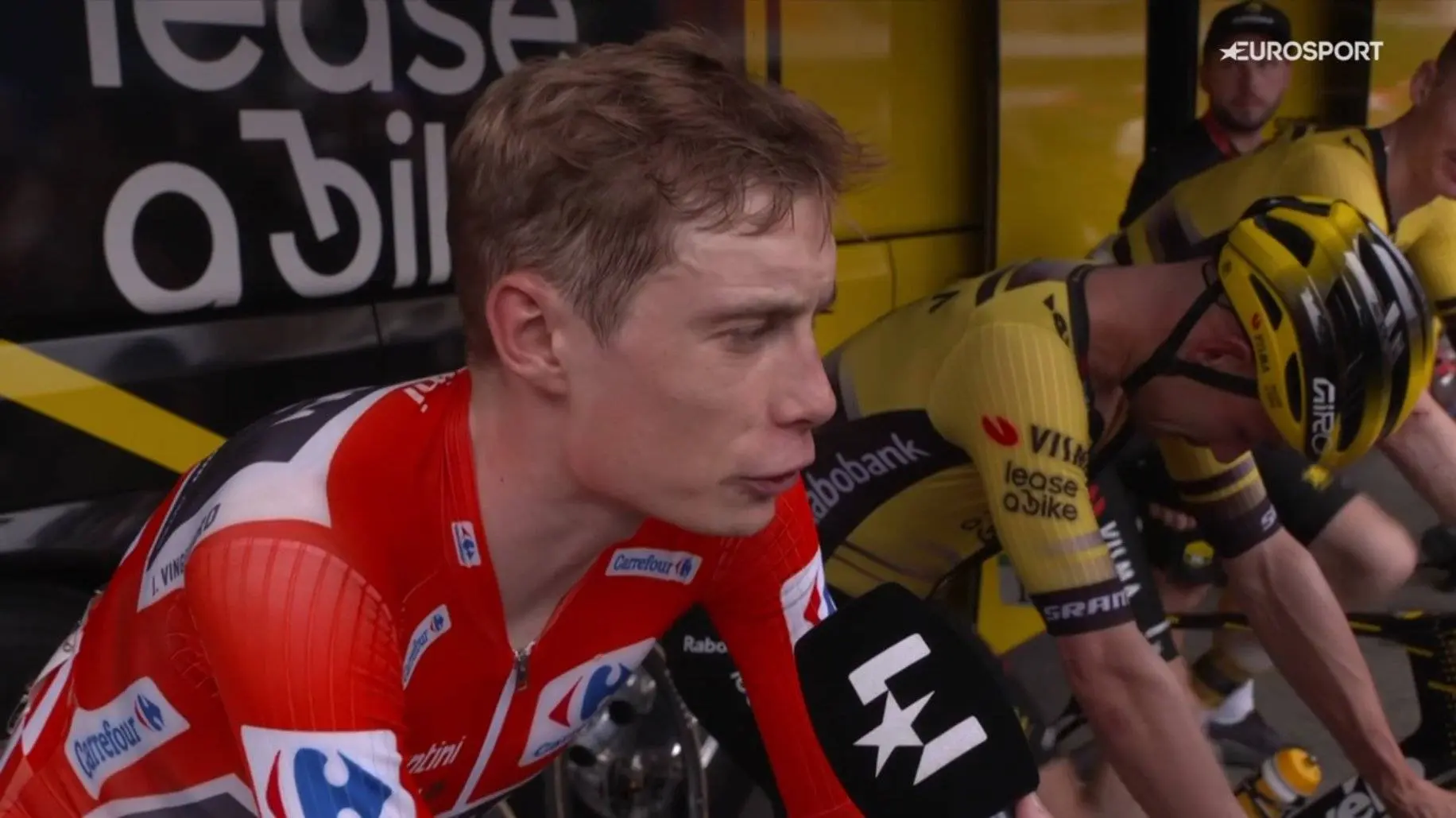
For fans, the neutralisation of Stage 11 was
anticlimactic, a finish line that never came. Most riders have been very
careful in their description of what happened on Wednesday, which shows they
know just how sensitive the situation is. For riders, it was a reminder of
their vulnerability in a sport where human endurance meets the unpredictability
of the open road. For demonstrators, it was a successful effort to project
their message onto an international stage. The challenge moving forward is to
ensure that these competing realities (protest, performance, and public safety)
can coexist without tragedy.
What do you think the best solution ideas are? How can
cycling, organisers, and security teams find a way to respectfully control the
protests? And what is your stance on Israel – Premier Tech, do they have a duty
of care to the other teams? Let us know in the comments section below!

Fin MajorCycling Journalist
Fin Major is a UK-based writer at CyclingUpToDate and has been part of the team since 2024. He is the site’s main writer for FAQs and evergreen explainers and has written around 2,000 pieces for the platform. Alongside this work, he focuses on in-depth analysis and covers the biggest races on the calendar, including the Tour de France, the Giro d’Italia, and La Vuelta a España, providing clear context around performance trends, tactics, and key storylines.
In his reporting, Fin uses reputable data sources such as ProCyclingStats for results, statistics, and historical context. He places strong emphasis on careful sourcing, editorial accuracy, and updating articles promptly when new, verified information becomes available. Outside of writing, Fin is an active cyclist, which supports his practical understanding of the sport and its demands.
claps 0visitors 0
Just in

Popular news
Latest comments
- No it’s not, what utter drivel. How do you know he wasn’t presented the option to stay with a renegotiated contract. I’m sure if he’d not gotten a better deal elsewhere he would even have considered accepting. It’s not like they would have told him to ride for free like Cavendish had to.Jumpyjohn21-10-2026
- It’s been a long time since any real Special accomplishments.Jumpyjohn21-10-2026
- It's nice to know that (some of) this article is not AI generated... igneous is autocorrected Ineos
 Rafionain-Glas21-10-2026
 - What are they doing nobody knows.abstractengineer21-10-2026
- Well JV, thats the text book definition of forced🤣🤦abstractengineer21-10-2026
- Sivakov was like the 5th best rider in the team, maybe not even that. He dropped before the other, he was not the final man. Besides when you got a leader who is attacking from 50-100k out , you dont really need a entire team, let alone Sivakovabstractengineer21-10-2026
- Visma is broke and cant sign any top riders. If anyone still dont get that after riders, coaches leave mid contract and even the ownwer going out publicaly saying they cant compete financially anymore. I dont know what copium world one live in lolmiguel21-10-2026
- If I were Visma I would take a bunch of money, buy out the Seixas contract and get him on that team. He is the next star after Tadej starts to slow down in two or three years.awp21-10-2026
- If the UAE follows Saudi fortunes, a lot of this might actually happen.Jumpyjohn21-10-2026
- Really? And you know this from who?Jumpyjohn21-10-2026
Loading
Write a comment