ANALYSIS | The 5 stages that can decide the 2026 Tour de France - Alpe d'Huez, Col du Tourmalet, Plateau de Solaison and more...
Cycling
We now know what the Tour de France 2026 has in store for us in terms of route, and it is one where there are not too many days where you can make serious differences. In fact there are only six days in which we could see the favourites distance each other in any meaningful way - although it is difficult to consider the time trials in this route very disruptive taking into consideration most top GC contenders nowadays are also top time trialists. We take a look into the five days that should be the most decisive.
This is something that for the 2026 route is not hard to decide actually, as the organizers have decided not to spread out the decisive stages throughout the entire route as has previously happened, but instead deliver a more back-heavy route where only on stage 14 are the serious differences expected to begin being built. There are plenty chances beforehand, whilst splits and crashes can always occur, but ordinarily it is when the race reaches the Vosges that the fireworks will truly begin.
The riders will enjoy a hilly and treacherous Grand Depart in Barcelona before travelling up to the Pyrenees. Between stages 7 and 12 we will mostly see opportunities for the sprinters, a sort of separation between the first tough section of the race and the decisive week in which the likes of Tadej Pogacar and Jonas Vingegaard are expected to fight for the yellow jersey - with no rider really coming to mind at the time who could potentially rival the two.

2026 Tour de France map
Stage 6: Pau - Gavarnie-Gedré

Stage 6
We will have a team time trial in Barcelona and then two hilltop finishes on the Alto de Montjuic and Les Angles, but only a few seconds at best are expected to separate the GC riders through these days - most of which also won't want to risk or spend too much on the opening days of a 21-day long race. The race enters France through the Pyrenees and has a day that is rather hilly and then a sprint stage ending in Pau. The final day in the region is stage 6, starting in Pau as well and having the 'modern' flat start which means it's going to be a GC day, not one for the breakaway to surprise, and then a treble of ascents where we can see the first big differences.
The elephant in the room is clear: The Col du Tourmalet. But before the riders get there they face the Col d'Aspin, a sort of warm-up and chance to build fatigue for anyone who wants to attack the longer climb. It's 12 kilometers at 6.5% but then the big one is 17 kilometers long at over 7%, having its summit at the iconic 2115-meter high mark, a meaningful challenge that ends with 39 kilometers to go. If no-one wants to attack, UAE and Visma both resigning to a conservative tactic, then we're in for a snoozefest as the final climb doesn't allow for meaningful attacks. But this is a day where you can race tactically, deploying riders in the breakaway and then potentially using them after the Tourmalet and here they can make serious difference. So, many teams will want to do this, and the slopes of the Tourmalet are enough for any rider to attack and make the difference if they want. It's unlikely to see minutes being created here but it can happen, and the Tour will gain shape early on likely on this day. But then it will wait a long time for another important day.
Stage 14: Mulhouse - Le Markstein

Stage 14
Stage 14 marks the 'real' start to the Tour. The big Vosges challenge is a day with tons of climbing from start to finish and it will show the region at it's best. No 'unipuerto' Planche des Belles Filles where it always comes down to an uphill sprint, instead the organizers used the 2023 formula with a finale on Le Markstein after several climbs, a flat finish after a difficult climb that can compare itself to its Pyreneen and Alpine peers. A lot can happen here, the weather is often bad in the region, the descents are tricky and the climbs have different gradients and durations, allowing for surprises but the long ascent to the Grand Ballon early on also allowing for a very strong breakaway group to be formed. But the main riders will wait for the Col du Haag.
But here the Tour has done well, introducing a little-known climb to the finish, which is harder according to locals than what the profile shows. A downhill kilometer lowers the 7.3% average quite a lot, in a climb that often features gradients of over 10% throughout its 11 kilometers. At this point in time, the riders won't have ridden a long ascent in already a week, and as told me by Dan Martin this summer at the Tour, that can actually make a very meaningful and negative impact in some riders even though they've been in competition with all others throughout the previous days. The Col du Haag will take around 30 minutes to climb and this will be the first time the riders will do this kind of effort since stage 6, we could see a few riders explode and take a big mental hit.
Stage 15: Champagnole - Plateau de Solaison

Stage 15
A nicely designed stage and introduction to the Alps. I've joked that Javier Guillén was invited as a feature guest when it came to designing this stage, as it features a very familiar format often used by the Vuelta. Lots of rolling roads and an ultimate focus on steep climbs, with a tough summit finish. It's a proper mountain stage with around 4500 meters of climbing, although you shouldn't expect major risks as the Plateau de Solaison is a true killer and not having your best legs on it can be too expensive of a receipt for many to pay.
The Col de la Crosette is 4.6 kilometers long at 11% and it's a crazy hard climb, set to split the peloton quite a lot, but don't expect Pogacar or Vingegaard to be attacking here. Instead, saving their legs for the final 12-kilometer climb that averages almost 9%. It's consistent, one where you pace from start to finish or risk exploding, and to end off the second week of racing, can truly create the differences that will then have to be closed into the final week of racing.
Stage 19: Gap - Alpe d'Huez

Stage 19
Now let's be real, in the big picture of the race, the Alpe d'Huez stage 19 ascent is not likely to be as decisive as the previous two mountain stages. It's a short day on the bike, it comes before the queen stage, and it's not as hard of a climb as the Solaison. But it's still the Alpe d'Huez and this stage has been designed in a way that I suspect had in mind seeing records fall down. The modern Tour is sadly designed in a way that most mountain stages are just short, and the organizers did not want to take a risk at designing a long mountain stage. That is a shame, as it is common knowledge that introducing different formats and kinds of mountain days is how you see riders have better or worst days, and also how you see more surprises, twists and riders cracking. But Prudhomme and Gouvenou went for the 'safe' route and the story behind this double Alpe d'Huez is also interesting.
The idea was always for the stage 20 design, but fearing backlash for not having the full climb on the route, the Tour has been redrawn to feature the entire Alpe d'Huez too, which will serve as the end to the penultimate mountain stage. This is still a stage that will create differences without a doubt, but above all it will be a day - for us fans - to focus on the thrills, the beautiful landscape and the hundreds of thousands who will travel up the mountain to make their voices heard. The next day for the riders there will be very little smiles, for quite obvious reasons.
Stage 20: Le Bourg d'Oisans - Alpe d'Huez

Stage 20
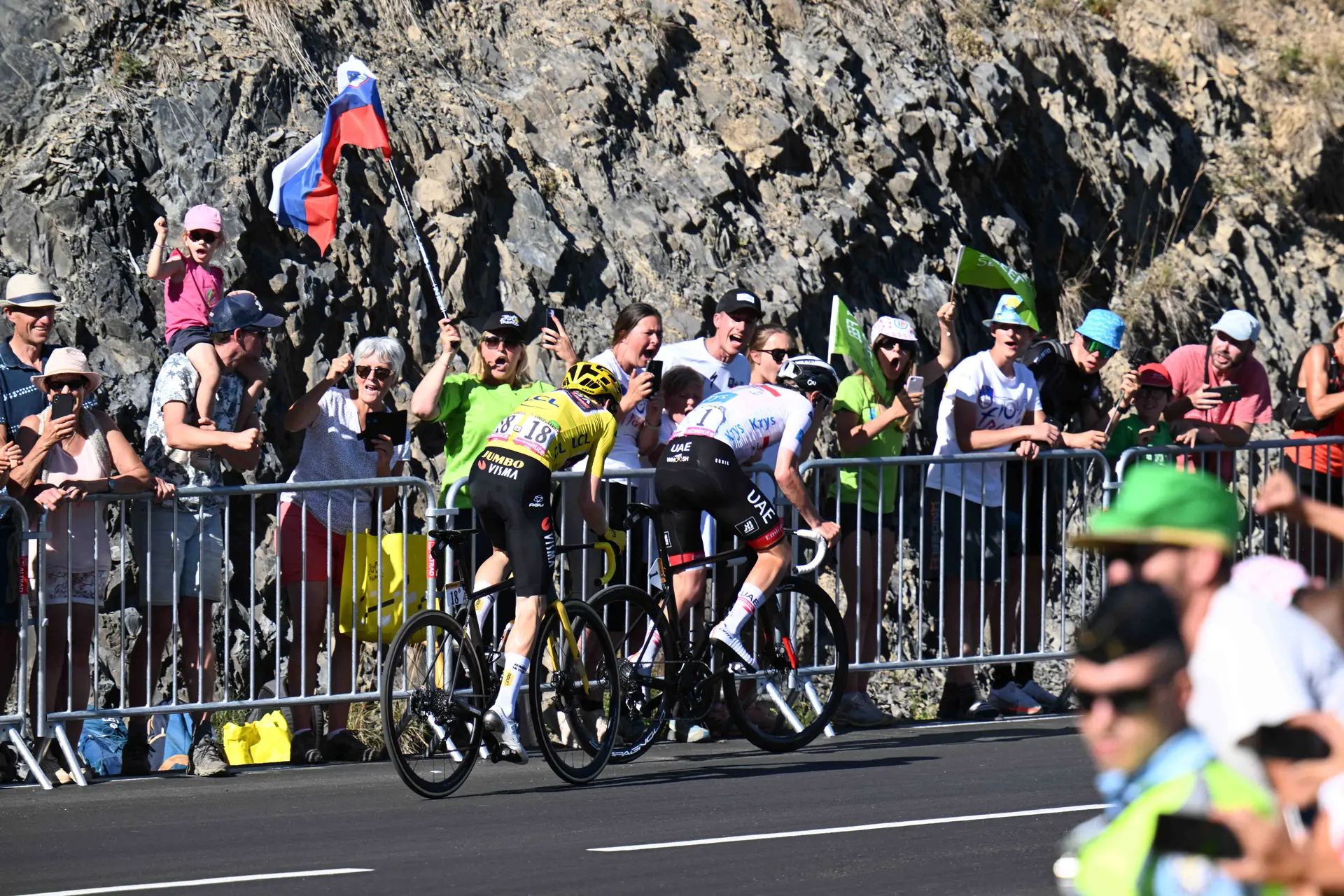
The QUEEN stage. There is no arguing, and there's no attempt to argue from anyone as far as I know. Sure, there was an active attempt once again to avoid the long distance, but the toughness that's been packed in these 171 kilometers is unreal. For this stage I take my hat off, as the Tour has done what it very rarely does: Leave the hardest mountain stage to last, and make it different from all others. Here we have the altitude factor introduced to the riders for the first time on the very last mountain day, in climbs that are also extremely long and back-to-back. If anyone is going to crack, it's here, and it's always on the final day that this sort of stage is best because it won't allow for anyone to fully relax regardless of their positions, and it gives fans and riders the hope that difference can be made until the very end. That is how you do it.
On the menu we've got the Col de la Croix de Fer in the start, 24 kilometers long but in reality a three-section climb with several descents inbetween, where we should see explosive racing and a brutal battle to form a breakaway. Then comes the mythical (and I mean MYTHICAL) Télégraphe/Galibier combination, perhaps the toughest set of climbs the Tour often uses. The first is 12 kilometers at 7%, and only after a small descent the riders take on a gigantic mountain of 17 kilometers in distance, averaging 7% (tougher towards the end) with the altitude going up to 2642 meters. Some riders will thrive in this environment, some will not. In this climb there simply is no hiding, and there are 61 kilometers to the finish which means that getting dropped can and should mean minutes and minutes lost.
The tactical aspect is also key because the descent down the Lautaret side is very gradual and teammates can be of crucial support right up until the Col de Sarenne. In itself 12.8 kilometers at 7.3%, almost as hard as the Alpe d'Huez, and then through a small Alpine road the riders will move towards the ski station through rolling roads where the action will just extend itself. The riders will only ride the final part of the Alpe d'Huez, but the section will be big enough that we should see a few kilometers of absolutely packed roads all the way to the finish line to properly finish the Tour's mountain leg.
Rúben SilvaEditor-in-Chief
A founding contributor to CyclingUpToDate since its launch in January 2022, Ruben Silva has played a central role in shaping the site’s editorial direction and long-term growth. Before joining the project, he built his experience through independent blogging at Echelons Hub and by producing race previews for Ciclismo Internacional, developing a strong analytical voice rooted in daily engagement with professional cycling.
Beyond editorial work, he has been closely involved in the expansion and coordination of CyclingUpToDate’s wider network, helping establish and support sister platforms across multiple languages. This includes ongoing collaboration with CiclismoAlDia (Spanish), CiclismoAtual (Portuguese), WielrennenUpToDate (Dutch), and RadsportAktuell (German), contributing to a shared editorial vision and consistent international coverage.
He also helps oversee editorial governance across the network, setting standards for accuracy and consistency and coordinating updates or corrections when needed.
Originally from the Porto metropolitan area in Portugal, he holds a bachelor’s degree in Geography. His path into cycling journalism was shaped not through formal media training, but through independent reporting, community engagement, and sustained on-the-ground involvement in the sport.
Over the course of his career, he has conducted approximately 100 interviews across road cycling and cyclocross, ranging from one-to-one conversations and online formats to press conferences and on-site pre- and post-race coverage. His interviews include leading riders, team managers, and prominent figures within cycling media: Tadej Pogacar, Jonas Vingegaard, Mathieu van der Poel, Primoz Roglic, Wout van Aert, Joao Almeida and Tom Pidcock; managers like Patrick Lefevere and Joxean Matxin; and YouTube personality Bryan Kennedy (BKXC)...
Within 18 months of launch, he helped grow CyclingUpToDate’s English-language platform into one of the most-read cycling news websites, built entirely from the ground up. As both a professional journalist and lifelong cycling enthusiast, his focus remains on delivering accurate, timely, and well-contextualized coverage.
claps 2visitors 2
Just in
Popular news
Latest comments
- well this one definitely makes my STUPIDEST ARTICLES OF 2026 list. chapeau…OCexile14-10-2026
- Cyclocross is nothing without stars like MVDP, WVA, Pidcock... etc. Out of all cycling disciplines, road racing is the most popular discipline in professional cycling, especially in terms of global prestige, major-event audiences, and the historical status of its greatest riders. People that don't follow cycling as a sport have heard of Merckx, Hinault, Pantani, Armstrong, Remco, Vingegaard, MvDP, Van Aert, Pogačar etc. So if we're talking about professional cycling and the sport's most famous athletes, road racing is the clear number one. Road cycling's greatest champions are judged across such a wide scale. E.g. - Pogačar can win the Tour de France and then go after Paris–Roubaix and other prestigious one day races. These races also have a wide range of versatility: cobbles, gravel, punchy, hilly, TT. This versatility is a huge part of why road racing is No.1 in cycling. Maybe Sven Nys is a dutch cycling "legend"... but that's where it starts and ends. Ad acta.PogiSloFans14-10-2026
- “at some point those guys will turn their backs on OUR sport”? after dedicating so much of their lives to cyclocross and in mathieu’s case winning more world championships than anyone, it would seem to me like they’ve earned the right for it to be always be THEIR sport, too, even after they retire from it.OCexile14-10-2026
- It takes two to tango. Riders also have a say. Maybe they didn't see any opportunities on a stacked team such as Visma's? Who knows, but could be a multitude of reasons why deals fall through.Pogboom14-10-2026
- Eventually Pogi will get older and slower. Father Time will favor the young. The question is whether he can beat Pogi before Pogi decides to retire. You never know... Pogi may retire after winning paris-roubaix :)b3tlla14-10-2026
- i think he can continue to race for maybe another 2 years till he drops out of podium contention. With his TT and his follow the leader in the Mountains,he should not need too many teammates too.abstractengineer14-10-2026
- Aren't they still shopping around for a main sponsor for next year?wrsty14-10-2026
- How broke is visma now? wtf they cant even fight moviestar and decathlon for riders and lose both their mid targets based on their budget and they cant even get those? Crazy...:/miguel13-10-2026
- TT But he won by a minute so he could have cut down on some of it
 Rafionain-Glas13-10-2026
 - weight is measurable. power is measurable. So why didn't he prepare that way from the TDF if he wanted to beat Pogi and after Pogi wasn't going to be there, to win.abstractengineer13-10-2026
Loading
Write a comment